A Food Travels LDN blog celebrating everything food-related.
I started my Instagram Blog ‘Food Travels LDN’ back in 2015 under the name of Foodtravelsx. At the time I was studying in Brazil, and had come across so much incredible food that I wanted a place where I could document it all. Since moving to London last year, I have been focusing on growing my account, improving photo quality and offering as many interesting and useful recommendations to my followers as possible.
Now I’m taking it one step further. ¡Comemos! is my new blog, dedicated to expanding on my Instagram posts, providing more detailed reviews along with general thoughts and feelings on the foodie scene globally. So, stay tuned for my first post, and in the meantime…
Having grown up in a small village with no shops and next to no public transport links, getting to any decent restaurant or café was a bit of a commitment. Driving and parking would have to be considered, and so the concept of a regular, local, neighbourhood spot just didn’t really exist.
Fast forward to now, and living in North London, I’ve begun to discover the wonders of having fantastic restaurants more or less on my doorstep.
Although I don’t live in Crouch End, it’s fast becoming one of my favourite parts of London – a lovely, little residential bubble, walking distance from my flat. And it’s in Crouch End that I’ve had some fantastic brunches and dinners in the past 12 months.
It was a evening browse on Deliveroo that led me to The Clock, whose menu looked far too good to be available for takeaway on a delivery app.
On a warm summer’s Saturday night (this is not a novel…), you could be mistaken for thinking we were abroad, on holiday – something which we could only dream of in the months following Lockdown phase one. It certainly didn’t feel as if we were in London.
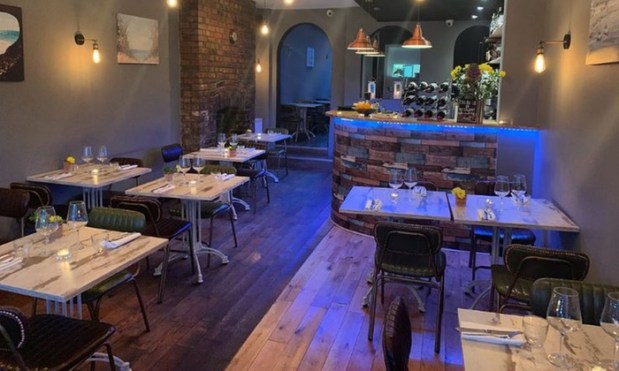
The Clock has the appeal of being a small, intimate venue, with an understated shopfront (that to be honest, you could easily miss), and a comforting, homely vibe inside. Staff are friendly, but not overbearing, and the menu makes it delightfully difficult to choose from.
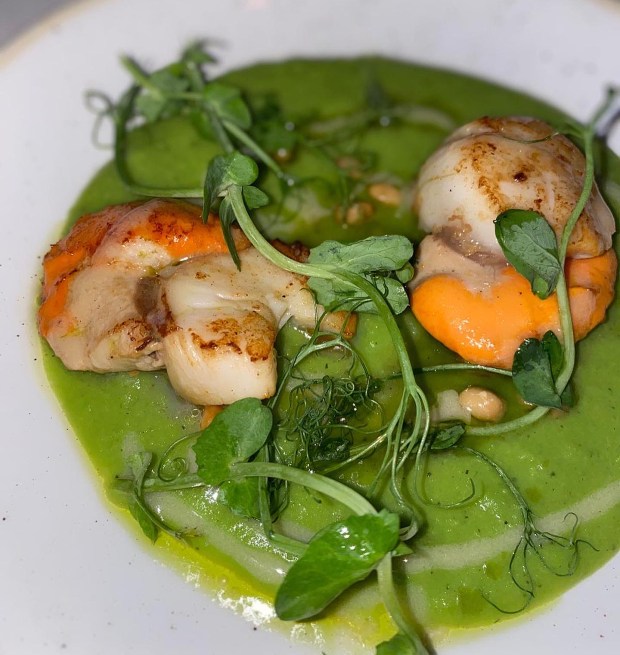
I’m actually going to reference two visits here, as I returned within a couple of weeks, having loved it so much. On the first visit, we shared Seared Scallops with Fresh Pea Purée and Hazelnuts. Not only was this beautiful to look at, but the scallops were cooked perfectly, and the pea purée was light, and well-seasoned.
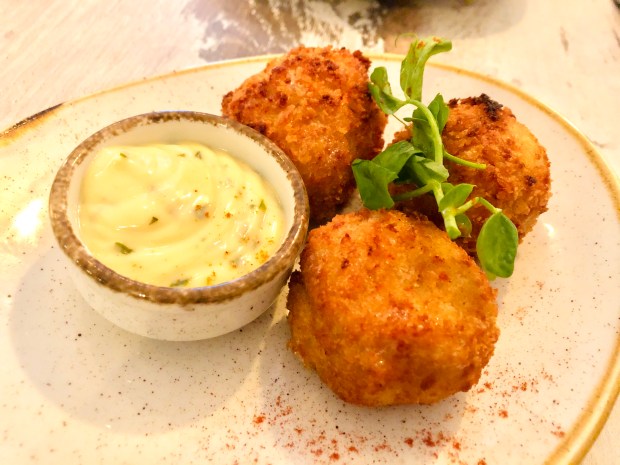
On my second visit, I was particularly impressed by the Sweetcorn and Chorizo Croquettes, where the filling had been blitzed to a smooth puree-type paste. Despite the potential for this to sound slightly like mush, it was incredibly flavoursome and with the crunchy croquette exterior, the consistency of the filling worked really well.
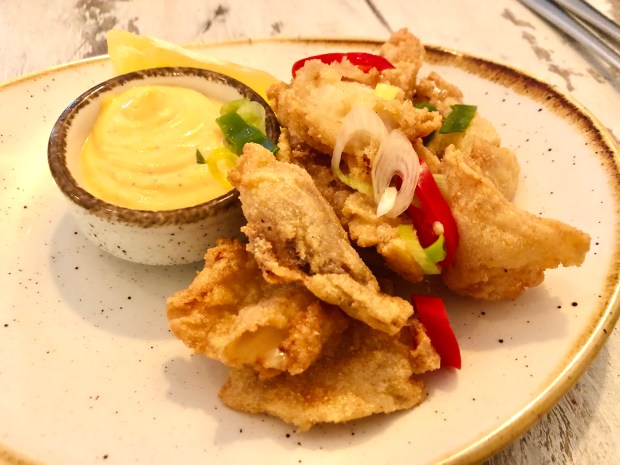
The Salt & Pepper Squid was decent, but not wowing, so for a little salty, snack-style starter, this is a great option.
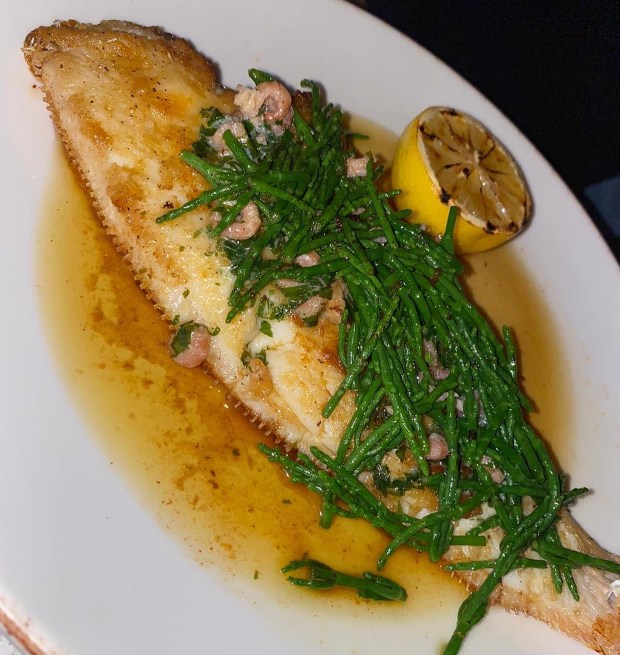
On to the mains and as much as I should probably save the best until last, I have to go straight in with the Lemon Sole with Samphire. I love those magical moments where you genuinely know you’re eating one of the best things you’ve ever tried. This certainly was my ultimate fish dish. You have to persevere to deal with the bones and forget trying to look elegant when you’re picking them from your teeth but ignore that, because the flavour… Slightly citrussy with a light, flaky texture, this fish is buttery and delicious. The samphire adds a lovely burst of colour, with brown shrimp dotted throughout. A side of equally as buttery green beans with hazelnuts was a nice addition – I should add that the piece of fish is huge, and so you probably won’t want a heavy side.
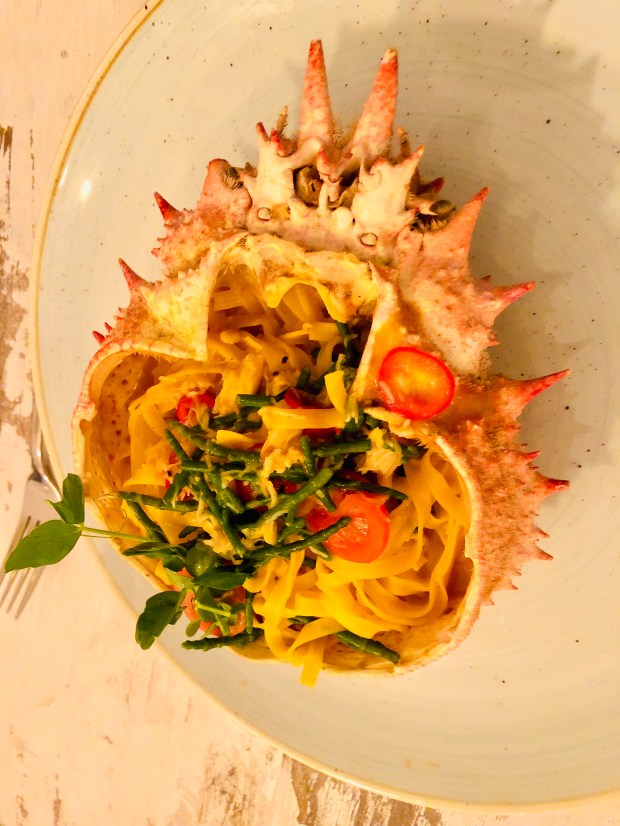
One of their most featured dishes on social media, and for good reason, is the Cornish Crab Linguine. Served in the Spider Crab’s hollowed out shell, the linguine is freshly-made, with a light olive oil sauce coating with roasted tomatoes. The shell serving dish is a bit of a novelty, but one that I absolutely bought into.
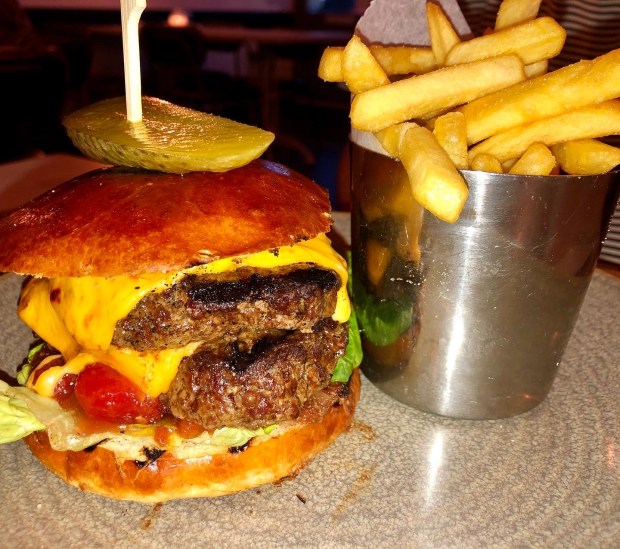
For hungrier bellies to fill, the Double Cheeseburger with thick, juicy patties, cheese and cornichons is a solid option. A mountain of a burger, you certainly won’t be left wonting for more, and the well-seasoned chips carefully straddle the line between fries and chunky chips (something which I’m definitely here for…).
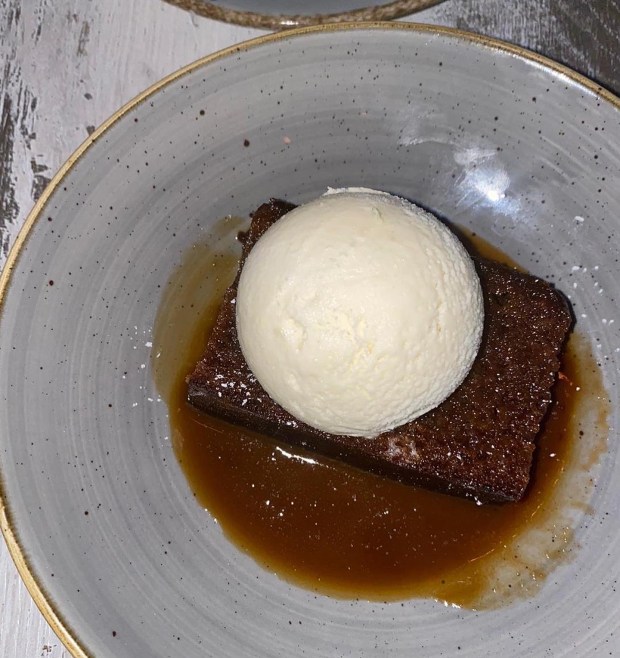
I couldn’t complete my review without mentioning the desserts, despite the fact that I certainly didn’t need one either time. Their Sticky Toffee Pudding is indulgent, with a moist, treacly sponge and a generous helping of vanilla ice cream plonked on top, and you’ll find it paddling in an oozy pool of toffee sauce.
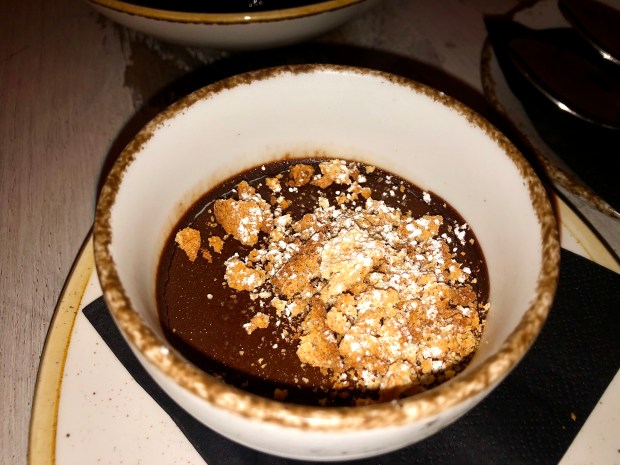
For those who love a boozy pudding with an added caffeine-kick, the Bailey’s Espresso Chocolate Pot is a great shout. It’s super rich and creamy, and the crumbly biscuit topping adds variation to the texture.
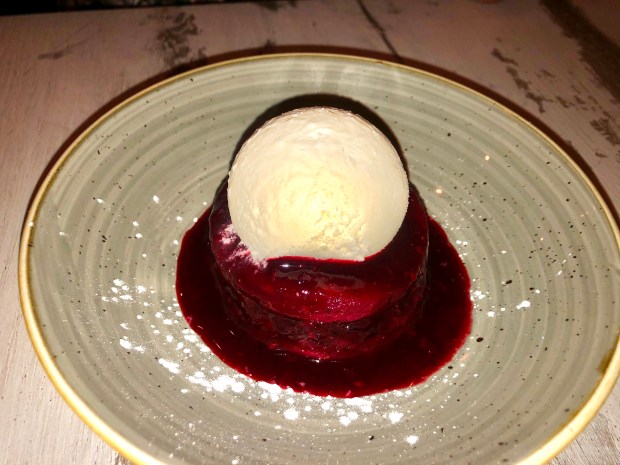
This time though, I really have saved my favourite until last, and to top things off, it was so unexpected. The Summer Berry Pudding didn’t necessarily stand out to me on the menu, as I tend to steer towards chocolate or caramelly style desserts rather than fruit-based, but this was the highlight of the meal. It’s a beautifully striking deep red colour, with the sponge completely saturated with the rich berry sauce. A big dollop of clotted cream on top finishes it off perfectly, and helps to balance out the sharp, punchiness of the tart berry flavours.
It’s important to point out that The Clock has since brought in its new Autumn Menu which looks absolutely fantastic, however not all of the dishes mentioned above are still available, so please see below for their current availability:
Scallops with Pea Puree and Hazlenuts – no longer available having been replaced by an alternative scallop starter
Chorizo and sweetcorncroquettes – still available (listed under the ‘bites’ section of the `a la carte menu)
Salt and Pepper Squid – available on the fixed price menu
Roast Lemon Sole – a slightly different variation is available with sea asparagus and herb butter emulsion
Spider Crab Linguine – still available
Double Cheese Burger – available on the prix fixe menu
Sticky Toffee Pudding – still available
Baily’s Espresso Chocolate Pot – no longer available
Summer Berry Pudding – no longer available
I can’t wait to next head to The Clock for another fantastic meal, and to try out their new menu. It has the loveliest atmosphere inside and is perfect for a date night.
With current Covid restrictions, we know that the hospitality industry is really being tested, and so please do head to independent restaurants like this one with your household – not only will you be eating really well, but we’re also helping these businesses to stay afloat. Places like Crouch End are as lovely as they are because of local businesses like The Clock so check out the menu, book your table, and lend your support.*
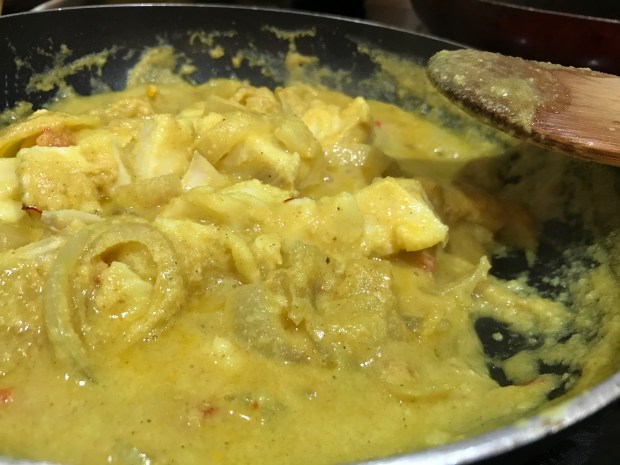
This recipe wasn’t planned. It was a ‘what have I got in the fridge that needs using up?’ kind of meal, which then ended up being utterly delicious. It turned out that it was fresh fish stock and coconut cream that were in my fridge, crying out to be saved, avoiding getting lost behind mountains of double cream, yoghurt and pancetta, or indeed, just ending up in the bin.
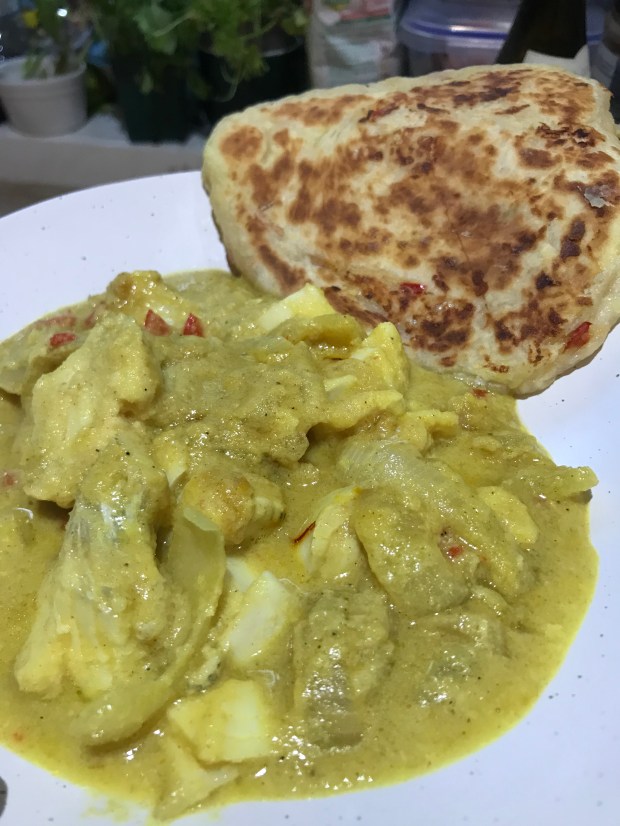
I can’t say it’s the most photogenic dish, but we’ve got way too caught up in a world where a dish’s appearance is more influential than its flavour, so excuse the imperfect imagery, and simply try it for yourself – this definitely bears more resemblance to curries in India than restaurant or takeaway curries!
The idea of making a curry without using a ready-made sauce or paste can often seem like a lot of effort, but experimenting with different spices and flavourings is what makes it exciting. I can assure you that this curry recipe is very straightforward and doesn’t require a food processor or hand blender for the base paste.
You can adjust the spice levels to your taste – this wasn’t fiery, but I do like a fair bit of chilli in mine.
Serves 2
1 large onion
Thumb of ginger
1 whole chilli
1 ½ tsp turmeric
1tsp chilli powder
40g coconut cream (I used the kind that comes in a solid block)
250ml fish stock (fresh if you can find or make it)
2 white fish fillets
A pinch of saffron
Sprinkling of desiccated coconut
Rice or flatbread to serve
Slice the onions and cook for at least 20 mins in oil on a low heat until they are beginning to caramelise.
Add the diced chilli and grated ginger along with all the spices except the saffron. Cook for a few more minutes until fragrant.
Add the coconut cream and fish stock, turning up the heat slightly and cooking until reduced by1/3.
Add saffron and chunks of fish (or you can keep the fillets whole) and cook until fish is done.
Serve with rice and a sprinkling of desiccated coconut.
As you can see, there are so few steps to this recipe, and once the onions are done, it’s a pretty quick-to-cook meal. It’s sometimes difficult to leave the onions alone for so long, as the temptation is just to get on with things, but allowing them to properly caramelise really does add to the flavour so try to resist the urge to move on too early – I promise it’ll be worth it.
In recent years, the light and fluffy Chinese delicacy that is the baozi, or bao, has found its way into restaurants and kitchens across the globe. Their being steamed, combined with the yeast within the dough, makes for a soft and delicately spongey texture, quite unlike any other kind of baked bread or steamed dumpling.
Our lexical disclaimer for today is here to inform you that ‘bao’ in itself translates as ‘bun’ in Mandarin, and so the commonly-used Western phrase ‘bao bun’ is grammatically redundant, literally meaning ‘bun bun’, in the same way that in Hindi, ‘Chai tea’, actually means ‘tea tea’.
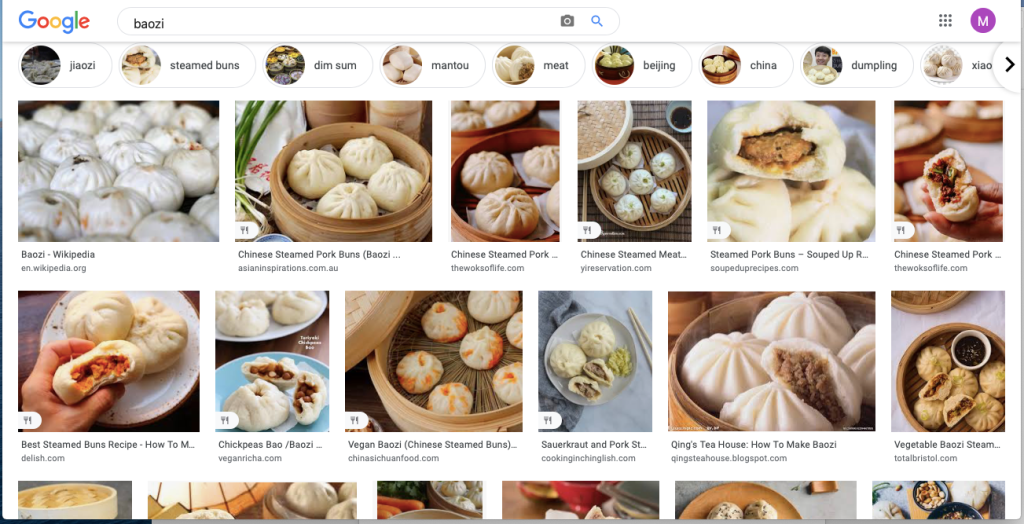
Baozi
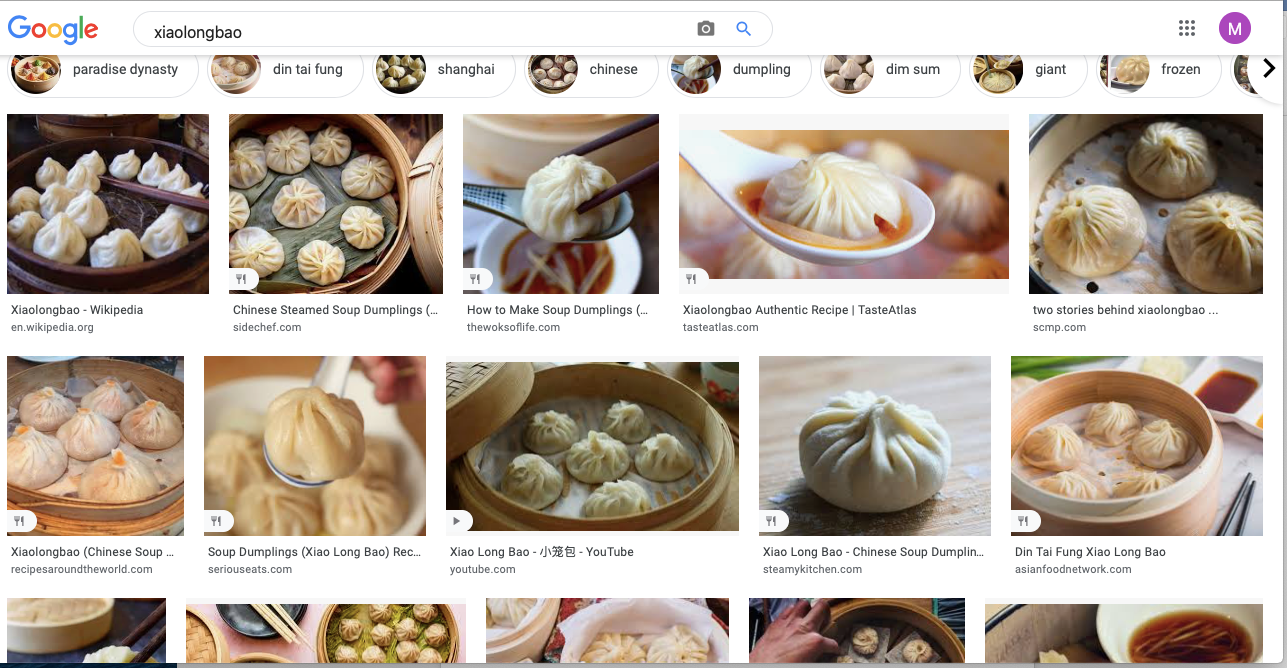
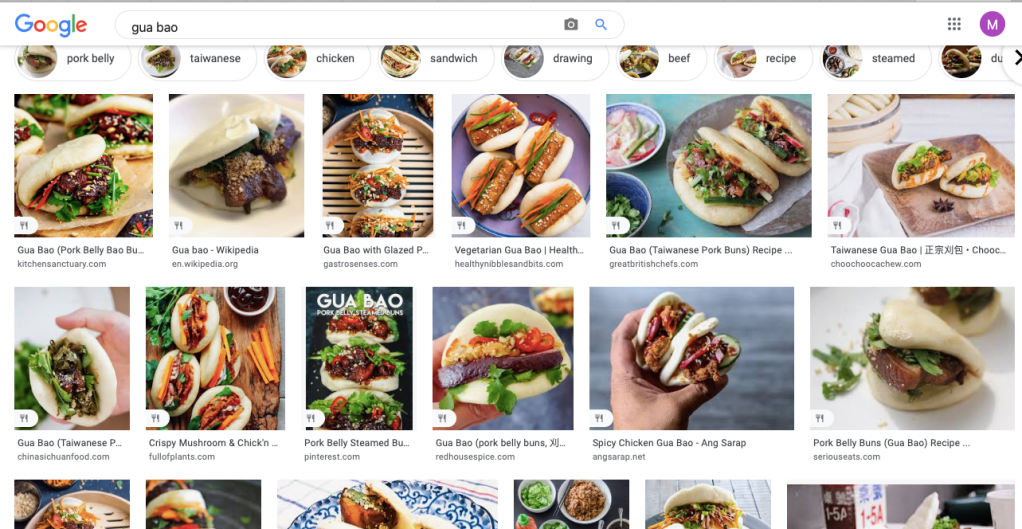
Generally baozi are a filled ‘bun’, with the dough gathered together on top, sometimes leaving a small hole for steam to escape, and complete with either a meat or vegetable filling. One of the most popular is the Char Siu Bao, filled with sticky barbecued pork. Other variants include the xiaolongbao, with xiaolong referring to the bamboo steaming basket in which they are cooked and served., This bao is filled with a hot soup, and is sometimes referred to as a dumpling. The final type of bao that I’ll touch on is the gua bao, which comprises of a flat, open steamed lotus-leaf bun, with a meat (often pork belly) filling.
Xiaolongbao
As ever with Chinese food, it’s very difficult to generalise, as regional cuisines across what is such a huge country vary so significantly. Whether we’re talking baozi, xiaolongbao or gua bao, these may be more prevalent in certain provinces, or be made differently in others, and so defining such a specific part of incredibly complex and diverse cuisine is pretty tricky to do in a few hundred words!
gua bao
…….
Career changes, and COVID combined meant that my dreams of heading to China this year were scuppered, and so I’ve never tried these dreamy little buns in their homeland. Living in London does mean however, that there are a million one street food stalls, Chinatown restaurants, and chains that serve up these little beauties, although of course I’m unable to comment on their authenticity.
Interestingly, many of the places in which I tried bao/baozi weren’t actually Chinese-influenced, and include Malay, Vietnamese and Japanese-inspired food businesses to name a few. The very first time I tried baozi was years ago at a little independent restaurant back in Nottingham, called Yumacha, which describes itself as serving up ‘an eclectic mix of the Far East’s favourite dishes’. These kind of ‘Asian fusion’ restaurants seem to be on the rise, combining Chinese, Japanese, Thai and Indonesian cuisine plus a whole lot more. I had no idea what I was eating at the time, with the concept of a steamed bun seeming completely alien to me – I have to say this was many years before my foodie instinct really kicked in, and my knowledge of the food I was eating was minimal. Despite this, I loved the unfamiliar, cloud-like texture of the buns, along with their punchy flavoured meat fillings.
Keu Deli
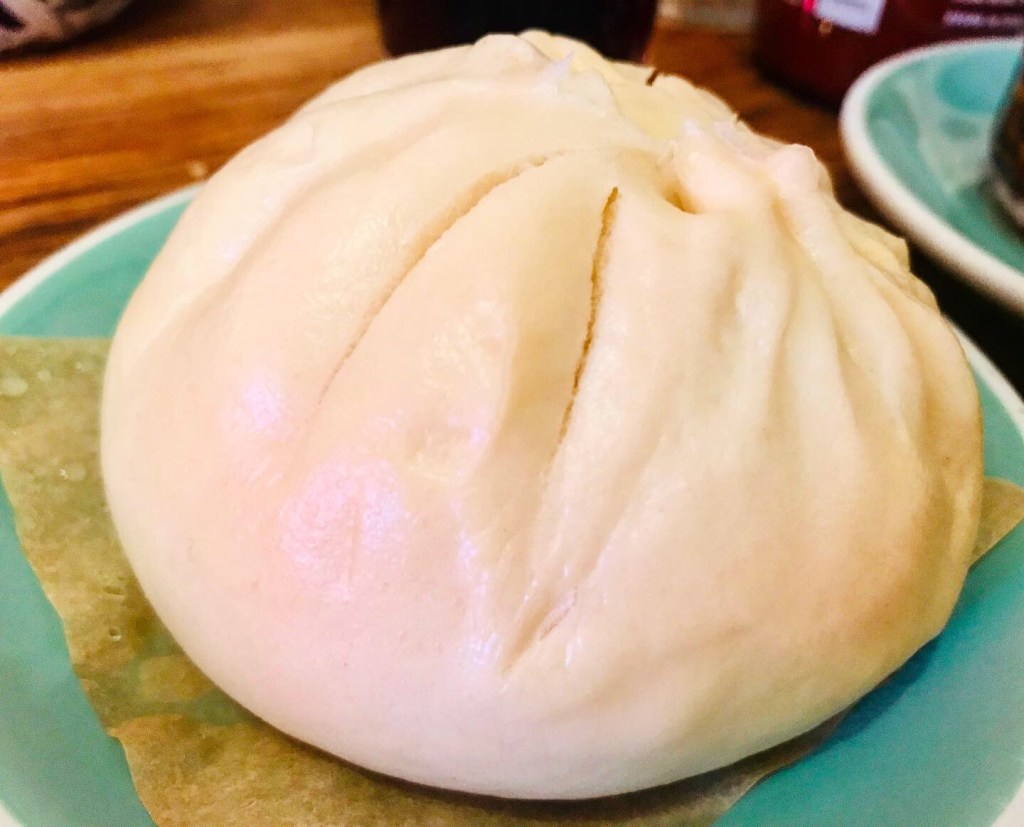
Fast-forward a good 5+ years, and I’ve tried a fair few variations. Popular Vietnamese Keu Deli in London serves up a giant baozi, which definitely wins points for the lightest, most satisfying bao texture. BaoziInn in Chinatown is a solid bet for quality baozi, which were slightly flatter in my experience, and fillings include the pork-patty-like stuffing that I tried.
Admittedly, I’ve yet to try xiaolongbao, possibly because I’ve distanced them from the baozi that I love, as they do tend to resemble dumplings, and the hot broth filling has never appealed to me as much as a juicy meaty filling.
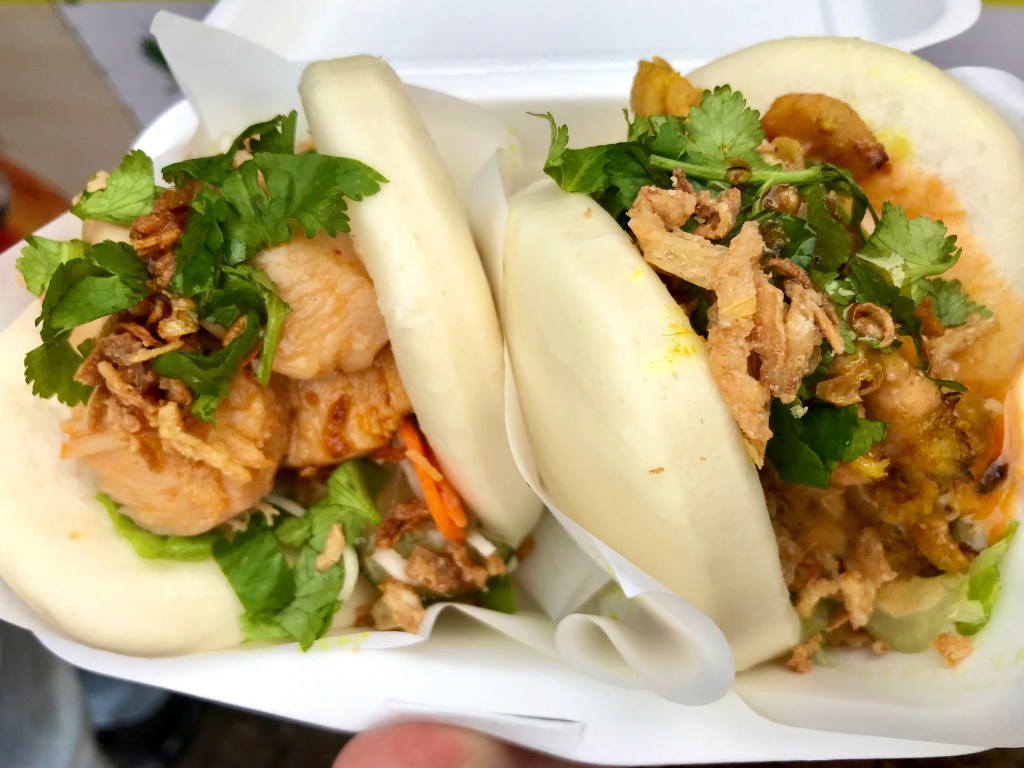
Gua bao , however, might be my favourite, based on those that I’ve tried. They have the most wonderfully smooth texture, and oddly, more filling seems to be packed into these open bao than stuffed within the closed, larger baozi.
My favourites so far were from Thai-Malaysian street food stall Satay Street ,where I was lucky enough to win a competition for two free portions. I tried a curried chicken bao and a satay chicken bao, both of which were great, with the satay flavour being particularly delicious.
Satay Street
I have to admit that the first gua bao I ever tried was actually from Wagamama – I think they’d just added it to the menu, as they were giving away samples outside with a pulled beef style filling, and it was pretty good. There’s only been one occasion where I’ve not been able to finish a gua bao, and I won’t name the business, but it was the filling rather than the bun that I couldn’t stomach – I can only hope you never stumble across it yourselves!
DIY BAO
Oh dear…
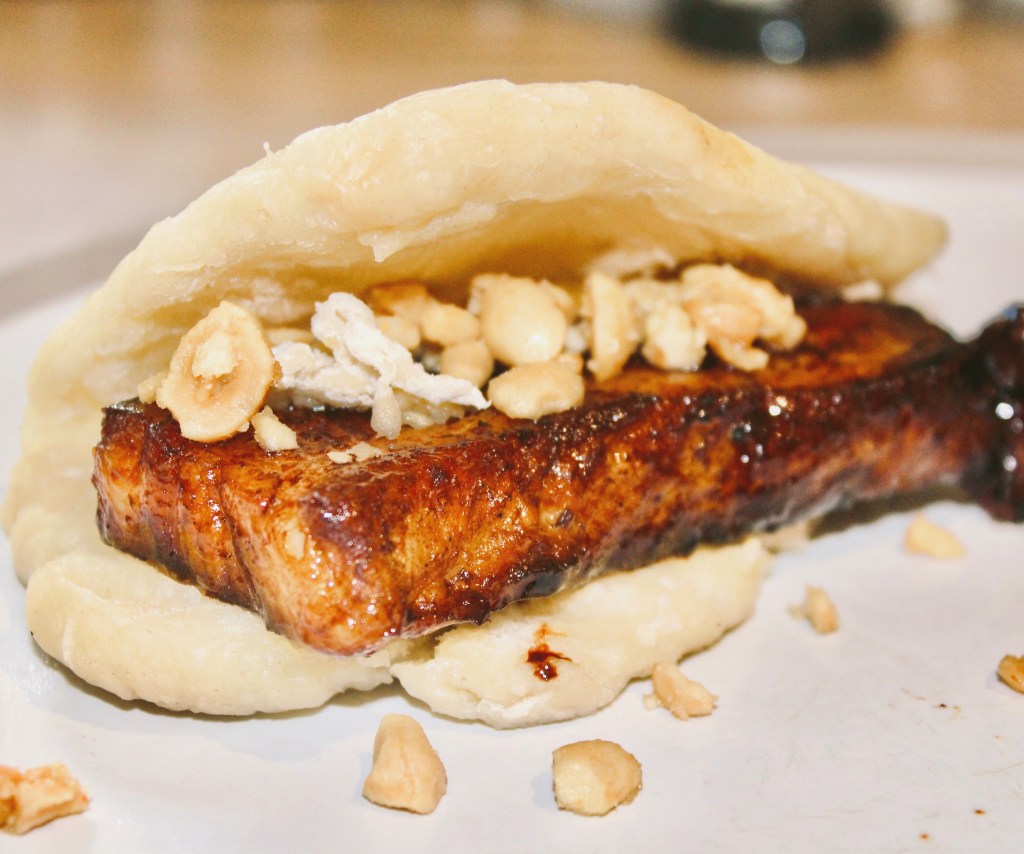
Baking your own bao at home seems like such a daunting exercise, and I have had varying degrees of success. The first time I tried it was a BBC GoodFood recipe, with a pork belly filling, and whilst the filling with sticky and sweet, as you can see, my buns failed entirely, ending up flat as pancake, stodgy and generally quite grim. Whether this was the recipe, my techniques, or dodgy ingredients I couldn’t tell you, but it didn’t bode well for future attempts.
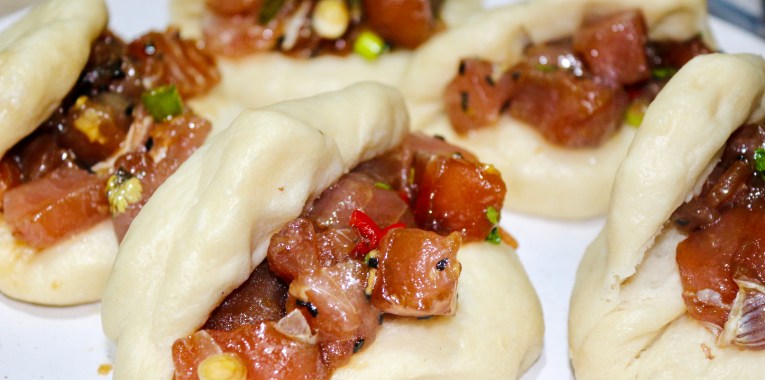
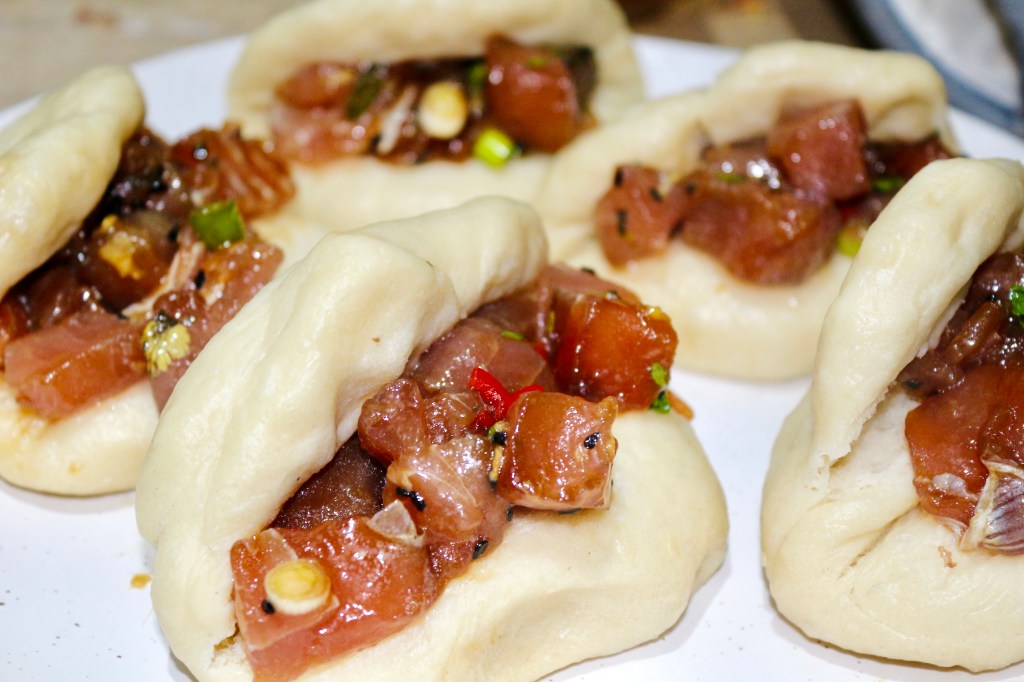
That’s why I was so surprised when I tried Queen Nadiya’s recipe for spicy tuna bao, and they turned out excellently. From her ‘Time to Eat’ cookbook, this is a recipe I would 100% recommend – there’s definitely a little effort required, but with such impressive results, it’s worth it. The buns are super filling but the tuna itself is light, fresh-tasting, and umami, and when a recipe like this goes to plan, there’s a real sense of achievement waiting for you on the other side.
I’m sure there are a huge number of people who still have never tried any form of bao, and if you’re one of them I really urge you to do so. I can’t think of a single other food that compares in texture to these perfect little buns, and with fillings being so varied, there’s bound to be something to suit all tastes.
Sitting somewhere between the midst and the aftermath of a global pandemic, there isn’t a huge amount to get excited about right now, but being back in a world where it’s (more or less) socially acceptable to go out to eat again is definitely something to be grateful for.
The closure of bars and restaurants during the past few months has been a shock to the system, but it’s the closure of local, small town and village pubs that has really hit home for many. Such pubs, unique to us here in the UK and Ireland, are often community hubs, bringing together locals, and offering both spontaneous and ritualistic escapes from home and working life.
Finding a good village pub isn’t as straightforward as it might sound. If you’re not local, they may be slightly out of your way, meaning taxis or designated drivers are required, then you’re looking for a warm, friendly and comfortable environment, and finally, a solid menu. Chain pubs’ generic menus featuring microwaved curries and reheated brownies just won’t cut it – I want unique dishes, cooked from scratch, menus having been designed by chefs and managers who care about the produce they’re working with, and the plates they’re serving up.
Running out of certain dishes and ingredients is always a good sign, as is having to wait a while for your food, and it’s for all these reasons that The Red Lion in Thurgarton, Nottinghamshire, was the perfect, homely, post-lockdown pub outing.
New social distancing measures mean that like all other pubs, bars and restaurants, its layout has had to change quite drastically, reducing the number of tables, and therefore eliminating that busy, intimate feel that you’ll generally find within pubs. But despite this, the tables that remained were full, with people also taking full advantage of outdoor seating.
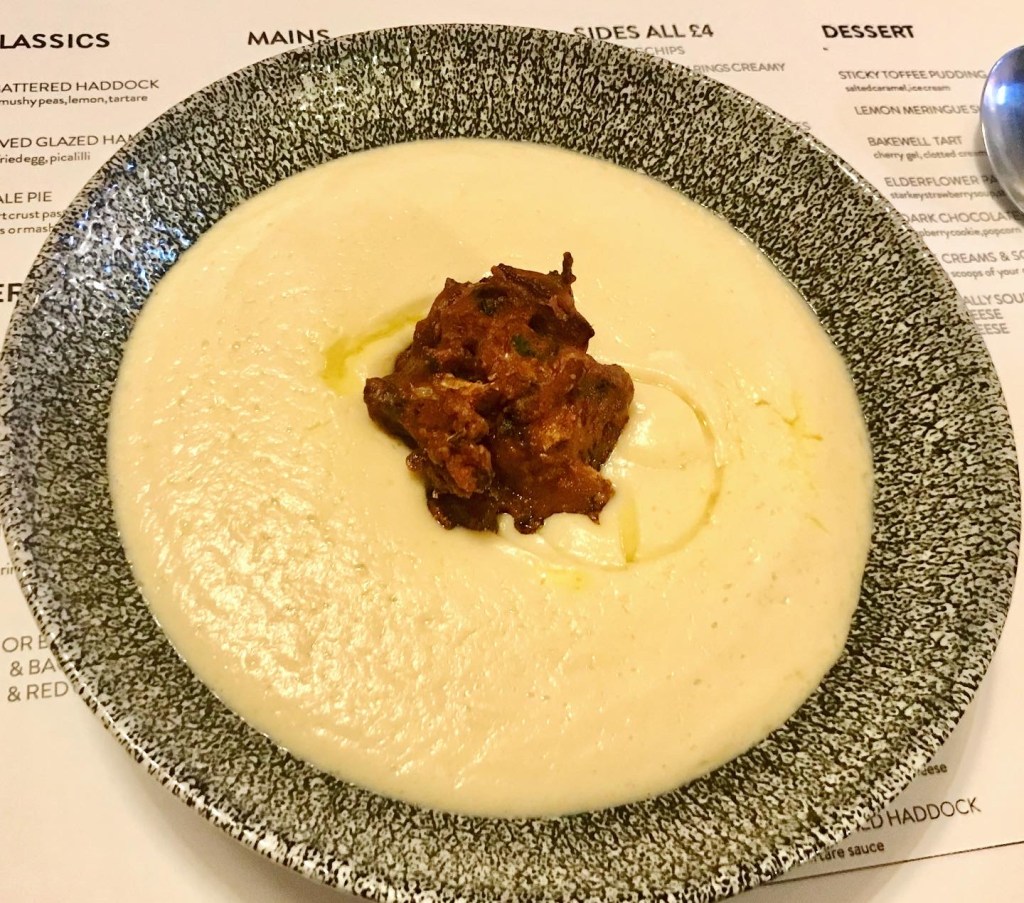
Having browsed the menu beforehand, I knew it was going to be a 3-course meal kind of visit, and I’m often drawn to dishes on menus that stand out as being different, and therefore I try to avoid having staple favourites. Up until recently, cauliflower was a mystery to me – bland-tasting and ugly, I couldn’t understand how anyone could enjoy it, but as times change, I’ve definitely grown more of an appreciation for it, and so the cauliflower velouté starter was calling out to me.
The first few mouthfuls tasted surprisingly sweet, and took a moment to adjust to, but the smooth, velveteen texture was a real treat, enhanced by a delicious drizzle of curry oil and a crunchy bhaji to top it off. The portion was pretty immense – had I been cooking at home, this would’ve been my entire dinner, and so half the portion size would’ve meant more room to comfortably enjoy my main and dessert.
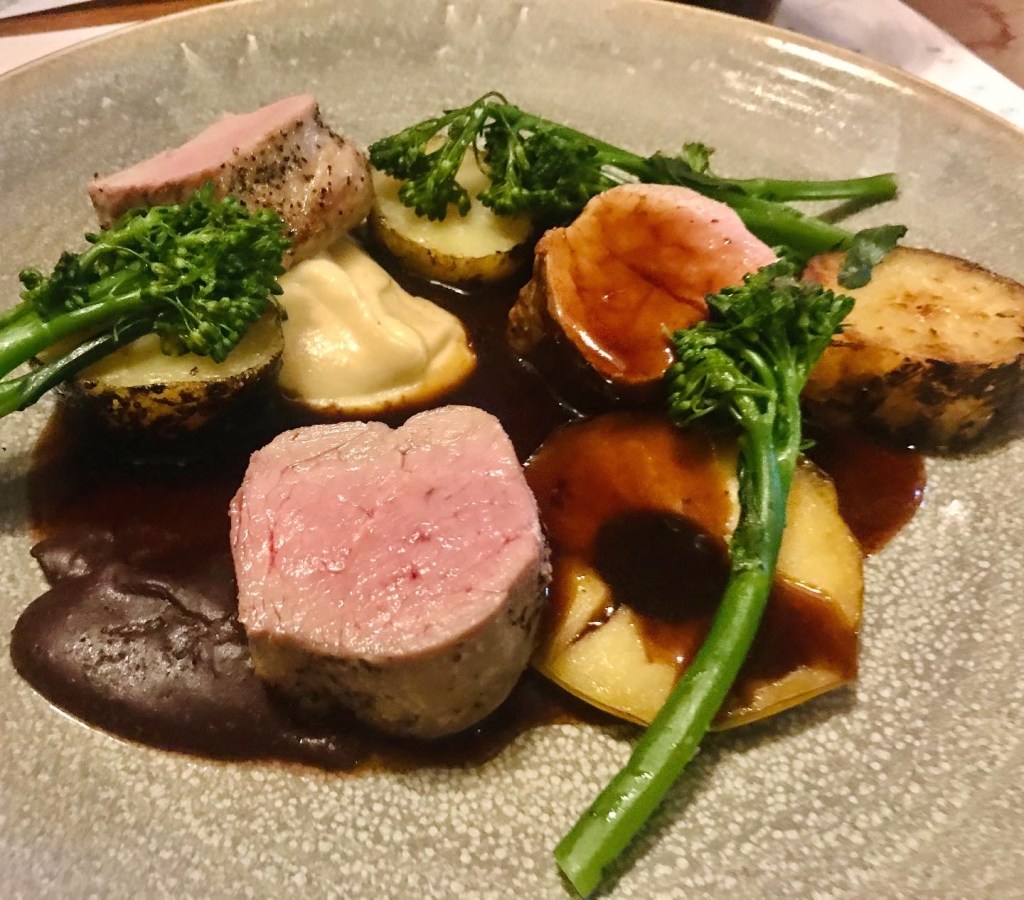
After spending some time going back and forth between a steak with blue cheese sauce or pork tenderloin for my main, fortunately this was decided for me when I learned the blue cheese sauce was unavailable. I’m sure this decision worked out for the best as the pork tenderloin was beautifully cooked.
With the slightest hint of pink within, it was soft and delicate, and could’ve held its own without a single sauce or garnish elsewhere on the plate. Having said that, the sauces and garnishes were great additions, particularly the creamy celeriac purée and caramelised apples, and the tenderstem broccoli added a flash of green to what otherwise would’ve been a pretty neutral-beige plate. The only part of the dish that I questioned was the black pudding purée; I’m a huge fan of black pudding and love the flavours, however, for me, as a purée it was just a little too thick and claggy. The black pudding was definitely still worthwhile, but perhaps would’ve worked better in another form, whether sliced, or as a crumb.
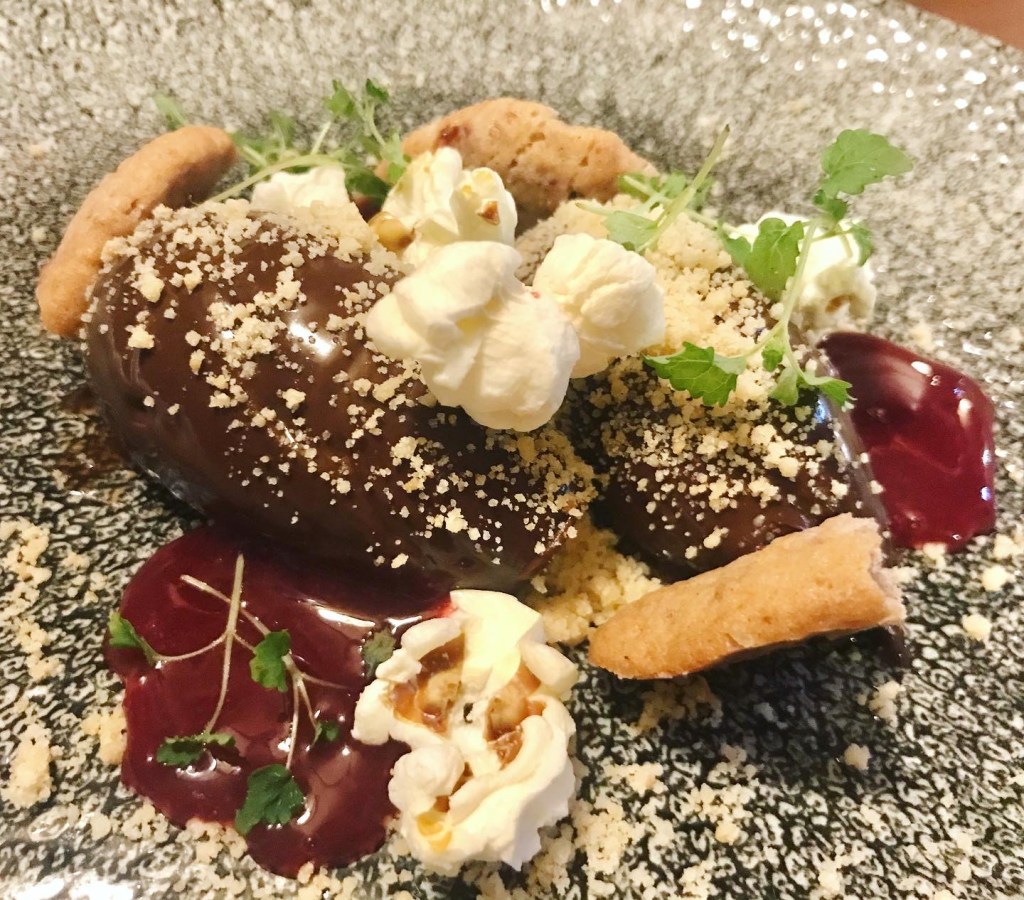
Finally came dessert. Having seen pictures of The Red Lion’s desserts online and on social media, I loved the high-end, fancy feel that they had to them. Still a strong portion size but with huge amounts of attention to detail, which ultimately created a beautiful-looking dish like the one below.
This is a chocolate ganache with popcorn, cookie and cherry sauce, and it was this unusual combination of treats that intrigued me. Combining ganache, popcorn and a cookie sounds like it could end up quite a clunky, inelegant dish, but it was quite the opposite. To be honest I’m not sure the popcorn or cookie added anything flavour-wise, however they both enhanced the appearance and texture of the dish. The ganache itself was incredibly rich, but this was balanced by the beautifully sharp, deep red cherry sauce. I’ve never come across a dessert like this before on a menu, and its this kind of inventiveness that really excites me.
Realistically, you aren’t going to accidentally stumble across village pubs like The Red Lion without prior knowledge or recommendations, but hopefully that’s where I come in. It’s great to give the big chains, and packed city restaurants a miss for once, and head somewhere that local or not, really appreciates your business, and puts a lot of heart into the food they produce. Based on the food alone, The Red Lion can certainly be described as a gastropub, but one that is unpretentious and welcoming.
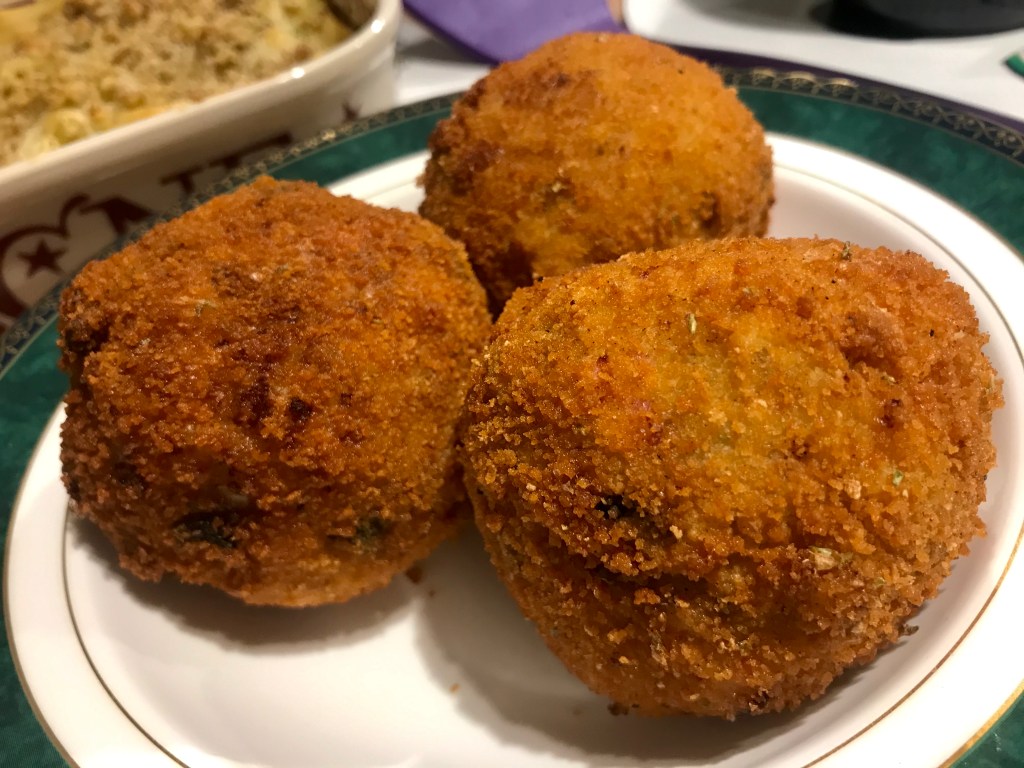
Arancini are one of Italy’s most delicious deep-fried snacks. Varying in size, they’re basically deep fried risotto, often with a particularly cheesy centre, which can ooze apart as you break into them. They’re the perfect starter, or an indulgent on-the-go snack, whether cheese-, meat- or tomato-based.
Having tried them both in the UK and Italy, I thought I’d attempt my own at home, bearing in mind I’d never made them before. A few months ago I made some prawn croquettes following a Rick Stein recipe, and this gave me a decent understanding of how a deep-fried treat with a creamy centre should be made.
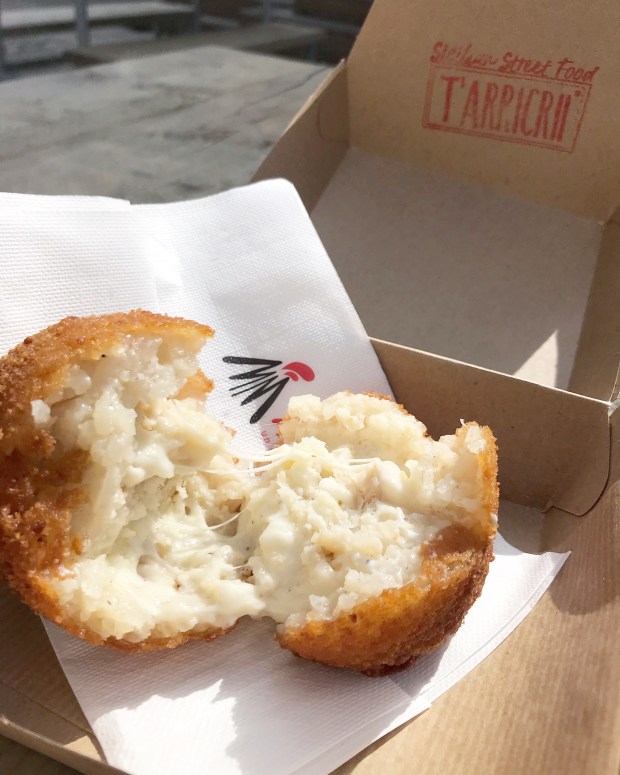
My favourite arancino (singular), I actually had in Manchester of all places, at a street food pop-up called Tarricrii. The arancini were huuuuge, and it was the melted cheesiness that had me sold.
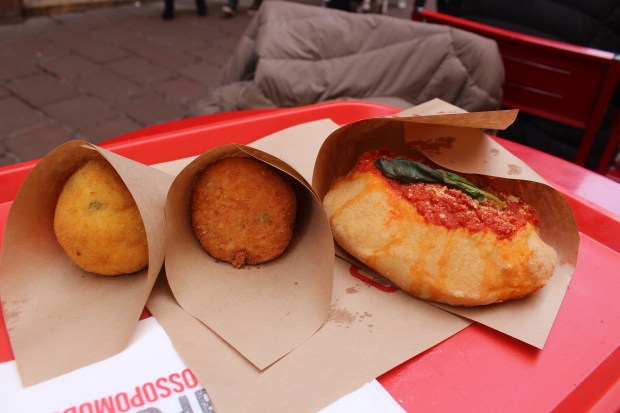
The two that I had in Bologna, Italy, were from an indoor market type place, and although I don’t remember the exact flavours, I know that at least one was tomato-based, there was beef mince involved, and peas featured somewhere. These ones highlight how arancini certainly don’t have to be cheese-filled, and this may be a bastardisation, but to be honest, given the choice, who wouldn’t want a sinking washing line of mozzarella to emerge as you break it apart?
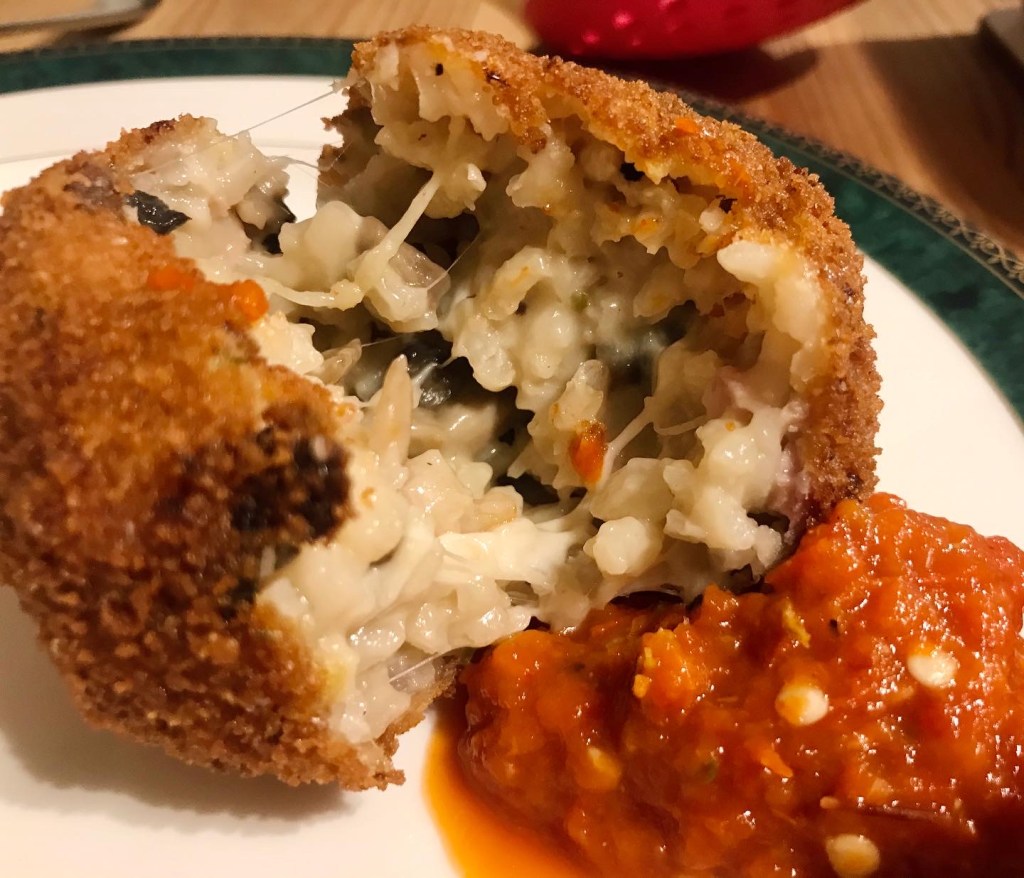
The recipe below is for a ham and mushroom filling, however, it’s incredibly easy to customise the risotto filling, creating a vegetarian version for example, or even adding pesto, tomato sauce, or other meats.
Makes 9
For the Arancini
arborio rice (so sorry I can’t remember the quantity lol – enough risotto rice for 4 people would be a decent bet)
3 slices of thick ham (torn into small chunks)
8 chestnut mushrooms (sliced)
1 large onion
600ml chicken stock
Salt/pepper
Parmesan
1 ball of mozzarella
4tbsp cornflour
1 egg (beaten)
Fresh oregano (or dried if fresh not available)
1 cup breadcrumbs (sorry for the inconsistency of measurements!)
Splash of marsala
Slice the onions and cook for at least 20 mins until caramelised.
Add mushrooms and cook for a further 5 mins
Add the arborio rice and coat with onion mix.
Begin to add the stock and marsala little by little, gradually allowing it to reduce each time over a medium-high heat.
Season, and add the ham, torn mozzarella, parmesan and oregano.
When the risotto is complete, spread out flat on a tray with sides and chill in the fridge for at least 4 hours.
When ready, remove from the fridge and form into large balls (or smaller depending on how you want to serve them).
Roll the arancini first in a bowl of cornflour to coat, then the beaten egg mix, and then finally the breadcrumbs until fully coated.
Heat your chosen oil in a saucepan and deep fry 2-3 at a time until they’re crisp and golden.
For the Roasted Red Pepper Sauce:
1 red pepper
½ onion
1 clove garlic
Salt/pepper
Cayenne pepper
Oregano
Tomato puree
Paprika
Roast the pepper with a little bit of oil for 40 ish mins at 160 until it is bursting from its skin.
Add to a food processor with the garlic and roughly chopped onion.
Blend to a thick-ish paste/sauce and then stir through the remaining ingredients.
I was apprehensive about how these would turn out, but it’s ended up being one of my favourite recipes. They are best eaten fresh, and don’t freeze that well, so make only as many as you can eat!
They’re creamy, gooey, and dipping them into the red pepper sauce gives the perfect sharp kick to it. They are impossible not to like, and I think I’m going to have to try a gorgonzola version next…
I served these as a starter to my Chicken Pesto Lasagne which you can also find the recipe for here on my blog, so enjoy!
So far on our global culinary journey, I’ve covered some of the world’s greatest (and lesser-known) savoury dishes, but it’s time for a change. With its sticky, nutty, booze-fuelled filling, Pecan Pie is surely one of America’s greatest desserts, and it’s about time I dived into some sweeter culinary classics.
As is often the case with ‘traditional’ dishes, tracing their origins is pretty tough, but with pecans native to the southern states, pecan desserts such as this one are most commonly associated with the south. New Orleans is a particular hub for the famous pie, with some believing that it was invented by the French, shortly after they settled in the city.
Nowadays, in the US, corn syrup is the most common ingredient used to get the deliciously sweet and sticky flavour and texture, however, prior to the invention of corn syrup, and in Pecan Pie recipes not of direct US origin, molasses, treacle, syrups and maple syrup are all used as alternatives.
Closely linked to Thanksgiving and Christmas celebrations, there are a number of variations of Pecan Pie, the most common being with the addition of Bourbon whiskey – another product which is also symbolic of the deep south. Occasionally, chocolate or chocolate chips are added to the pie, although this seems to be less ‘traditional’.
Christopher’s
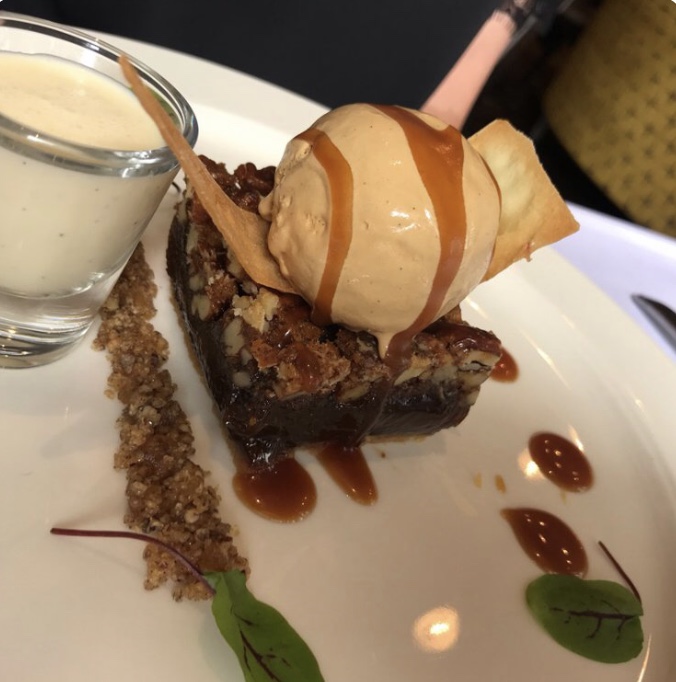
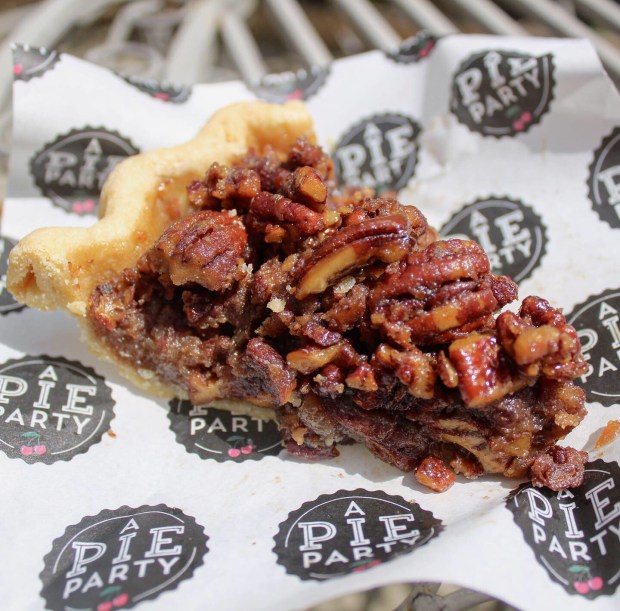
My first couple of experiences of Pecan Pie were both in London, the first being at Christopher’s, an American-influenced restaurant in Covent Garden, and the second, a new menu item created by Claire at my favourite street food stall, A Pie Party. The Christopher’s pie slice was delicious – warmed through and served with ice cream, and was slightly more cakey (and without a traditional crust) than Claire’s version, which is definitely more conventional. I was apprehensive when I first bought a slice from A Pie Party, as unlike the Christopher’s version, this one was flavoured with Bourbon, and I’ve never been great with boozy flavours in desserts. Unsurprisingly, I had nothing to worry about, as Claire had got the balance spot on – a definite punch of whiskey flavours without it overpowering the whole dessert. The pecans were definitely more the star of the show in this second version, with no cakey filling – simply a classic pastry filled with a sticky, non-dense pecan mixture. Both were very different, but equally as delicious.
A Pie Party
Having had New Orleans on my mind for the last couple of years, I was lucky enough to spend a few days there earlier this year, precariously close to when all travel was put on hold due to Covid-19. Of all the places in the world to try this dessert, I was going to land in the epicentre of Pecan Pie greatness. It was tough trying to narrow down exactly where I would indulge in a slice of the classic pie, with it generally being a staple on most menus, but after conducting a little of my own research, casual dining restaurant Mulate’s seemed like a good shout.
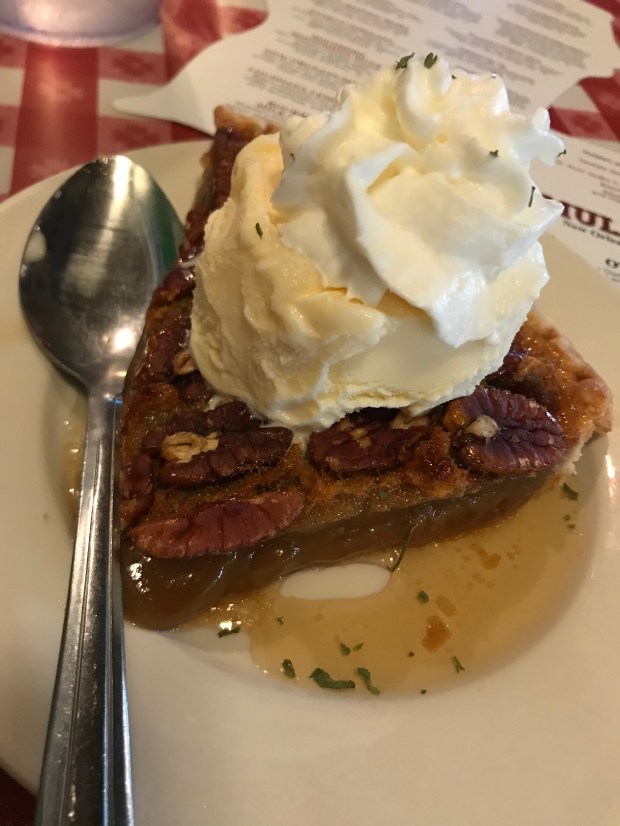
It felt like the most American place I’d ever step foot in – the kind of setting you’d see the Teen Mom cast being filmed in, talking over their latest dramas. It’s a weirdly large place, with endless tables and super high ceilings, and your typical uniform all-smiles service. And to be quite honest, it’s got a pretty down-market feel. However… this is precisely the reason you don’t judge a book by its cover (not that there’s actually anything wrong with the interior), because the Pecan Pie… oh that Pecan Pie. A sensation. I definitely made the right shout having it warmed with a dollop of ice cream – as the ice cream melted into the gooey, sticky filling, it was honestly heaven on a plate. Of all the Pecan Pie slices mentioned in this post, this one definitely takes the top spot.
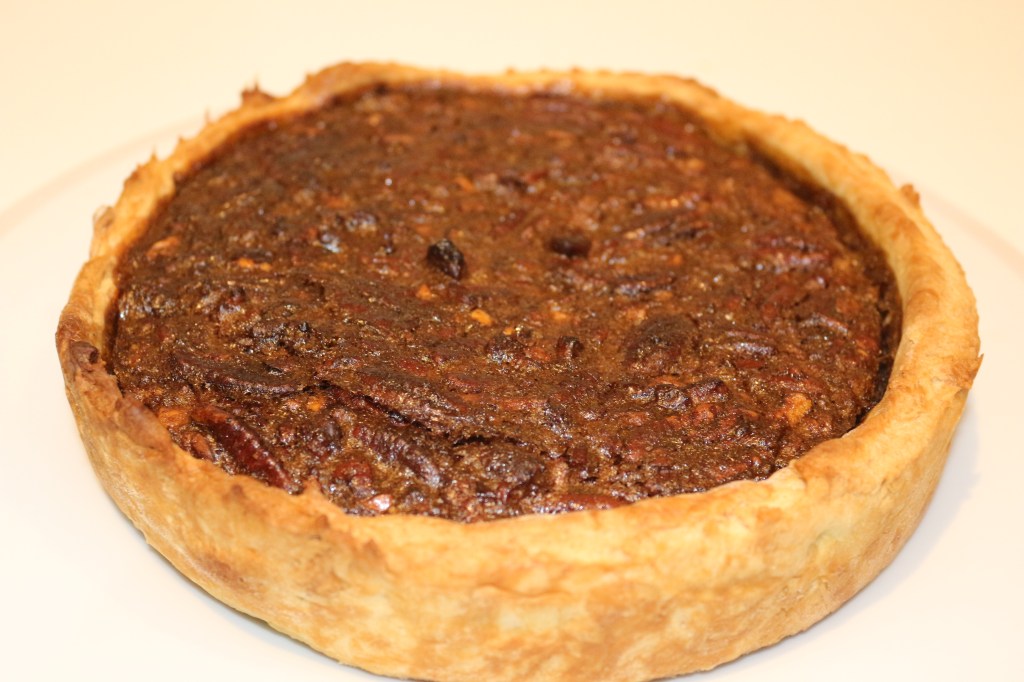
So when I touched down back in the UK, I felt inspired by the tastes of NOLA, and had bought many sticky pecan related goodies to cook with. I actually already had the Jamie’s America (Jamie Oliver) cookbook and there’s a whole section in there on New Orleans, including a Pecan Pie recipe.
Looking at the results, the pastry case definitely shouldn’t go up as high as this did but this was due to the pie tin that I used combined with significant excess pastry based on the recipe quantities. I’d say overall it’s a decent recipe. The filling tasted good, full of sticky pecans without an overwhelming Bourbon flavour, however, the pastry on the other hand was slightly underwhelming. It didn’t have the lovely crisp, buttery texture that I was hoping for, but how much of that was down to my cooking (and shit, overpowering oven) I can’t say.
Pecan Pie is a dessert that really does deserve to go global. That sticky, nuttiness with a hit of Bourbon to the back of the throat is certainly a more adult taste, but because of that, if you’ve ever thought you didn’t like it, I’d recommend going to back it a few years down the line (our tastes really do change over time…).
It can be a bit pricey to recreate at home, but if you still want your fix without all the effort, there are so many restaurants and bakeries out there that can sort you right out. If you can’t quite justify crossing the Atlantic for it, definitely visit Claire at A Pie Party, or Christopher’s in Covent Garden for two solid New Orleanian efforts.
Hard to believe it’s been around four months since my last dining out experience. Never could we have conceived of a global crisis in which every restaurant, bar, pub and café in the country would be closed, what that would mean for our social connections, and more significantly, what that would mean for the thousands of businesses out there, thrown into such an uncertain scenario.
I’d avoided venturing out for the first couple of weeks following the easing of lockdown rules – in my head, I pictured rowdy raucousness throbbing through the streets, and despite a little of that going down in places, it didn’t seem as intense as I’d expected. So when I did finally decide to book that much-anticipated first restaurant visit, it had to be somewhere special.
Scottish restaurant Mac and Wild was that place, having sat firmly atop my restaurant bucket list for two years, ever since drooling over a photo of their ice cream-topped sticky toffee pudding on Instagram.
Ironically, I didn’t end up trying that very sticky toffee pudding (which probably means I’ll have to make a return visit one day), but here’s how the rest of it went…
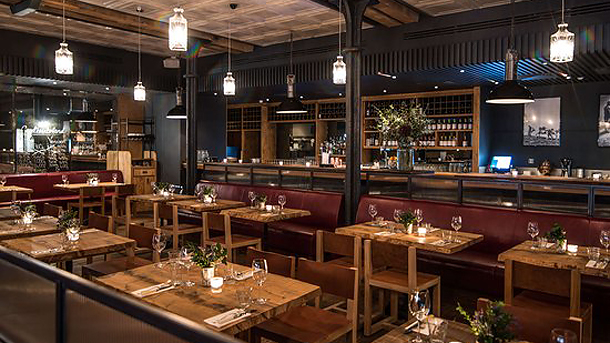
With Fitzrovia all booked up, we arrived at their Devonshire Square branch, having booked one of the lovely-looking socially-distanced huts, complete with a seating for up to 4, and your very own self-serve drinks cabinet. In my head, I’d pictured these being outside, but their three, I have to say it as it is, sheds, were opposite the bar inside. Nonetheless, they still created a sense of privacy and intimacy, shielded from other diners. Had I booked one of these huts outdoors in winter, complete with blankets, and heating, I think it would’ve been beautiful – both atmospheric and cosy, but as it were, dining in one of those indoors in 27 degree heat, it was a little on the sweaty side.
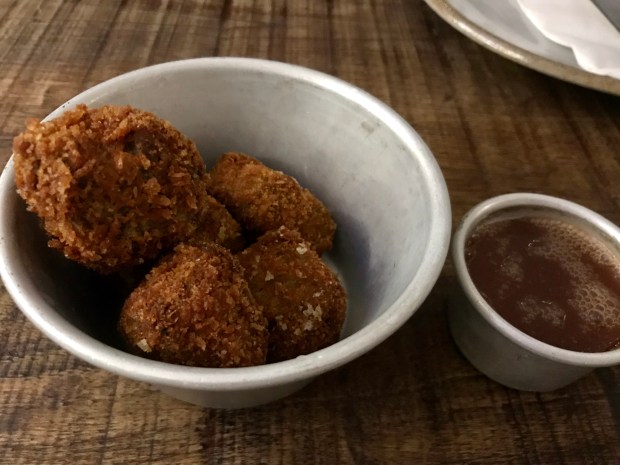
Being a Scottish restaurant, there are a number of haggis-inspired dishes on the menu, including their Haggis Pops, which we ordered to start. I should also mention at this point that their menu was limited, compared to what their Devonshire Square-specific online menu stated they had. I had been so desperate to try their Venison Scotch Egg, but it was nowhere to be found, so settled for the Haggis Pops.
Never (ashamedly) having tried haggis before, it’s difficult for me to judge, as I’m not familiar with the standard flavours and textures, however, the pops came as little fried bites, the meaty haggis filling encased in a crunchy shell. Whilst I enjoyed the outer crunch and the flavours, the texture wasn’t necessarily to my liking – oddly, despite being meaty, it had the texture of a potato croquette filling, and I’ve expressed my views on potatoes here before… To accompany the pops there’s a cranberry-mustard, or ‘Red Jon’ sauce. We spent a good few minutes trying to pinpoint what exactly the sauce was comprised of, intrigued by the sharp and sweet notes, before reluctantly giving in when ‘mustard’ was all we could come up with, and resorting to consulting the ingredients list.
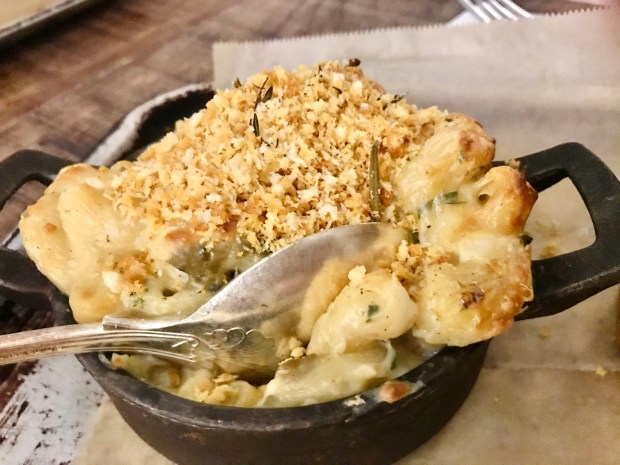
Once again, when it came to ordering mains, I was disappointed to see that amongst the side dishes, the Haggis Mac and Cheese I’d set my heart on didn’t feature. Luckily, they were still offering their Truffle Mushroom Mac and Cheese, which I chose to accompany their signature ‘Venimoo’ Burger. The Venimoo features beef and venison patties, with Béarnaise sauce, cheese, pickles and caramelised onions. The burger was very good. Juicy patties, full of flavour, with a sharp, tanginess from the pickles and the warming, creaminess of the Béarnaise sauce and melting cheese. I can’t say it was mind-blowing (I’ve unintentionally ended up with pretty sky high standards), but the quality and flavours certainly made it worth ordering.
Interestingly my highlight was the Truffle Mushroom Mac and Cheese. Despite not being a speciality dish of theirs, I loved the consistency – a super creamy cheese sauce, without the overwhelming sickliness that truffle can sometimes bring. The mushrooms were cut into large cubed pieces, which I surprisingly enjoyed, cementing its place amongst the best mac and cheeses I’ve tried in London.
As previously mentioned, I didn’t get round to trying the Sticky Toffee Pudding in the end, which only calls for a return visit, however, I’ll be sticking to the soft drinks next time, as the cheapest bottle of white wine came in at £36, despite the drinks menu on their website listing white wine prices as ranging between £20 and £74. For me, this was the most significant issue; service had been good, the food was good to excellent, but for those of us not rolling in money who fancy a drink, £36, when you know full well the bottle isn’t worth that, hurts. It feels almost wrong to say anything negative about businesses that are fighting to survive right now, but having been furloughed myself, and seeing a drop in income, I can’t ignore such limited options when it comes to drinks pricing, particularly as the food prices are very reasonable, which just makes the wine list prices seem even more out of place.
Having said that, I’m so glad to be back eating out, and sharing my thoughts, having enjoyed months of home cooking and takeaways. There’s just something that can’t be beaten about the whole restaurant experience, from the social aspect, to holding a physical menu in front of you and spending an unnecessarily long time indecisively asking the waiters for another 5 minutes to decide.
Restaurants need our support now more than ever, so if you’re craving a high quality burger and wonderful Mac and Cheese, Mac and Wild is a solid choice.
It’s been a while since our last virtual food adventure, but I’m back at it, and this time we’re heading to Lebanon, for a baked breakfast treat that’ll make you question why eating flatbreads for breakfast isn’t the norm here…
I have tried desperately hard throughout this piece to use the singular form of today’s featured dish as the plural version completely changes the word and I can’t bear to incompetently destroy the language… so without further ado, welcome the Man’ousheh.
Origins…
Similar to what we learnt from the Hungarian Lángos, the Man’ousheh (there are also spelling variations) traditionally came from the haul of bread that women would bake in the mornings to feed their families. Smaller portions of dough would go towards making the Man’ousheh for breakfast.
Bread historically has played such a huge part in many cuisines across the globe, being a staple way to feed a family, and one that has unique features in various countries. Compare the fried or baked Lángos commonly topped with sour cream and cheese with the thinner Man’ousheh, heavily spiced with za’atar, sesame seeds and minced lamb to name a few common toppings. You could go from a Turkish stuffed gozlëme flatbread to Spanish pan con tomate, but regardless of where you are, variations of bread-based dishes have been feeding us for centuries.
Terminology…
As I begin to think more deeply about cultural appropriation and the exoticisation of food, I’d like to add a disclaimer here about the use of the word ‘flatbread’. There’s sometimes debate when it comes to equating one country’s produce to that of another nation, for example, lots of articles talk of the Man’ousheh as the Lebanese ‘pizza’. A man’ousheh really isn’t a non-Italian pizza, and actually, only an Italian pizza is an Italian pizza… Therefore trying to equate the two risks ignorance. I’ve also seen some posts questioning the depiction of the Man’ousheh as a flatbread. At the end of the day, a Man’ousheh is simply a Man’ousheh, however, when language and cultural barriers prevent us from understanding what that actually consists of, it can be useful to make comparisons.
The difference between referring to it as a flatbread and as a pizza, is that flatbread is a much more generic term that doesn’t refer to one specific dish from a specific culture, and instead types of flatbread can be found globally. On the other hand, the term ‘pizza’ has more limitations, and almost suggests the idea that the Man’ousheh is trying to live up to a European classic, but hasn’t quite hit the mark.
It’s these kinds of connotations that we should be aware of when comparing food from different backgrounds – let’s eliminate the unquestioned assumption that everything we’re not familiar with is a variation of something we already know. Instead, we should appreciate that there’s a wealth of food out there that goes beyond our personal experience.
With our less-than-inspiring culinary reputation here in the UK, we, more than anyone, should be aware that actually there’s very little we did invent on the food front, and so much that we’ve adopted here stems from the influence of other cultures. The terminology we use should respect and appreciate the food we’re discussing, only using generic comparisons when essential for explanatory purposes.
From Lebanon to London
Lengthy disclaimer aside, nowadays the Man’ousheh can be found in bakeries across the Levant, and has even branched out further afield, gaining attention in the US and here in London. The Lebanese Bakery is one of the best places in the city to try a Man’ousheh, and it actually has stores in Beirut too, which should tell you exactly how legit it is. Their menu’s full of Middle Eastern flavours and toppings, including halloumi, pine nuts, pomegranate molasses and various yoghurts. They even do sweet versions topped with Nutella, tahini and honey.
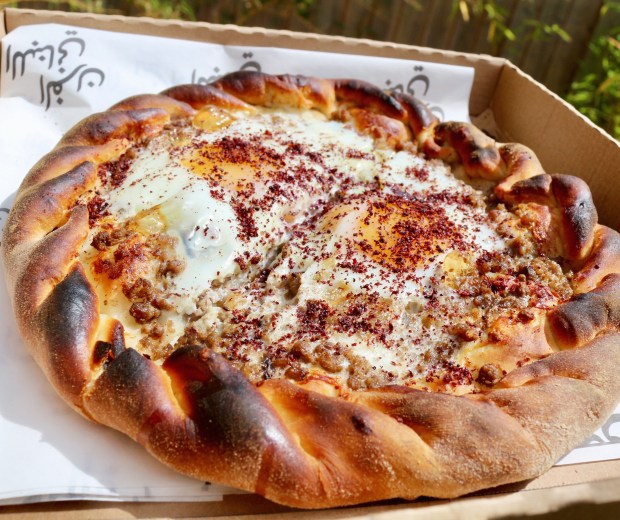
As well as a basic flatbread with hummus, I ordered their all-day breakfast Man’ousheh with baked eggs and awarma (lamb confit). It looked beautiful, with its plaited crust and dazzling egg yolks, and for £6.95, they’re very reasonably priced.
Home cooking
Moving from the experts to my home kitchen, things aren’t as pretty. I love my Lonely Planet Street Food cookbook for its array of recipes for much-loved snacks and on-the-go dishes across the world, so I thought I’d give baking a Man’ousheh a go myself.
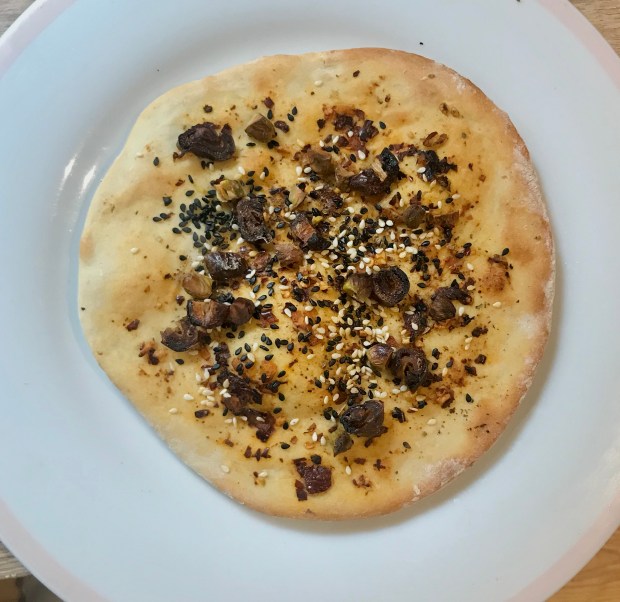
As you can see, definitely not as attractive as those made by the professionals, which is to be expected, but it was ok. The dough definitely wasn’t as light and fluffy, and instead was much thinner with more of a crunch to it, however, it was edible, and sometimes that’s all I’m asking for. I avoided the temptation to shovel as much meat and cheese on top as I could manage, and instead opted for a lighter za’atar, sesame seed and date topping.
If you’re inspired to have a go at home, although the Lonely Planet recipe worked, I’m 100% sure there are much better recipes out there, so it’s really not tricky at all, but just give it a Google and take your pick.
Failing that, trying a Man’ousheh at The Lebanese Bakery is highly recommended for a substantial shared snack or a solid lunch (or very solid breakfast…).
I have no idea where I’m going next time so off I go to get planning for the next edition of Around the World in 80 Plates!







 ¡Comemos!