In recent years, the light and fluffy Chinese delicacy that is the baozi, or bao, has found its way into restaurants and kitchens across the globe. Their being steamed, combined with the yeast within the dough, makes for a soft and delicately spongey texture, quite unlike any other kind of baked bread or steamed dumpling.
Our lexical disclaimer for today is here to inform you that ‘bao’ in itself translates as ‘bun’ in Mandarin, and so the commonly-used Western phrase ‘bao bun’ is grammatically redundant, literally meaning ‘bun bun’, in the same way that in Hindi, ‘Chai tea’, actually means ‘tea tea’.
Baozi
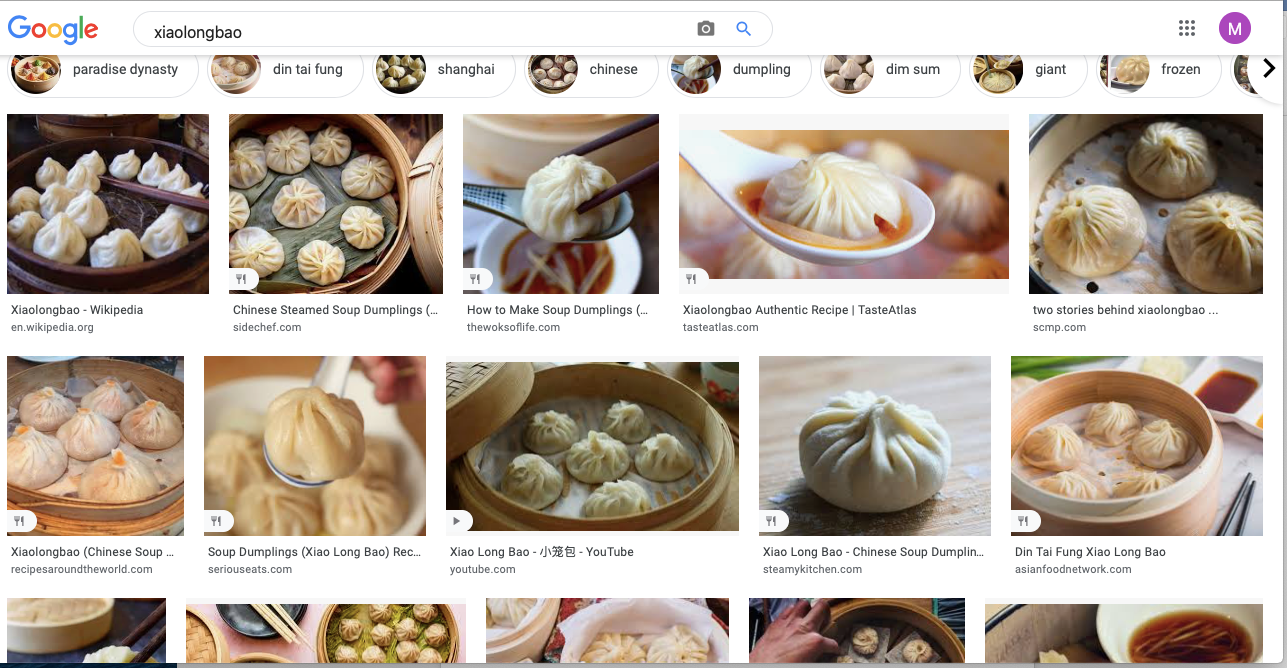
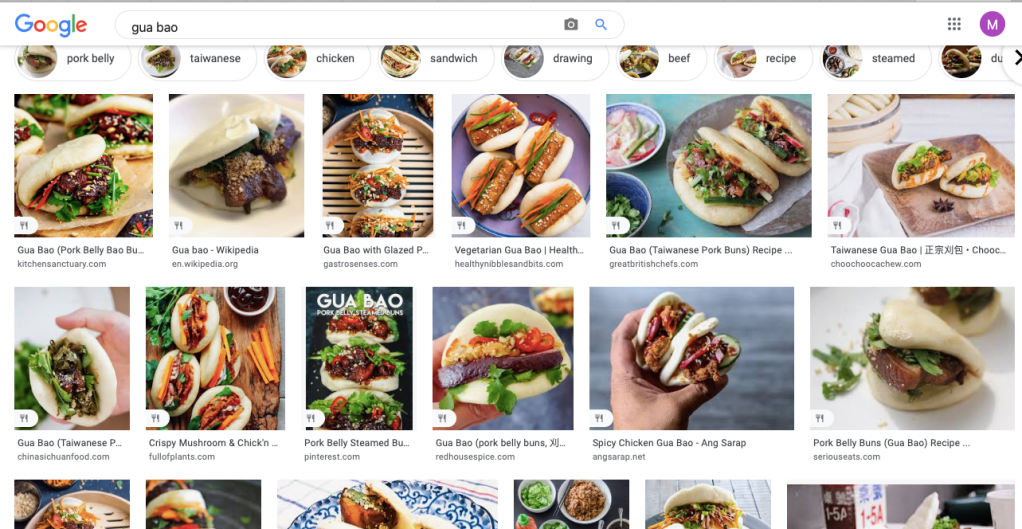
Generally baozi are a filled ‘bun’, with the dough gathered together on top, sometimes leaving a small hole for steam to escape, and complete with either a meat or vegetable filling. One of the most popular is the Char Siu Bao, filled with sticky barbecued pork. Other variants include the xiaolongbao, with xiaolong referring to the bamboo steaming basket in which they are cooked and served., This bao is filled with a hot soup, and is sometimes referred to as a dumpling. The final type of bao that I’ll touch on is the gua bao, which comprises of a flat, open steamed lotus-leaf bun, with a meat (often pork belly) filling.
Xiaolongbao
As ever with Chinese food, it’s very difficult to generalise, as regional cuisines across what is such a huge country vary so significantly. Whether we’re talking baozi, xiaolongbao or gua bao, these may be more prevalent in certain provinces, or be made differently in others, and so defining such a specific part of incredibly complex and diverse cuisine is pretty tricky to do in a few hundred words!
gua bao
…….
Career changes, and COVID combined meant that my dreams of heading to China this year were scuppered, and so I’ve never tried these dreamy little buns in their homeland. Living in London does mean however, that there are a million one street food stalls, Chinatown restaurants, and chains that serve up these little beauties, although of course I’m unable to comment on their authenticity.
Interestingly, many of the places in which I tried bao/baozi weren’t actually Chinese-influenced, and include Malay, Vietnamese and Japanese-inspired food businesses to name a few. The very first time I tried baozi was years ago at a little independent restaurant back in Nottingham, called Yumacha, which describes itself as serving up ‘an eclectic mix of the Far East’s favourite dishes’. These kind of ‘Asian fusion’ restaurants seem to be on the rise, combining Chinese, Japanese, Thai and Indonesian cuisine plus a whole lot more. I had no idea what I was eating at the time, with the concept of a steamed bun seeming completely alien to me – I have to say this was many years before my foodie instinct really kicked in, and my knowledge of the food I was eating was minimal. Despite this, I loved the unfamiliar, cloud-like texture of the buns, along with their punchy flavoured meat fillings.
Keu Deli
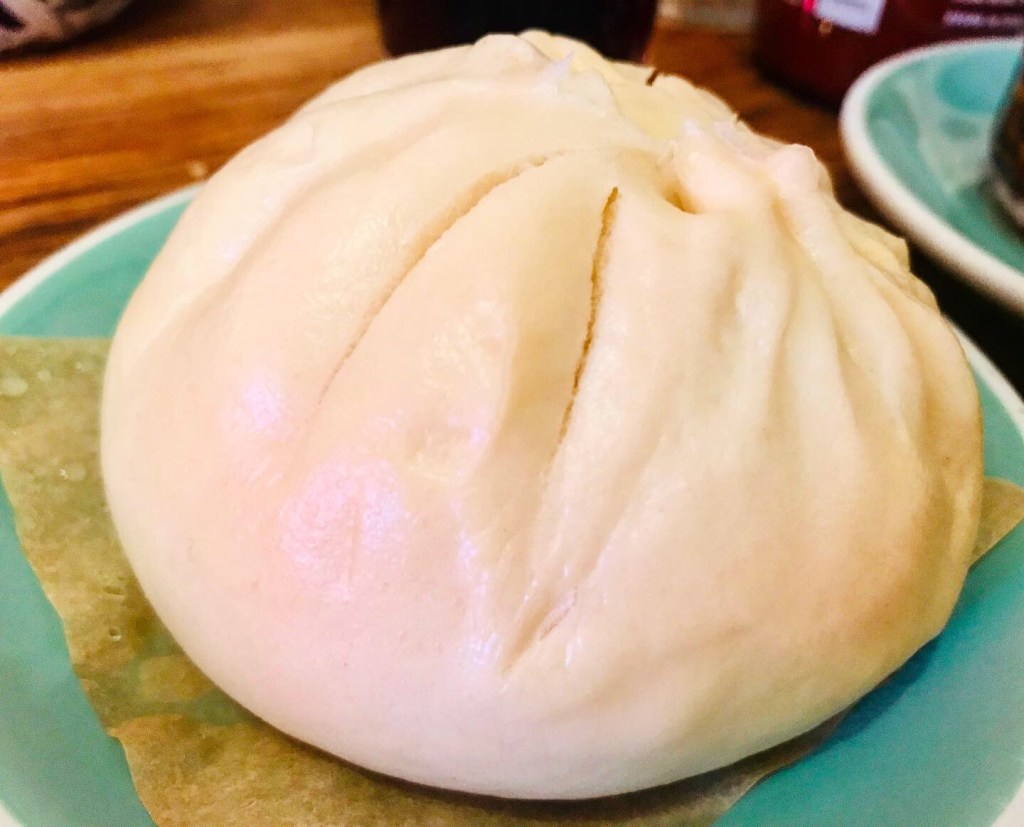
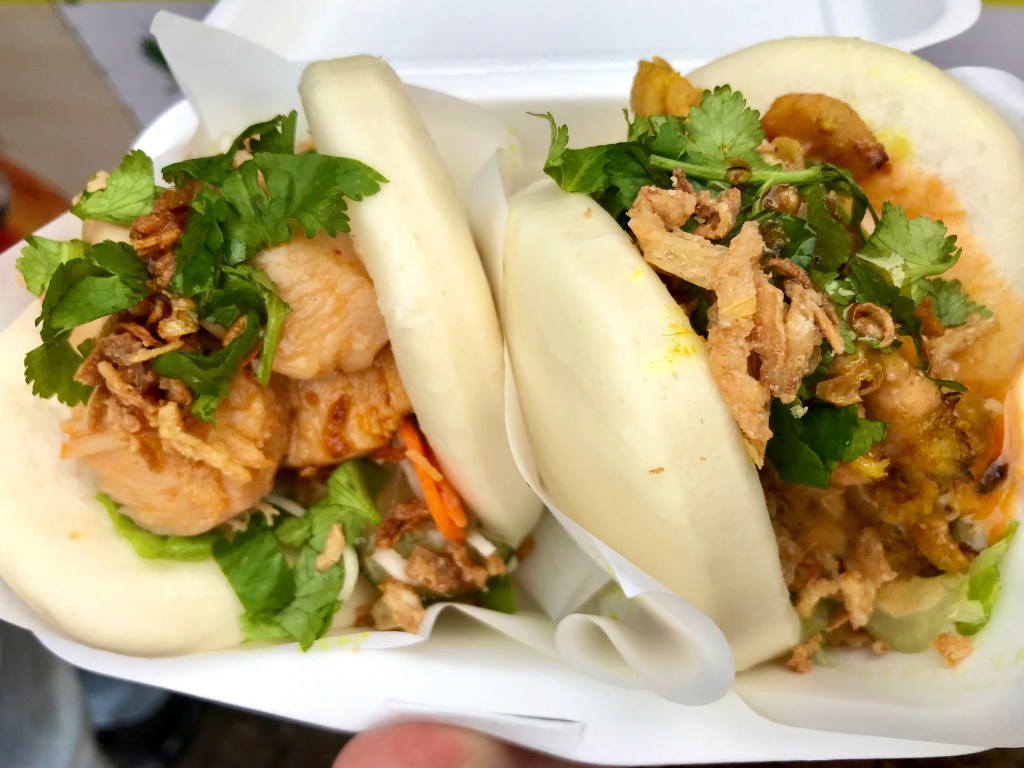
Fast-forward a good 5+ years, and I’ve tried a fair few variations. Popular Vietnamese Keu Deli in London serves up a giant baozi, which definitely wins points for the lightest, most satisfying bao texture. BaoziInn in Chinatown is a solid bet for quality baozi, which were slightly flatter in my experience, and fillings include the pork-patty-like stuffing that I tried.
Admittedly, I’ve yet to try xiaolongbao, possibly because I’ve distanced them from the baozi that I love, as they do tend to resemble dumplings, and the hot broth filling has never appealed to me as much as a juicy meaty filling.
Gua bao , however, might be my favourite, based on those that I’ve tried. They have the most wonderfully smooth texture, and oddly, more filling seems to be packed into these open bao than stuffed within the closed, larger baozi.
My favourites so far were from Thai-Malaysian street food stall Satay Street ,where I was lucky enough to win a competition for two free portions. I tried a curried chicken bao and a satay chicken bao, both of which were great, with the satay flavour being particularly delicious.
Satay Street
I have to admit that the first gua bao I ever tried was actually from Wagamama – I think they’d just added it to the menu, as they were giving away samples outside with a pulled beef style filling, and it was pretty good. There’s only been one occasion where I’ve not been able to finish a gua bao, and I won’t name the business, but it was the filling rather than the bun that I couldn’t stomach – I can only hope you never stumble across it yourselves!
DIY BAO
Oh dear…
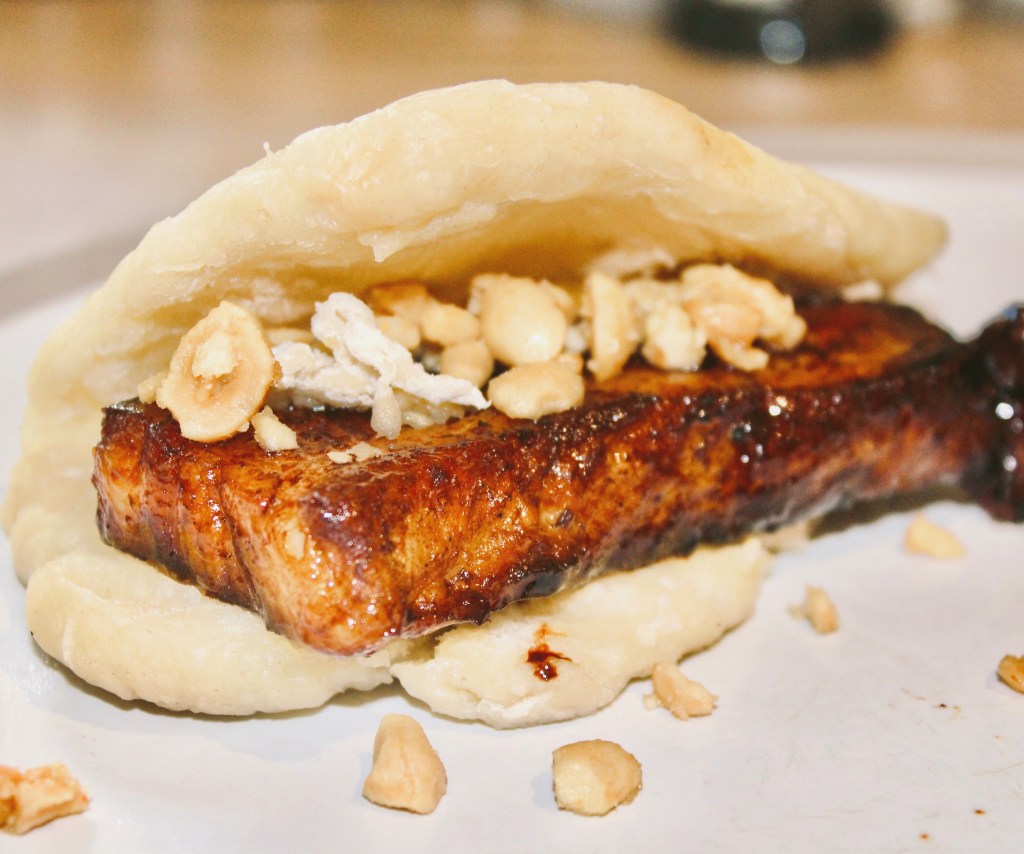
Baking your own bao at home seems like such a daunting exercise, and I have had varying degrees of success. The first time I tried it was a BBC GoodFood recipe, with a pork belly filling, and whilst the filling with sticky and sweet, as you can see, my buns failed entirely, ending up flat as pancake, stodgy and generally quite grim. Whether this was the recipe, my techniques, or dodgy ingredients I couldn’t tell you, but it didn’t bode well for future attempts.
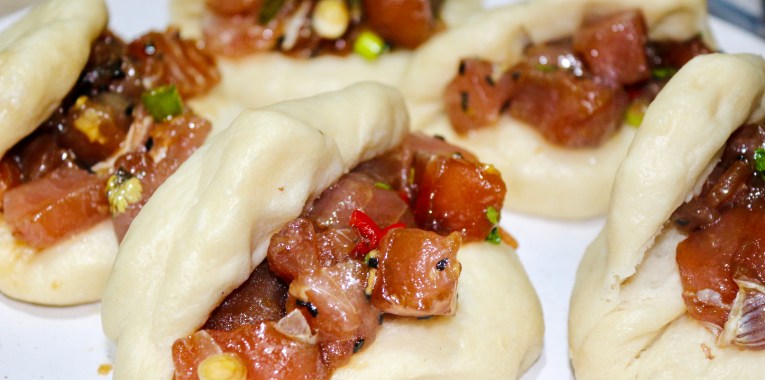
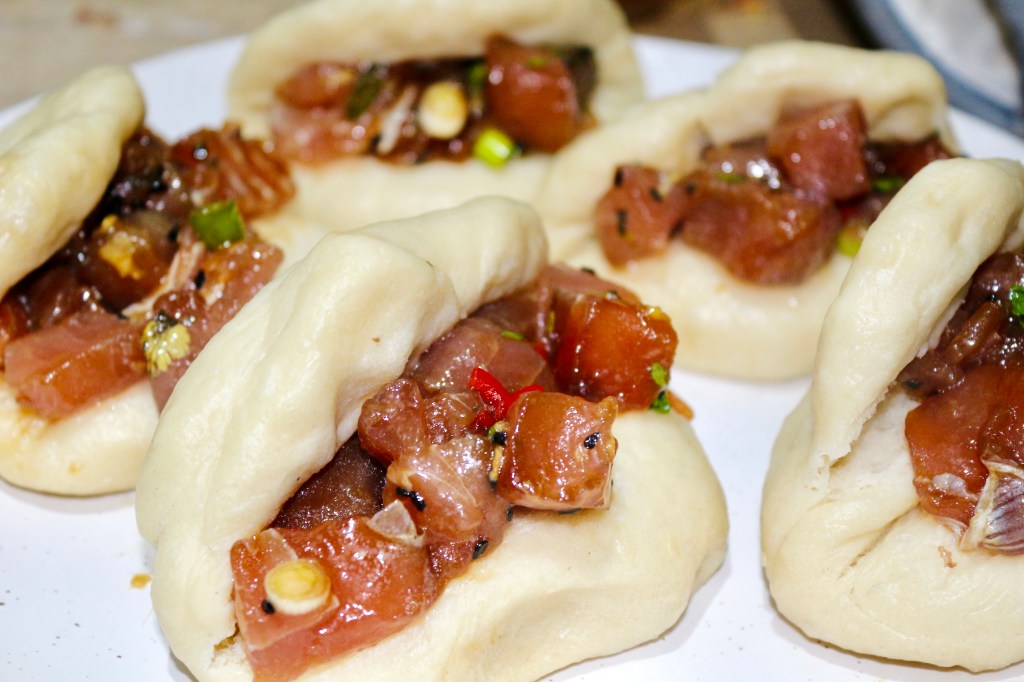
That’s why I was so surprised when I tried Queen Nadiya’s recipe for spicy tuna bao, and they turned out excellently. From her ‘Time to Eat’ cookbook, this is a recipe I would 100% recommend – there’s definitely a little effort required, but with such impressive results, it’s worth it. The buns are super filling but the tuna itself is light, fresh-tasting, and umami, and when a recipe like this goes to plan, there’s a real sense of achievement waiting for you on the other side.
I’m sure there are a huge number of people who still have never tried any form of bao, and if you’re one of them I really urge you to do so. I can’t think of a single other food that compares in texture to these perfect little buns, and with fillings being so varied, there’s bound to be something to suit all tastes.
So far on our global culinary journey, I’ve covered some of the world’s greatest (and lesser-known) savoury dishes, but it’s time for a change. With its sticky, nutty, booze-fuelled filling, Pecan Pie is surely one of America’s greatest desserts, and it’s about time I dived into some sweeter culinary classics.
As is often the case with ‘traditional’ dishes, tracing their origins is pretty tough, but with pecans native to the southern states, pecan desserts such as this one are most commonly associated with the south. New Orleans is a particular hub for the famous pie, with some believing that it was invented by the French, shortly after they settled in the city.
Nowadays, in the US, corn syrup is the most common ingredient used to get the deliciously sweet and sticky flavour and texture, however, prior to the invention of corn syrup, and in Pecan Pie recipes not of direct US origin, molasses, treacle, syrups and maple syrup are all used as alternatives.
Closely linked to Thanksgiving and Christmas celebrations, there are a number of variations of Pecan Pie, the most common being with the addition of Bourbon whiskey – another product which is also symbolic of the deep south. Occasionally, chocolate or chocolate chips are added to the pie, although this seems to be less ‘traditional’.
Christopher’s
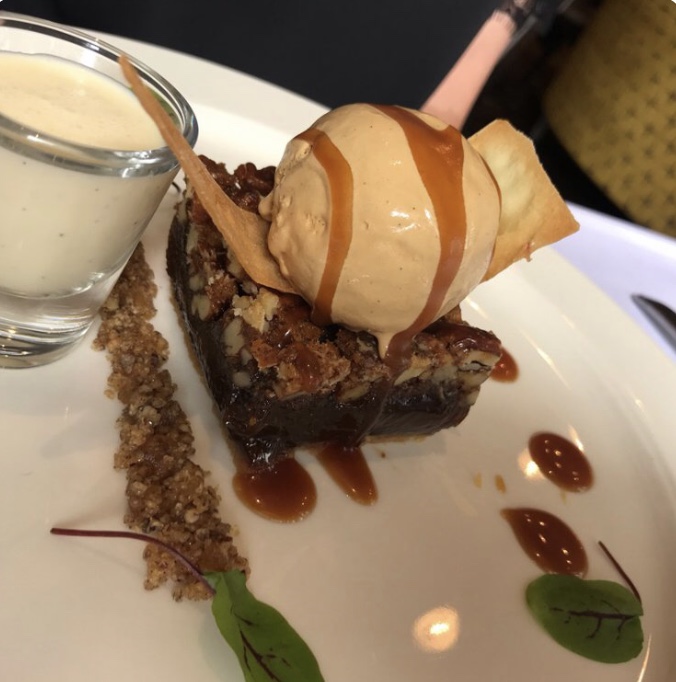
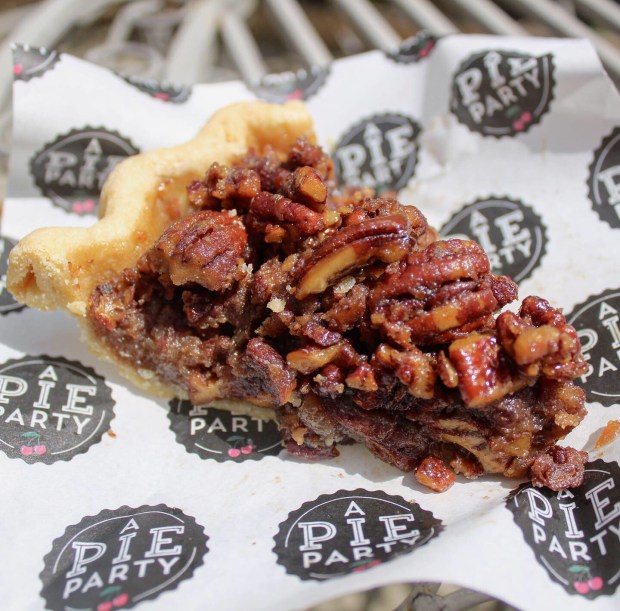
My first couple of experiences of Pecan Pie were both in London, the first being at Christopher’s, an American-influenced restaurant in Covent Garden, and the second, a new menu item created by Claire at my favourite street food stall, A Pie Party. The Christopher’s pie slice was delicious – warmed through and served with ice cream, and was slightly more cakey (and without a traditional crust) than Claire’s version, which is definitely more conventional. I was apprehensive when I first bought a slice from A Pie Party, as unlike the Christopher’s version, this one was flavoured with Bourbon, and I’ve never been great with boozy flavours in desserts. Unsurprisingly, I had nothing to worry about, as Claire had got the balance spot on – a definite punch of whiskey flavours without it overpowering the whole dessert. The pecans were definitely more the star of the show in this second version, with no cakey filling – simply a classic pastry filled with a sticky, non-dense pecan mixture. Both were very different, but equally as delicious.
A Pie Party
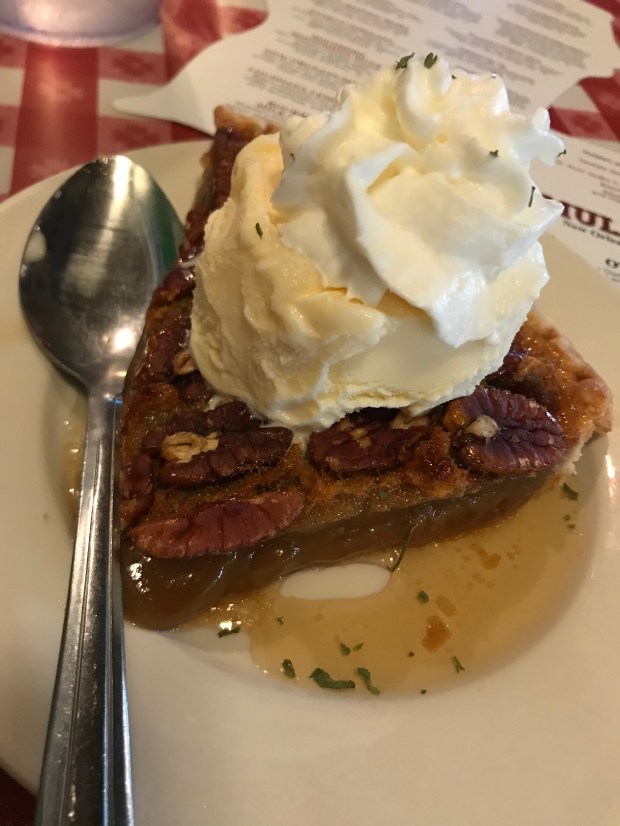
Having had New Orleans on my mind for the last couple of years, I was lucky enough to spend a few days there earlier this year, precariously close to when all travel was put on hold due to Covid-19. Of all the places in the world to try this dessert, I was going to land in the epicentre of Pecan Pie greatness. It was tough trying to narrow down exactly where I would indulge in a slice of the classic pie, with it generally being a staple on most menus, but after conducting a little of my own research, casual dining restaurant Mulate’s seemed like a good shout.
It felt like the most American place I’d ever step foot in – the kind of setting you’d see the Teen Mom cast being filmed in, talking over their latest dramas. It’s a weirdly large place, with endless tables and super high ceilings, and your typical uniform all-smiles service. And to be quite honest, it’s got a pretty down-market feel. However… this is precisely the reason you don’t judge a book by its cover (not that there’s actually anything wrong with the interior), because the Pecan Pie… oh that Pecan Pie. A sensation. I definitely made the right shout having it warmed with a dollop of ice cream – as the ice cream melted into the gooey, sticky filling, it was honestly heaven on a plate. Of all the Pecan Pie slices mentioned in this post, this one definitely takes the top spot.
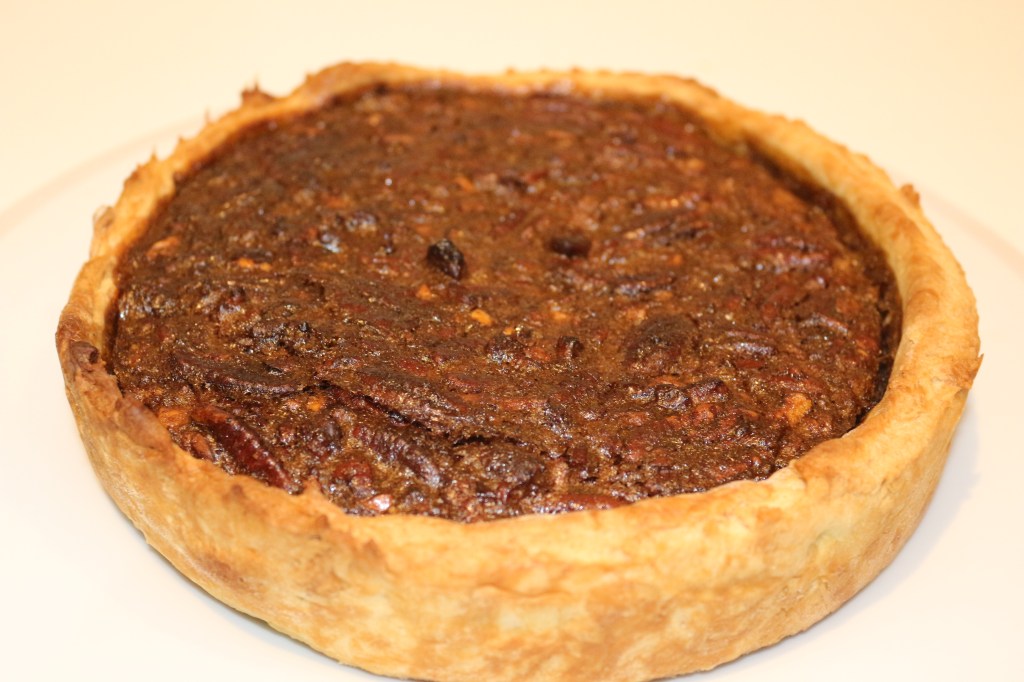
So when I touched down back in the UK, I felt inspired by the tastes of NOLA, and had bought many sticky pecan related goodies to cook with. I actually already had the Jamie’s America (Jamie Oliver) cookbook and there’s a whole section in there on New Orleans, including a Pecan Pie recipe.
Looking at the results, the pastry case definitely shouldn’t go up as high as this did but this was due to the pie tin that I used combined with significant excess pastry based on the recipe quantities. I’d say overall it’s a decent recipe. The filling tasted good, full of sticky pecans without an overwhelming Bourbon flavour, however, the pastry on the other hand was slightly underwhelming. It didn’t have the lovely crisp, buttery texture that I was hoping for, but how much of that was down to my cooking (and shit, overpowering oven) I can’t say.
Pecan Pie is a dessert that really does deserve to go global. That sticky, nuttiness with a hit of Bourbon to the back of the throat is certainly a more adult taste, but because of that, if you’ve ever thought you didn’t like it, I’d recommend going to back it a few years down the line (our tastes really do change over time…).
It can be a bit pricey to recreate at home, but if you still want your fix without all the effort, there are so many restaurants and bakeries out there that can sort you right out. If you can’t quite justify crossing the Atlantic for it, definitely visit Claire at A Pie Party, or Christopher’s in Covent Garden for two solid New Orleanian efforts.
It’s been a while since our last virtual food adventure, but I’m back at it, and this time we’re heading to Lebanon, for a baked breakfast treat that’ll make you question why eating flatbreads for breakfast isn’t the norm here…
I have tried desperately hard throughout this piece to use the singular form of today’s featured dish as the plural version completely changes the word and I can’t bear to incompetently destroy the language… so without further ado, welcome the Man’ousheh.
Origins…
Similar to what we learnt from the Hungarian Lángos, the Man’ousheh (there are also spelling variations) traditionally came from the haul of bread that women would bake in the mornings to feed their families. Smaller portions of dough would go towards making the Man’ousheh for breakfast.
Bread historically has played such a huge part in many cuisines across the globe, being a staple way to feed a family, and one that has unique features in various countries. Compare the fried or baked Lángos commonly topped with sour cream and cheese with the thinner Man’ousheh, heavily spiced with za’atar, sesame seeds and minced lamb to name a few common toppings. You could go from a Turkish stuffed gozlëme flatbread to Spanish pan con tomate, but regardless of where you are, variations of bread-based dishes have been feeding us for centuries.
Terminology…
As I begin to think more deeply about cultural appropriation and the exoticisation of food, I’d like to add a disclaimer here about the use of the word ‘flatbread’. There’s sometimes debate when it comes to equating one country’s produce to that of another nation, for example, lots of articles talk of the Man’ousheh as the Lebanese ‘pizza’. A man’ousheh really isn’t a non-Italian pizza, and actually, only an Italian pizza is an Italian pizza… Therefore trying to equate the two risks ignorance. I’ve also seen some posts questioning the depiction of the Man’ousheh as a flatbread. At the end of the day, a Man’ousheh is simply a Man’ousheh, however, when language and cultural barriers prevent us from understanding what that actually consists of, it can be useful to make comparisons.
The difference between referring to it as a flatbread and as a pizza, is that flatbread is a much more generic term that doesn’t refer to one specific dish from a specific culture, and instead types of flatbread can be found globally. On the other hand, the term ‘pizza’ has more limitations, and almost suggests the idea that the Man’ousheh is trying to live up to a European classic, but hasn’t quite hit the mark.
It’s these kinds of connotations that we should be aware of when comparing food from different backgrounds – let’s eliminate the unquestioned assumption that everything we’re not familiar with is a variation of something we already know. Instead, we should appreciate that there’s a wealth of food out there that goes beyond our personal experience.
With our less-than-inspiring culinary reputation here in the UK, we, more than anyone, should be aware that actually there’s very little we did invent on the food front, and so much that we’ve adopted here stems from the influence of other cultures. The terminology we use should respect and appreciate the food we’re discussing, only using generic comparisons when essential for explanatory purposes.
From Lebanon to London
Lengthy disclaimer aside, nowadays the Man’ousheh can be found in bakeries across the Levant, and has even branched out further afield, gaining attention in the US and here in London. The Lebanese Bakery is one of the best places in the city to try a Man’ousheh, and it actually has stores in Beirut too, which should tell you exactly how legit it is. Their menu’s full of Middle Eastern flavours and toppings, including halloumi, pine nuts, pomegranate molasses and various yoghurts. They even do sweet versions topped with Nutella, tahini and honey.
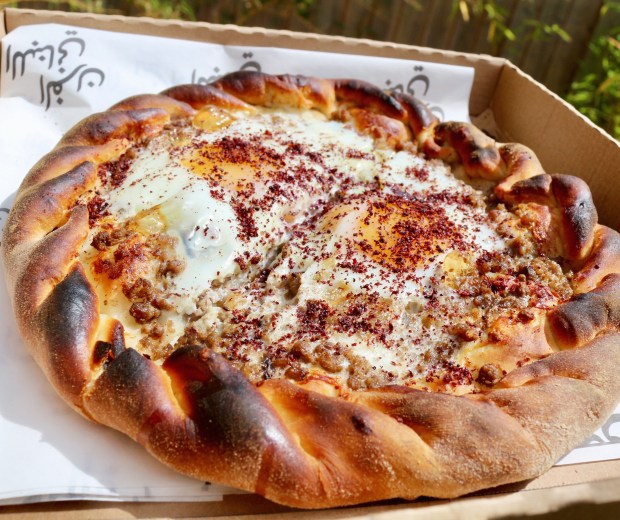
As well as a basic flatbread with hummus, I ordered their all-day breakfast Man’ousheh with baked eggs and awarma (lamb confit). It looked beautiful, with its plaited crust and dazzling egg yolks, and for £6.95, they’re very reasonably priced.
Home cooking
Moving from the experts to my home kitchen, things aren’t as pretty. I love my Lonely Planet Street Food cookbook for its array of recipes for much-loved snacks and on-the-go dishes across the world, so I thought I’d give baking a Man’ousheh a go myself.
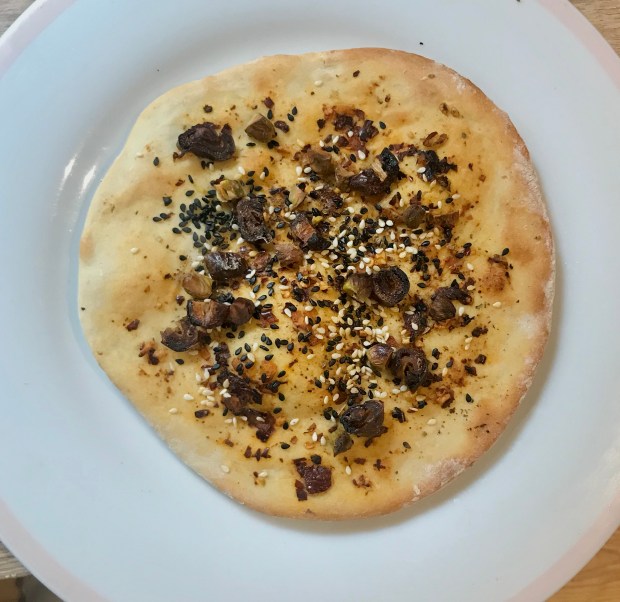
As you can see, definitely not as attractive as those made by the professionals, which is to be expected, but it was ok. The dough definitely wasn’t as light and fluffy, and instead was much thinner with more of a crunch to it, however, it was edible, and sometimes that’s all I’m asking for. I avoided the temptation to shovel as much meat and cheese on top as I could manage, and instead opted for a lighter za’atar, sesame seed and date topping.
If you’re inspired to have a go at home, although the Lonely Planet recipe worked, I’m 100% sure there are much better recipes out there, so it’s really not tricky at all, but just give it a Google and take your pick.
Failing that, trying a Man’ousheh at The Lebanese Bakery is highly recommended for a substantial shared snack or a solid lunch (or very solid breakfast…).
I have no idea where I’m going next time so off I go to get planning for the next edition of Around the World in 80 Plates!
Substitutes, hacks and essentials for a delicious and nutritious diet
Before I go on, I want to make it clear that I don’t follow a plant-based diet, in fact, I don’t think there’s anything I don’t eat (except for raw celery, ew…), however, in the past year or so, I have enjoyed testing out a lot more plant-based recipes and ingredients, and am happy to whip up meat-, egg- and dairy-free meals quite regularly, alongside my steaks, chicken curries and seafood dinners.
Here I want to highlight some of my favourite plant-based alternatives and ingredients that you can try out in your own cooking, whether you want to go vegan completely, or are simply open-minded when it comes to trying new things.
A couple of disclaimers before I get stuck in – I’m aware that there are lots of people following vegan diets who have no wish to recreate meat and dairy products, and in some ways may see that as contradictory to their ethical beliefs, however, I do believe that meat substitutes are a great way of being able to replicate textures and flavours that someone following an exclusively plant-based diet may miss. Meat replacements can act as a way of enjoying food to its fullest extent without compromising on your beliefs, but if it’s not for you, then that’s no problem, just ignore those suggestions!
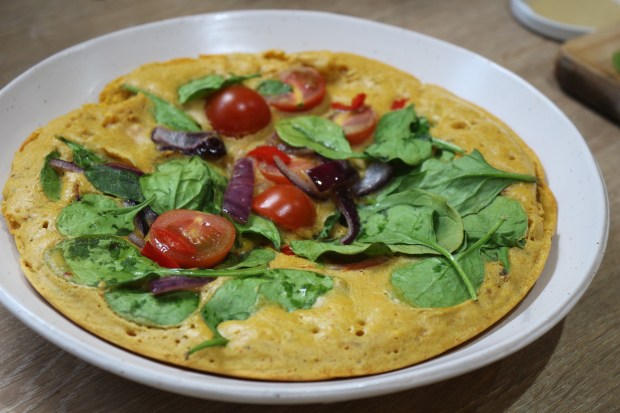
One thing that does frustrate me when I’m discovering new plant-based recipes is when they’re labelled as something they’re not. One primary example that I’ve come across is the concept of a chickpea ‘omelette’. Some people who no longer eat eggs may miss omelettes, and so on seeing a recipe with this title, you’d be forgiven for thinking that chickpeas could be warped into something resembling an omelette. Well, I’ve tried these recipes, and it’s not an omelette. It bears closest resemblance to a thick and heavy chickpea flour pancake, and so misleading titles like this do annoy me. Plant-based food can be so delicious, there’s no need to con people into thinking you’ve come up with a ground-breaking substitute. So, sorry guys, but if you only eat plant-based, as far as I’m aware, omelettes are no more.
NOT an omelette.
Anyway here come the ideas; the food and hacks that’ll make it so much easier to enjoy meat and dairy-free meals.
Dairy
Cream, milk and yoghurt
One of the biggest food groups you may be concerned about is dairy – so many of us adore cheese, many recipes call for the use of cream, and milk is a daily staple. Luckily, the plant-based alternatives are getting better and better. Alpro does a really good cream alternative, which although slightly thinner in consistency, works a dream in dishes that require a little splash, for example a pasta sauce. It’s also got a lower fat content.
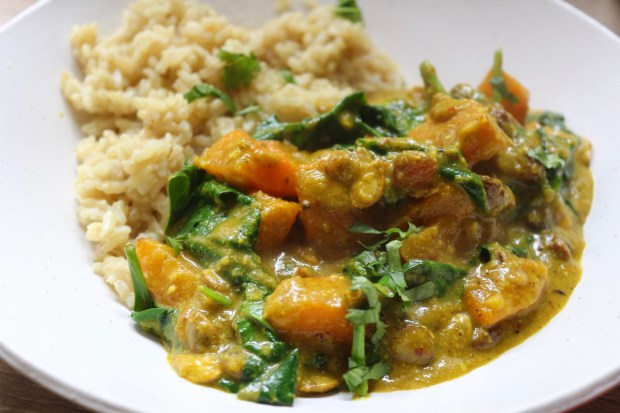
If it’s curry you’re in the mood for, go straight for coconut milk. This is often used in non-plant-based curry recipes anyway and so you aren’t compromising on flavour or texture at all. Because it’s so widely used, coconut milk is cheap in comparison to other dairy-free alternatives.
My plant-based butternut squash spinach curry recipe can be found here on the blog
For your everyday milk, there are loads of options on offer. Without making a conscious effort to try everything that’s out there, I’ve ended up religiously buying soy milk. If you want to avoid soy, there’s almond, oat, and coconut milk, to name a few other options. It’s worth experimenting just to see what works best for you, as their nutritional content is slightly different, with some containing more sugars, and there are also subtle differences in flavour. Plant-based milks certainly aren’t as thick and creamy as cows’ milk, but I personally don’t miss it in my hot drinks and cereal, and you’d never know the difference when baking, even if the recipe calls for standard full-fat milk.
Yoghurt and cream cheese alternatives, in my opinion, are not quite as developed as the milk on offer yet, but there’s still plenty out there. Coconut yoghurt is one of the most common plant-based versions, however, I do find that the coconut flavour is quite strong. If you’re looking for a more neutral flavour, soy yoghurt is available, but it tends to lack the sweetness of traditional Greek yoghurt. I would opt for coconut yoghurt to eat on its own, and soy yoghurt for use in cooking and baking.
So far, when it comes to cream cheese, I haven’t seen many options readily available in my local supermarkets, but I’m sure more exist. The only one I have seen is coconut cream cheese, which I haven’t tried. I’m sure this would be ideal for baking, however, if you wanted to use it as a spread, there are other slightly different alternatives, including thick and creamy tofu spreads, or cashew cream cheese which isn’t too difficult to make at home.
Cheese
The final element of dairy to address is hard cheese, and for cheese-lovers embarking on a new plant-based journey, this can often be one of the most difficult parts, as vegan cheese has a reputation for being a pretty poor substitute. Having said that, improvements are being made, and if you’re looking for a plant-based cheese that melts, violife is the one. I absolutely love it – it’s a dream in toasties, or grated and melted as a topping on pastas, and it has a really nice flavour too. Unmelted it’s ok, but I probably wouldn’t choose to eat it that way. If you want plant-based cheese to eat uncooked, it’s worth checking out the emerging small businesses that are making their own plant-based cheeses, mostly from nuts. I bought a few cheeses from I am Nut Ok at a local market – one truffle cheese, one chipotle cheese and a jar of vegan parmesan. Admittedly they don’t taste like your typical dairy cheeses, however, they are quality products, with great flavour that can definitely contribute to filling that cheese-shaped void in your life. The Parmesan is particularly good. La Fauxmagerie is another dairy-free cheese producer that’s worth exploring.
Protein
Vegetable substitutes
When it comes to the protein in your meal, or replacements for meat products, there are so many options. Whether you’re using quinoa and beans in a chilli, aubergine slices as burger patties or butternut squash and sweet potato in soups and curries, veg, beans and pulses are incredibly versatile, and adapt to different flavours really well. One of my favourite discoveries was oyster mushrooms – they have a slightly chewy texture, and very mild flavour and are used as a meat replacement in lots of recipes, from tacos and burritos to stews. They’re not always the easiest to find but they’re definitely worth trying out.
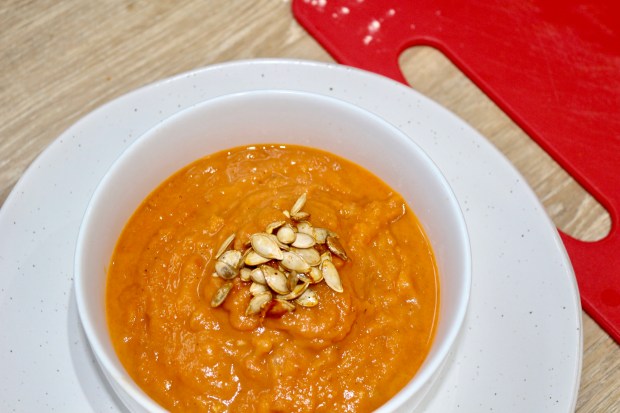
My cream butternut squash soup recipe can also be found in the ‘Recipes’ section of the blog
Pulled Pork replacements
In the past year or two, a food trend that has emerged seemingly from nowhere is the rise of jackfruit. Despite having been a staple in many global cuisines for a long time, the western world has suddenly begun to idolise it as if it were a brand new discovery. Although it is a fruit, it’s most commonly used in savoury dishes, and one of the techniques being splashed all over the internet and in ‘street food’ menus is pulled jackfruit – a replacement for pulled pork. Its stringy texture makes it a strong substitute, and once it’s bathed in various sauces and spices, it barely resembles a fruit at all.
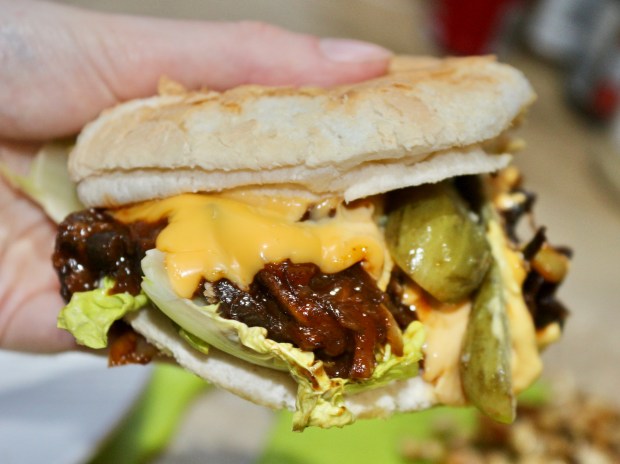
One of my favourite new discoveries that’s also visually (though not texturally or ‘flavourally’) similar to pulled pork, is pulled banana skin. Yes that’s right, the actual peel. I first saw it done on an Instagram story of Nadiya Hussain’s and couldn’t believe the delicious cheesy burger bun image she’d posted was filled with thick, black banana peel. Not one to shy away from a challenge, I thought I’d give it a try, and I don’t think I’ll ever be able to throw banana peel away again. You should keep it refrigerated until it goes super dark, and then use a fork to peel apart the skins, into stringy pieces. What you do next is up to you, but Nadiya throws it in a pan with some onion and garlic, and then adds a load of sweet bbq sauce.
Who knew banana peel could look so good?
Tofu
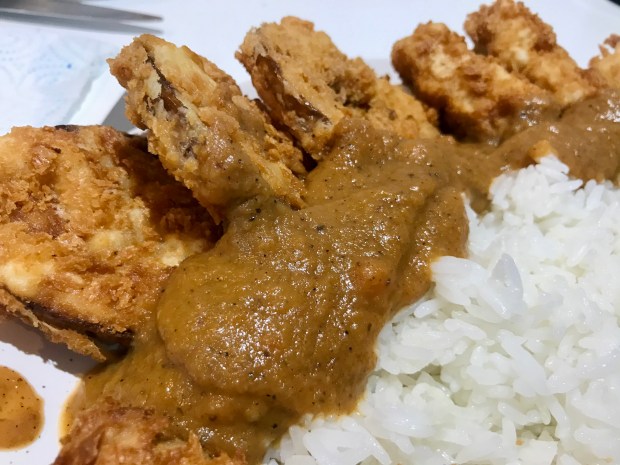
A controversial vegan staple is tofu. I completely get why people would be put off by it – to say it like it is, it’s the most bland thing you could possibly eat, and the texture isn’t particularly appealing either. So why eat it at all? Well, I guess it can be a pretty decent meat replacement, but you have to know how to cook it. It’s all about seasoning, marinating and spicing it up, maybe even with a crunchy batter or crumb. Personally I don’t think tofu is something we should decide we love or hate – actually, it wholly depends on how you eat it and what you have it with. I’ve had tofu dishes that I haven’t enjoyed, but others that have been great, including tofu katsu and tofu dumplings. One of my favourite uses of tofu was a Rachel Ama recipe where she turns it into a thick, creamy spread with the simple addition of some chives. The recipe can be found in her book ‘Rachel Ama’s Vegan Eats’ and is perfect on toast. So don’t judge it too soon – once you find a fantastic recipe, full of flavour, you’ll be able to enjoy tofu too.
Tofu and aubergine katsu – delicious!
Seitan
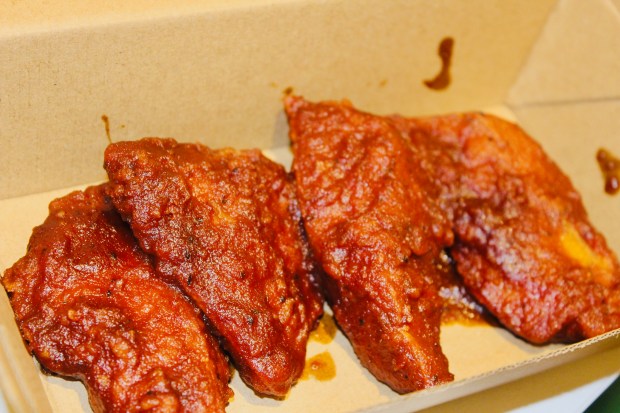
There are of course, some rather more ‘hardcore’ meat replacements, and by that I mean those that require a little more spending and effort in order to turn them into a tasty meal. The most on trend at the minute is Seitan. Otherwise known as wheat gluten, it’s the thick, elastic gluten leftover when all the starch granules have been removed from wheat flour dough. It’s become super popular as a much more convincing meat substitute than tofu, and has a more pleasing texture. I’ve had seitan wings, seitan burger patties and seitan doner meat to name a few, and I’ve been a fan every time. I’m pretty sure you can buy pre-prepared seitan, but some recipes (like many of Avant Garde Vegan’s) require you to make your seitan patties and bacon from scratch, which is why it requires a bit more time and dedication.
Seitan wings from Temple of Seitan in Hackney/Camden
There is some debate over these kinds of meat replacements in terms of what nutrition they actually provide for our bodies. With meat you’re getting a solid helping of protein, and from vegetable-based meat replacements you take in multiple nutrients, however the likes of tofu and seitan don’t really have much to offer. For me, these types of substitutes are more of an occasional purchase, and ideally it’s much better to cook with food that bears greater resemblance to its original form, i.e. fruit and veg.
Eggs
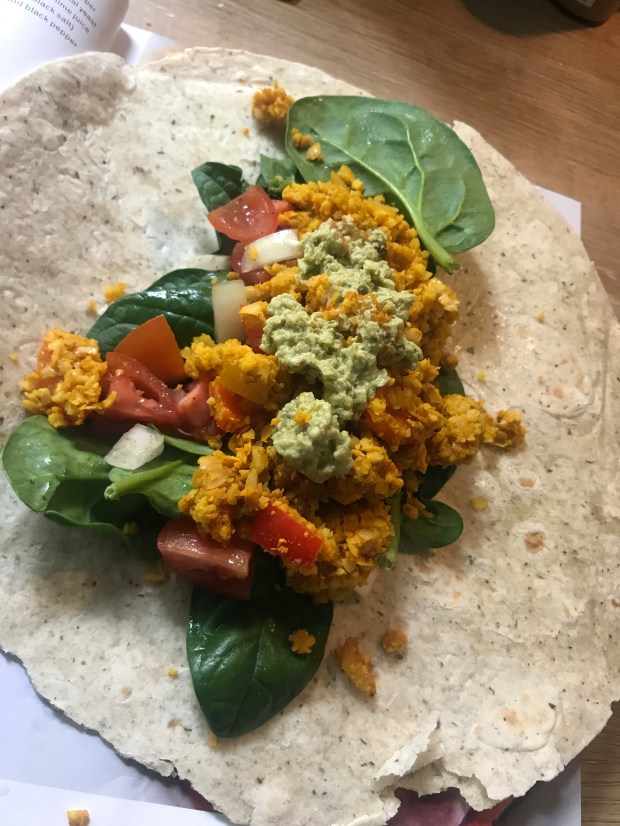
Moving onto eggs, these are something that you may be struggling to work out how you’re going to live without if you’re considering going vegan. There are various replacement options, depending on the type of egg you’re after. To be honest, I don’t have anything to offer when it comes to fried or poached eggs, however, scrambled are a popular vegan choice. Common replacements include, tofu, mashed chickpeas and ackee (a fruit popular in the Caribbean). I have tried the ackee concept, but am yet to have cooked it successfully so can’t speak on behalf of that one. Tofu scramble can be very nice, providing it’s well-spiced and seasoned. One of my favourites, though, was another of Rachel Ama’s recipes for a chickpea scramble breakfast wrap. I’m not sure the scramble would be as satisfying on it’s own, but certainly as a filling it tasted fantastic, and the texture wasn’t bad.
When it comes to baking with eggs, there are a number of options. To recreate the binding effect that eggs offer, mixing chia or flax seeds with water is a great option, as the seeds expand as they take on water, and you’re left with a thick, gelatinous mixture. Things like apple sauce are a great way of getting moisture into bakes without using eggs, although from the vegan baking recipes I’ve tried so far, as delicious as they’ve been, they never quite achieve the same rise.
Sauces and flavourings
There’s absolutely no reason why plant-based food should be bland, as generally sauces, stocks and spices are in no way off-limits to those avoiding animal products, even if specific vegan versions have to be made. One of the most commonly used flavourings in plant-based meals is nutritional yeast. These flakes can be added to sauces, pastas and even water to create a kind of stock, and they have a distinctly cheesy smell and flavour that otherwise would be missed in a vegan diet. Miso paste, liquid smoke and soy sauce/coconut aminos are other key flavour boosters – you can even buy vegan fish sauce.
It’s also super easy to create plant-based sauces from scratch. Avoiding dairy products, cashews are a key ingredient for whipping up thick, creamy sauces – they just need to be soaked for a few hours then blended along with whichever other flavourings and ingredients you’re craving.
Although standard pesto isn’t vegan (or vegetarian for that matter) due to the use of parmesan, it’s incredibly easy to either leave it out, use a vegan version, or just add a sprinkling of the aforementioned nutritional yeast. Rather than sticking with the same pasta sauce every day of your life, pesto is such a fun one to jazz up, as it can be made with any combination of veg, nuts, garlic and olive oil.
Sun dried tomato pesto pasta from Rachel Ama’s Vegan Eats
Obviously tomato-based sauces never have to be off-limits, but even these can be made more exciting by incorporating sun dried tomatoes or red peppers into the mix. You can try pesto versions of those ingredients, or mix them with soaked blended cashews for a creamy red sauce – much like the equivalent of a little tomato puree swirled through some mascarpone, only with loads more flavour.
creamy red pepper pasta – sauce made with cashews
Baking
Baking is one area in which it can be a bit tougher to convince people of plant-based ingredients’ ability to get the job done. But believe me, I’ve followed a few plant-based sponge recipes now, and they have been delicious. As I mentioned regarding the lack of eggs, you don’t quite get the same rise, but they do still rise enough. Apple cider vinegar is a good addition as it should react with your raising agent (baking powder or bicarb) to generate a slightly more significant rise. For added moisture in your bakes, bananas or apple sauce are decent options, although obviously they will affect the flavour to an extent.
lemon drizzle and pistachio loaf cake
Believe it or not, meringues aren’t off the cards either. Odd as it may sound, aquafaba, which is the liquid you find in tinned chickpeas etc, is the main ingredient in whipping up vegan meringues, although not having tried it myself, I’m sure it takes a fair bit of practice.
chocolate ganache torte using coconut milk and vegan chocolate for the filling
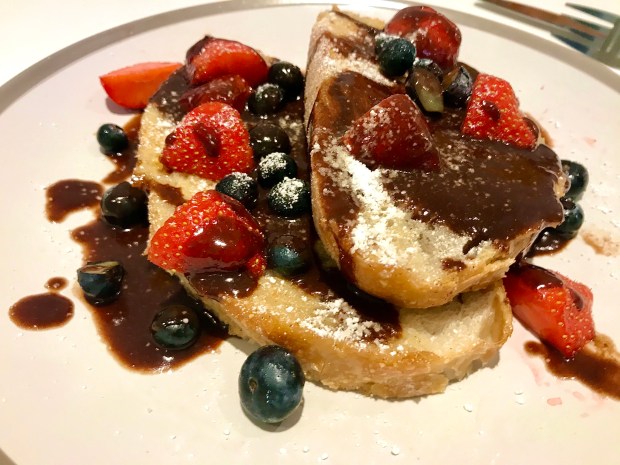
In terms of brunch baking, fear not, because pancakes and French toast are still firmly on the menu. For your French toast egg wash replacement, simply combine plant-based milk with maple syrup and vanilla essence and soak your bread in that. Pancakes can be made equally as easily without eggs – a base mixture of milk, flour, baking powder and vanilla essence will do just fine.
What this post goes to highlight is just how many creative, straightforward and widely shared options there are nowadays when it comes to cutting down on your meat/fish/dairy/egg intake or avoiding animal products altogether. This also applies to the kinds of ingredients you can access in supermarkets, with vegan versions of chicken, mince and bacon now all being pretty common finds. Lots of popular confectionary such as Oreos, Biscoff and party rings are also vegan certified so you don’t have to miss out on the good stuff.
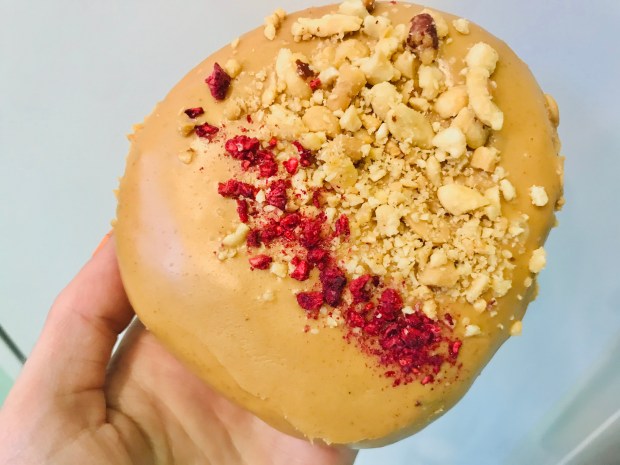
Even vegan doughnuts are on the rise – check out this PB and Jlo doughnut from Doughnut Time…
So whether you love doing your bit for animal welfare and the environment, or you still love a juicy beefburger, there shouldn’t be anything to stop you from being a bit more experimental in the kitchen when it comes to eating well. Buddha bowls, seitan steaks and chickpeas galore, plant-based definitely isn’t something to be feared.
Let’s just get something straight, this is DIY like you’ve never seen it before. No flat packs, toolboxes or storming off in frustration, this is the kind that leaves your belly full and your taste buds tingling.
The Coronovirus has obviously affected all of us to quite extreme extents, and the hospitality industry has been one of the hardest hit. Restaurants and businesses have therefore had to come up with innovative ways to keep trading and continue engaging with their customers.
This is where DIY comes into it. It’s the latest trend to have emerged from lockdown, providing those of us at home with all the tools we need to recreate our favourite restaurants’ signature dishes.
I’ve rounded up my favourites, both sweet and savoury, plant-based and meat feasts, complete with content, prices and delivery locations.
Disclaimer: I haven’t tried all of these, so am basing my list on those that stand out the most. This list is not exhaustive and there are so many more great kits out there that you can buy to help to support small businesses.
Patty & Bun – Lockdown DIY Kit
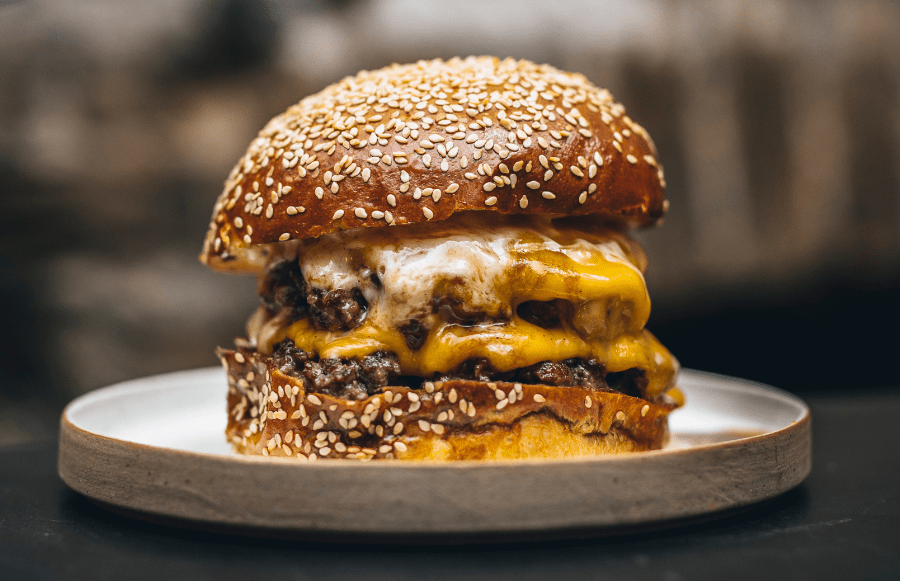
What to Expect: This has to be the exception to my ‘in no particular order rule’ as this is the first DIY kit I ordered and it was incredible. Patty & Bun have you recreating their famous ‘Ari Gold’ and/or ‘Smokey Robinson’ burgers all from your own kitchen. They’ve even introduced a vegan version more recently. Kits include 4 patties and brioche buns, and fillings, depending on which burger you opt for include cheese slices, chipotle mayo, caramelised onions, pickled onions and bacon. Their meat is from HG Walter and is fabulous. They really will be the juiciest burgers you’ve ever made from home.
Price: £25
Location: Nationwide
Doughnut Time – DIY Home Kit
What to Expect: As well as the option to order their 6-packs of doughnuts for those in London, Doughnut Time have created a number of DIY kits so that you can come up with your own creations at home. For full creative licence, opt for the Design-Yo-Own Kit, which comes with 4 blank canvas ring doughnuts along with coloured icing piping bags and mixed confectionary including Smarties and Freddos. If you’d rather go for a classic, The Favourites Kit gives you everything you need to recreate 2 Sia Later (red velvet) doughnuts and 2 Ice Ice Bae Baes.
Price: £20-22
Location: Nationwide
Where the Pancakes Are – Chilled Pancake Boxes
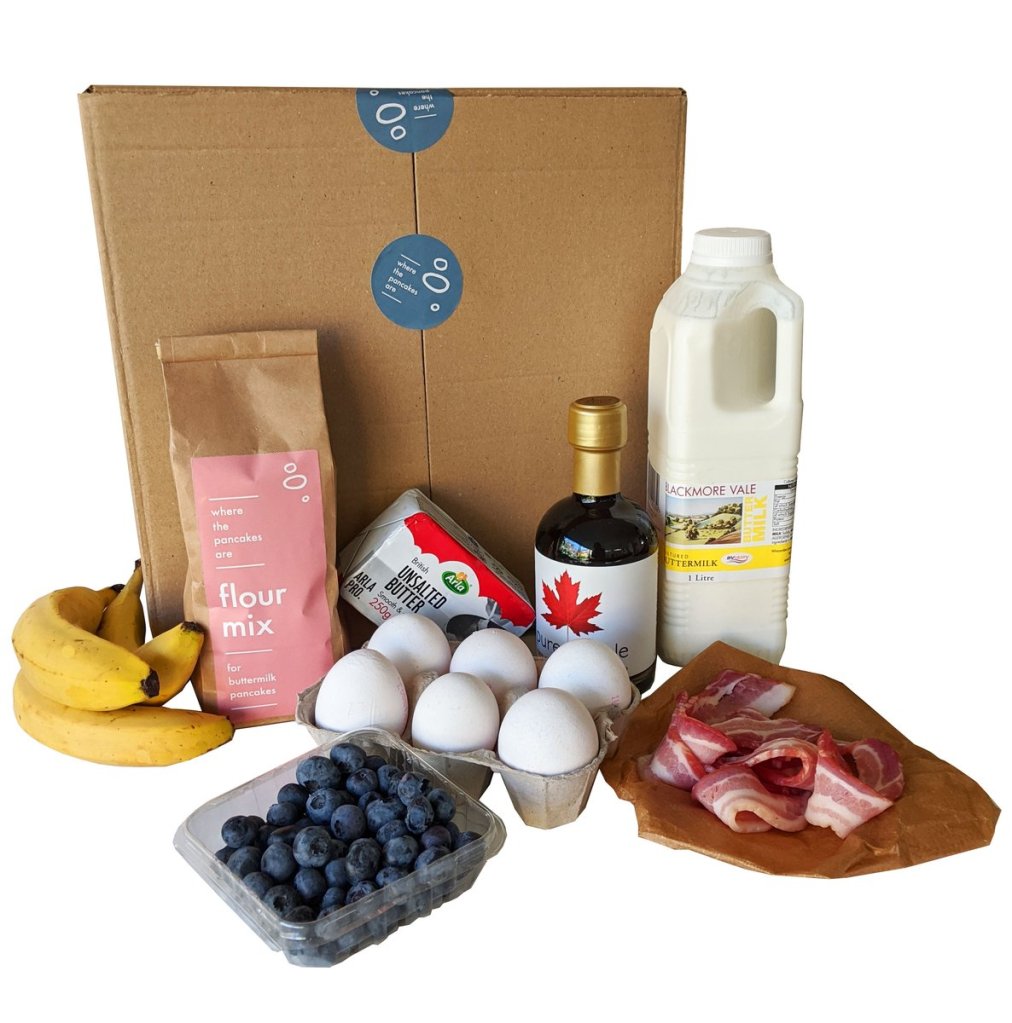
What to Expect: Where The Pancakes Are’s online store not only sells the individual ingredients to jazz up your pancakes, i.e. Canadian maple syrup and their own pancake flour mix, but also has a couple of kits to keep you entertained at brunchtime. The feast box comes complete with bananas, blueberries and bacon, whilst the more modest survival kit adds maple syrup to your staple ingredients.
Price: £22-29.50
Location: Central London postcodes
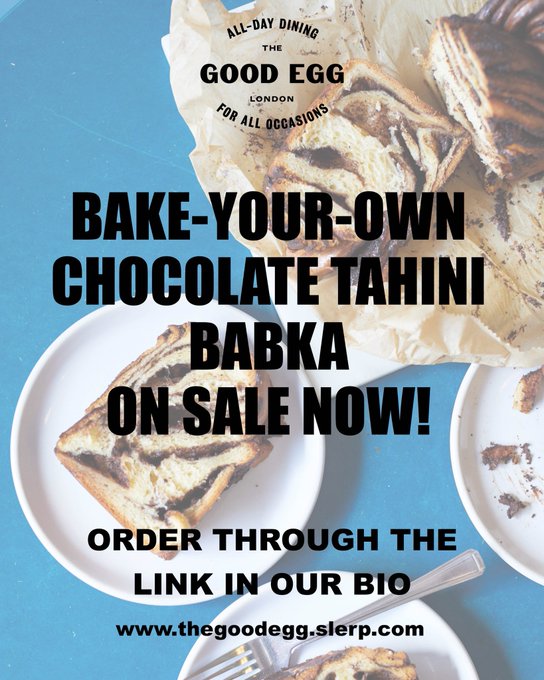
The Good Egg – Bake-your-own-Babka kit
What to Expect: The chocolate tahini Babka is a fan favourite at The Good Egg, but now you can enjoy it in your own kitchen. Whilst you’ll need a few bits and bobs of your own (milk, loaf tin etc.), the kit provides you with the flour, salt, butter, eggs and flavourings to master the Babka yourself.
Price: £23.98
Location: London only (select postcodes)
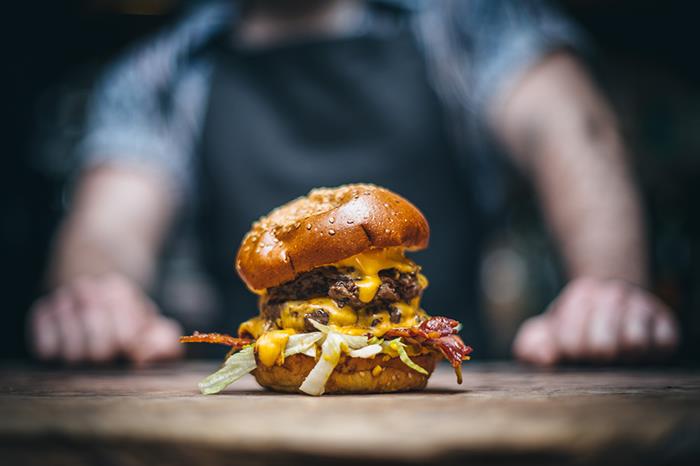
Burger and Beyond – Bacon Butter Burger Lockdown Kit
What to Expect: The burger joints are really killing it this lockdown, and Burger and Beyond are no different. With deliveries going out every Saturday, the kit comes with 4 demi Brioche buns, signature 35 day aged minced beef blend, pancetta bacon, American cheese, burnt butter mayo and pickled onions.
Price: £25
Location: London, Chelmsford, Braintree and Colchester
La Pepiá – Arepa Kits
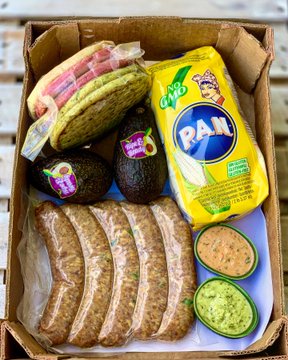
What to Expect: For some Latin vibes in the kitchen, La Pepiá have created their own make-at-home arepa box, full of colour and flavour. Arepas are traditional South American corn buns, which can be filled with vegetables, cheese, beans and meat. You’ll receive 5 rainbow arepas, 5 Venezuelan chorizo sausages or a block of halloumi, 2 avocadoes, green salsa and spicy salsa.
Price: £33-35
Location: London (free delivery)
Pizza Pilgrims – The Frying Pan Pizza Kit
What to Expect: With two deliciously doughy mozzarella pizzas waiting to be whipped up, Pizza Pilgrims’ kit contains two 48 hour proved dough balls, marinara sauce, fior di latte, olive oil, fresh basil and parmesan. If you’re cooking for one, the dough and the marinara can be frozen for you to enjoy another time. At present only one kit can be purchased per order.
Price: £15 (plus £10 delivery)
Location: Nationwide
Lina Stores – Pasta Meal Kits
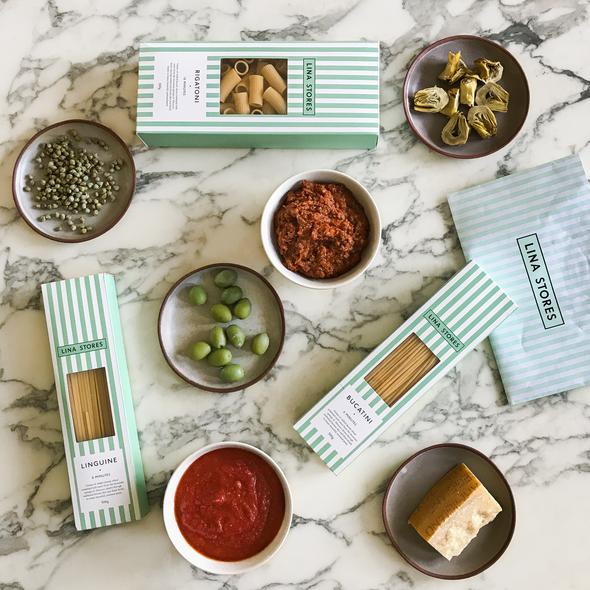
What to Expect: Both fresh and dried pasta meal kits are on offer from the delicatessen-cum-restaurant Lina Stores. The kits include enough ingredients for a whopping 8-10 plates of pasta, with the dry kit featuring 3 different types of pasta, 2 sauces, olives, capers, artichokes and Parmesan. The fresh kit comes with a beautiful artichoke and truffle green ravioli, 2 other fresh pastas, 2 sauces, butter and Parmesan.
Price: £32
Location: London
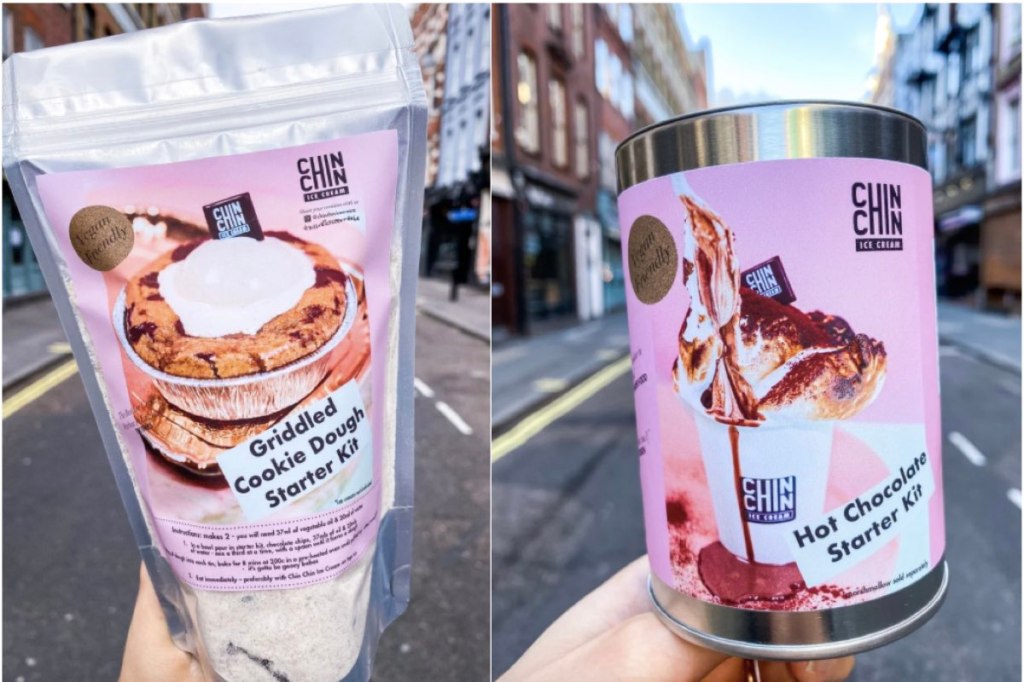
Chin Chin – Starter Kits
What to Expect: Chin Chin are known for they wacky, creative flours and ice cream dessert concepts, so it’s no surprise that at present, they’re sticking to some of their tamer creations to send out to us at home. As well as selling loads of their dessert toppings and snacks individually such as Bee Pollen Honeycomb and Sourdough Cinnamon Toast, you can get your hands on their Hot Chocolate and Griddled Cookie Dough Starter Kits. Both intensely indulgent, these are definitely worth investing in.
Price: £8.95-9.95
Location: Nationwide
Crumbs and Doilies – Cookie and Cupcake Kits
What to Expect: For another sweet treat, why not try Crumbs and Doilies cookie or cupcake kits which look as beautiful as they taste. With a load of flavours on offer including red velvet, double chocolate and birthday cake, the kits are packed with either cake mix, icing sugar, oil and cupcake cases, or all the fillings and flavourings you need for a batch of cookies – just add your own butter and eggs.
Price: £15.50-18.50
Location: Nationwide
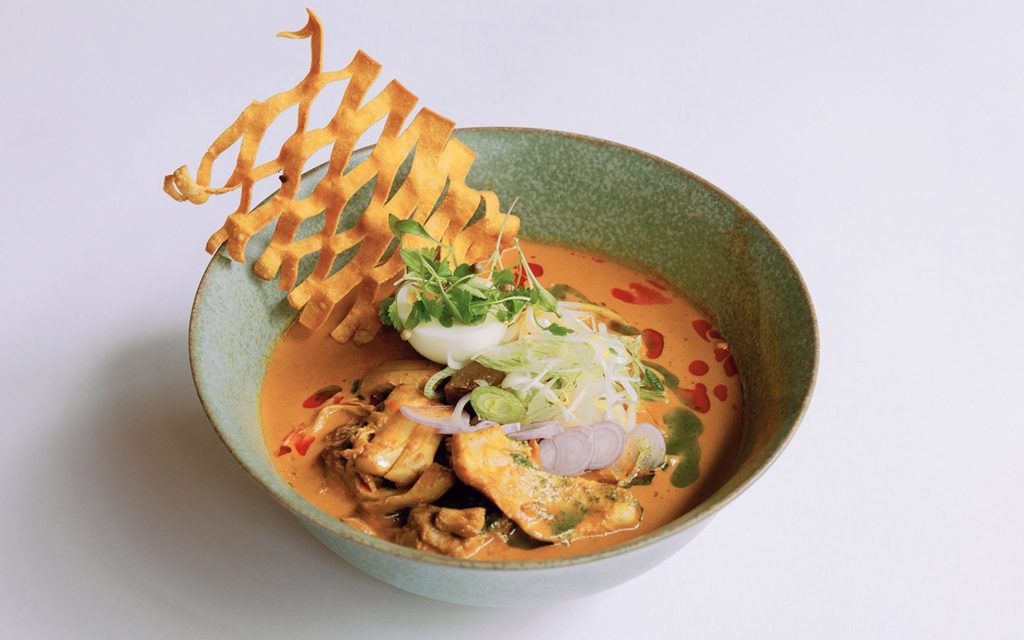
Lahpet – Coconut Noodle Kits
What to Expect: Not much is yet known about the latest kit to be hitting the restaurant scene, with its release still somewhere on the horizon, however, you can be sure that Burmese restaurant Lahpet’s DIY kit will be bursting with all the spice you need to create your own deliciously creamy noodle bowl.
Price: TBC
Location: TBC
Mac + Wild – Venimoo Burger Kits
What to Expect: As well as opening up their online butcher, selling everything from burgers to sausages, venison to ‘white pudding’, Scottish-based restaurant Mac + Wild have now created their own DIY kit based on their ever popular Venimoo Burger (a burger that’s been on my bucket list for a very long time). Stepping it up from its other burger competitors, this box contains enough for 4 Venimoos, including 4 brioche buns, 4 beef patties, 4 venison patties (yep, it’s double stacked), 8 cheese slices, lettuce, gherkin, Red Jon sauce, Béarnaise and mustard. See – here’s one where you don’t even have to provide your own relish, and it’s barely a penny more.
Price: £28
Location: Nationwide
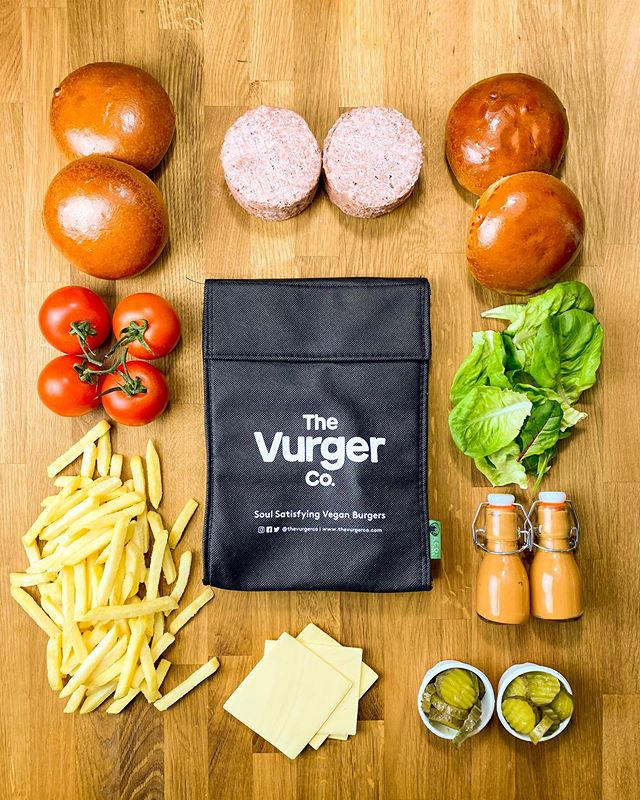
The Vurger Co – Vurger Meal Kit
What to Expect: One for the plant-based lovers out there now, you can get your hands on either 2 or 4 of The Vurger Co’s Big New York Melts with kits enabling you to recreate them at home with Beyond Burger patties, vegan brioche buns, vegan cheese slices, lettuce, gherkin, tomato, a bottle of burger sauce, and wait for it, this one even comes with a hefty portion of skin on fries for the complete burger experience.
Price: £17.95 for 2, or £34.95 for 4
Location: Select London postcodes
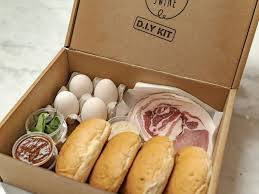
Le Swine – DIY kit
What to Expect: One of the first off the mark when lockdown began was Le Swine offering a delicious make-at-home bacon butty experience. Opt for kits to feed 2 or 4 featuring bacon, duck eggs, bacon butter, signature milk and onion buns, fresh sage and homemade ketchup. If you’re looking to go all out, you can even upgrade to their Ultimate Brunch Kit for 4 which adds on both chipotle and mushroom ketchup, 1l of Virgin Mary Mix, a tin of olives and a voucher for later use when their Spitalfields market location reopens.
Price: £12-35
Location: London
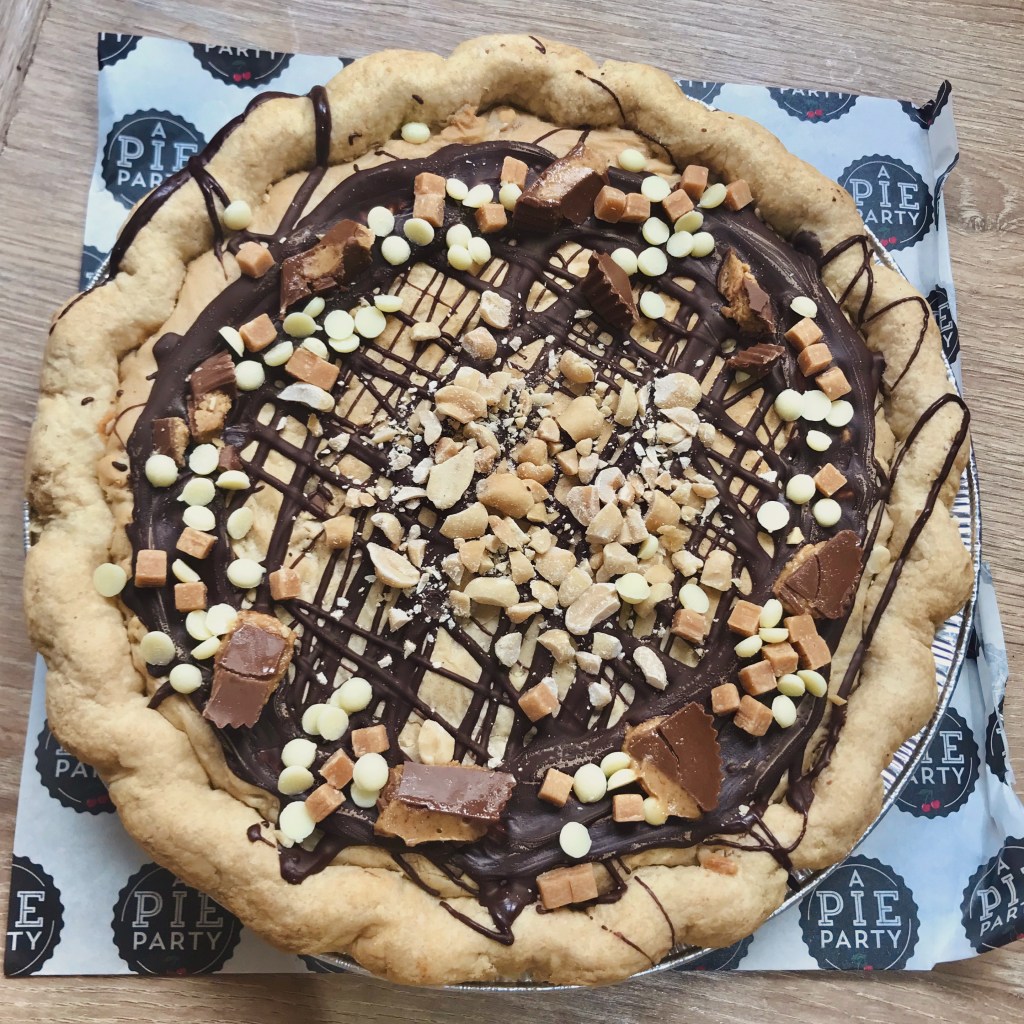
A Pie Party
What to Expect: Finishing with one that doesn’t quite fit the bill, but that I just couldn’t exclude. A Pie Party is my favourite small business ever, dishing up incredible pies, brownies and other sugary treats that are unlike any other. Claire isn’t offering DIY kits, but why bother when you can have full-sized pies and ready-made cookies and brownies delivered straight to your door, for you to devour with no delay.
Price: £18-39
Location: Nationwide
The Peanut Butter Blondie Pie
Supporting businesses like these at this v dodgy time is so important if you want to see them back in business when ‘normal’ service resumes. There really is something for everyone, from minimal to maximum effort, covering a range of budgets. Check out their websites or Instagram accounts for further information and mouth-watering shots from each of these fab restaurants and businesses.
So we’ve travelled to North Africa, we’ve stepped foot in Europe, but now it’s time to cross the Atlantic to the home of an incredible cuisine, exploding with flavours in everything from their national dish of Ackee and Saltfish, to curried goat and of course Jerk.
Today, however, we’re looking at something different – the humble patty.
Living in the UK or US, when the word patty crops up, it’s likely that a burger patty is the first thing to spring to mind. Actually, Jamaican patties are similar to pasties/empanadas, whatever you want to call them – basically a delicious thick and flaky pastry filled with a spicy, juicy mix of most commonly ground beef, but the possibilities are endless, with other options including shrimp, chicken and fish.
The pastry often has a yellowish tint, tinted by the spices mixed into the dough, which can include turmeric and curry powder.
Following the British colonisation of Jamaica, pasties were introduced, and so the Jamaican Beef Patty developed as a derivative of those that were first imported. From there, the influence of spices from Indian workers in the Caribbean led to the curried, cumin flavours in the pastry.
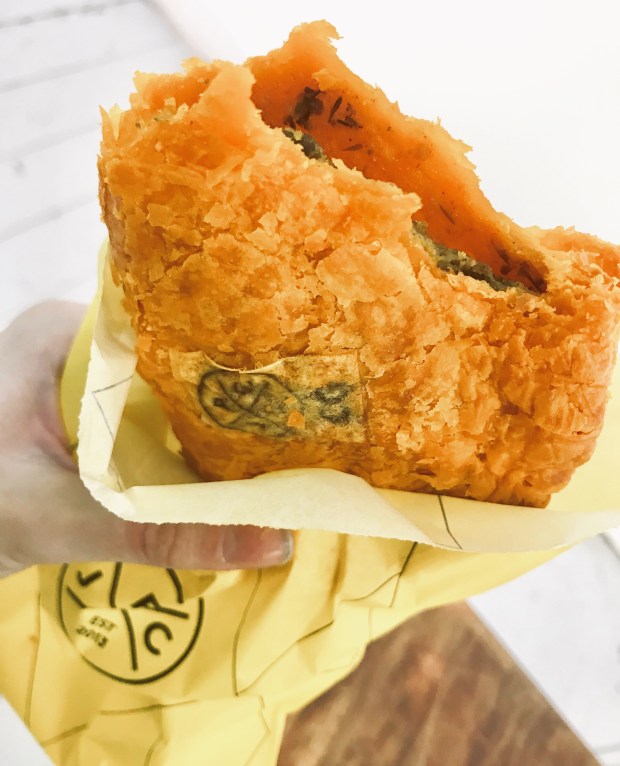
I first tried a patty from the Jamaica Patty co. in London but instead of the traditional beef, I opted for a curried goat version. The pastry was a really vivid orangey hue, and was incredibly flaky – imagine it like biting into a croissant, and as you do so, loads of flakes of pastry, big and small, break away, and at the end, you’re left with a paper bag full of thin pastry flakes. The filling was so delicious – a super rich, deep in colour curried goat, tender in texture and full of flavour. My first patty experience was a winner and I’ve loved the concept of them ever since. I’d even say the flavours appeal to me way more than Cornish pasties – I much prefer a pastry packed to the brim with a meaty filling rather than padded out with carby veg and potatoes.
Now that was around 6 months ago and I hadn’t tried one since, but the other day, flicking through my favourite cookery book – Ainsley’s Caribbean Kitchen (such beautiful photography in there, and full of colour), I realised I already had all the ingredients to try his patty recipe. I hadn’t expected much and wasn’t particularly bothered about making them, I just wanted to use up the ingredients I had.
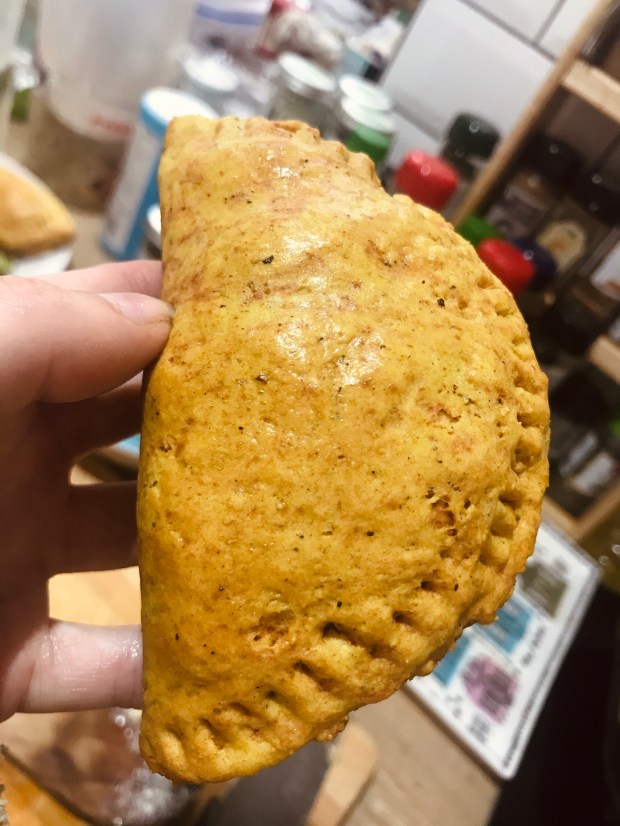
In some ways, having no expectation made it even more exciting when they turned out like this:
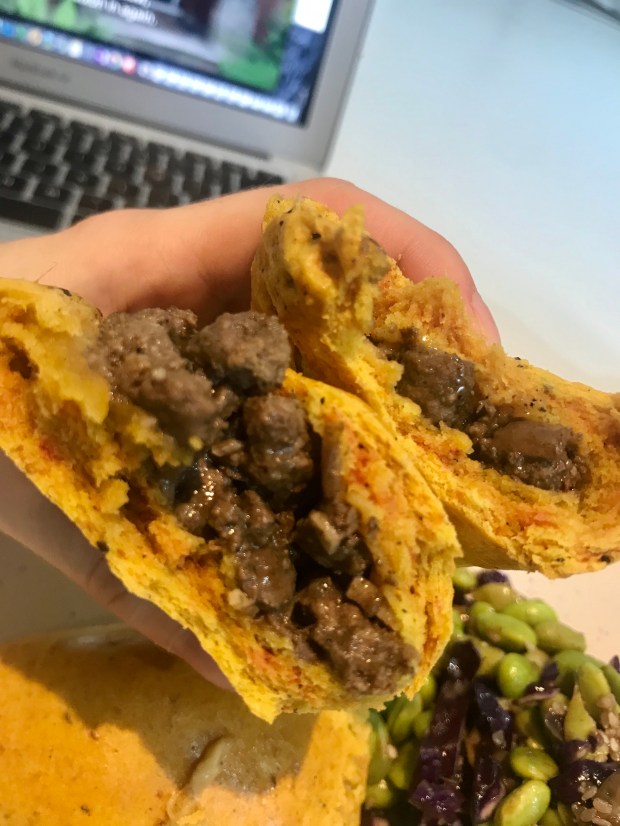
So the pastry wasn’t as flaky as I’ve heard is common in Jamaica (and like the one from Jamaica Patty Co) but I’m pretty sure for an amateur cook this is more difficult to achieve anyway. The flavour, however, in the pastry alone was insane. I could’ve eaten a load of the baked dough on its own; a shiny, golden shell full of spices. The filling I enjoyed, a rich, almost gravy-like minced beef mix, but it didn’t compare to the curried goat one I’d tried previously.
These patties can be eaten as the main part of a meal with sides, as I had for my dinner, or simply as a snack.
I desperately want to visit Jamaica to indulge in all their amazing food, so hopefully when travel becomes possible again, that’ll be my first stop.
If you’re bored of baking sweet treats this lockdown, why not give a savoury bake a go – there are so many simply patty recipes online.
But for now, I’ll leave you with some food for thought – Team Patty or Team Pasty? You decide…
Deep fried dough. No one can explain why something that sounds so basic and actually quite gross is in reality so delicious. It still baffles me that there are so many different ways of making deep fried dough into snacks and meals, each one of them bringing something completely different to the table, literally.
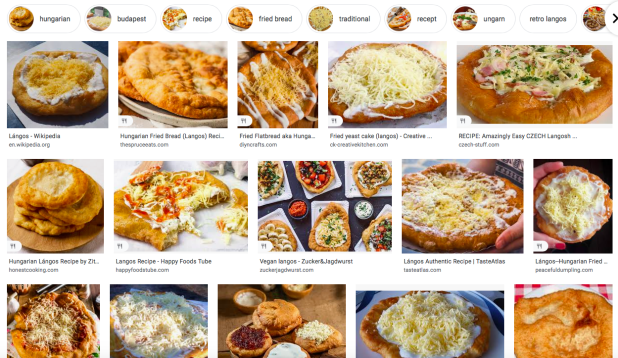
My travels are this week taking us to the home of the Lángos – a deep fried dough featuring as many customisable toppings as you’d like. And where does this delicacy hail from?
Hungary.
If you’ve read my post on my trip to Budapest last November, you may already have known that.
Don’t be too tempted to jump on the idea that this is like a Hungarian pizza. There are many differences. Obviously here the dough is fried, and that’s key, but sometimes mashed potato is added for a fluffy, slightly creamy texture. Secondly, the main topping tends to be sour cream – not a tomato sauce in sight. And last to mention, is unfortunately, the (optional) cheese topping on a Lángos doesn’t tend to be melted, but don’t let that put you off, this actually allows you to get a lot more flavour from the cheese, even if the texture isn’t quite as mouth-wateringly gooey.
Despite not being as large as a typical medium-sized pizza, as it’s deep-fried, it can be pretty heavy, so don’t underestimate just how filling they are, even if the toppings are minimal.
The Lángos is often described as a street food – in fact, once again, it was in my Lonely Planet Street Food guide that I first came across it. Having said that, one of the main qualities of street food tends to be that it’s super easy to eat on the go. As a pretty stodgy flatbread, the Lángos doesn’t really fulfil this brief, and so whilst it’s cheap and easy to quickly whip up outside the confines of a restaurant, you’re probably going to want to take a seat to eat it.
Back when bread was regularly baked in every household, the Lángos dough would be excess leftover from bread-making, and would be baked in the same way, however seeing as such daily home baking is no longer practised, the dough now ends up being deep-fried instead. Back when it was baked in the bread oven, it was placed right at the front, close to the flame, which is where the delicacy gets its name, with láng being the Hungarian word for flame.
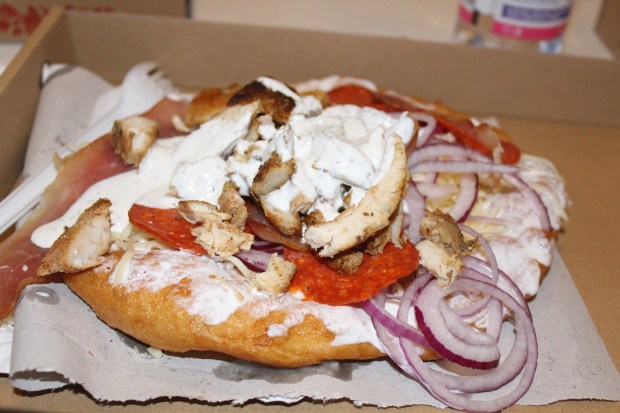
Moving on to my own experiences of the dish. I first tried it at the Central Market in Budapest last year. The upstairs section of the huge market hall has an area dedicated to food, which is comparatively small in size, meaning that queues of people are packed in to one small space, all eagerly awaiting their delicious lunch meal. Whilst my friends opted for slightly more nutritious salad and veg-topped versions, I of course went for the meatiest feast I could find. Sour cream, grated cheese, onion, chicken, pepperoni and ham struggled to contain themselves on top of the dough base as we hunted for somewhere to perch. This is by no means a light snack; be prepared to feel a little heavy afterwards, but it’s worth it. To be honest, Lángos aren’t the most flavoursome meals – other than the flavour from the toppings, there’s little seasoning or added ingredients, other than perhaps a garlicky rub on the base, but the appeal here is definitely more due to tradition and doughy, fried indulgence.
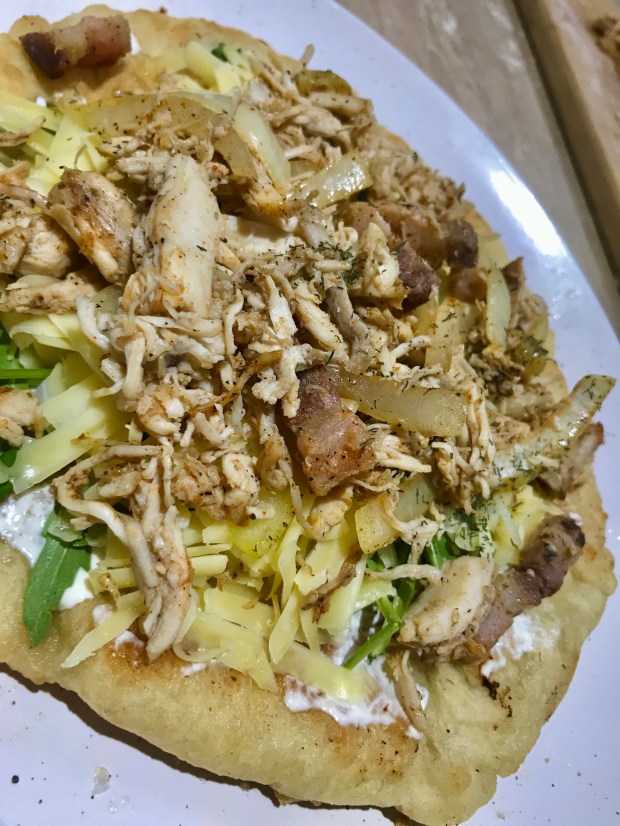
Having said that, when I attempted my own version at home, I have to admit that it was even better than the one I tried in Budapest. After frying, along with the standard sour cream and cheese base, I topped the dough with shredded chicken, pancetta, rocket and onion. Whilst the onion on my Lángos in Budapest was raw, I decided to cook it this time, just to avoid the pungency that raw onion can have. The seasoned toppings were really tasty, and the addition of mashed potato to the dough made it super soft, whilst still maintaining the slightly crispy exterior.
I would definitely make Lángos again at home. They’re really simple, although I would fry the dough for slightly longer next time, just for extra crispiness, as my fear of overcooking it this time made it a little too squidgy in the centre.
And that’s dish number 2 in the series complete. We’ve gone from a healthy, plant-based tomatoey pasta lentil dish last time round, to a deep fried fully- loaded doughy delight, so you can be sure that there are no rules when it comes to deciding which dishes to showcase next.
There are loads of recipes for Lángos online, so with so much time at home at the minute, why not try your own hand at one of Hungary’s signature dishes for an indulgent weekend treat.
Just to be clear, my plant-based journey has not come to an end, in fact I’ll hopefully keep it up forever, but it is time to end this series, and I’ll be honest, I’m not ending it on the best note.
Forgive my lack of commitment this time round, but what with everything going on right now, lockdown, money concerns etc., ensuring that every single one of my meals was 100% vegan hasn’t been a priority.
Having said that, I did still make and order some fab food, which I’ll detail below before ending with some highlights and top tips that you can carry forward into your own journey to realising the potential of plant-based food.
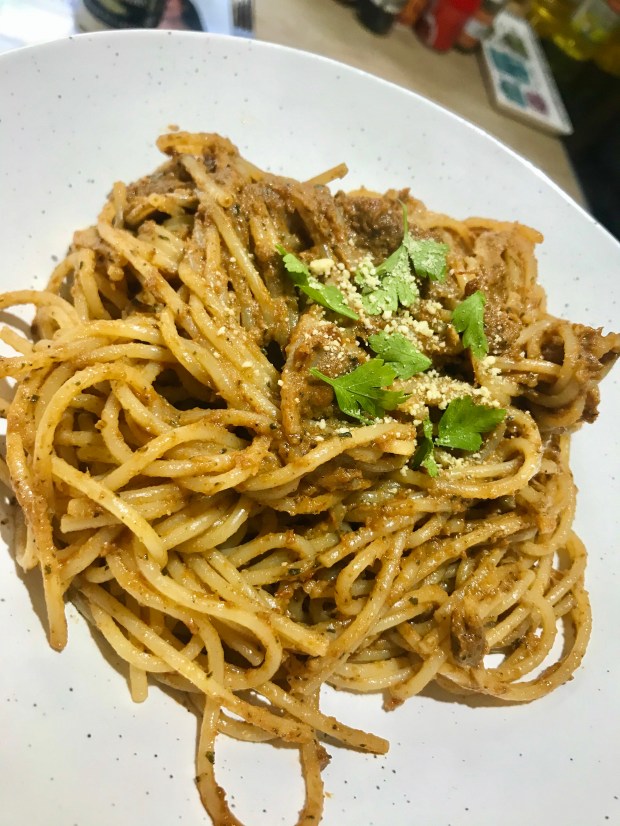
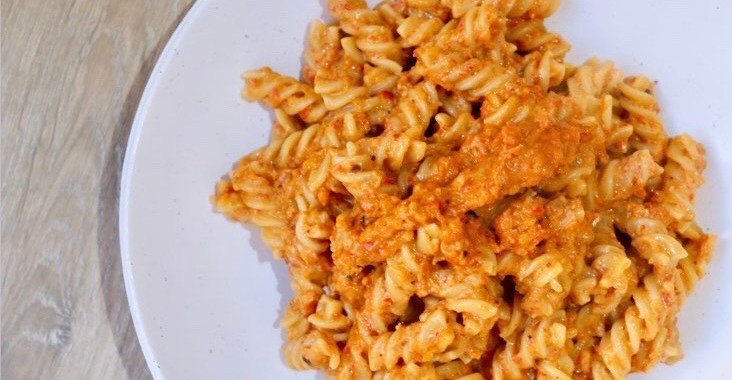
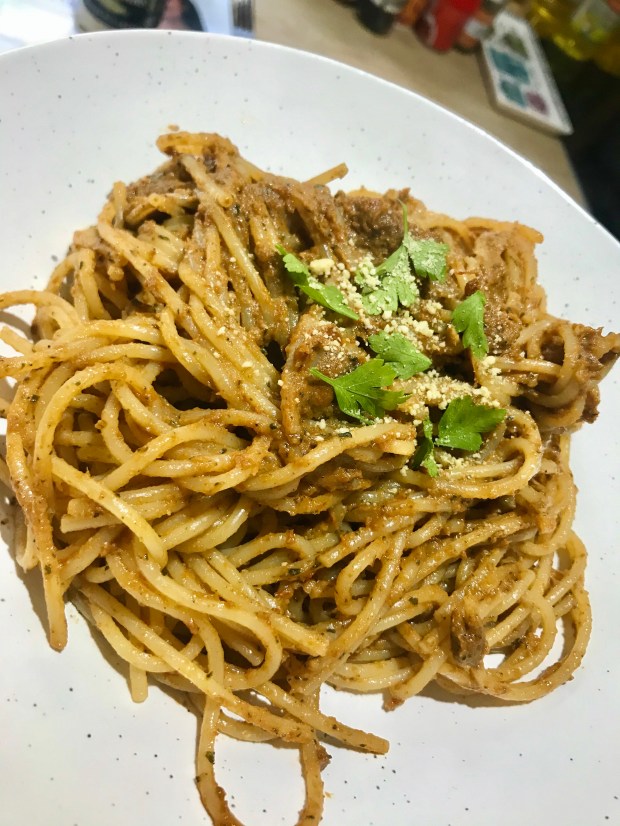
I’ll start with two amazing pasta dishes, the first being @elavegan’s red pepper pasta, with a cashew based sauce, and Rachel Ama’s sun dried tomato pesto pasta. Both of these were super easy to make, although a food processor or some kind of blender type thing is required. If you’re going plant-based or trying to eat more of it, I would definitely recommend getting one anyway as you’ll get so much use out of it.
The red pepper pasta was incredibly creamy, with quite a thick sauce, the red pepper giving it a lovely, soft, sweetness.
The flavour of the sun dried tomato pesto was much stronger – fresh basil, balsamic vinegar and sun dried tomatoes end up being quite a pungent combination, but a delicious one nonetheless.
A couple of soups were also on the cards as per. Sometimes I find soups incredibly satisfying, warm and hearty, and others just miss the mark. The first – Nadiya’s lentil and orange soup fell under the latter category. Obviously I love her recipes, but I struggle with orange-based savoury recipes, particularly in something liquidy like a soup.
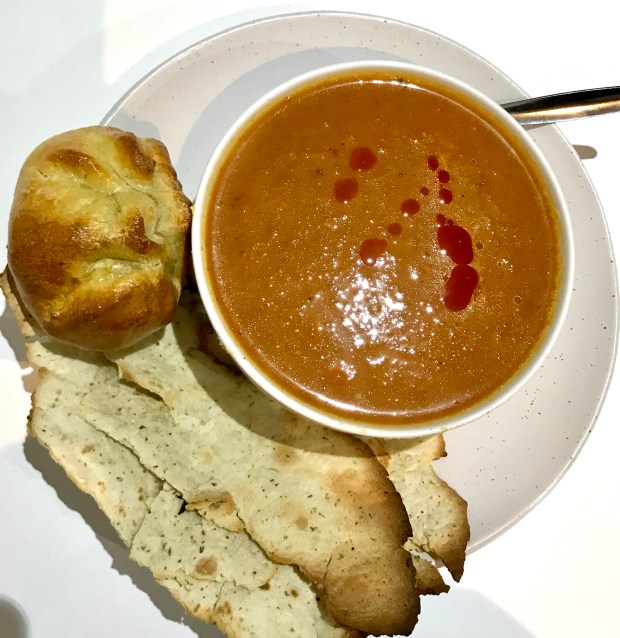
The second soup was my own recipe – harissa and carrot. Whilst it tasted decent with a strong kick of heat, I’m not sure I loved it enough to make again, although undoubtedly if I’d added a load of cream I’m sure it would’ve ticked more boxes…
Drinks now! BBCgoodfood have a pretty good recipe for a chai latte, although plant-based milk is one of the things I’m finding it more difficult to get hold of at this time. Normally soy milk is my go-to but I’ve had to switch to almond milk as that’s all that’s been available. Even so, this frothy, warmly-spiced latte was a perfect morning pick-me-up when breakfast isn’t really my thing.
Dreamy indulgence from Doughnut Time is next on the list. They genuinely do the best vegan doughnuts, which are no different in taste to their normal range. I’d frozen their Vegan Fox doughnut last month as it was part of their Valentine’s range but I’d eaten so much I couldn’t justify trying this one too, so rather than miss it, I shoved it in the freezer ready for a rainy day. Cue lockdown and I’d never been so grateful for this level of resourcefulness. It’s not recommended that you freeze these doughnuts but that won’t stop me. After defrosting and 20 seconds or so in the microwave, I had the most delicious, soft-doughed, melty-buttercreamed chocolate doughnut. The fudge buttercream is incredible and I really hope they give a vegan chocolate doughnut like this one a permanent spot on their menu. Failing that, the David Hasselbiscoff is one of the best doughnuts of all time.
Trust me to be taking complete advantage of the fact that many small food businesses have upped their delivery range due to the current situation, meaning that I’ve been able to get my hands on both Picky Wops’ vegan pizzas and indulgent subs from Jake’s Vegan Steaks.
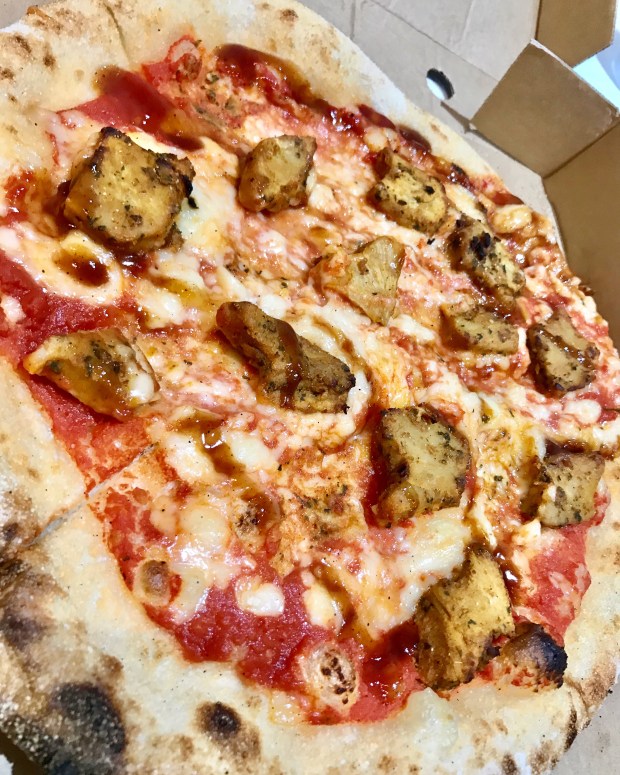
After a few teething issues on the delivery front, I received my bbq chick’n pizza and a cashew-based tiramisu. The pizza was really tasty – the chick’n pieces had a nice texture, the dough was light and fluffy and the ratio of toppings to dough was spot on. It wasn’t the best vegan cheese I’ve had – was more like a thick Béchamel style sauce, but not unpleasant. Admittedly I wasn’t a fan of the tiramisu. The cashew-based mousse/sauce/cream/whatever you want to call it didn’t have much flavour, and I got one hint of coffee from my second to last bite. That’s it. But would defo order pizza from them again in the future.
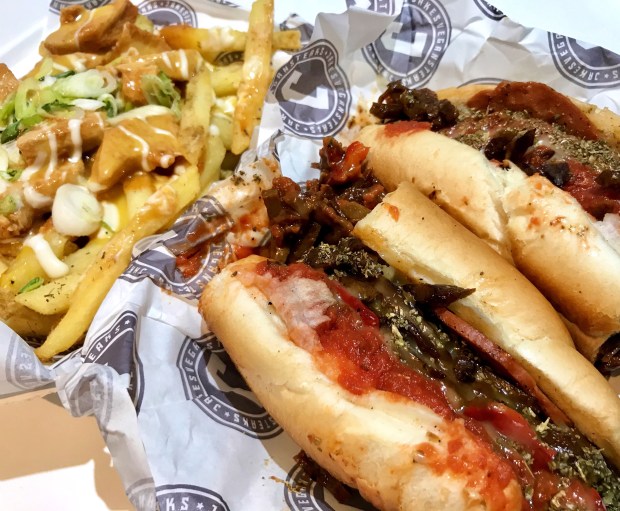
Jake’s Vegan Steaks was my other treat, after I fell in love with their subs at Vegan Nights event last year. Although I’d become obsessed with the super spicy version of their Philly Cheezesteak, I wanted to try something new so ordered the Pepperoni Pizza Steak, along with bbq chick’n fries. The pepperoni sub was decent, although they’d been pretty heavy handed with the oregano. Ultimately, I wouldn’t order it again over the Philly Cheezesteak. The fries were great; really well seasoned with tasty cheesy bbq sauce and chick’n pieces.
And that’s pretty much all I have to share this time round – as it’s supposed to be a week’s worth of meals that’ll give you an idea of how many times I cheated, but like I said, we are in exceptional circumstances.
Before signing off on this series, I wanted to finish with some highlights, mostly in London, from some fantastic businesses that deserve your support.
Redemption, Covent Garden
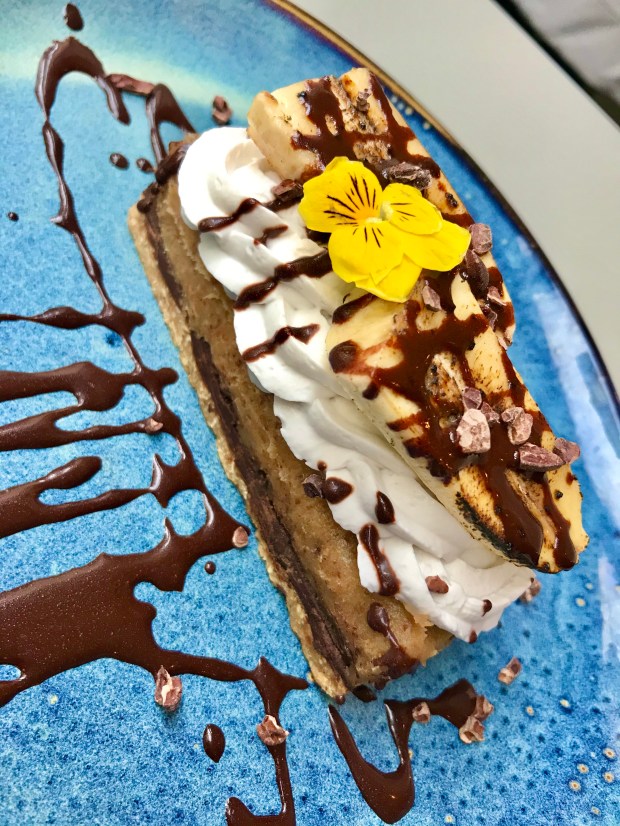
A lovely little restaurant/café with takeaway treats and drinks, Redemption backs on to Neal’s Yard with indoor and outdoor seating. It’s beautiful inside and the food is just as attractive. My top recommendation is the raw Banoffee Pie, pictured below.
Itsu, Everywhere
Less luxurious, Itsu is perfect for healthy veggie lunches. Sushi doesn’t have to be raw fish, and their veggie gyozas and maki rolls are some of the best.
Club Mexicana, KERB Seven Dials
Club Mexicana served up one of the best burritos I’ve had. The cheezeburger burrito genuinely tastes like a cheeseburger – god knows how, but it’s filling, cheesy and uses a great beef mince substitute.
Temple of Seitan, Camden and Hackney
Who ever thought that vegan wings would be a thing. Temple of Seitan, as the name suggests, serves up a load of fast food using the chicken substitute Seitan, and these wings had the most convincing texture. With a delicious bbq glaze, these are high on my list of recommendations.
Humble Dough, Boxpark Shoreditch
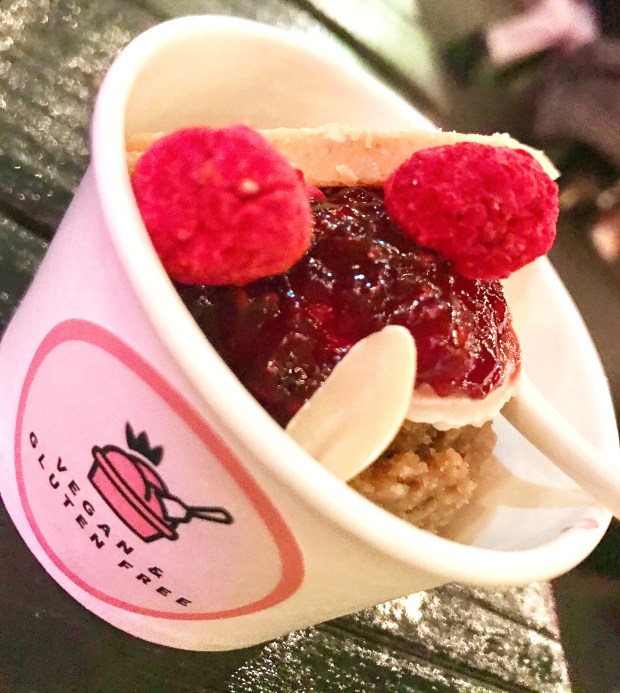
One of my favourite sweet treats now, Humble Dough serve up little pots of vegan cookie dough with various toppings. I tried the peanut butter and jam pot, which was delicious, and despite looking like a tiny portion, was the perfect amount for not becoming sickly.
And last but not least – what have I learnt during the last 7 months or so of on-off plant-based eating? It’s been a really interesting little experiment – one that is no longer an experiment and is now just a routinely part of my diet, but here are some things I want you to know…
Don’t listen to how you should feel
I still get frustrated with vegan propaganda telling you that on a plant-based diet, you’ll feel so much lighter and will have way more energy. That’s great if that happens to you, but I have experienced no such thing, and some weeks I’ve even felt awful – heavy and bloated from excess veg, beans and pulses. That’s not to put you off. I just want people to be aware that even if you don’t see the benefits that other people are claiming, this doesn’t mean that it’s not worth the changes. Don’t expect to feel a certain way, and don’t worry if you don’t. Everyone’s body reacts differently to what they put into it, and you won’t necessarily feel like a goddess overnight…
Learn to love key ingredients
There are some amazing ingredients that you should really get to grips with if you want to reduce your meat/dairy intake. If you love cooking then cashews are a really big one, as most creamy plant-based sauces use softened cashews. Beans and pulses are another saviour – chickpeas in particular can become super versatile, not only eating them as they are in curries and stews, but also turning them into a spicy scrambled egg substitute or forming them into falafel or burger-like patties. Aubergine and cauliflower should be your veggie best friends – there are an abundance of vegan recipes using these two ingredients in so many ways online, and finally… tofu. It’s a controversial one, but I honestly believe anyone can enjoy it if it’s cooked to their taste. The main danger is with it being bland, so for a genius solution, follow Rachel Ama’s recipe for chive tofu spread, which is amazing on toast.
Get to know easy replacement hacks
Plant-based milk is obviously a major one – try a few different brands and ingredients and work out which is the one for you – almond, soy, coconut? Pancakes and waffles can easily be made without eggs, just stick to flour, sugar, milk, baking powder and flavouring, and egg replacements in baking can be produced from flax seeds and even aquafaba (liquid in chickpea cans).
Don’t be too strict on yourself
If you’re not cutting out meat and dairy for ethical reasons, I don’t see the need to be super strict on yourself. Just reducing your intake is a great thing to do, so if you’re craving a Dominos pizza or a family-sized bar of Cadbury’s Dairy Milk, there’s no shame in that. You don’t have to change your diet to prove anything to anyone and so there’s no harm in just going entirely plant-based part-time – even if that’s verrry part-time, as in a few days a month.
Look to the experts for inspiration
There are so many vegan blogs, youtube channels and Instagram accounts out there now, not to mention a growing range of excellent cookbooks. Explore, and get to know your favourites, as each of these cooks and bloggers comes with their own style. My favourites include Rachel Ama for vegan meals that think outside the box, Mrs Hollingsworth for amazing baking, snacks and desserts and elavegan for simple recipes using readily available ingredients. Avant Garde Vegan and Fearne Cotton are also worth looking to for ideas.
And that’s it for the time being. I’ll still be sharing my vegan week successes on my Instagram account every month (@foodtravelsldn), but this is the end of the series.
Of course there’ll be new series’ on the way, including my Around the World in 80 Plates, part 2 of which will be coming next week.
But can you guess where I’ll be heading, and what I’ll be making….?













 ¡Comemos!