Butternut Squash Soup

If you told me a couple of years ago that I’d regularly be eating soup for lunch and dinner I would’ve scoffed. Soup is a liquid meal – how can that possibly satisfy you and fill you up? Well, somehow it does, and I’ve now tried so many delicious soup recipes (Ainlsey Harriott’s in his Caribbean Kitchen cook book are fab), that I thought it was about time I came up with some of my own.

Butternut squash soups have always been some of my favourite, and a lot of that is down to the fact that they are never watery. I love a creamy soup, and with squash, you can get that lovely consistency without even having to add cream, and so it can still be a super healthy meal.

My soup recipe below is not only healthy, but also entirely plant-based (pretty easy to achieve with soups), and I’ve kept a pretty thick consistency. If you wanted a smoother, runnier soup, all you’d have to do is add a little more water, and blend more thoroughly.
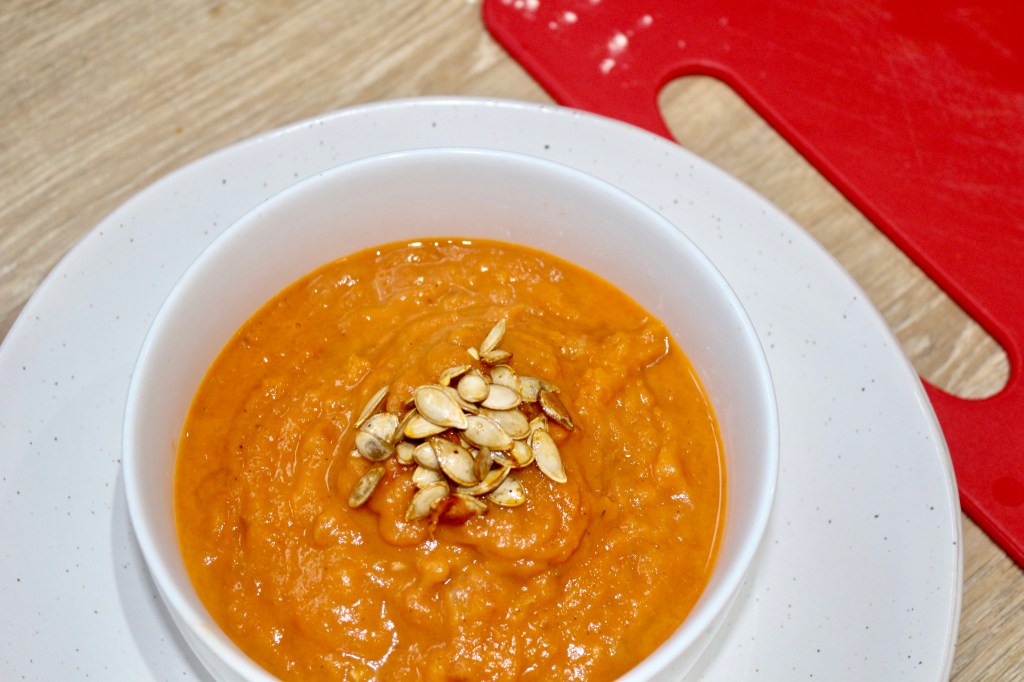
And as anti-food waste as I am, there’s no need at all to throw away the seeds. They’re delicious roasted, and add a lovely crunchy to finish off the soup.

Serves 2

Ingredients:

½ squash (plus seeds)

1 carrot

2 ½ tbsp honey

1tsp paprika

salt/pepper

olive oil

1 onion

½ chilli

1 clove garlic

1 stick celery

50ml coconut cream

1 tin chopped tomatoes

100ml water

1tsp nutmeg

1tsp cayenne pepper

1tbsp nutritional yeast

  1. Roast the squash and carrot (both diced) with 1tbsp honey, paprika, olive oil and seasoning until soft and caramelised.
  2. Roast seeds in separate tray with the same honey coating (use ½ tbsp) until golden. These won’t take as long as the veg, so keep an eye on them.
  3. Sweat the onion in a saucepan or deep casserole dish (anything that the soup can happily sit in without overflowing!), then add the garlic and chilli.
  4. Add the chopped celery and seasoning.
  5. When the veg has finished roasting, add to the pot along with the coconut cream, tomatoes and water.
  6. Add the remaining spices, honey and nutritional yeast, and after stirring, bring to the boil then reduce to simmer for 20 mins.
  7. Remove from heat and blend with a stick blender and add a splash of water if the soup is too thick.
  8. Return to simmer for 5 mins then serve topped with the seeds.

This soup is full of flavour, with a little spicy kick to it, and there’s no way you won’t be satisfied after finishing a bowl. You could serve with crusty bread, but as this soup is on the thicker side, I find that I don’t necessarily want any heavy carbs to dip in (with a thinner soup it’s a different story…).

As is the case with most of my recipes, they’re really easy to adapt if you don’t have all the ingredients. Nutritional yeast isn’t essential, it just adds an extra, subtle umami flavour, and I prefer using a small amount of these flakes to a load of vegetable stock. Sweet potatoes would also work really well for the base of the soup, roasted cherry tomatoes instead of tinned tomatoes, and the coconut cream could be replaced by any other cream or coconut milk, or even just left out entirely for more of a light veggie, tomato flavour.

I really do love this recipe, more so than any of the other squash soup recipes I’ve tried elsewhere, so do give it a try.

¡Comemos!

xo

Butternut Squash, Blue Cheese and Pear Puff Pastry Tart

I love puff pastry. The pre-prepared kind, that is. I’ve never attempted to make it myself, and maybe one day I’ll give it a go, but for now, ready-rolled is an absolute lifesaver.

I love the crunch as you bite into it, with little flakes floating down everywhere. It has a lightness that shortcrust lacks, and a delicious butteriness that you don’t get from filo.

Because you don’t need to make the pastry, this tart is so simple to make, and can be served as one large tart, or smaller, individual versions, using exactly the same measurements.

I used the amazing Beauvale blue cheese from Cropwell Bishop Creamery, which is local to me, as it’s incredibly creamy which is ideal for creating the dreamy melted blue cheese topping, rather than an equally as delicious, but not so practical crumbly Stilton.

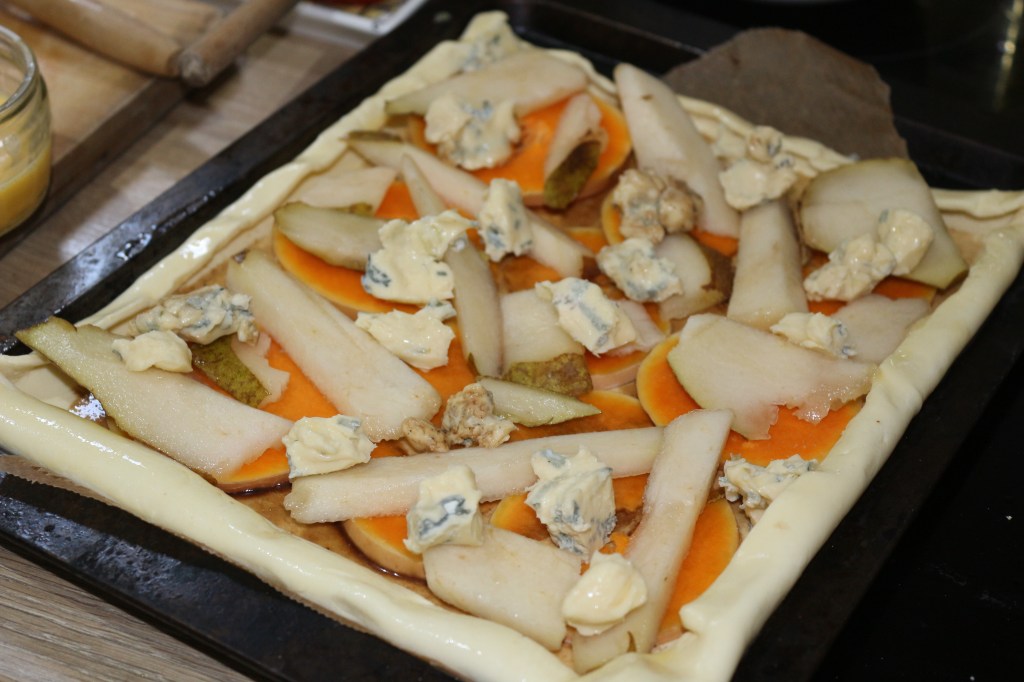
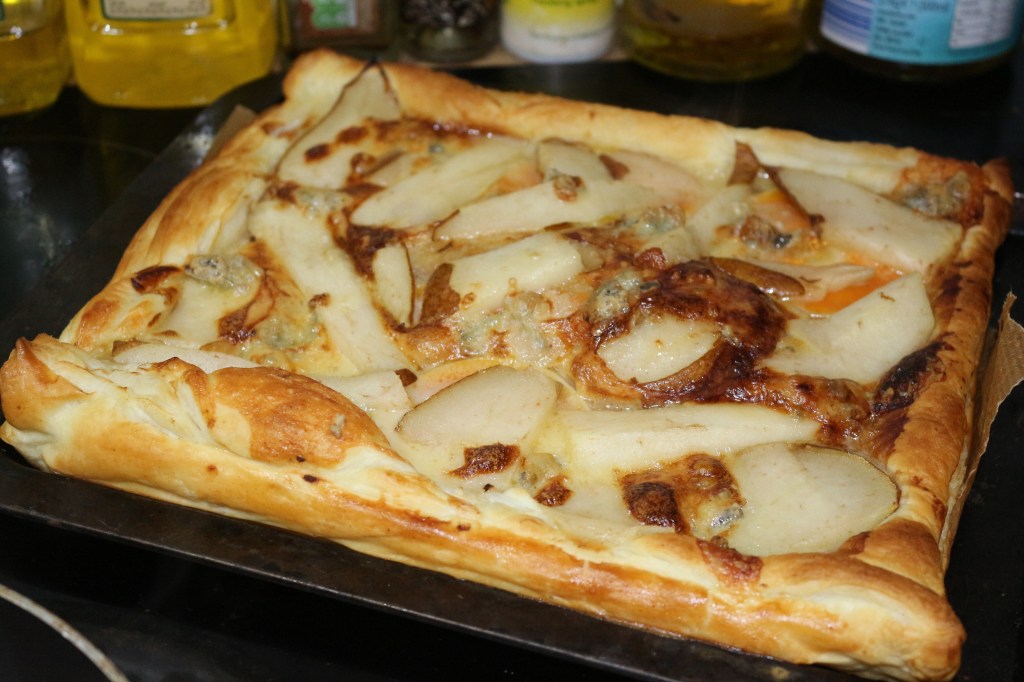
From the photos, you’ll notice that there are two versions of this tart that I made. The first used all the ingredients, but I wasn’t happy with the base, so decided to remake it, and the second version was spot on. Having said that, I didn’t have enough puff pastry or any pears the second time, hence the smaller tarts and fewer toppings.

You can absolutely get the tart to cook through completely without the bottom being soggy, but don’t be afraid to let the outside edges brown a little more to do so. Baking the pastry blind beforehand will also help to ensure it’s completely cooked through.

I won’t even lie, the first time I made this, I ate the entire tart in one go. I just kept going back for more it was so good, so now, over to you…

Makes 1 large rectangular tart and 4 individual tarts

Ingredients:

½ packet of ready rolled puff pastry

½ butternut squash

salt/pepper

rosemary

1tbsp cornflour

1btsp honey + 1btsp balsamic vinegar (combined)

1 pear

75-100g blue cheese (the creamier the better)

1 egg, beaten

chopped walnuts (optional)

  1. Preheat oven to 180.
  2. Cut squash into thin discs and add to a baking tray with olive oil, salt, pepper and rosemary, and roast until soft. This shouldn’t take long – around 10 mins, depending on your oven.
  3. Unroll the pastry and fold over the edges to create a crust. Bake the puff pastry until puffed up and starting to brown slightly (5-8 mins).
  4. Remove pastry from the oven and flatten out the puffed up centre.
  5. Sprinkle the cornflour over the pastry base so that any excess moisture from the filling will be soaked up.
  6. Layer over the squash, pear and chunks of blue cheese, then brush the edges with egg wash before placing back in the oven to bake until golden and cooked throughout. You will need to monitor the base as this will cook slower than the edges which will brown quickly, so turn the heat down if need be.
  7. After removing from the oven, ensure base is not soggy, top with the chopped walnuts and drizzle with the honey/balsamic vinegar dressing.

I topped the finished tart with my favourite spice mix, which is a Spanish brand, including garlic, onion, thyme, chilli flakes and some other spices in there, but you can top with whatever you enjoy – whether that’s a sprinkle of chilli flakes, a few sprigs of rosemary, a dusting of pepper, or just leave it as is!

Once you’ve baked your first tart, you’ll realise how easy it is to customise and make it your own. There are so many different toppings you could experiment with, from Italian caprese, to goat’s cheese and honey, or a classic cranberry and Brie. So get experimenting, and…

¡Comemos!

xo

Butternut Squash and Spinach Curry

I love following recipes. When I’m conscientiously working step by step through someone else’s instructions for a masterpiece, I’m learning.

More recently, however, I’ve started to think that although I do love other people’s recipes, the only way to take my cooking to the next level, is to trust myself a little bit more, and take what I’ve learnt, trying to put that into practice to produce my own recipe-less meals.

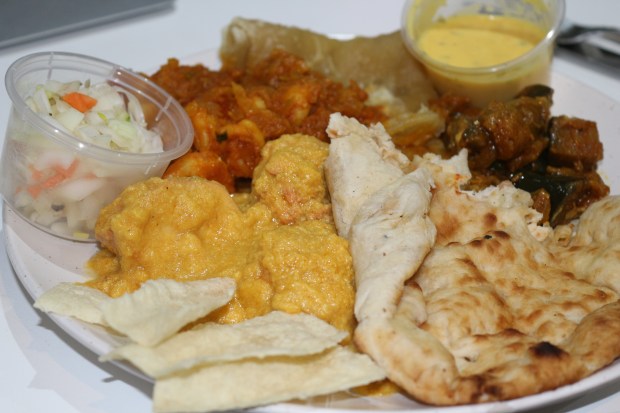
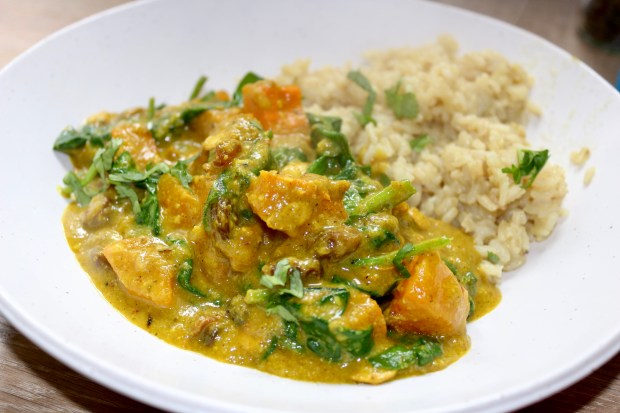
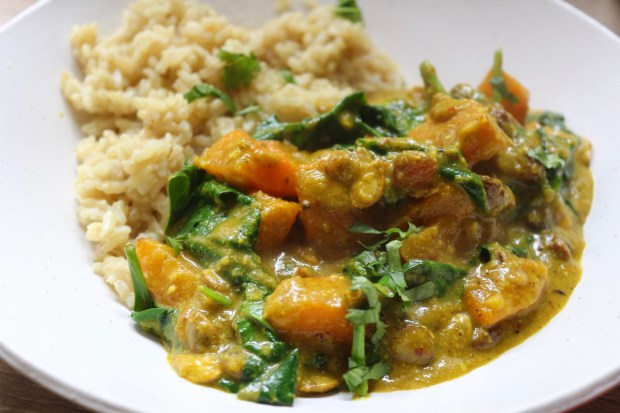
I had an Indian takeaway the week before last, and realised that my absolute favourite kind of curry is that creamy, thick, slightly sweet sauce. Sort of like a korma, but sweeter. That’s not to say that I’m not good with spice, because I love the heat, but I’m just such a sucker for sweetness.

That creamy takeaway curry that I adore

I don’t think I’ve ever followed a cookbook or internet recipe that has successfully emulated this sweet and fragrant kind of curry sauce, so that’s where my mission came in.

I’m very happy with the paste I’ve managed to produce. It’s so full of flavour, and could be adapted to work with a variety of main ingredients, so if you’d rather try chicken, or wanted to substitute the spinach for chickpeas, etc., it would work.

This curry didn’t end up being as thick and creamy as those I’ve tried and loved in the UK, however, thinking back to my recent visit to India, curries over there really aren’t like that at all. They tended to be either slightly more runny, or towards the other extreme, lacking in sauce and instead focusing on the paste as a sort of coating.

So there’s my excuse for the consistency of this delicious, healthy curry.

As always I come with disclaimers – my oven behaves like a bonfire, and so any recipe that says roast for 40 minutes, in my oven, has to be converted to about 20 to prevent a lump of charcoal emerging 40 minutes later. Therefore, timings may need to be adjusted accordingly to account for differences in appliances. Just use your common sense.

Serves 2

Ingredients:

  • ½ butternut squash + seeds
  • olive oil
  • chilli or paprika flakes
  • 1 tbsp turmeric
  • 200ml coconut milk
  • 2 mini packs of raisins
  • 2 handfuls of spinach
  • small handful coriander
  • rice of your choice to serve

For the paste:

  • 1 large onion
  • 2 cloves of garlic
  • 2tsp ginger paste or thumb of fresh ginger
  • 1tbsp curry powder
  • ½ tsp cinnamon
  • 1tsp cumin
  • ½ tsp chilli powder
  • 1 tsp fenugreek
  • large pinch of salt
  • seeds of 1 cardamom pod
  • large handful of coriander
  • handful of almonds
  • 4 dates or 2 tbsp maple syrup
  • 1 tbsp water
  1. Preheat overn to 180
  2. Cube the butternut squash then rub the cubes and seeds with olive oil and chilli or paprika flakes
  3. Roast for 10 minutes (ish) or until almost cooked through. Then put to one side.
  4. Heat oil in a pan and add chopped onion and garlic. It doesn’t particularly matter how they’ve been chopped, as they’ll end up blended anyway.
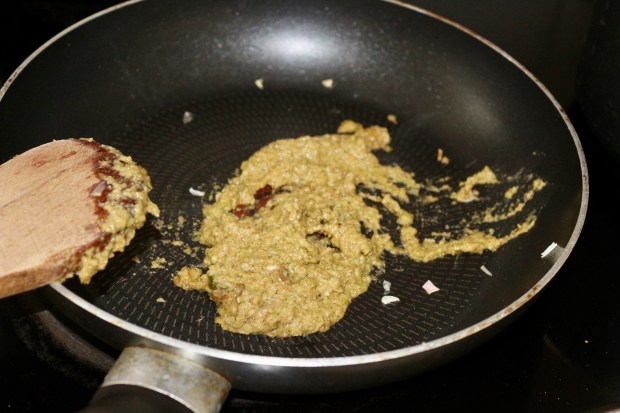
  5. Add all the paste ingredients to a blender and blend to a smooth paste. Don’t worry if the colour doesn’t look particularly appetising; we’ll correct that shortly.
  6. Begin to cook the paste in a pan, adding the turmeric, coconut milk and raisins.
  7. The coconut milk will make the curry very runny so around 20 minutes on a medium heat should allow it to reduce and thicken slightly.
  8. 5 minutes or so before the curry has reduced to your taste, add the butternut squash, making sure to reserve the seeds for later.
  9. Seconds before you remove the pan from the heat, throw in the spinach and mix through so that it wilts slightly but not completely.
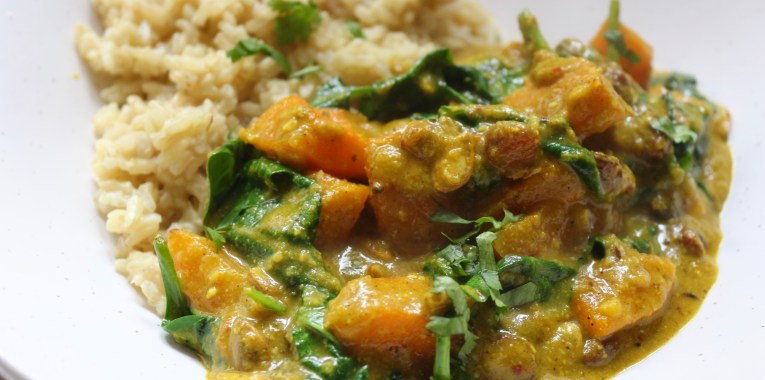
  10. Serve with rice, sprinkling over the squash seeds and chopped coriander.

This would also be wonderful served with naan to soak up all the delicious juices.

The paste is absolutely the star of the show, so as I said, the bulk ingredients (meat/veg) are pretty interchangeable so feel free to adapt this as you wish.

The lovely thing about making your own pastes and sauces is that you know exactly what’s gone into them. This is definitely one of my favourite things about cooking from scratch – no dodgy added ingredients with long-winded scientific names.

So next time you fancy a curry night, try and give those jarred curry pastes a miss. This time it’s down to you, throwing in as much or as little spice as you need to create your own Indian masterpiece.

¡Comemos!

xo