

The first in a new series, here I’ll be taking a look at key dishes from countries around the globe, how they compare in London, and how you can attempt to whip them up in your kitchen at home.
Before I get stuck in, I’d like to point out that I began writing this before things really spiralled with regards to the Coronavirus. I talk later on about my love for London’s street food pop ups, and urge you to visit your local, independent restaurants, however, as things stand at the minute, obviously that isn’t necessarily possible. So many places I love have closed down, some not knowing if they will ever be able to reopen. It’s a massively tough time for so many people, so I just hope that when all of this subsides, as many of these places as possible can get back on their feet. So, continuing with my original request, please consider investing your time and money (and stomach space) in these amazing small businesses when it’s safe to do so again – they will really appreciate your support, and it’ll be exciting to try something new.
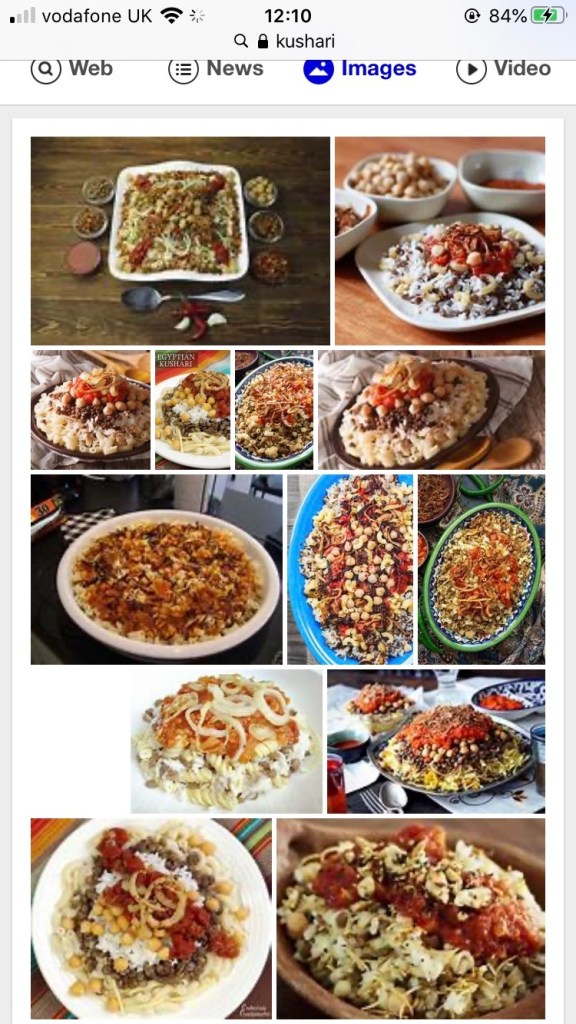
But getting stuck back in, my first stop is Egypt, an underrepresented cuisine here in the UK, with my Egyptian dish of choice being Koshari (also written as ‘Kushari’).
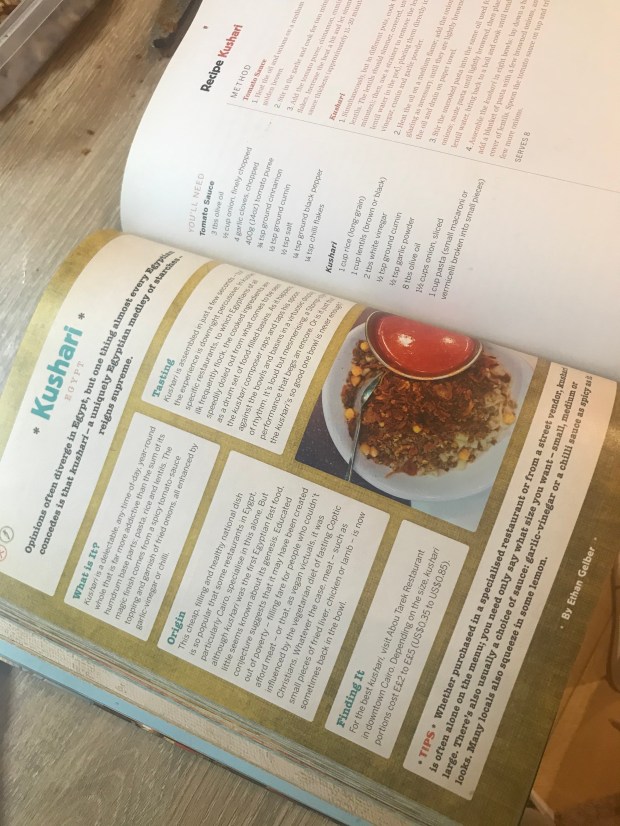
I first came across Koshari in the Lonely Planet Street Food guide, which highlights some of the world’s best street food, offering readers simplified home recipe versions.
But what is it? As the national dish of Egypt, Koshari consists of brown rice and lentils mixed with chickpeas and macaroni, and topped with a tomato sauce and crispy fried onions. All the elements within the dish are super basic, but combined, create a fibre-filled snack, which is full of flavour. Traditionally, koshari doesn’t use any animal products and so is suitable for vegan diets, although nowadays, some places mix up their menus to include meat versions. Koshari initially came about as a street food dish, being sold on carts throughout Egyptian towns and cities; however, it can now also be found on more formal restaurant menus.
One of the most wonderful things about living in London is the diversity of its food scene. The concept of ‘street food’ in the UK has come under scrutiny recently due to the rapid increase in super popular, commercialised food halls offering ‘street food’. Authenticity and motivations have been questioned, and one of the key issues has been the idea that this kind of food, which initially existed across the world to be sold to labourers as a quick and cheap lunch option, has been ‘gentrified’ in a sense. For ‘street food’ in London, you could find yourself paying over £10 for one dish to enjoy as part of a social outing. Despite this, I strongly believe that our street food scene shouldn’t be given a bad name. I love the fact that many of my favourite food stalls and pop ups are run by people who are so passionate about their food products that they want to channel that into preparing traditional dishes here in London. There may be wider issues, but not to the extent that we should feel guilty for enjoying incredible international food created by experts.
No matter how obscure you think a dish may seem, there’s a 99.9% chance that you’ll still find it in London, and Koshari is one of those. Koshari Street is a small business with a little store on St Martin’s Lane, Covent Garden, which serves the classic dish alongside meat and chicken options, protein bowls, and build your own bowls. The store is a really relaxing space with a small number of tables, and all the ingredients for the dish lain out in front of you behind the counter.
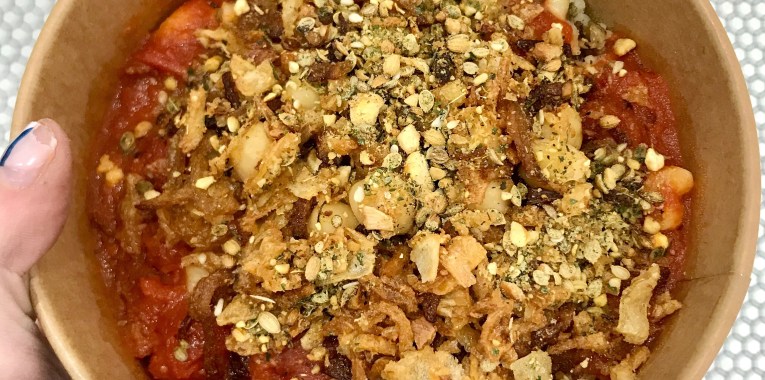
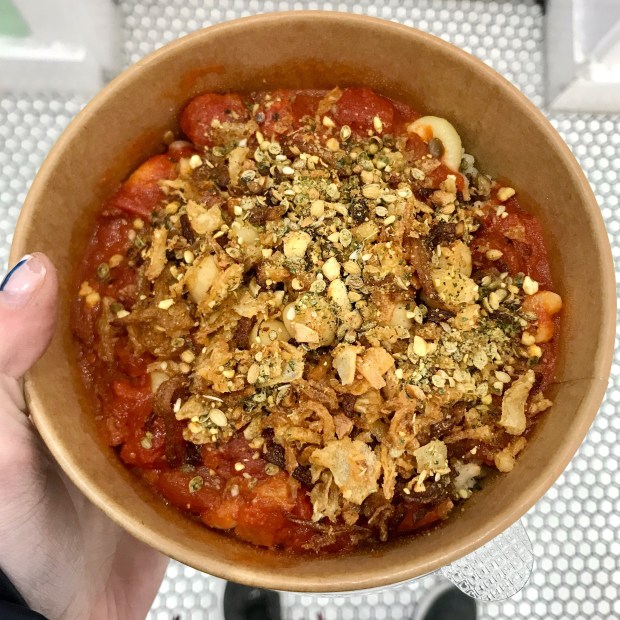
So many of the bowls looked great, but for ‘research purposes’ I wanted to try the classic. With bowls coming in regular and large, I can confirm that the regular portion is a really good size. The base, as is customary, is made up of lentils, macaroni and small noodle pieces and is topped with the classic zingy tomato sauce, chickpeas and a deliciously spiced nut mix, which also adds a lovely crunchy texture to the dish. Koshari bowls are super healthy, but really filling, and I’m really happy to see Egyptian food on the mainstream here in London.
But then it was over to me. To be honest, the task of recreating this at home probably wasn’t as daunting as some of the other dishes I will be attempting, after all, it only really consists of boiling your rice, lentils and pasta and mixing up your tomato sauce before piling everything together. Even so, I was pretty happy with how it turned out…
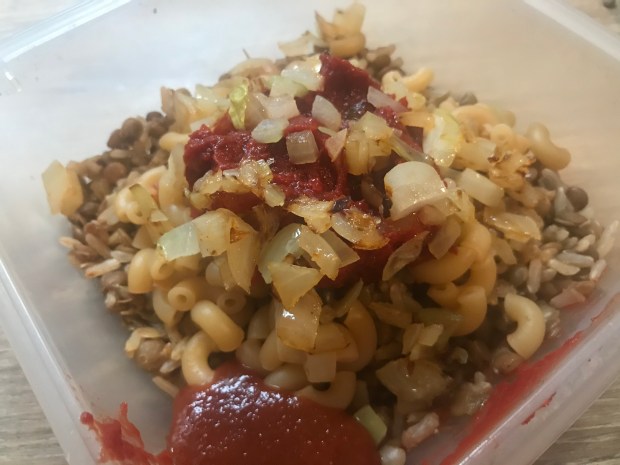
As a lunchbox meal to eat at work or on the go, this kind of dish is perfect, and is also the kind of thing you can batch cook. I added lots of diced onion to the top of mine for added flavour, but really the classic is so satisfying that you really don’t need to mess with the traditional ingredients. The tomato sauce is actually just a tomato puree mixed with garlic, onion, cinnamon, cumin, salt, pepper and chilli flakes. Because the carb/protein base of this dish is so simple, the beauty of it comes from the spices so the cumin and cinnamon really do bring the whole thing together.
This post has been short and sweet, but hopefully you’ve learnt something. I’d love for this series to encourage you to try something new; to venture out and indulge in a kind of cuisine you’d never really considered before, and maybe even try tackling an unusual dish in your own kitchen. We’ve probably all tried French, Spanish, Mexican, Indian etc., but there is so much more out there that’s hidden from our mainstream dining options. Don’t get me wrong, some of the dishes in this series will be pretty well known, but others I hadn’t even heard of before researching potential material.
Most towns and certainly all cities will have at least a handful of independently run restaurants or cafes dishing up amazing food from lesser-publicised corners of the world, so for your next date, family celebration or friendly catch-up, why not try something new and support those who are kind enough to share their national cuisine with us?
¡Comemos!
xo
 ¡Comemos!