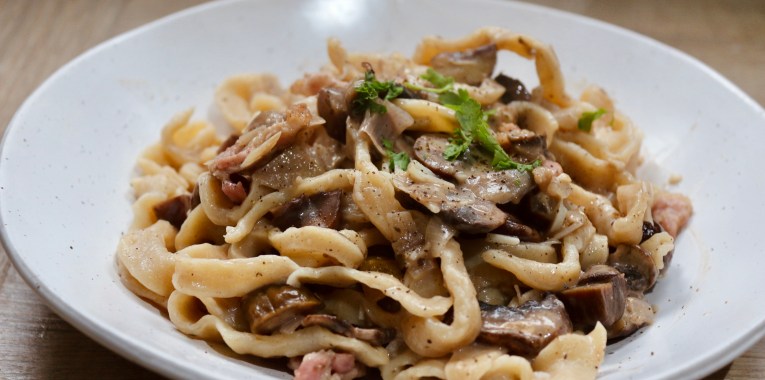
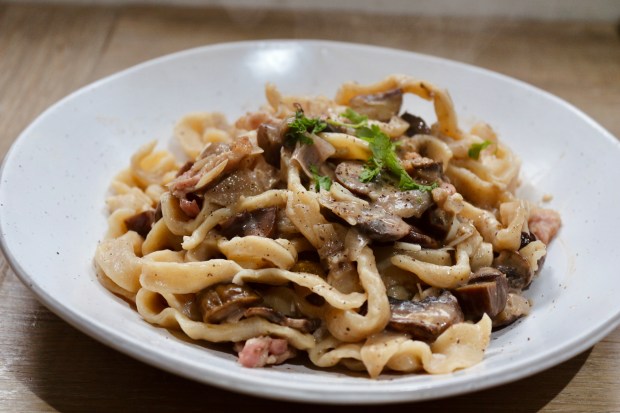
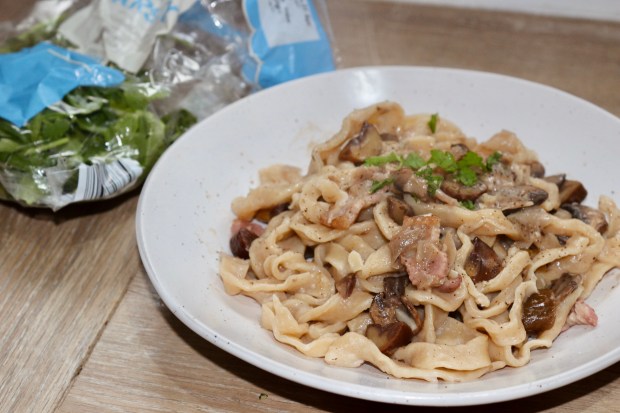
A bit of a long-winded title but seriously, all the elements that go together in this dish deserve as much credit as each other.
My mum would always use Marsala in cooking, particularly in pasta and risotto dishes, and despite having no idea what it was, or that it even existed (nothing to do with Garam masala), I knew that every dish I tasted that had a splash of Marsala added was just that little bit tastier. This fortified Italian cooking wine, combined with salty pancetta and meaty mushrooms and chestnuts make the perfect combination. You can buy it from Italian delis or online. You should also try to use deli-style thick pancetta rather than the super finely cut supermarket slices, which just don’t have anyway near as much flavour.
This was also my third time making pasta. You absolutely don’t have to make the pasta yourself, and I’ll openly admit that I haven’t got it spot on yet. I absolutely loved the finished result, but I know this isn’t the classic light, silky fresh pasta you’d expect served to you in a restaurant, so feel free to either skip that step or use your own recipe or techniques. I actually ditched my pasta machine this time round because I found it way too fiddly to use, and a good old-fashioned rolling pin on the kitchen table did the trick, providing you persevere, getting the dough super thin.
I’d also like to highlight that the pasta dough recipe below is not my own, and is taken from Gino D’acampo’s Gino’s Pasta.
The pancetta does add a delicious crisp saltiness to the dish, but you could also use egg-free pasta and skip the pancetta for a plant-based meal. A small amount of miso paste could be a decent replacement just to hold on to some of those umami flavours.
Serves 2
For the pasta:
200g strong white flour
2 eggs
1tbsp olive oil
For the sauce:
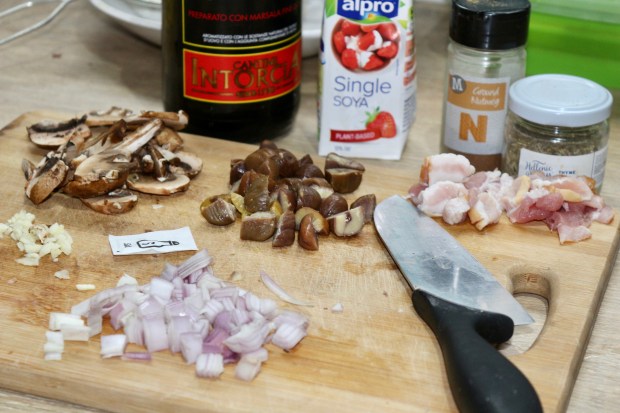
150g mushrooms (button/chestnut)
50g cooked chestnuts
50g pancetta, diced
splash of marsala
100ml double cream (or plant-based alternative)
pinch of nutmeg
salt/pepper
a few sprigs of thyme
fresh parsley (optional)
Sift the flour onto a work surface and make a well in the centre.
Add the eggs, salt and olive oil.
Mix the wet ingredients with the dry, slowly combining from the inside out (bring the flour on the inside of the well into the wet ingredients first and work your way outwards).
Gather and knead to a soft dough (8 ish minutes).
Roll into a ball and leave to chill for 20 minutes.
Meanwhile start on the sauce. Brown the pancetta in olive oil then add the mushrooms and chestnuts.
Pour in the Marsala, add the thyme and seasoning and cook on low-medium heat to reduce.
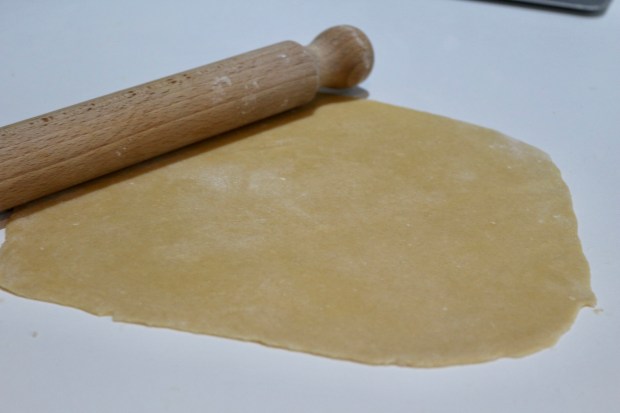
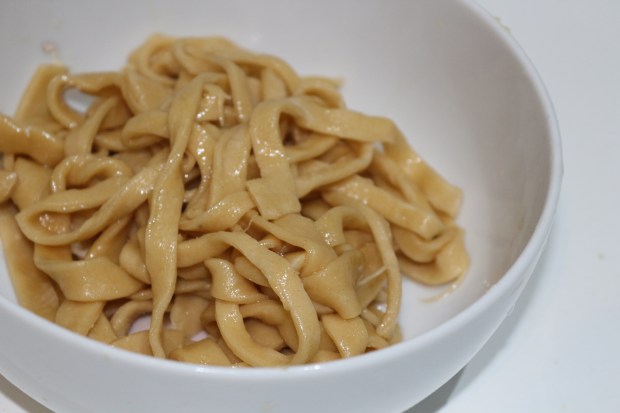
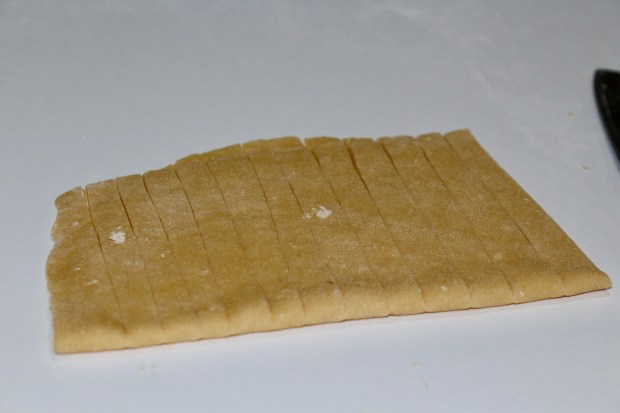
Now back to the pasta. Remove the dough from the fridge, roll out very thinly so that you can see your hand through the dough either using a pasta machine or a rolling pin.
Fold the rolled dough in half and slice into ribbons of equal width.
Toss with a small amount of olive oil to stop the pasta from sticking together.
Bring a pan of salted water to the boil and add the pasta. It will cook super quickly and generally is ready when it rises to the surface. Drain, reserving a tiny bit of the cooking water for the sauce.
Finish off the sauce by adding a couple of tablespoons of pasta water, the double cream and nutmeg. Allow to cook for a couple of minutes before removing from the heat and tossing the pasta through the sauce.
Serve immediately topped with a little extra thyme and/or fresh parsley.
Pasta-making aside, this recipe is super straightforward, and the sauce is easily customised. The creamy Marsala is beautiful on its own and so even if you didn’t want to add the mushrooms and chestnuts, it should still taste fab.
I love following recipes. When I’m conscientiously working step by step through someone else’s instructions for a masterpiece, I’m learning.
More recently, however, I’ve started to think that although I do love other people’s recipes, the only way to take my cooking to the next level, is to trust myself a little bit more, and take what I’ve learnt, trying to put that into practice to produce my own recipe-less meals.
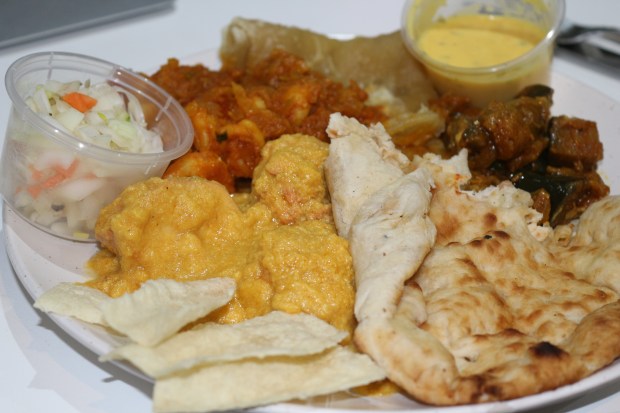
I had an Indian takeaway the week before last, and realised that my absolute favourite kind of curry is that creamy, thick, slightly sweet sauce. Sort of like a korma, but sweeter. That’s not to say that I’m not good with spice, because I love the heat, but I’m just such a sucker for sweetness.
That creamy takeaway curry that I adore
I don’t think I’ve ever followed a cookbook or internet recipe that has successfully emulated this sweet and fragrant kind of curry sauce, so that’s where my mission came in.
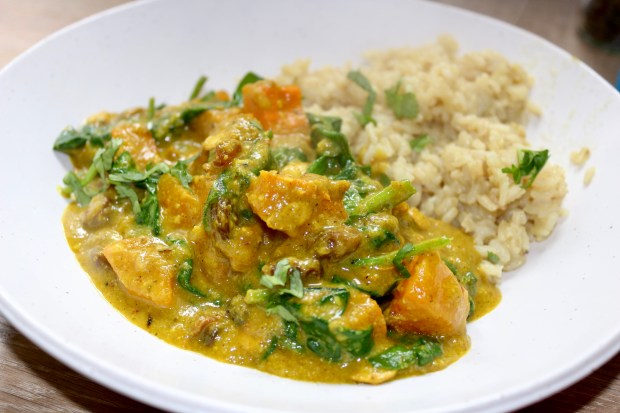
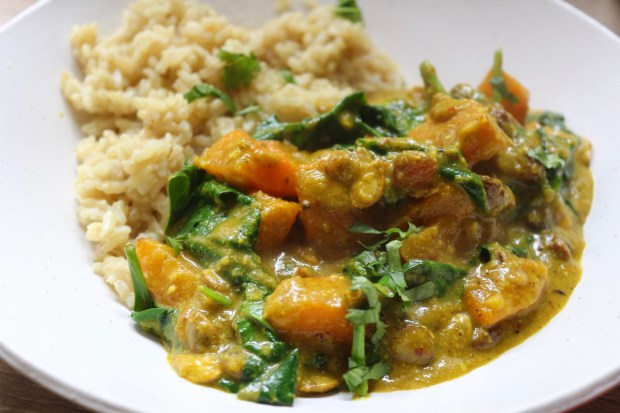
I’m very happy with the paste I’ve managed to produce. It’s so full of flavour, and could be adapted to work with a variety of main ingredients, so if you’d rather try chicken, or wanted to substitute the spinach for chickpeas, etc., it would work.
This curry didn’t end up being as thick and creamy as those I’ve tried and loved in the UK, however, thinking back to my recent visit to India, curries over there really aren’t like that at all. They tended to be either slightly more runny, or towards the other extreme, lacking in sauce and instead focusing on the paste as a sort of coating.
So there’s my excuse for the consistency of this delicious, healthy curry.
As always I come with disclaimers – my oven behaves like a bonfire, and so any recipe that says roast for 40 minutes, in my oven, has to be converted to about 20 to prevent a lump of charcoal emerging 40 minutes later. Therefore, timings may need to be adjusted accordingly to account for differences in appliances. Just use your common sense.
Serves 2
Ingredients:
½ butternut squash + seeds
olive oil
chilli or paprika flakes
1 tbsp turmeric
200ml coconut milk
2 mini packs of raisins
2 handfuls of spinach
small handful coriander
rice of your choice to serve
For the paste:
1 large onion
2 cloves of garlic
2tsp ginger paste or thumb of fresh ginger
1tbsp curry powder
½ tsp cinnamon
1tsp cumin
½ tsp chilli powder
1 tsp fenugreek
large pinch of salt
seeds of 1 cardamom pod
large handful of coriander
handful of almonds
4 dates or 2 tbsp maple syrup
1 tbsp water
Preheat overn to 180
Cube the butternut squash then rub the cubes and seeds with olive oil and chilli or paprika flakes
Roast for 10 minutes (ish) or until almost cooked through. Then put to one side.
Heat oil in a pan and add chopped onion and garlic. It doesn’t particularly matter how they’ve been chopped, as they’ll end up blended anyway.
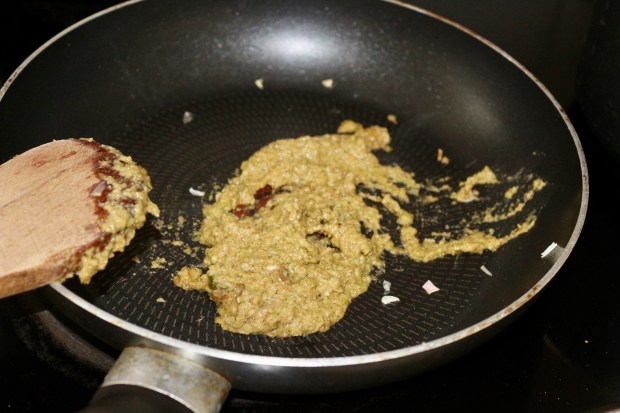
Add all the paste ingredients to a blender and blend to a smooth paste. Don’t worry if the colour doesn’t look particularly appetising; we’ll correct that shortly.
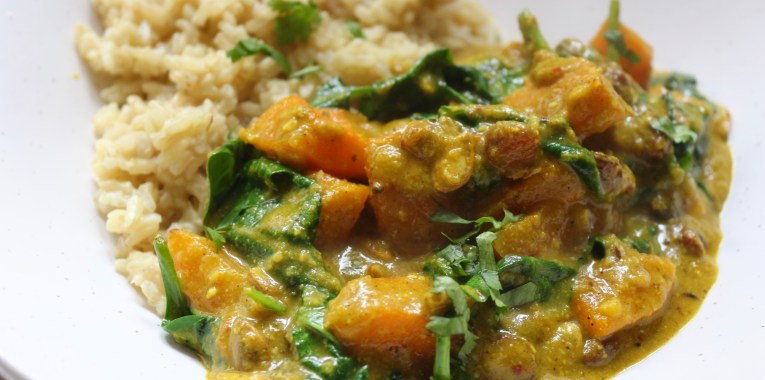
Begin to cook the paste in a pan, adding the turmeric, coconut milk and raisins.
The coconut milk will make the curry very runny so around 20 minutes on a medium heat should allow it to reduce and thicken slightly.
5 minutes or so before the curry has reduced to your taste, add the butternut squash, making sure to reserve the seeds for later.
Seconds before you remove the pan from the heat, throw in the spinach and mix through so that it wilts slightly but not completely.
Serve with rice, sprinkling over the squash seeds and chopped coriander.
This would also be wonderful served with naan to soak up all the delicious juices.
The paste is absolutely the star of the show, so as I said, the bulk ingredients (meat/veg) are pretty interchangeable so feel free to adapt this as you wish.
The lovely thing about making your own pastes and sauces is that you know exactly what’s gone into them. This is definitely one of my favourite things about cooking from scratch – no dodgy added ingredients with long-winded scientific names.
So next time you fancy a curry night, try and give those jarred curry pastes a miss. This time it’s down to you, throwing in as much or as little spice as you need to create your own Indian masterpiece.
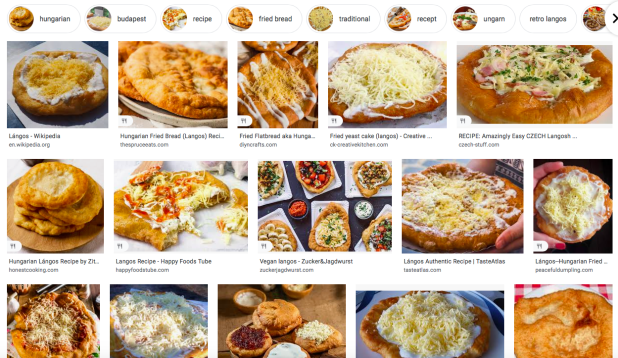
Deep fried dough. No one can explain why something that sounds so basic and actually quite gross is in reality so delicious. It still baffles me that there are so many different ways of making deep fried dough into snacks and meals, each one of them bringing something completely different to the table, literally.
My travels are this week taking us to the home of the Lángos – a deep fried dough featuring as many customisable toppings as you’d like. And where does this delicacy hail from?
Hungary.
If you’ve read my post on my trip to Budapest last November, you may already have known that.
Don’t be too tempted to jump on the idea that this is like a Hungarian pizza. There are many differences. Obviously here the dough is fried, and that’s key, but sometimes mashed potato is added for a fluffy, slightly creamy texture. Secondly, the main topping tends to be sour cream – not a tomato sauce in sight. And last to mention, is unfortunately, the (optional) cheese topping on a Lángos doesn’t tend to be melted, but don’t let that put you off, this actually allows you to get a lot more flavour from the cheese, even if the texture isn’t quite as mouth-wateringly gooey.
Despite not being as large as a typical medium-sized pizza, as it’s deep-fried, it can be pretty heavy, so don’t underestimate just how filling they are, even if the toppings are minimal.
The Lángos is often described as a street food – in fact, once again, it was in my Lonely Planet Street Food guide that I first came across it. Having said that, one of the main qualities of street food tends to be that it’s super easy to eat on the go. As a pretty stodgy flatbread, the Lángos doesn’t really fulfil this brief, and so whilst it’s cheap and easy to quickly whip up outside the confines of a restaurant, you’re probably going to want to take a seat to eat it.
Back when bread was regularly baked in every household, the Lángos dough would be excess leftover from bread-making, and would be baked in the same way, however seeing as such daily home baking is no longer practised, the dough now ends up being deep-fried instead. Back when it was baked in the bread oven, it was placed right at the front, close to the flame, which is where the delicacy gets its name, with láng being the Hungarian word for flame.
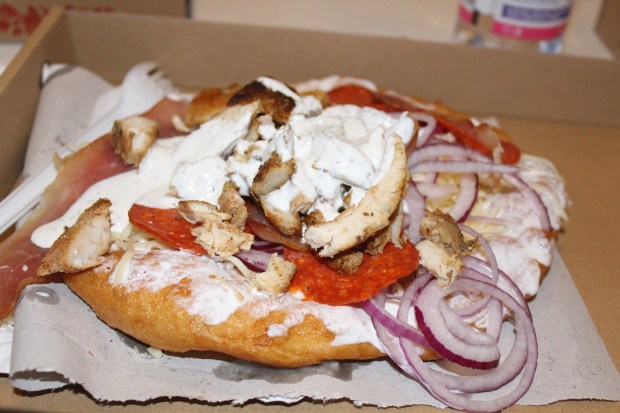
Moving on to my own experiences of the dish. I first tried it at the Central Market in Budapest last year. The upstairs section of the huge market hall has an area dedicated to food, which is comparatively small in size, meaning that queues of people are packed in to one small space, all eagerly awaiting their delicious lunch meal. Whilst my friends opted for slightly more nutritious salad and veg-topped versions, I of course went for the meatiest feast I could find. Sour cream, grated cheese, onion, chicken, pepperoni and ham struggled to contain themselves on top of the dough base as we hunted for somewhere to perch. This is by no means a light snack; be prepared to feel a little heavy afterwards, but it’s worth it. To be honest, Lángos aren’t the most flavoursome meals – other than the flavour from the toppings, there’s little seasoning or added ingredients, other than perhaps a garlicky rub on the base, but the appeal here is definitely more due to tradition and doughy, fried indulgence.
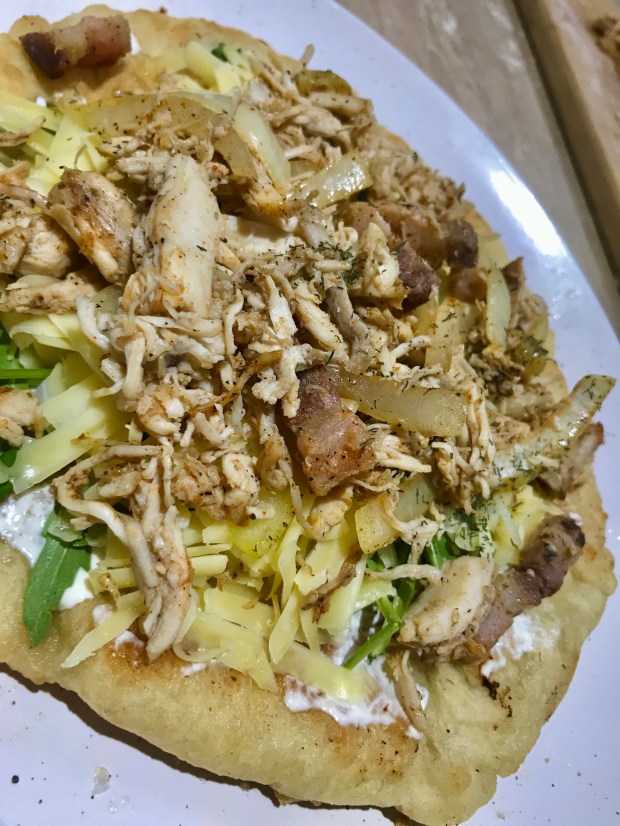
Having said that, when I attempted my own version at home, I have to admit that it was even better than the one I tried in Budapest. After frying, along with the standard sour cream and cheese base, I topped the dough with shredded chicken, pancetta, rocket and onion. Whilst the onion on my Lángos in Budapest was raw, I decided to cook it this time, just to avoid the pungency that raw onion can have. The seasoned toppings were really tasty, and the addition of mashed potato to the dough made it super soft, whilst still maintaining the slightly crispy exterior.
I would definitely make Lángos again at home. They’re really simple, although I would fry the dough for slightly longer next time, just for extra crispiness, as my fear of overcooking it this time made it a little too squidgy in the centre.
And that’s dish number 2 in the series complete. We’ve gone from a healthy, plant-based tomatoey pasta lentil dish last time round, to a deep fried fully- loaded doughy delight, so you can be sure that there are no rules when it comes to deciding which dishes to showcase next.
There are loads of recipes for Lángos online, so with so much time at home at the minute, why not try your own hand at one of Hungary’s signature dishes for an indulgent weekend treat.
It’s day 3 for me. Day 3 of lockdown. No work, not even anything I can take home, and so like many people working in the hospitality sector, I feel a bit lost.
When I then think that many people have been on lockdown/self-isolating for much longer than my mere 3 days, I wonder how you’ve got by.
Things will improve, but right now, we’ve found ourselves in a mad situation. Whilst ‘key workers’ are doing a fantastic job, be it saving lives, stocking shelves or collecting bins so that our world can keep turning, they’re not the only ones bearing the brunt of it all.
I’m talking about poor old Netflix.
Never has our favourite means of procrastination had to deal with so many demands, so many fed up people desperate to find entertaining ways to pass time.
That’s why I’ve come up with my top 16 foodie shows to invest your time in over the coming weeks (or months…). Most of these are on Netflix, some can be found on BBC iPlayer if that’s accessible to you, and failing that, just good old Google should do the trick. These things can often be found somewhere on the web, even if the quality isn’t perfect.
So, if you’re going to devote more time to TV now, you may as well choose something entertaining, informative, and thought-provoking, that’ll get you super excited for all the incredible food waiting for you out there when this blows over…
Category is: Best of British
Great British Bake Off
Okay, so, chances are, you’ve seen some of this already, and failing that, you’ve certainly heard of the Great British Bake Off, so it’s an obvious choice, but there’s honestly nothing better. You can find every single series of the original BBC version of Bake Off on Netflix, and if you can actually find any eggs or flour in the supermarkets, now is the perfect time to hunt for some baking inspiration. GBBO is light-hearted, warm, and funny; a really easy watch full of showstopping cakes, pastry disasters and lots of creepy Paul Hollywood stares.
Nadiya’s Time To Eat / Nadiya’s Family Favourites
Of course there was no way I could write a post like this without mentioning Nadiya. Neither of these shows are actually on Netflix, but both can be found on iPlayer, and once again, they’ll definitely be able to provide you with some ‘isolation inspiration’ cooking-wise. Nadiya is the anti-food-waste queen, with her recipes ideal for families, using simple ingredients, and making sure not to waste a single thing. As well as her resourcefulness when it comes to cooking, her wonderful positivity and bright, sunny personality is a joy to watch on screen.
twnews.co.uk
Masterchef
Less home cooking, more refined, restaurant flair, Masterchef is another mouth-watering best of British option. With a current series on-going on BBC at the minute, there’s still time to catch up from the beginning before the final. The pompousness of the food critics, alongside Gregg’s caricature-like reactions creates a balanced programme filled with as much fun and disaster as there is serious cooking and creativity. Although I haven’t watched it myself, I hear that the Australian version is also worth getting into.
bbc.co.uk
Million Pound Menu
A bittersweet one up next, but definitely a highlight for me. Million Pound Menu takes street food and restaurant concepts and challenges the brains behind them to impress a number of industry figures enough that they choose to invest up to £1,000,000 in their business venture. Many of the restaurants and pop ups involved I’d either already heard of or even eaten at myself, so watching the faces behind them on screen was really interesting. It’s quite gutting to watch at this moment in time when many of them who were still trading have had to put their businesses on hold, not knowing if they will have the means to open their doors again when the lockdown rules are lifted, but on the off chance that this might inspire you to support such small businesses in any way you can, I urge you to watch this series, full of impressively creative and determined, young, entrepreneurial minds. It’s also presented by Fred Sirieux if that sways any of you…
bighospitality.co.uk
The Big Family Cooking Showdown
Last in the Best of British, is The Big Family Cooking Showdown, hosted by my beloved Nadiya, and Zoe Ball. In each episode, 3 families compete in 3 challenges, preparing home cooked comfort food with their relatives, to make it to the semi finals, as they are judged by Rosemary Schraeger and Giorgio Locatelli. If you can stand Rosemary Schraeger for more than 5 seconds then it’s definitely worth a watch, and for some added fun, why not drink everytime she wobbles her head in disapproval, babbling ‘THe TeXtUrE iS aLl WrOnG…’. This is light-hearted fun, with relatable families like yours and mine, from teenage contestants to grandparents, all cooking together.
thesun.co.uk
Category is: Baking
Zumbo’s Just Desserts
Should I be ashamed to say that I didn’t know who Adriano Zumbo was before watching this? Possibly not as a Brit, but I’m glad I’ve now been introduced to his amazing creations. I’ve often heard people say that part of the reason Americans loved GBBO was because of how lovely all the contestants were to one another, unlike US cooking shows which are much more competitive, and the same should be said for Australian shows. Zumbo’s Just Desserts is similar to Bake Off in terms of individual contestants completing baking challenges, however all of the creations, as the title suggests, are desserts, excluding things like bread and pies like they make in GBBO. The contestants are also much more openly competitive towards each other, some even verging on villainous in their taunts, but this is what makes it so entertaining. Rachel Khoo copresents, with the only downside to the show being her unnecessarily frumpy frocks.
usa.newonnetflix.info
Sugar Rush
From Australian baking shows, to the US, this time we’re sticking with Adriano Zumbo as judge, but of course it couldn’t be hosted by anyone other than a drama school-esque, lip-gloss wearing, movie-star smiled Hunter March. Yes he’s American, of course that’s his real name. The premise here is that the 4 teams of two have three challenges to complete (that’s 4 teams, 2 contestants in each and 3 challenges, got it?), with a set amount of time in which to complete all 3. The time that they save in each round is then added to their 1-hour time limit in the final test, with the least impressive team being eliminated after each challenge. You’ll see cupcakes, confectionary and giant cake masterpieces, each team bringing their own unique style into the kitchen.
medium.com
Nailed It
Onto something slightly different now – instead of focusing on those who can bake, we’re looking at those who really can’t. On Nailed It, those individuals with a terrible track record in the kitchen compete to recreate professional bakes for cash prizes, with varying degrees of success. It’s just a bit of fun, with some pretty terrible attempts that’ll likely make you feel better about your own skills. It’s also a great excuse to practise your language skills, with series set in the US, Mexico, Spain, France and Germany. I’ve only actually watched the Spanish one so far, and it is ridiculous; quite appalling TV to be honest, but in times like these we’re pretty desperate aren’t we, and it’s entertaining nonetheless.
netflix.com
Category is: Global Cuisine
Ugly Delicious
A new one out there, Ugly Delicious follows US-Korean chef Dave Chang as he chases the trail of some of the most popular foods out there, questioning the concept of authenticity as he goes. Can we really compare the typical foods eaten across the vast space that is China, with our narrow-minded and potentially misguided attempts at Chinese food elsewhere in the world? Is pizza still pizza when crafted by innovative chefs in Japan? Covering tacos and kebabs, curry and fried chicken, this show will have you questioning authenticity vs flavour vs branding, with a group of passionate and grounded friends and colleagues guiding you along the way.
netflix.com
Street Food
It almost seems like a phenomenon of the past, but Street Food took Netflix by storm when it came out last year. With no host or recurring voiceover, we’re left in the company of the mostly non-English speaking cooks, who have mastered their crafts in major cities across Asia. Meet Toyo in Osaka, Florencia in the Phillipines and Jai Fay in Bangkok, who even went on to earn a Michelin Star for her street food café. Off the back of this series, people have flocked from all over the world to try this incredible street food from humble beginnings, but here you get to see these masterful chefs before their work gained international notoriety.
netflix.com
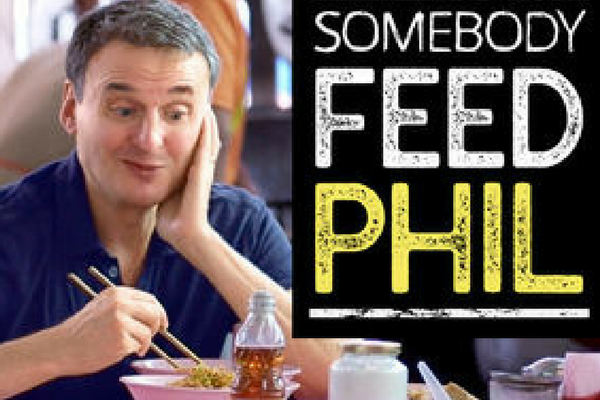
Somebody Feed Phil
The best kind of food-travel doc series, Somebody Feed Phil follows writer and producer Phillip Rosenthal as he embarks on an international food tour, landing in cities including Lisbon, Saigon and New Orleans, bringing a dose of (albeit American) humour along the way.
arts.tioh.org
Chefs’ Line
We’re heading back to Australia with this unique competitive series, in which 4 home cooks compete against ‘the chefs’ line’ composed of 4 chefs, ranging in experience, from hugely successful Sydney restaurants, including the head chef himself. Every 4 episodes centres around a different cuisine, covering Turkish, African and Italian to name a few. Contestants often have strong ties to that particular cuisine, whether they were born in Turkey or are third generation Italians, making them even more determined to showcase their skills and beat the professionals.
wikipedia.org
Category is: Celebrities/Chefs
Chef’s Table
Each episode of Chef’s Table tells the story of one of the world’s greatest chefs at present, from their background and visions, to inspiration and professional journeys. Travel to Argentina to hear from Francis Mallmann and his Patagonian cuisine, and then to Bo Songvisava for an insight into her rise to success as one of Thailand’s most successful chefs. A highly-acclaimed Netflix Originals series not to be missed.
lorriegrahamblog.com
Breakfast, Lunch, Dinner
If you got through Ugly Delicious and decided you needed a bit more Dave Chang in your life then don’t you worry, as Breakfast, Lunch, Dinner is here for you. This time around Dave calls in the help of some familiar faces including Seth Rogan in Vancouver, Chrissy Teigan in Marrakesh, Lena Waite in LA and Kate McKinnon in Phnom Penh, as they explore the city, indulging in 3 delicious meals and learning more about local culture and customs.
whatsnewonnetflix.com
Category is: Informative/Scientific
Rotten
Something a bit different this time round; Rotten encompasses a series of documentaries uncovering the controversial truths surrounding the supply chain of some of our favourite foods. Chocolate, avocado and peanuts are all on the list as foods hiding ethical issues when it comes to their production and supply. Meet those who are affected as they discuss their plight, and come away with a deeper understanding of how your food consumption habits may be affecting others half way across the world.
hitc.com
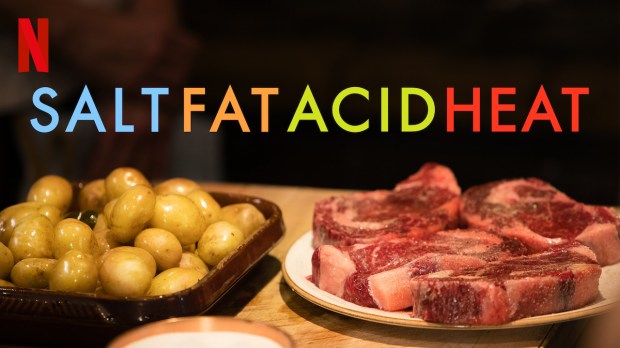
Salt, Fat, Acid, Heat
The final show to mention is another travel-cum-science-cum-all round mouth watering content kind of show. The show is hosted by chef and food writer Samin Nosrat, and is based on her own book of the same name. Travel with her to various locations to each time examine one of the 4 essential components of great cooking – fat in Italy, salt in Japan, acid in Mexico and heat in California.
anz.newonnetflix.info
And there’s my round up complete.
Netflix is an absolute blessing at this time, and whilst I admittedly am already slightly fed up of staring up at a screen, it is the only thing I can find to occupy my time once I’ve finished cooking, writing and working out. A lot can be learnt from the shows above, and they certainly offer a huge amount of inspiration, whether that’s for your next trip abroad when we’re finally allowed outside the confines of our own homes again, or simply your next kitchen cooking project to while away the hours.
The first in a new series, here I’ll be taking a look at key dishes from countries around the globe, how they compare in London, and how you can attempt to whip them up in your kitchen at home.
Before I get stuck in, I’d like to point out that I began writing this before things really spiralled with regards to the Coronavirus. I talk later on about my love for London’s street food pop ups, and urge you to visit your local, independent restaurants, however, as things stand at the minute, obviously that isn’t necessarily possible. So many places I love have closed down, some not knowing if they will ever be able to reopen. It’s a massively tough time for so many people, so I just hope that when all of this subsides, as many of these places as possible can get back on their feet. So, continuing with my original request, please consider investing your time and money (and stomach space) in these amazing small businesses when it’s safe to do so again – they will really appreciate your support, and it’ll be exciting to try something new.
But getting stuck back in, my first stop is Egypt, an underrepresented cuisine here in the UK, with my Egyptian dish of choice being Koshari (also written as ‘Kushari’).
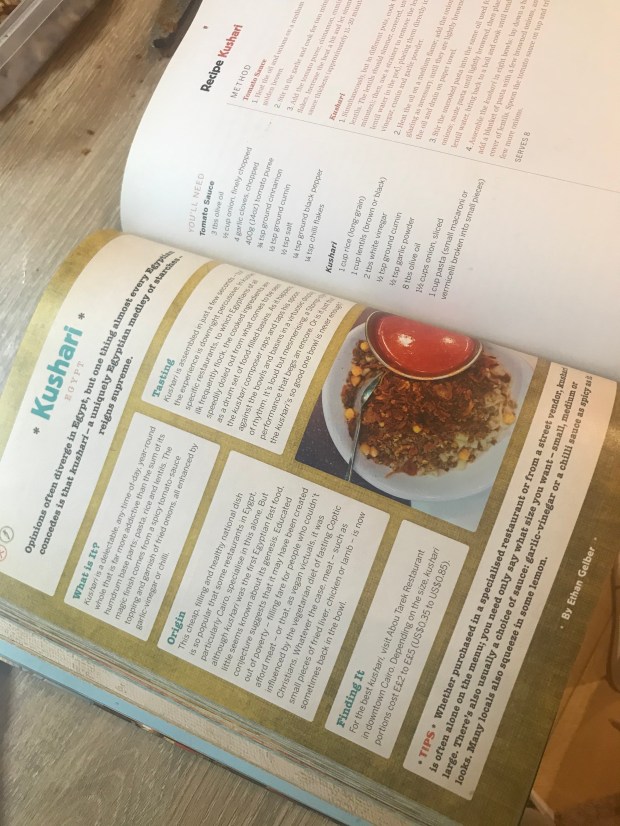
I first came across Koshari in the Lonely Planet Street Food guide, which highlights some of the world’s best street food, offering readers simplified home recipe versions.
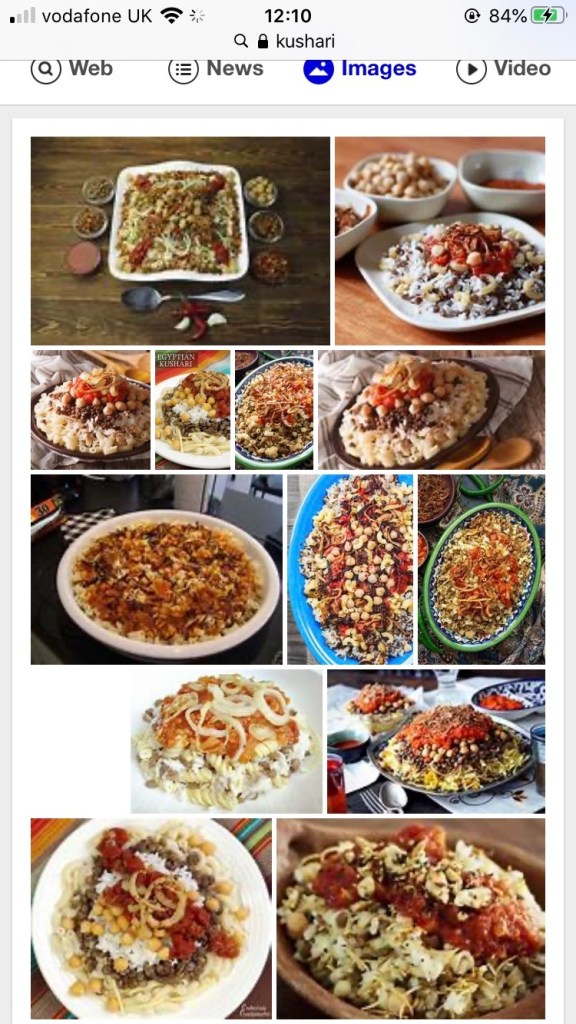
But what is it? As the national dish of Egypt, Koshari consists of brown rice and lentils mixed with chickpeas and macaroni, and topped with a tomato sauce and crispy fried onions. All the elements within the dish are super basic, but combined, create a fibre-filled snack, which is full of flavour. Traditionally, koshari doesn’t use any animal products and so is suitable for vegan diets, although nowadays, some places mix up their menus to include meat versions. Koshari initially came about as a street food dish, being sold on carts throughout Egyptian towns and cities; however, it can now also be found on more formal restaurant menus.
One of the most wonderful things about living in London is the diversity of its food scene. The concept of ‘street food’ in the UK has come under scrutiny recently due to the rapid increase in super popular, commercialised food halls offering ‘street food’. Authenticity and motivations have been questioned, and one of the key issues has been the idea that this kind of food, which initially existed across the world to be sold to labourers as a quick and cheap lunch option, has been ‘gentrified’ in a sense. For ‘street food’ in London, you could find yourself paying over £10 for one dish to enjoy as part of a social outing. Despite this, I strongly believe that our street food scene shouldn’t be given a bad name. I love the fact that many of my favourite food stalls and pop ups are run by people who are so passionate about their food products that they want to channel that into preparing traditional dishes here in London. There may be wider issues, but not to the extent that we should feel guilty for enjoying incredible international food created by experts.
No matter how obscure you think a dish may seem, there’s a 99.9% chance that you’ll still find it in London, and Koshari is one of those. Koshari Street is a small business with a little store on St Martin’s Lane, Covent Garden, which serves the classic dish alongside meat and chicken options, protein bowls, and build your own bowls. The store is a really relaxing space with a small number of tables, and all the ingredients for the dish lain out in front of you behind the counter.
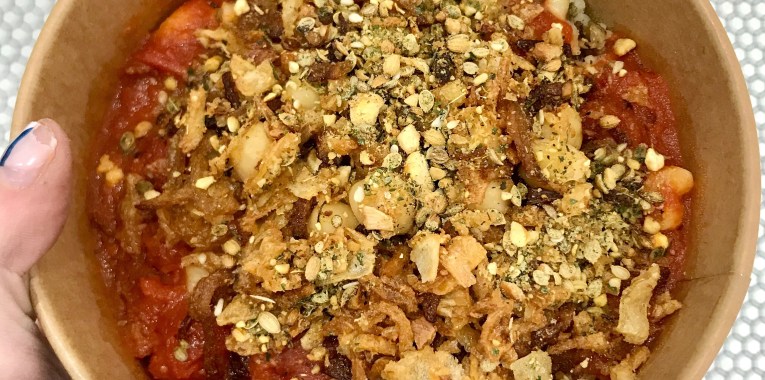
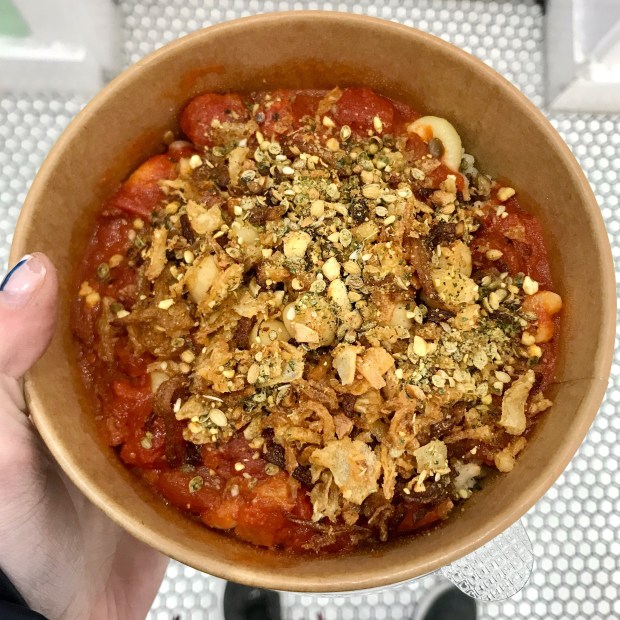
So many of the bowls looked great, but for ‘research purposes’ I wanted to try the classic. With bowls coming in regular and large, I can confirm that the regular portion is a really good size. The base, as is customary, is made up of lentils, macaroni and small noodle pieces and is topped with the classic zingy tomato sauce, chickpeas and a deliciously spiced nut mix, which also adds a lovely crunchy texture to the dish. Koshari bowls are super healthy, but really filling, and I’m really happy to see Egyptian food on the mainstream here in London.
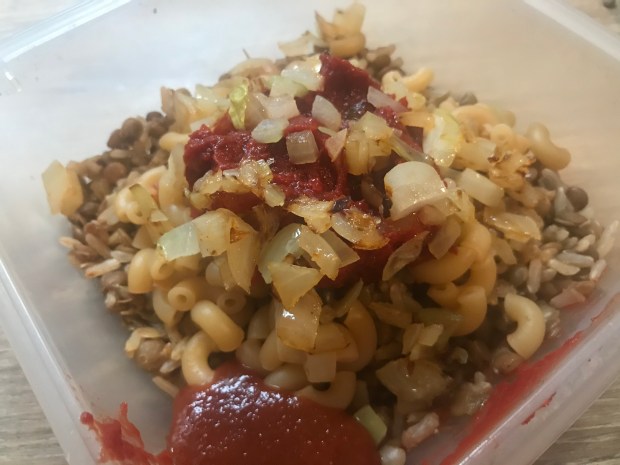
But then it was over to me. To be honest, the task of recreating this at home probably wasn’t as daunting as some of the other dishes I will be attempting, after all, it only really consists of boiling your rice, lentils and pasta and mixing up your tomato sauce before piling everything together. Even so, I was pretty happy with how it turned out…
As a lunchbox meal to eat at work or on the go, this kind of dish is perfect, and is also the kind of thing you can batch cook. I added lots of diced onion to the top of mine for added flavour, but really the classic is so satisfying that you really don’t need to mess with the traditional ingredients. The tomato sauce is actually just a tomato puree mixed with garlic, onion, cinnamon, cumin, salt, pepper and chilli flakes. Because the carb/protein base of this dish is so simple, the beauty of it comes from the spices so the cumin and cinnamon really do bring the whole thing together.
This post has been short and sweet, but hopefully you’ve learnt something. I’d love for this series to encourage you to try something new; to venture out and indulge in a kind of cuisine you’d never really considered before, and maybe even try tackling an unusual dish in your own kitchen. We’ve probably all tried French, Spanish, Mexican, Indian etc., but there is so much more out there that’s hidden from our mainstream dining options. Don’t get me wrong, some of the dishes in this series will be pretty well known, but others I hadn’t even heard of before researching potential material.
Most towns and certainly all cities will have at least a handful of independently run restaurants or cafes dishing up amazing food from lesser-publicised corners of the world, so for your next date, family celebration or friendly catch-up, why not try something new and support those who are kind enough to share their national cuisine with us?
Mardi Gras, voodoo queens and crawfish-filled bayous.
Spot the common denominator.
If you hadn’t already got it from the very obvious title, your answer is: New Orleans. I can’t pinpoint exactly what it was that possessed me to travel half way across the world on my own for 4 days’ exploration in one of the US’ southernmost states, but there’d always been something in the back of my mind (it may have had something to do with American Horror Story Season 3, and the many pop culture references to the city that often crop up where other US cities of its size don’t get a look in). So a programme about witches, torture and murderous axemen probably doesn’t sound like the best justification, but it at least got me interested in learning more.
As soon as I came across an anomaly flight, £200 cheaper than the rest, that was it. No second-guessing, it was a done deal, and all that remained was to come up with my own itinerary.
After almost missing my connection in Miami, on the verge of tears and sprinting through the airport like I’ve never run before, only to find that the pilot hadn’t even turned up in those 9 minutes before the plane was due to take off, I arrived safe and sound that first evening.
Immediately put at ease by my lovely (female) Uber driver, who insisted she wouldn’t leave me until she knew I was safely inside my accommodation, this theme of genuine friendliness continued throughout the trip, and people were keen to engage with the weird British girl (who definitely doesn’t sound like Keira Knightley) who had decided to holiday on her own.
The houses on Esplanade Avenue, where my Air B ‘n’ B was located, were beautiful. This picturesque residential street is lined with oak trees, townhouses and creole mansions, many of which were still decorated with flags and beads in the Mardi Gras colours of purple, green and yellow from the previous weeks’ celebrations.
Knowing I was in for four days of absolute feasting, and experiencing jetlag (or the opposite) for the first time, I found myself awake at 4.30 the next morning, and took full advantage of this early start to go for a run. I felt at home straightaway, with people greeting me, and a fellow runner acknowledging me with a nod and a wave. Tourist who?
District Donuts was stop number 1 after successfully navigating the city’s bus service to Magazine Street. At this point I should also mention that more or less everywhere I ate during my stay had been thoroughly researched beforehand (it’s me, of course it was), whether via photos on Instagram, blog posts, travel guides or website recommendations. Being surrounded by doughnuts everyday back in London, I wanted to see how they compared here. The Cookies ‘n’ Cream that I went for had the most incredible dough, much lighter and softer than any I’ve had here, however, the icing was very artificial tasting. You can almost tell from the odd pure white colour, and smooth, shininess of the icing that something looks a little bit off. But it was absolutely worth the visit still, as my other breakfast dish (lol yes, this ‘multiple courses at inappropriate meal times’ theme will continue) was so American, but so good.
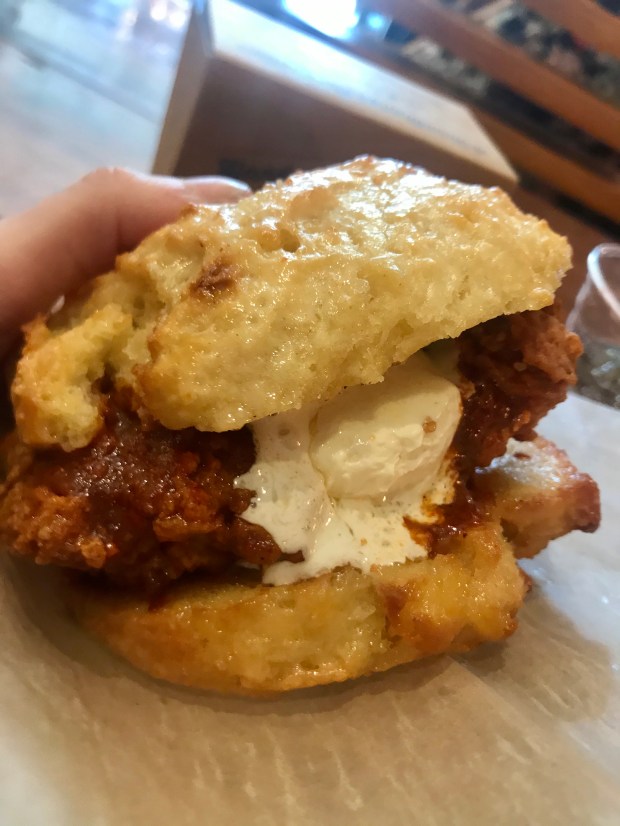
‘Biscuits’ in the American sense were never something I’d really understood. They looked to me like an unappetising savoury scone that was often covered in a weird thing they attempted to call gravy, but not this one. This biscuit had been French-toastified so it was soft and fluffy, and slightly sweet with a honey glaze, lump of fried chicken in the middle, and hot sauce and mayo. With a modern, verging on hipster feel inside, this was a great first place to dine.
I then had to work up an appetite for lunch, so embarked on a 2 hour walking tour of the Garden District, viewing houses owned by celebs like Sandra Bullock, and others where scenes from Interview with a Vampire and The Curious Case of Benjamin Button had been filmed. For some great window shopping after this, Magazine Street was the perfect place to wander and browse, and was so calm after all the Mardi Gras madness a couple of days before.
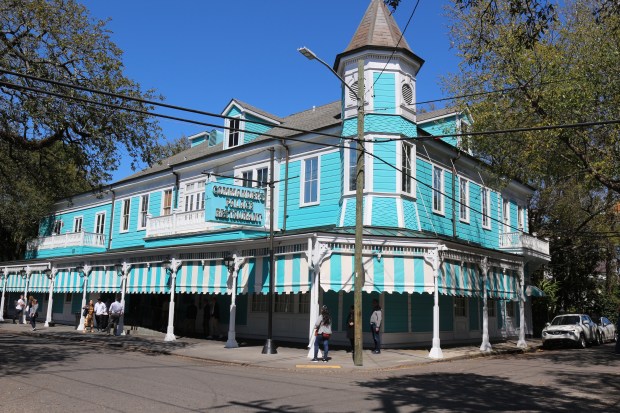
Cue one of the most highly anticipated meals of my trip. Commander’s Palace is frequently recognised as one of the best restaurants in the US. You couldn’t miss it, what with its striking and slightly garish turquoise and white striped exterior, but reservations are required.
I’m not used to fine dining, and so I probably should’ve known that it’d be a bit too much for me. I wanted to throw my drink over the waiter’s face every time I was referred to as ‘Miss Mary’. Second thing to note is the atmosphere. Their 25 cent lunchtime martinis (max 3pp) don’t help anything. Americans can be loud, but this was nearing unbearable. Shouting, hysterical laughter and squealing – even chants of ‘DO IT, DO IT’, you’d have thought you were at a college frat party. There definitely was an air of self-importance floating around amongst everyone, but there is an indication of this in the fact that there is a non-casual dress code, including jeans being ‘discouraged’. Luckily for me, I had taken my lovely leopard print culottes, which I’d been complemented on twice already (‘Omg, I love your outfit… do you love planned parenthood?’).
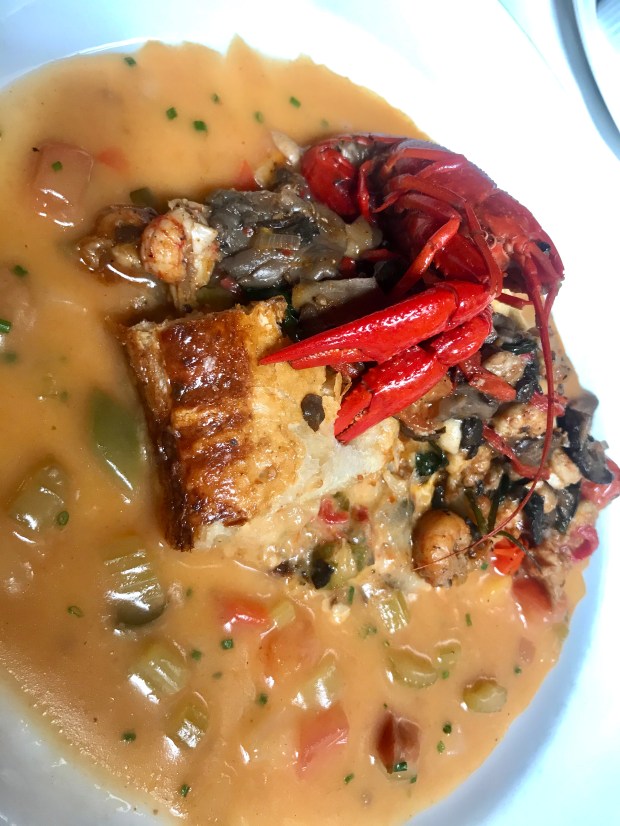
My main of Crawfish Strudel was an interesting dish, however, the Louisianans love a good roux, and this sauce was slightly too roux-y for me, with that almost gelatinous, slightly gloopy feel. The strudel itself was lovely, but would’ve been even nicer not swimming in a floury sauce.
Dessert was where it’s at. With amazing reviews on the Eaten app, I had to try the Bread Pudding Soufflé with Whisky Butter Sauce. The texture of the soufflé on top was wonderful, and then underneath the surface was the moist and sticky bread pudding – a New Orleans classic. I don’t really like spirits at all, and the whisky butter was very strong, but despite that it worked. Its potency complemented the sweetness of the other elements of the dish.
Fast forward to Saturday morning and I’m off for breakfast again, this time to the wonderfully Instagrammable Willa Jean, which is just outside of the touristy area. It was probably a good sign that it was super busy in here, but being on my own I always found it pretty easy to be seated quickly.
You may be disappointed to hear about the highlight of my whole trip. It was this.
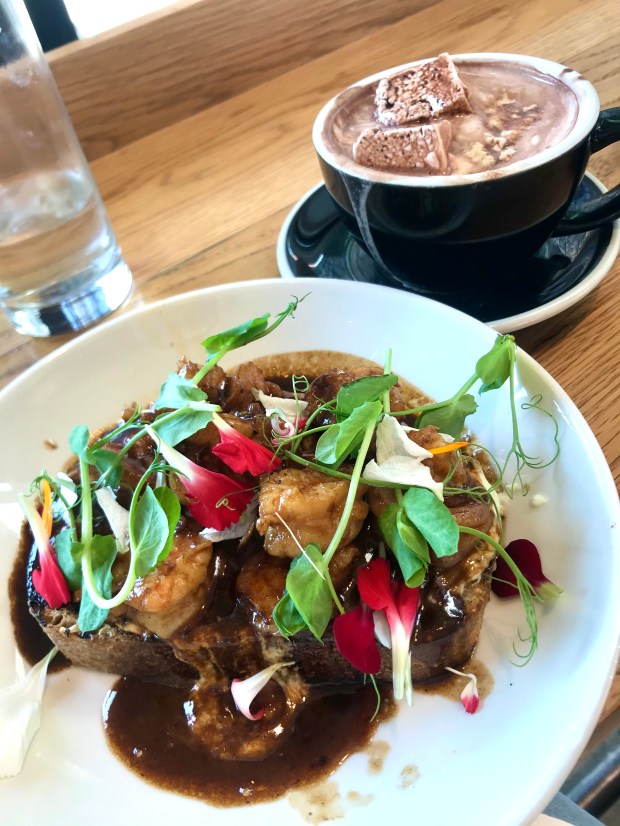
Yet another amazing biscuit, this time sweet. I’d read about this on a blog, but had not anticipated how incredible it would be. Texturally, this was like a cross between bread, sponge and flaky pastry all in one. Added to it being served warm, and filled with a sweet strawberry jam and thick cream, the taste and texture were sensational. Of course one dish wasn’t enough though so to drink (or as a dessert – you decide) I ordered a peanut butter hot chocolate. Again, superior to all London hot chocolates, this was super thick, with lots of peanut butter flavour on the surface but without being too sickly, and then the gooiest, melting marshmallows to finish it off. And if you think I finished here, you’re wrong. What about my savoury course? Flavour-wise, the bbq shrimp toast wasn’t as mind-blowing, although the bbq sauce was nice, and the melting cheese was a great addition. But again it was the texture I loved. This was a perfect example of how savoury French toast works. On paying my bill I told the waitress that I’d been to Commander’s Palace yesterday but that I’d come back to Willa Jean a million times over before going back there.
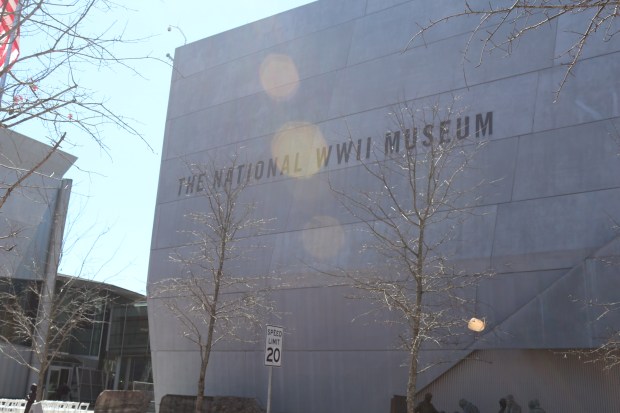
Willa Jean was located conveniently close to the National World War II Museum, which was very impressive. A large, slightly intimidating-looking building, you need at least 3 hours to look round everything here, and that’s not including the add-ons. I hadn’t realised how much there would be to see and so after an hour and a half had to rush round so I didn’t miss my next tour. The exhibits really are impressive, from the detail and artefacts on show, to the makeshift jungle and winter forest environments that you find yourself walking through. An absolute must-visit in the city.
At this point I was slightly regretting having had a 3 course breakfast as I was now due to start a 3 hour food tour in the French Quarter. I persevered. Stop number one was one of NOLA’s many hot sauce shops. Once armed with your mini spoon, you can sample any or every product they have in store, including the hottest sauce in the history of hot sauce which is about 5 kabillion times hotter than the Carolina Reaper and requires the signing of a disclaimer before you try it…. Despite being pretty good with spice it’s safe to say I gave that one a miss.
Next up was Leah’s Pralines; pralines being one of their sweet snacks of choice due to the abundance of pecan trees in the state. I found these to be overwhelmingly sugary, but that didn’t stop me from bringing home a pack of bacon pecan brittle to top my pancakes with.
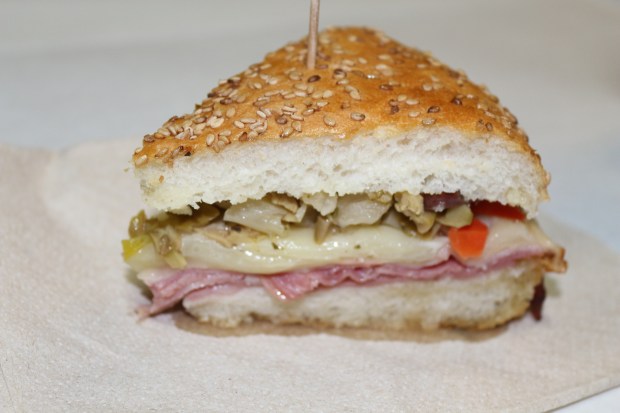
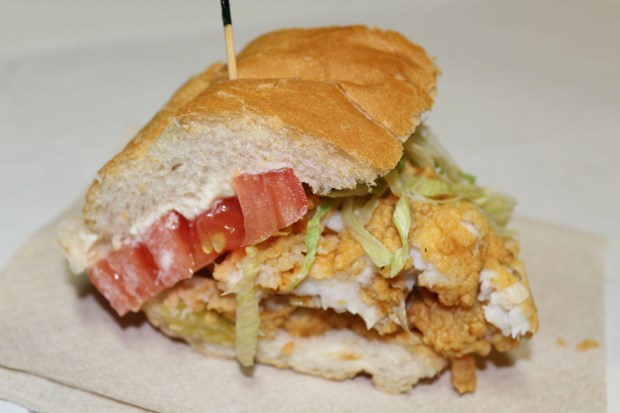
We couldn’t miss out on NOLA’s two most traditional sandwiches – the Po’ Boy and Muffaletta. The story behind the Po’ Boy is said to stem from a 1929 strike in which two brothers served those on strike these sandwiches for free, referring to them as ‘Po’ (poor) boys’ when they approached. This one from Nola Po Boys had a catfish filling, which although fried, was so light, with such flaky fish. Other popular fillings include oysters, shrimp and roast beef.
The Muffaletta is typically served on a seeded bread and consists of hams and salami such as mortadella, cheese, often provolone, and an olive relish. Despite being a great sandwich, the olive relish didn’t really do it for me.
Tujague’s next. This is one of the oldest bars in the city, with the actual, physical bar being imported from Europe over 160 years ago. They’re known for their Grasshopper cocktails (mint, cocoa and cream based), and their beef brisket. Now I’m a huge fan of brisket, but I found it to be slightly dry, despite being lovely and flaky in texture.
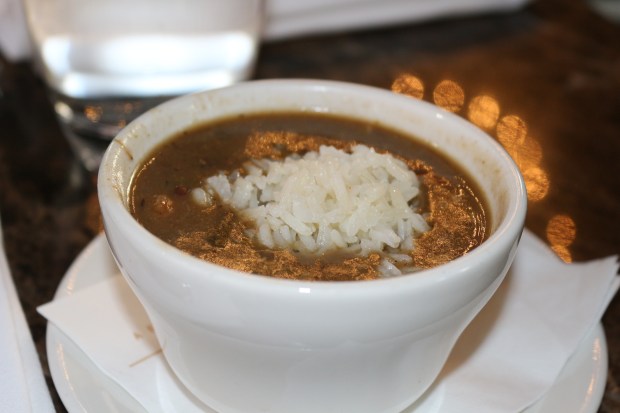
Second to last stop was Dickie Brennan’s Tableau, Dickie Brennan being part of the famous Brennan family of restaurateurs who between them run many of the city’s most raved about restaurants, including Commander’s Palace. This was the place where I finally go to try Gumbo. Gumbo comes from a West African languages, meaning okra. The stew also features the ‘holy trinity’ of veg, including celery, peppers and onions, and seafood gumbo tends to be the most common, which is what we tried. It was full of delicious shellfish flavour, and had a nice thickness to it – nothing worse than a watery stew. The rice is a great way to soak up some of the juices leftover at the end.
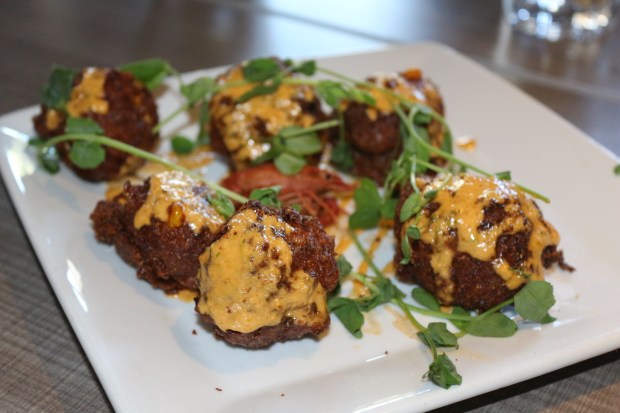
Last but not least was SoBou, with a slightly different vibe to the previous restaurants. SoBou takes a more modern approach to its cuisine, taking New Orleans’ classics and adding a twist. We tried their crawfish beignets to begin with – fried seafood balls with a sharp, slightly tangy sauce. Then came the pork cracklings, which have the texture and light crunch of a prawn cracker. The final dish was my favourite. Boudin balls are really common here – boudin being a kind of sausage, here made from chicken and beef short rib. These balls were almost like arancini with rice in the middle and a crispy exterior.
Food tours are definitely something I recommend when going abroad – eating the food is great, but learning about the stories, history and individuals behind each dish makes it a more enriching experience.
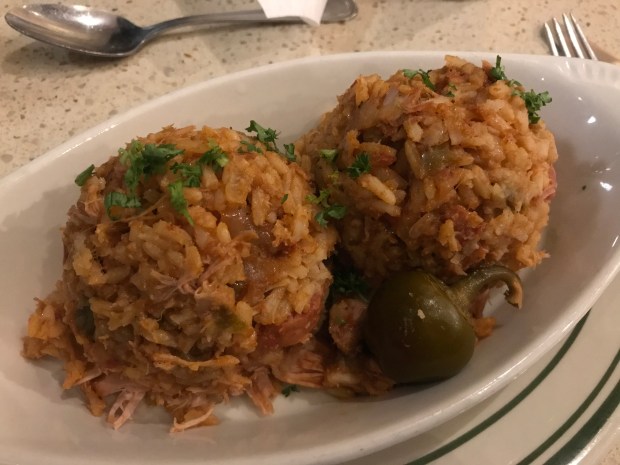
Can you believe I still went for dinner after all that? Don’t get me wrong, I wasn’t feeling up to it, but this was my only chance to try Jambalaya, which along with Gumbo is a must-try dish in NOLA. It’s thought that Jambalaya was inspired by West African Jollof Rice, as New Orleans was a big slave port, but there’s also talk of it being influenced by paella as the Spanish had control of the city for some years. Any rice dish that can stand alone without a sauce or a main portion of protein has to be something good, and Gumbo Shop’s chicken and Andouille sausage jambalaya lived up to that (the small amount of protein was scattered throughout the rice). With creamy rice and a lovely, tomatoey flavour with a Cajun kick, I couldn’t help but finish it.
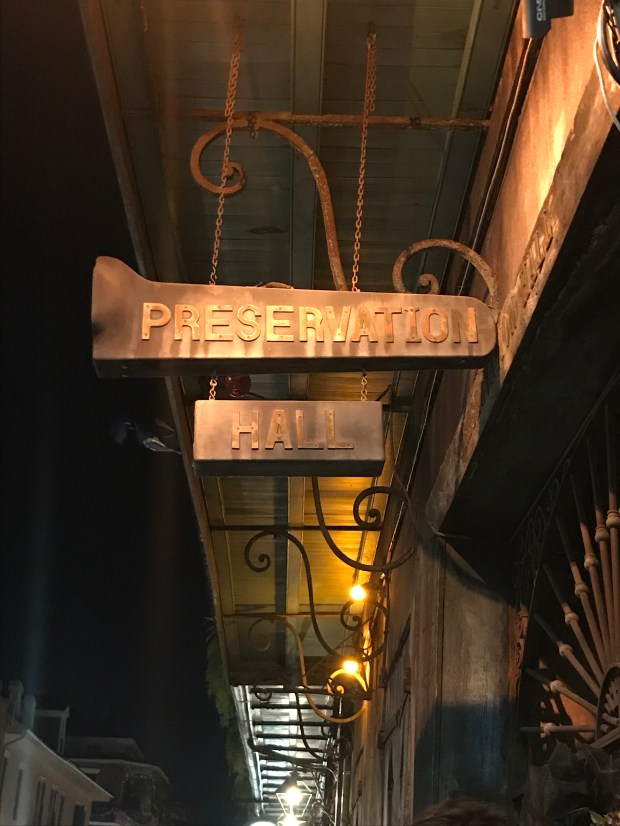
Although I was verging on food coma territory, I had one more stop that evening, and no, don’t worry, this one wasn’t food-related. I’d got tickets for a jazz show at the famed venue Preservation Hall, but hadn’t realised quite how small, intimate and informal it would be. Four rows of little wooden benches were laid out in the tiny, old, and slightly dilapidated-looking room. People packed in the back, standing, desperate to catch the show, and some even sat cross-legged on cushions at the front. The band was fabulous, and the show was relaxed and full of humour. The musicians were clearly having a great time, joking with each other and getting the audience going. Between the 5 musicians, they played piano, drums, trombone, trumpet, keyboard, saxophone, clarinet and double bass and covered everything from serenading romantic melodies to upbeat, raucous jazz tunes. By the end of the night, I was shattered, and other than my Uber driver home responding ‘… and Juliet??’ when I told him that I was from Nottingham, as in Robin Hood, my entertainment for the night was complete.
Imagine my surprise when after all that, I woke up the next morning feeling light as a feather and ready to start all over again. I couldn’t resist browsing Uber Eats to see how many of my bucket list restaurants and cafes I could get delivered to my door post-run. Lo and behold there were a couple of places that I couldn’t resist, the first being Buttermilk Drop. Other than Sno-balls (google them), my Lonely Planet pocket guide told me that this was the dessert to try in NOLA. It’s not quite a doughnut, but is basically a round ball of dough, covered in a buttermilk drizzled icing. It may not be the compliment they were after, but in the US they really know how to create a soft, spongy, non-stodgy dough like no one else. For my breakfast main course, I had been drawn to the Ruby Slipper Café, which not only had I read about before travelling, but had also walked past in the city centre where it’d seemed to be really busy.
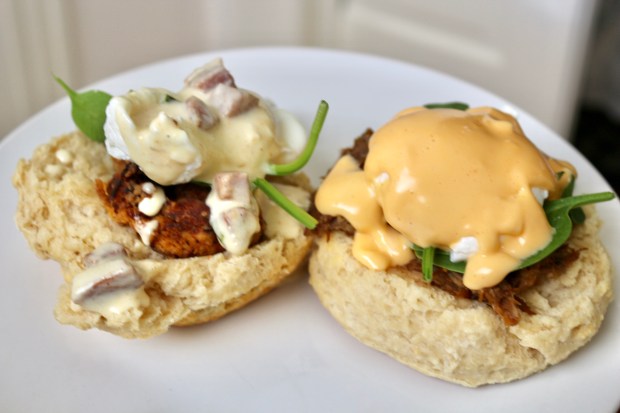
I went for their ‘Peacemaker Benedict’– 2 American biscuits (those things again…), one topped with fried chicken, a creamy sauce and poached egg, and the other, pulled pork, a chipotle style sauce and poached egg. This is the uncomfortable part where I admit that American biscuits are definitely superior to the English muffin, which is not as soft, and is slightly drier. However, the best breakfast was definitely yet to come.
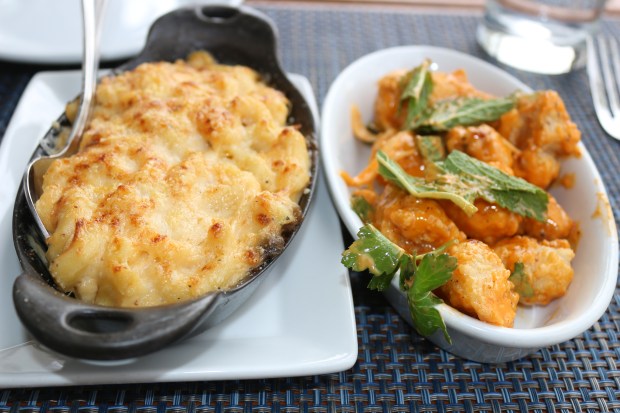
Next stop, Cochon for a combined lunch and dinner that I’d been dreaming of well in advance. I couldn’t visit New Orleans without trying alligator. The surrounding bayous (swamps) mean that there is plenty of this, what we would consider ‘exotic’, meat to go around. Cochon do fried alligator bites with a Cajun style sauce, and whilst I’d heard many people claim it tasted like chicken, I didn’t get this at all. I found the meat to be quite tough, so although I didn’t dislike it, I’d happily stick to popcorn chicken in the future. Alongside my alligator I went for a standard mac and cheese – something that has become more popular in the UK, in my opinion, due to its popularity in the US. I have a very specific idea of the kind of mac and cheese I like – it has to be creamy, not just pure melted cheese, but equally I’m not a fan of a roux-based mac and cheese sauce. But it’s the return of the roux again here. The thickness of the sauce just seemed tainted by a kind of flouriness that didn’t do it any favours. But it was still half-decent, with a crispy baked top.
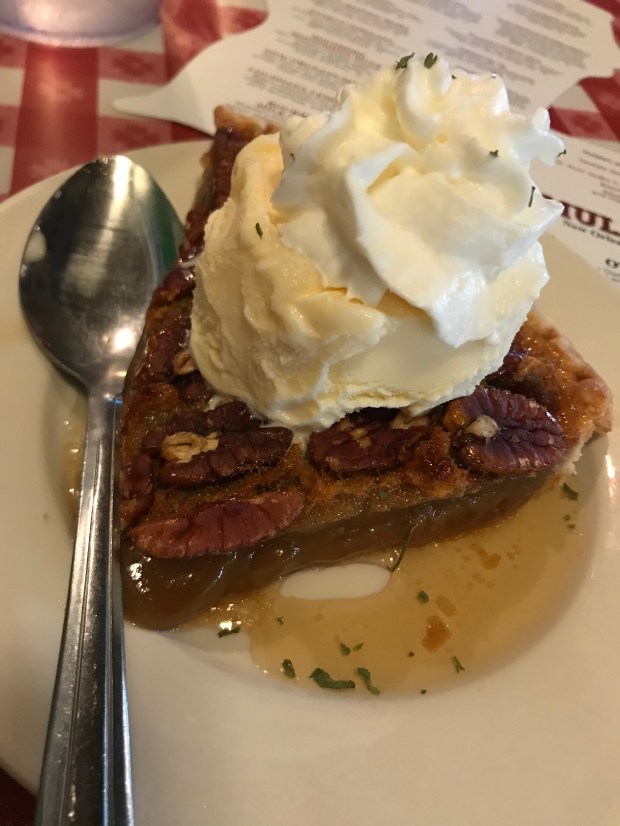
My final ‘meal’ of day 3 was a wonderful one. I’d seen photos of Mulates food online, and it had a cheap and cheerful kind of vibe to it. It was only when I started researching the best place for pecan pie that it really grabbed my attention. Pecans grow in abundance in NOLA, hence them using pecans in their pralines as opposed to almonds, and so I had high expectations of this pie. My first impression of Mulates as I walked in was an interesting one. For me, it seemed quintessentially American. Very informal, plastic red and white checked table cloths, a huge room that could cater to hundreds of people, and loads of waiters and waitresses running around in caps and burgundy polo shirts. Not gonna lie, it seemed quite shit on the inside. However, that pecan pie arrived warmed through and topped with ice cream and whipped cream, and my already full stomach suddenly made room for every single bite. The pastry didn’t fly across the table when I cut into it, the filling was gooey and almost oozing out of the sides, and although I’d never think to add ice cream or cream to pecan pie, it was delicious. I left here extremely satisfied, and also growing aware of the fact that all my food highlights seemed to be sweet dishes, which is not at all what I’d expected.
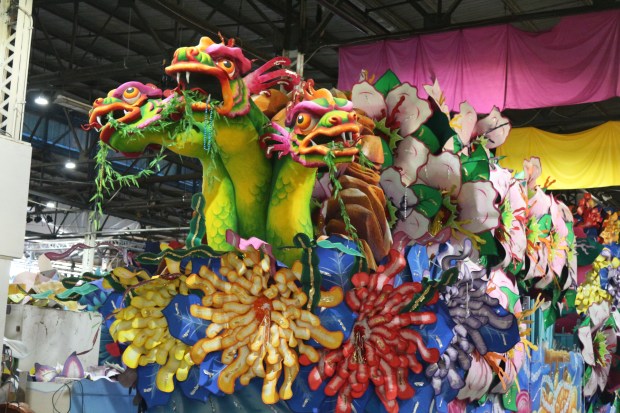
The need to walk some of that food off was great, and so a touristy afternoon led me to Mardi Gras World, located in a giant warehouse right on the river, past the cruise ship port, where I was convinced I’d ended up somewhere that couldn’t possibly house a tourist attraction, and I’d probably get arrested for trespassing at any moment. Fortunately, that wasn’t the case, and my tour started without issue. After a brief video explaining the origins of Mardi Gras, I was “forced” to try a piece of the traditional Mardi Gras King Cake, which I’d heard of before only through my study of Spanish, as the ‘Roscón de reyes’. The NOLA version is slightly more exciting, topped with sugar in the Mardi Gras colours representing justice, faith and power. One person will also find a small figure of a baby (or in Europe, literally a figure of Jesus), and that person is committed to buying next year’s cake! Nowadays they come in a load of different flavours, but cinnamon is really common, and this one also had apple in. Whilst it was tasty, I found the cinnamon to be very overpowering, but they do look beautiful. After finishing up the tour and getting to see a number of really impressive floats and giant carnival figures created by hand, I headed to the Southern Food and Beverage Museum, in yet another slightly out of the way location, and wandered round reading about everything from the creation of the New Orleans-born, now national chain Popeye’s chicken, to Texas BBQ and absinthe bars.
Mardi Gras World
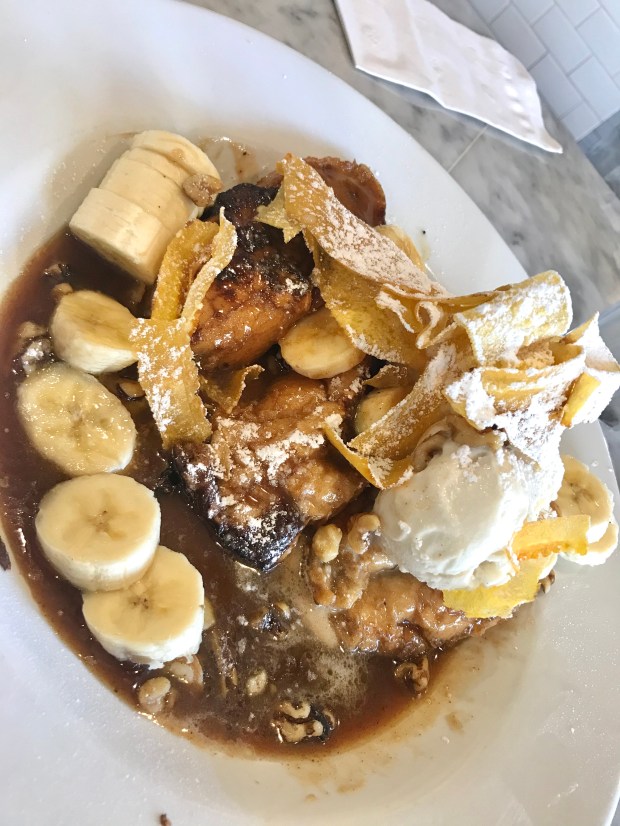
Another evening spent at my air b ‘n’ b, super tired, prepared me for one more day of food and exploration before heading to the airport late that final afternoon. One of my favourite meals, another sweet one, was at Stanley’s, in the beautiful Jackson square, in the heart of the French Quarter. Stanley’s had been recommended frequently as a fantastic all-day brunch place, with their Beaux Bridge Benedict and Bananas Foster French Toast both highly praised. Up to this point, I hadn’t tried anything Bananas Foster-related so this seemed like my last chance. Foster sauce is a delicious syrupy, brown butter and rum sauce, and my French toast came absolutely swimming in it. Not one to miss an opportunity to throw ice cream on everything, the Americans did it again, serving this brunch dish with two giant scoops of vanilla ice cream, walnuts, bananas and banana crisps. I was genuinely shocked by the portion size that arrived, but I couldn’t help but finish it all, even wishing I could drink up the remainder of the Fosters sauce sitting on the bottom of the plate.
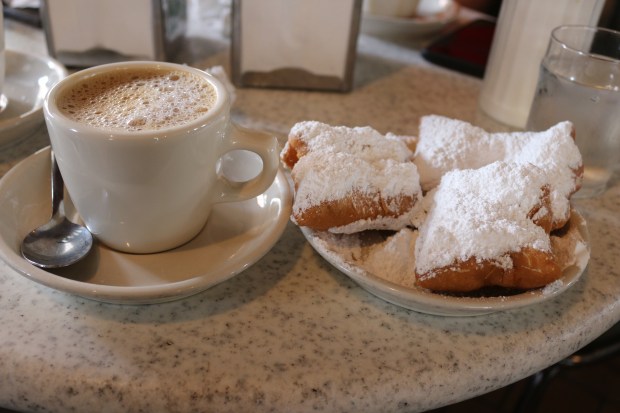
From sweet, to sweeter, I headed to Café du monde next. Everyone who’s visited the city knows about this spot, but it’s often debated whether it’s worth it, or whether it’s just a tourist trap. I have to say I loved it; I’d heard about how difficult it could be to get a table, and was surprised to discover that there’s no queuing system, instead you literally just peg it to a table as soon as one becomes free. From there, the waiters and waitresses will take your order, and if it’s anything other than the classic chicory coffee and beignets, they’ll ask you to leave (just kidding, but still, why are you there if not for this?). I sat outside, housed undercover in the old French market where the café is located. Admittedly I wasn’t a fan of the chicory coffee as it wasn’t creamy enough for me, but the beignets surprised me. Having only seen photos, I wasn’t sure what the fascination with this fried dough was, as it looked way too crispy, oily and overloaded with icing sugar, but actually they were amazing. Whilst they were crispy on the outside, the insides were super fluffy with the most delicious dough, and the powdered sugar thickens in your mouth, turning into a layer of thick icing. The only downsides are the toilets, which are absolutely grim, but I could cope with that for the food. Heading out to behind the store, by the Mississippi front, you can see into the kitchen and watch them make the beignets.
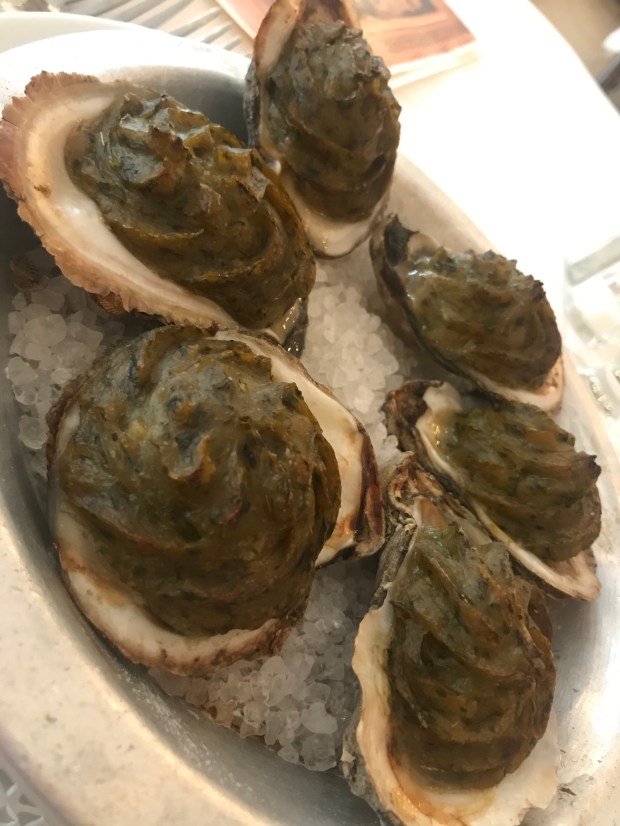
After a spot of souvenir shopping and wandering by the river, I decided to hit Antoine’s on the off chance that they had walk-in space available. I’d booked a table a few days ago purely to try their famous Oysters Rockefeller (the dish was created here in this 180 year old family-owned restaurant). I was also nervous about my attire, being in jeans and a cropped baggy jumper, due to the city’s strict dress code rules, but I was relieved to see that everyone else in there for lunch on a weekday was dressed equally as casually, and there were a huge number of tables free. I ordered said dish, it only being the second time I’d tried oysters, and the first time I hadn’t been a huge fan. Actually this time, the oysters weren’t bad, and I found them to be much more similar to mussels, however, despite the fact that nowadays there’s very little my taste buds can’t handle, I really couldn’t get on board with the Rockefeller sauce. It had a dry, congealed-textured film coating the sauce, with a thicker, creamier texture underneath, and I don’t even know how to describe the flavour. It wasn’t horrendous, but I left a fair bit of the dish. Still, no regrets, I’d desperately wanted to try them.
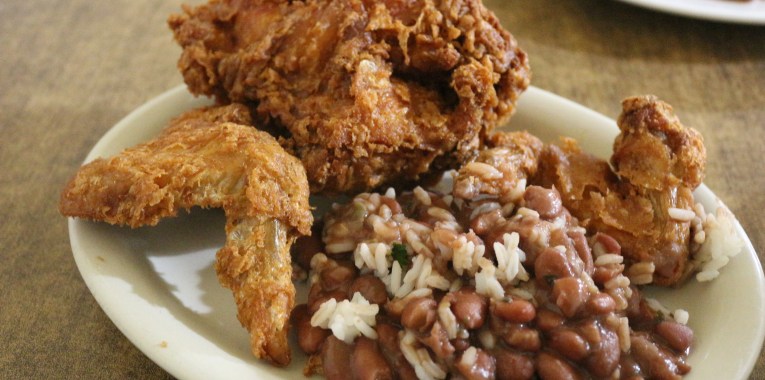
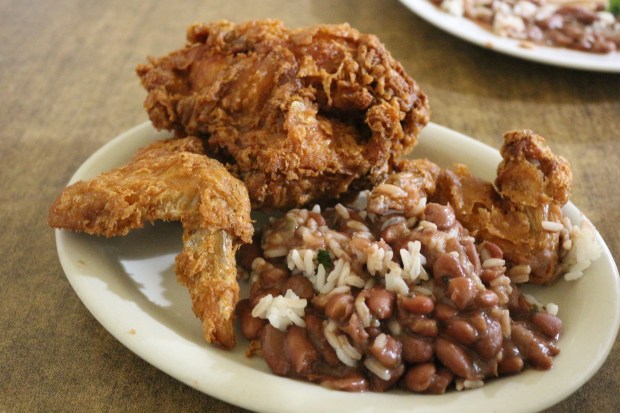
A long stroll to the other side of the city was my desperate attempt to work up an appetite for my final New Orleans’ dine-in meal. I’d hoped to save the best ‘til last with the world-famous fried chicken at Willie Mae’s Scotch House. It was voted by the Food Network as having the best fried chicken in the US, which is a huge statement. Again, I’d been warned about huge queues and long waits, but arriving at an off-peak time, I didn’t have to wait more than 20 minutes. I ordered the standard fried chicken with a side of red beans and rice. I was almost too nervous to take a bite, what with the fear of it not living up to its title as America’s best. For me, the chicken itself was nice. Occasionally I felt it was a bit too salty, but it was decent. What made it for me was the thin layer of batter, which was incredibly crisp and a delight to bite into. The red beans and rice were decent but I refused to even acknowledge the giant portion they brought to me, instead scraping a small amount on to my fried chicken plate in order to appease my ‘too-much-food-panic mentality’. I left satisfied, but ultimately unsure about the title with which Willie Mae’s had been honoured. I’m not sure any food establishment, no matter how good, can ever live up to being known as the greatest in the country.
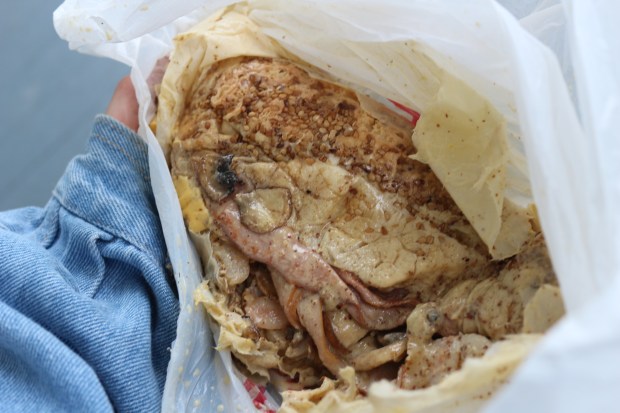
As far as I know, London has a couple of New Orleans/Louisiana style eateries, one of them being street food traders Bayou Bar, who produce delicious po’ boy sandwiches. Just before going away I’d seen that they’re hosting a Bayou Crayfish Boil at the end of this month, which I immediately bought tickets for, and contacted them to let them know what a coincidence it was that I was just about to visit NOLA when I’d heard about this event. They were hugely enthusiastic about the city and urged me to visit the deli-grocer’s Verti Marte, which during my trip I actually heard a couple of other people raving about in passing conversation, and so I knew I had to squeeze it in. I’d been told to try their ‘All That Jazz’ sandwich – a giant soft baguette loaded with smoky cold cuts, their special sauce, cheese and I can’t even remember what else but there was seriously loads. In my desperation not to miss it, I’d decided that I’d get one and take it with me to the airport to eat later before my flight. The first spanner in the works was the fact that I have an issue with doors – doors that don’t open first time, doors that are disguised as anything else other than a door. And so upon arrival, I simply couldn’t find the entrance. I spent a good 5 minutes wandering around trying to look like I knew what I was doing. I also couldn’t see inside and so had no idea if it was open or if anyone was watching me looking like a ginormous idiot, which only added to my social humiliation-related anxiety. After a few deep breaths, I decided to give it one last shot, pushing a caged panel of glass which bore no resemblance to a door, but it was the only remote possibility. To my relief, it opened. I was in. Ordering the sandwich was a smooth process, but after killing more time, wandering back to collect my luggage and having a nosy round one of the famous above ground cemeteries, I took my much-anticipated sandwich out to photograph. Well, there was so much filling, and such a flood of sauce, that after having been jostled around in my bag for a while with the sauce saturating the bread, the sandwich now resembled a moist lung. You may assume that this was the end, but a couple of hours later as I was waiting for my flight, I whipped out a plastic fork from my bag, and attacked said lung which was contained securely within a plastic bag whilst sitting in the gate lounge. I managed a fair few mouthfuls before I accepted that it was too late. No more could be done to salvage the sandwich. It was over.
And on that note, I boarded the plane, and flew home 5lbs heavier.
If you made it to the end, congrats, that was a long one. But no apologies, as I had the time of my life.
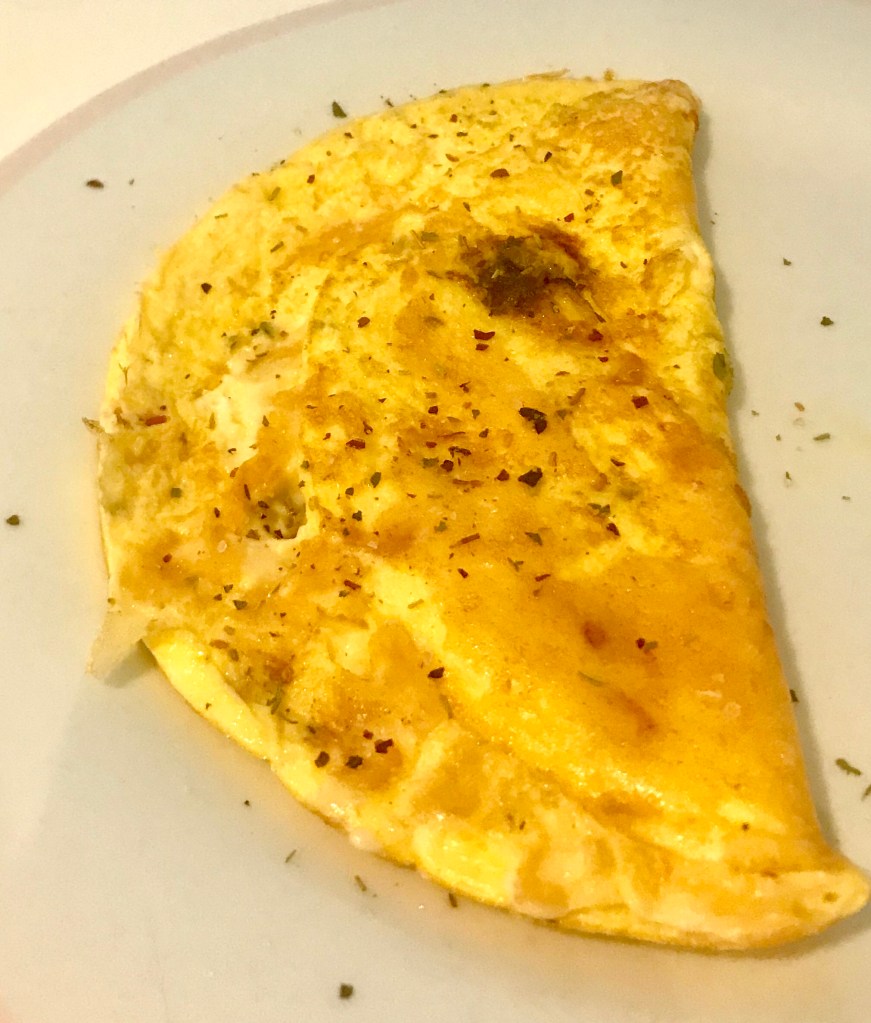
What is that?? I hear you ask. The deadest, most unphotogenic breakfast of all time?
Well, when it comes to unphotogenic, maybe, but I was so surprised how delicious this spicy cheesy omelette turned out that I just had to do this spontaneously basic post. I debated not including a photo because it looked so shit, but ultimately I felt like a recipe with no photo was a bit of a cop out, and I may as well open with something that looks a bit grim to grab your attention. Despite the world of instagrammable symmetrical plate aesthetics that we live in, let’s not forget that if you genuinely care about food, it’s all about the enjoyment of eating it rather than what it looks like, although a pretty plate is a pleasant bonus.
I used to find eggs so incredibly boring to eat and dull in flavour, which is a madness considering how versatile they actually are.
So now I’ve gone the other way; jumped on the ‘add a fried egg to everything’ bandwagon – burgers, toast, rice, you name it, there are very few dishes that can’t be enhanced by the addition of a fried egg.
But anyway, today isn’t about fried eggs, at least not in that sense. My breakfasts (when I actually have them) typically consist of something that I don’t deem to be time-consuming – granola, porridge or some kind of frozen leftover treat that I just need to reheat. This morning, however, I decided to push the boat out before work and cook an entire omelette!!
Obviously this whole notion of it being more effort is flawed anyway as stovetop cooked porridge probably takes longer and requires more patience and standing around, but still, I felt that this morning was going to be a major commitment.
Granted, only an idiot wouldn’t know how to whip up a standard omelette (if that’s you, yes, you are an idiot), but this one turned out to be so delicious that I had to share my satisfaction. With the kick of chilli and creaminess of the melting cheese, this breakfast was an absolute winner.
Makes 1 omelette
Ingredients:
2 eggs
Splash of milk
1/2 chilli (I used scotch bonnets but they don’t have to be this fiery)
Oregano
20g ish of smoked cheese
Mixed spices
Butter
1. Beat the eggs and add the milk, oregano, crumbled up cheese and chopped chilli then swirl to combine.
2. Heat a knob of butter in a non-stick pan over a medium heat.
3. Pour in the mixture and leave to cook and set.
4. When starting to set on top, use a spatula to examine the underneath to check when it’s golden with some darker brown patches. If you’re satisfied with the colour, instead of flipping the whole thing, just fold one half over the other.
5. Flip the folded omelette and leave for 30-60 seconds longer.
6. Serve up with your choice of seasoning. I used a mixed Spanish spice from the brand Toque which I think you can get online.
This is such a simple recipe but the flavour and the textures still wowed me. Feel free to alter the amount of chilli to your taste. You could also serve with a salad or even chips for a main meal. A drizzle of pesto would also be delicious on top.
This will make getting up for work in the morning so much easier, I promise.
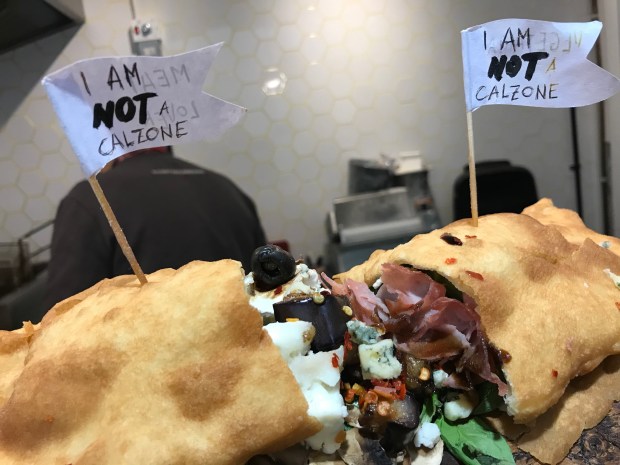
Any eagle-eyed readers may notice similarities between the title of this post, and my very first piece that I wrote last year, both revolving around Italian food. Whilst the title of the first one centred around the notion that Spaghetti Bolognese isn’t in any way, shape or form an authentic Italian dish, this one serves to educate the reader on the, what I’m sure any Italians would consider very obvious, differences between a panzerotto and a calzone.
So, with the Italians’ culinary pride in mind, I’ll attempt to highlight those differences, and do justice to the much-loved Southern Italian street food snack.
greenwichmarket.london
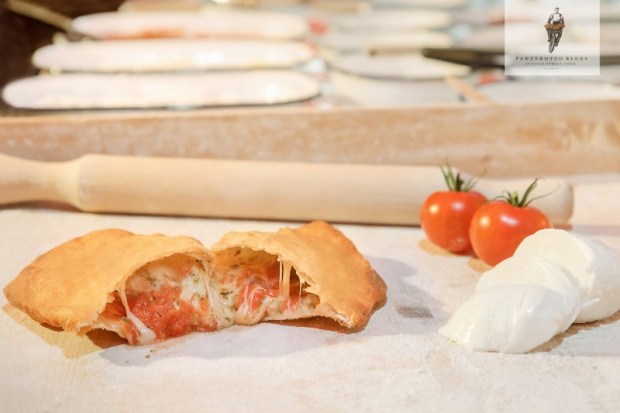
Panzerotti (plural form) originate from the region of Puglia, in the south, and consist of a savoury fried parcel filled with pizza-style fillings. It is much lighter than a calzone, with thinner dough, meaning it’s perfect as a hand-held snack. Another notable difference would be in the cooking – as mentioned above, panzerotti are fried, whilst the calzone is oven-baked.
The most basic filling is tomato and mozzarella, but these can be customised as easily as pizza toppings. Despite originating in Puglia, this perfect on-the-go street food has spread throughout Italy, gaining particular popularity in Milan, and has now reached international waters including the US, Australia, and of course here in the UK.
When it came to starting my background research for this post, it’s interesting that nearly every single one of the first three pages of Google results was specifically related to the London street food business that I’m going to focus on today. In fact, there were relatively few results discussing this dish in general.
I was inspired to do a little bit more research on Panzerotti after being invited to try the street food stall Panzerotto Blues, who trade at both Greenwich and Tooting Markets.
I headed to Tooting, which is a market that I’d never visited before. It’s covered, and is open on weekends with various seating areas, so is a great place to go with friends and family for a chilled outing. There are a number of traders with everything from butchers, to organic beauty products, to record shops and bars, and of course street food.
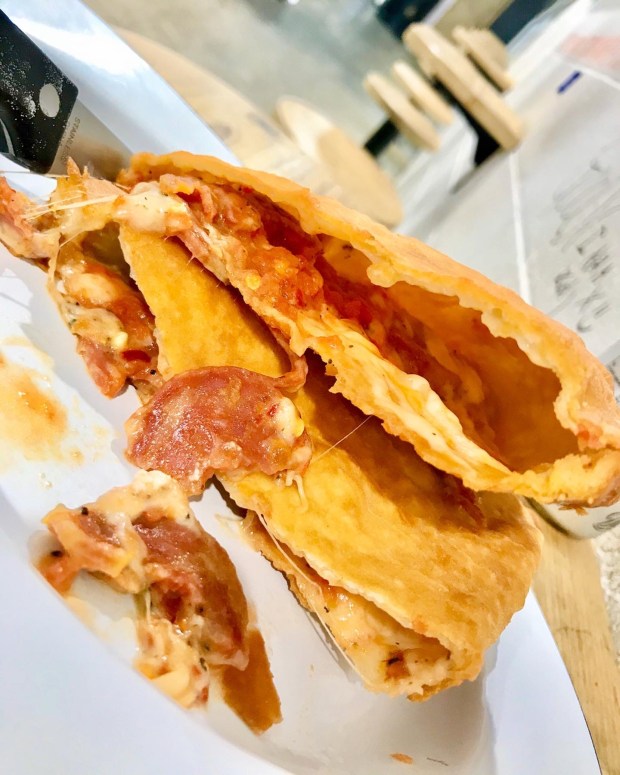
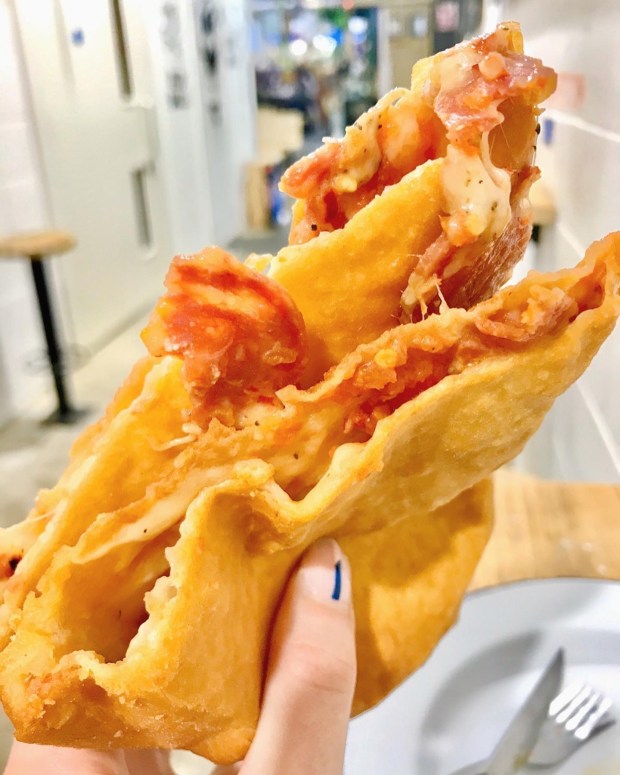
Panzerotto Blues is located towards the back of the market, surrounded by fellow street food businesses, and there’s plenty of seating. There are a number of options for your panzerotto filling, from mozzarella, to gorgonzola, olives to meat feast. I went for the Diavola, with pepperoni, mozzarella and added chilli flakes for a subtle kick.
I loved that you get to watch this being made in front of you. It’s so fresh, and super interesting to watch the dough being made, rolled out, stuffed with fillings then folded and crimped before being dunked into the deep fryer. Despite the fact that it’s deep fried, it’s actually not that greasy at all, and it ends up being surprisingly light as it’s not overloaded with fillings. The crunch from biting into the outer shell was so satisfying, and that combined with the ooze of the melted cheese on the inside just made the perfect contrast. Although at Greenwich there isn’t any seating so you’re given the panzerotto in foil to hold and bite straight into, here at Tooting it can be served on a plate complete with knife and fork so it doesn’t have to be messy!
They also do a number of side dishes which I’m keen to go back and try. As well as mozzarella sticks and onion rings, they have a dessert of little fried dough balls served with mini marshmallows and nutella. To. Die. For.
Panzerotto Blues is 100% somewhere I’d recommend in London. It’s exciting to see small businesses strive to recreate ‘authentic’ local dishes, even when they’re not widely known over here. Yes, we all love pizza, pasta and arancini, but there’s a lot more to Italian grab and go food, and this is the place to try it.
Running an independent street food business that trades in various locations is a tough gig. Factors completely out of anyone’s control such as the weather can so easily affect profits meaing that without that stability, it’s a job to be done only by those who really care about the food they produce, and it’s vital that businesses like Panzerotto Blues get our support. London has such an excitingly diverse culinary scene, and so much of that is down to its markets and street food. Let’s continue to celebrate our city’s culinary diversity, and most importantly, listen to the experts – IT IS NOT A CALZONE!














 ¡Comemos!