Making plant-based changes:

Substitutes, hacks and essentials for a delicious and nutritious diet

Before I go on, I want to make it clear that I don’t follow a plant-based diet, in fact, I don’t think there’s anything I don’t eat (except for raw celery, ew…), however, in the past year or so, I have enjoyed testing out a lot more plant-based recipes and ingredients, and am happy to whip up meat-, egg- and dairy-free meals quite regularly, alongside my steaks, chicken curries and seafood dinners.

Here I want to highlight some of my favourite plant-based alternatives and ingredients that you can try out in your own cooking, whether you want to go vegan completely, or are simply open-minded when it comes to trying new things.

A couple of disclaimers before I get stuck in – I’m aware that there are lots of people following vegan diets who have no wish to recreate meat and dairy products, and in some ways may see that as contradictory to their ethical beliefs, however, I do believe that meat substitutes are a great way of being able to replicate textures and flavours that someone following an exclusively plant-based diet may miss. Meat replacements can act as a way of enjoying food to its fullest extent without compromising on your beliefs, but if it’s not for you, then that’s no problem, just ignore those suggestions!

One thing that does frustrate me when I’m discovering new plant-based recipes is when they’re labelled as something they’re not. One primary example that I’ve come across is the concept of a chickpea ‘omelette’. Some people who no longer eat eggs may miss omelettes, and so on seeing a recipe with this title, you’d be forgiven for thinking that chickpeas could be warped into something resembling an omelette. Well, I’ve tried these recipes, and it’s not an omelette. It bears closest resemblance to a thick and heavy chickpea flour pancake, and so misleading titles like this do annoy me. Plant-based food can be so delicious, there’s no need to con people into thinking you’ve come up with a ground-breaking substitute. So, sorry guys, but if you only eat plant-based, as far as I’m aware, omelettes are no more.
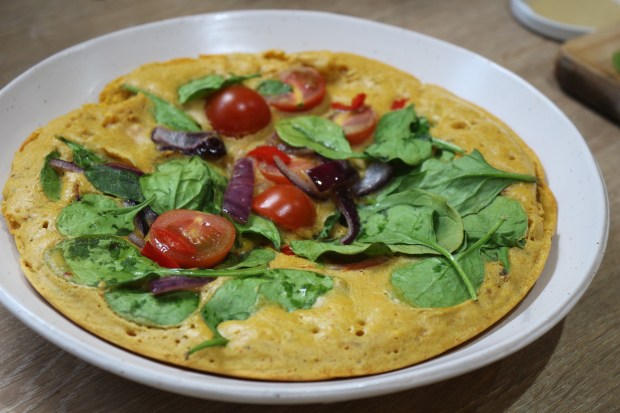
NOT an omelette.

Anyway here come the ideas; the food and hacks that’ll make it so much easier to enjoy meat and dairy-free meals.

Dairy

Cream, milk and yoghurt

One of the biggest food groups you may be concerned about is dairy – so many of us adore cheese, many recipes call for the use of cream, and milk is a daily staple. Luckily, the plant-based alternatives are getting better and better. Alpro does a really good cream alternative, which although slightly thinner in consistency, works a dream in dishes that require a little splash, for example a pasta sauce. It’s also got a lower fat content.

If it’s curry you’re in the mood for, go straight for coconut milk. This is often used in non-plant-based curry recipes anyway and so you aren’t compromising on flavour or texture at all. Because it’s so widely used, coconut milk is cheap in comparison to other dairy-free alternatives.
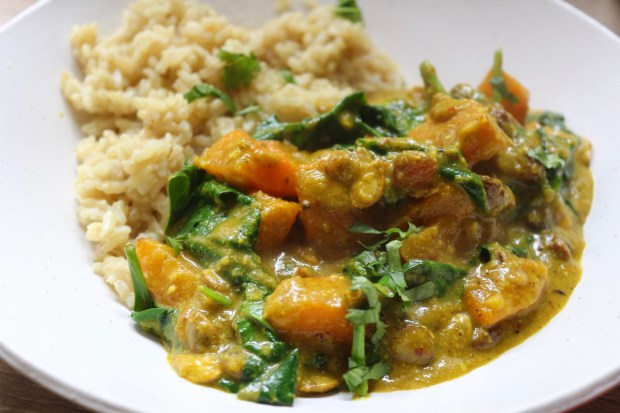
My plant-based butternut squash spinach curry recipe can be found here on the blog

For your everyday milk, there are loads of options on offer. Without making a conscious effort to try everything that’s out there, I’ve ended up religiously buying soy milk. If you want to avoid soy, there’s almond, oat, and coconut milk, to name a few other options. It’s worth experimenting just to see what works best for you, as their nutritional content is slightly different, with some containing more sugars, and there are also subtle differences in flavour. Plant-based milks certainly aren’t as thick and creamy as cows’ milk, but I personally don’t miss it in my hot drinks and cereal, and you’d never know the difference when baking, even if the recipe calls for standard full-fat milk.

Yoghurt and cream cheese alternatives, in my opinion, are not quite as developed as the milk on offer yet, but there’s still plenty out there. Coconut yoghurt is one of the most common plant-based versions, however, I do find that the coconut flavour is quite strong. If you’re looking for a more neutral flavour, soy yoghurt is available, but it tends to lack the sweetness of traditional Greek yoghurt. I would opt for coconut yoghurt to eat on its own, and soy yoghurt for use in cooking and baking.

So far, when it comes to cream cheese, I haven’t seen many options readily available in my local supermarkets, but I’m sure more exist. The only one I have seen is coconut cream cheese, which I haven’t tried. I’m sure this would be ideal for baking, however, if you wanted to use it as a spread, there are other slightly different alternatives, including thick and creamy tofu spreads, or cashew cream cheese which isn’t too difficult to make at home.

Cheese

The final element of dairy to address is hard cheese, and for cheese-lovers embarking on a new plant-based journey, this can often be one of the most difficult parts, as vegan cheese has a reputation for being a pretty poor substitute. Having said that, improvements are being made, and if you’re looking for a plant-based cheese that melts, violife is the one. I absolutely love it – it’s a dream in toasties, or grated and melted as a topping on pastas, and it has a really nice flavour too. Unmelted it’s ok, but I probably wouldn’t choose to eat it that way. If you want plant-based cheese to eat uncooked, it’s worth checking out the emerging small businesses that are making their own plant-based cheeses, mostly from nuts. I bought a few cheeses from I am Nut Ok at a local market – one truffle cheese, one chipotle cheese and a jar of vegan parmesan. Admittedly they don’t taste like your typical dairy cheeses, however, they are quality products, with great flavour that can definitely contribute to filling that cheese-shaped void in your life. The Parmesan is particularly good. La Fauxmagerie is another dairy-free cheese producer that’s worth exploring.

Protein

Vegetable substitutes

When it comes to the protein in your meal, or replacements for meat products, there are so many options. Whether you’re using quinoa and beans in a chilli, aubergine slices as burger patties or butternut squash and sweet potato in soups and curries, veg, beans and pulses are incredibly versatile, and adapt to different flavours really well. One of my favourite discoveries was oyster mushrooms – they have a slightly chewy texture, and very mild flavour and are used as a meat replacement in lots of recipes, from tacos and burritos to stews. They’re not always the easiest to find but they’re definitely worth trying out.
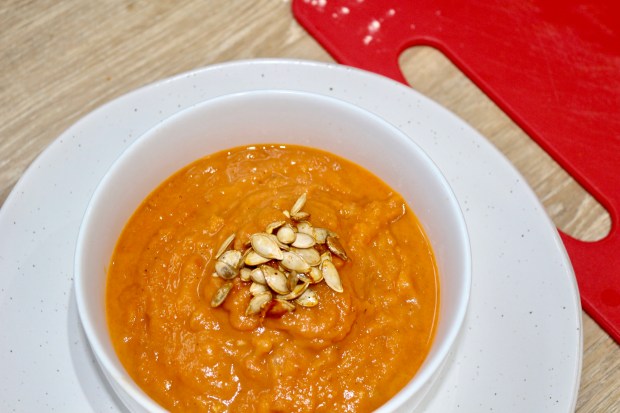
My cream butternut squash soup recipe can also be found in the ‘Recipes’ section of the blog

Pulled Pork replacements

In the past year or two, a food trend that has emerged seemingly from nowhere is the rise of jackfruit. Despite having been a staple in many global cuisines for a long time, the western world has suddenly begun to idolise it as if it were a brand new discovery. Although it is a fruit, it’s most commonly used in savoury dishes, and one of the techniques being splashed all over the internet and in ‘street food’ menus is pulled jackfruit – a replacement for pulled pork. Its stringy texture makes it a strong substitute, and once it’s bathed in various sauces and spices, it barely resembles a fruit at all.

One of my favourite new discoveries that’s also visually (though not texturally or ‘flavourally’) similar to pulled pork, is pulled banana skin. Yes that’s right, the actual peel. I first saw it done on an Instagram story of Nadiya Hussain’s and couldn’t believe the delicious cheesy burger bun image she’d posted was filled with thick, black banana peel. Not one to shy away from a challenge, I thought I’d give it a try, and I don’t think I’ll ever be able to throw banana peel away again. You should keep it refrigerated until it goes super dark, and then use a fork to peel apart the skins, into stringy pieces. What you do next is up to you, but Nadiya throws it in a pan with some onion and garlic, and then adds a load of sweet bbq sauce.
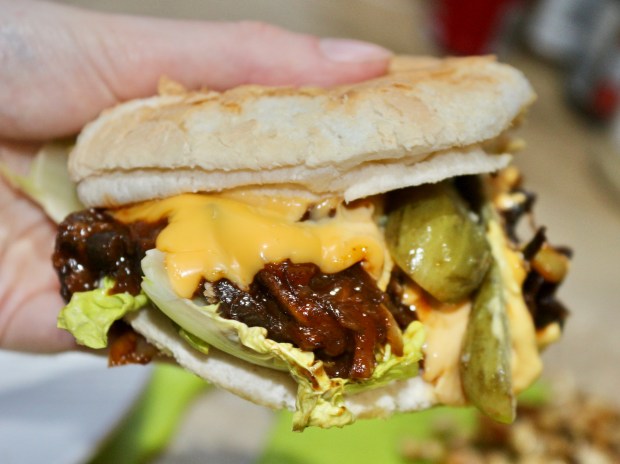
Who knew banana peel could look so good?

Tofu

A controversial vegan staple is tofu. I completely get why people would be put off by it – to say it like it is, it’s the most bland thing you could possibly eat, and the texture isn’t particularly appealing either. So why eat it at all? Well, I guess it can be a pretty decent meat replacement, but you have to know how to cook it. It’s all about seasoning, marinating and spicing it up, maybe even with a crunchy batter or crumb. Personally I don’t think tofu is something we should decide we love or hate – actually, it wholly depends on how you eat it and what you have it with. I’ve had tofu dishes that I haven’t enjoyed, but others that have been great, including tofu katsu and tofu dumplings. One of my favourite uses of tofu was a Rachel Ama recipe where she turns it into a thick, creamy spread with the simple addition of some chives. The recipe can be found in her book ‘Rachel Ama’s Vegan Eats’ and is perfect on toast. So don’t judge it too soon – once you find a fantastic recipe, full of flavour, you’ll be able to enjoy tofu too.
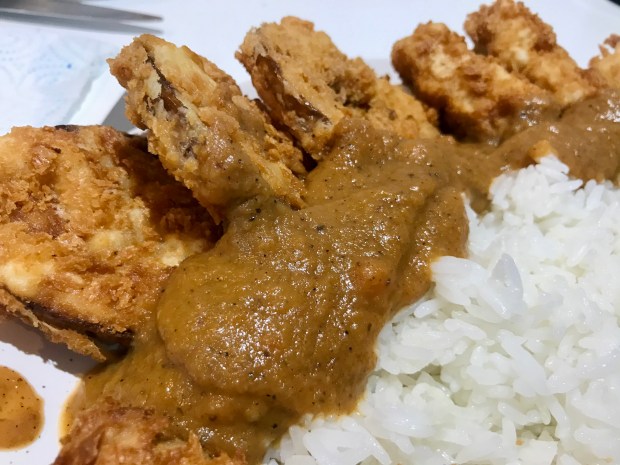
Tofu and aubergine katsu – delicious!

Seitan

There are of course, some rather more ‘hardcore’ meat replacements, and by that I mean those that require a little more spending and effort in order to turn them into a tasty meal. The most on trend at the minute is Seitan. Otherwise known as wheat gluten, it’s the thick, elastic gluten leftover when all the starch granules have been removed from wheat flour dough. It’s become super popular as a much more convincing meat substitute than tofu, and has a more pleasing texture. I’ve had seitan wings, seitan burger patties and seitan doner meat to name a few, and I’ve been a fan every time. I’m pretty sure you can buy pre-prepared seitan, but some recipes (like many of Avant Garde Vegan’s) require you to make your seitan patties and bacon from scratch, which is why it requires a bit more time and dedication.
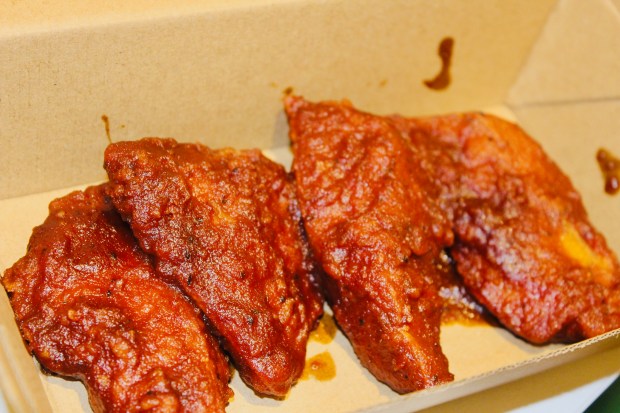
Seitan wings from Temple of Seitan in Hackney/Camden

There is some debate over these kinds of meat replacements in terms of what nutrition they actually provide for our bodies. With meat you’re getting a solid helping of protein, and from vegetable-based meat replacements you take in multiple nutrients, however the likes of tofu and seitan don’t really have much to offer. For me, these types of substitutes are more of an occasional purchase, and ideally it’s much better to cook with food that bears greater resemblance to its original form, i.e. fruit and veg.

Eggs
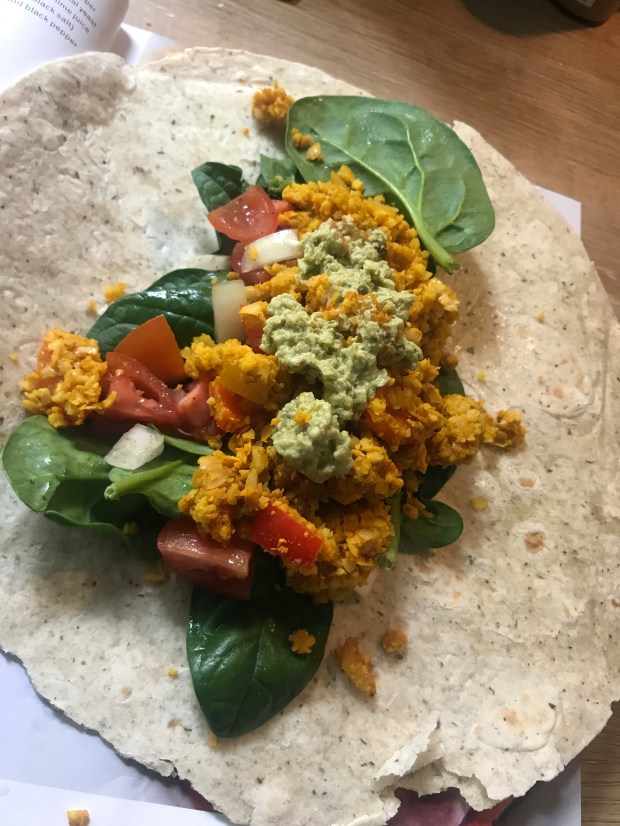
Moving onto eggs, these are something that you may be struggling to work out how you’re going to live without if you’re considering going vegan. There are various replacement options, depending on the type of egg you’re after. To be honest, I don’t have anything to offer when it comes to fried or poached eggs, however, scrambled are a popular vegan choice. Common replacements include, tofu, mashed chickpeas and ackee (a fruit popular in the Caribbean). I have tried the ackee concept, but am yet to have cooked it successfully so can’t speak on behalf of that one. Tofu scramble can be very nice, providing it’s well-spiced and seasoned. One of my favourites, though, was another of Rachel Ama’s recipes for a chickpea scramble breakfast wrap. I’m not sure the scramble would be as satisfying on it’s own, but certainly as a filling it tasted fantastic, and the texture wasn’t bad.

When it comes to baking with eggs, there are a number of options. To recreate the binding effect that eggs offer, mixing chia or flax seeds with water is a great option, as the seeds expand as they take on water, and you’re left with a thick, gelatinous mixture. Things like apple sauce are a great way of getting moisture into bakes without using eggs, although from the vegan baking recipes I’ve tried so far, as delicious as they’ve been, they never quite achieve the same rise.

Sauces and flavourings

There’s absolutely no reason why plant-based food should be bland, as generally sauces, stocks and spices are in no way off-limits to those avoiding animal products, even if specific vegan versions have to be made. One of the most commonly used flavourings in plant-based meals is nutritional yeast. These flakes can be added to sauces, pastas and even water to create a kind of stock, and they have a distinctly cheesy smell and flavour that otherwise would be missed in a vegan diet. Miso paste, liquid smoke and soy sauce/coconut aminos are other key flavour boosters – you can even buy vegan fish sauce.

It’s also super easy to create plant-based sauces from scratch. Avoiding dairy products, cashews are a key ingredient for whipping up thick, creamy sauces – they just need to be soaked for a few hours then blended along with whichever other flavourings and ingredients you’re craving.

Although standard pesto isn’t vegan (or vegetarian for that matter) due to the use of parmesan, it’s incredibly easy to either leave it out, use a vegan version, or just add a sprinkling of the aforementioned nutritional yeast. Rather than sticking with the same pasta sauce every day of your life, pesto is such a fun one to jazz up, as it can be made with any combination of veg, nuts, garlic and olive oil.
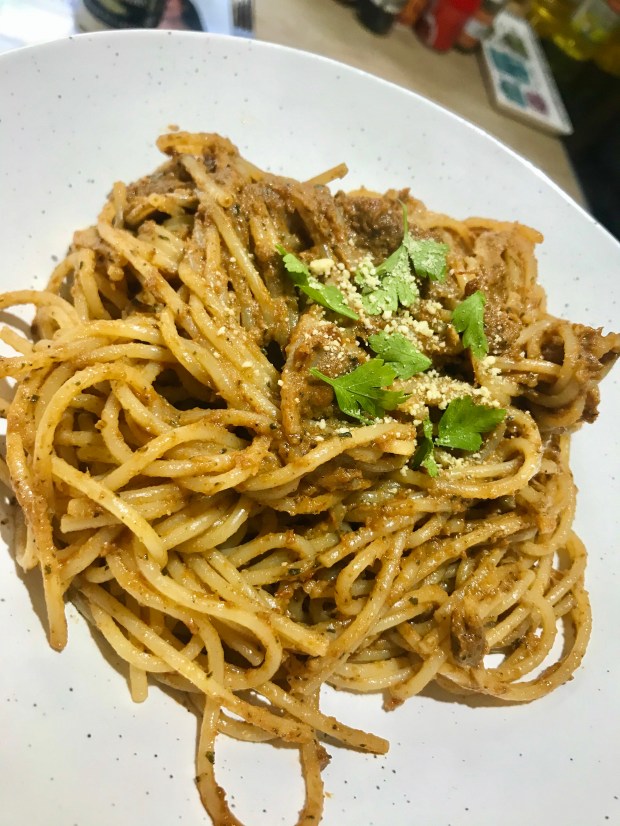
Sun dried tomato pesto pasta from Rachel Ama’s Vegan Eats

Obviously tomato-based sauces never have to be off-limits, but even these can be made more exciting by incorporating sun dried tomatoes or red peppers into the mix. You can try pesto versions of those ingredients, or mix them with soaked blended cashews for a creamy red sauce – much like the equivalent of a little tomato puree swirled through some mascarpone, only with loads more flavour.
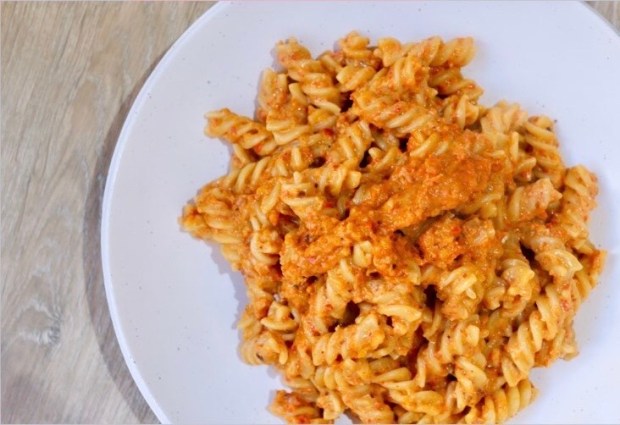
creamy red pepper pasta – sauce made with cashews

Baking

Baking is one area in which it can be a bit tougher to convince people of plant-based ingredients’ ability to get the job done. But believe me, I’ve followed a few plant-based sponge recipes now, and they have been delicious. As I mentioned regarding the lack of eggs, you don’t quite get the same rise, but they do still rise enough. Apple cider vinegar is a good addition as it should react with your raising agent (baking powder or bicarb) to generate a slightly more significant rise. For added moisture in your bakes, bananas or apple sauce are decent options, although obviously they will affect the flavour to an extent.

lemon drizzle and pistachio loaf cake

Believe it or not, meringues aren’t off the cards either. Odd as it may sound, aquafaba, which is the liquid you find in tinned chickpeas etc, is the main ingredient in whipping up vegan meringues, although not having tried it myself, I’m sure it takes a fair bit of practice.
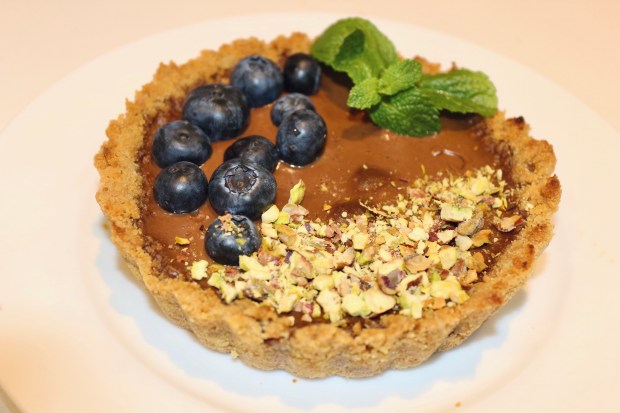
chocolate ganache torte using coconut milk and vegan chocolate for the filling

In terms of brunch baking, fear not, because pancakes and French toast are still firmly on the menu. For your French toast egg wash replacement, simply combine plant-based milk with maple syrup and vanilla essence and soak your bread in that. Pancakes can be made equally as easily without eggs – a base mixture of milk, flour, baking powder and vanilla essence will do just fine.
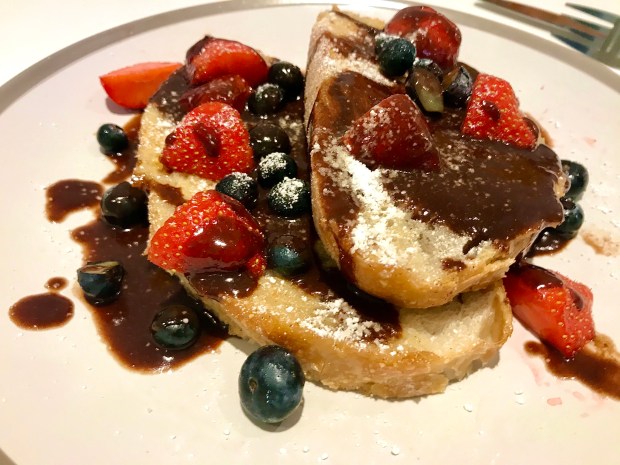
What this post goes to highlight is just how many creative, straightforward and widely shared options there are nowadays when it comes to cutting down on your meat/fish/dairy/egg intake or avoiding animal products altogether. This also applies to the kinds of ingredients you can access in supermarkets, with vegan versions of chicken, mince and bacon now all being pretty common finds. Lots of popular confectionary such as Oreos, Biscoff and party rings are also vegan certified so you don’t have to miss out on the good stuff.
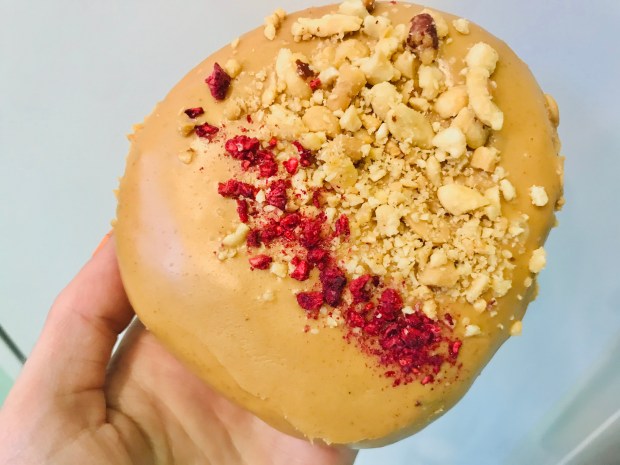
Even vegan doughnuts are on the rise – check out this PB and Jlo doughnut from Doughnut Time…

So whether you love doing your bit for animal welfare and the environment, or you still love a juicy beefburger, there shouldn’t be anything to stop you from being a bit more experimental in the kitchen when it comes to eating well. Buddha bowls, seitan steaks and chickpeas galore, plant-based definitely isn’t something to be feared.

¡Comemos!

xo
‘One Big Mac and Fries? That’ll be two hours of cardio please.’

What’s that all about then?

Really?

One (in my opinion, not particularly heavy) fast-food meal = calories equivalent to two hours of cardio?

Did I want to know that?

Probably not.

Should I be aware of that?

Possibly.

So today’s piece is more topical. I don’t tend to address news stories here, but what with this one being strongly-connected to a lot of the things I do like to talk about, things that are constantly on my mind, this one seemed sensible to address.

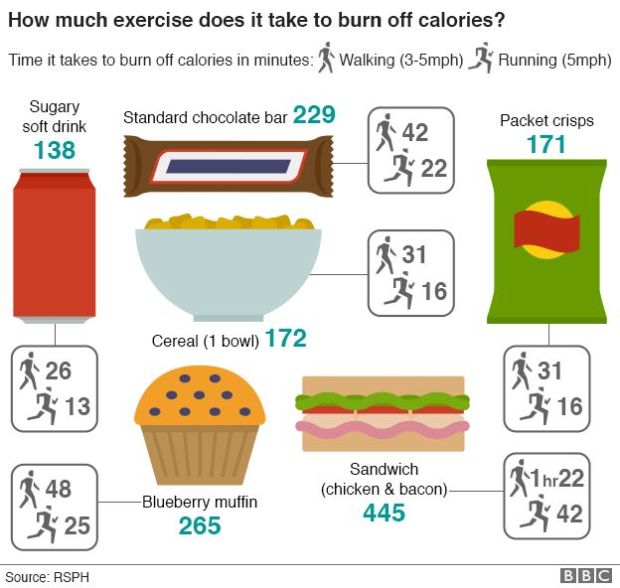
You’ve probably already heard, but in a nutshell, news emerged last week that The Royal Society for Public Health has suggested that food products should be labelled, not only with the number of calories within that item, but also the amount of exercise it would take to burn off those calories.

They believe that people don’t really understand the reality behind the number of calories we’re consuming, and what that actually means for our bodies.

Research from Loughborough Uni has now backed this up, following trials in which people eating food with ‘Pace Labelling’, as it’s called, ended up consuming around 200 calories less daily.

All this stems from the fact that around 13 million adults in the UK are considered ‘obese’ (Diabetes UK study) and that not enough is being done to combat this.

So that’s the idea.

But that’s only the half of it.

Of course, drastic measures like that are going to go hand in hand with a backlash of opinions, generating a huge amount of controversy, and it’s tricky to know where to stand on the matter.

Trying to avoid waffling like my A-Level French style compulsory discursive essays (intro-points for-points against-conclusion-DONE), I’m going to dare to address both sides and see where my thoughts lie, but apologies for said waffle in advance…

I’ve basically already summarised the benefits, explaining the gist of the news story above, but just to reiterate, intention of Pace Labelling = a reduction in the number of calories consumed, through educating people about what those calories actually mean for their bodies. Equating calories to exercise highlights just how “overindulgent” some foods can be (although that word in itself is pretty problematic but more on that later…) and therefore helps us to make healthier choices for ourselves.

It’s designed to be about awareness. Obesity is real, and that’s undeniable. How to combat it is obviously a very tricky topic, as it can be caused by so many different issues, from mental health, to lack of nutritional education, to other health issues, and even genetics.

For me, the intentions are wholly positive. This is coming from a place of genuine concern – however…

Over to the other side…

The news was immediately met by outrage and even more grave concern by a number of bodies and individuals.

Renee Cherry’s reaction to this for Shape magazine makes the very important point that calories aren’t necessarily what matter. What’s more important are the nutrients that you’re getting from those calories, and so it could be more beneficial to your body to eat a product with a higher calorific value, because it contains more ‘goodness’ or essential energy within.

Image via bbc.co.uk

On a similar nutrition-related level, no two people’s bodies are the same when it comes to energy consumption and usage. We know that generally speaking men need more calories than women, and that children need fewer than adults, but that doesn’t take into account the fact that each of our bodies reacts differently to different foods, diets and exercise routines, and so one set of dietary choices that works for person A could mean malnourishment or excess weight for person B.

These arguments against the new recommendation are relevant, but even louder to voice their opinions are those speaking out against the danger they pose to mental health and the risk of eating disorders.

The idea that food = guilt is a damaging one. This is often a key factor in disordered eating, along with the idea that we must immediately compensate for whatever we’ve consumed. There will absolutely be people who see a food label, link X amount of calories to X amount of exercise and either exercise literally to within an inch of their lives, or just avoid food altogether in case they don’t burn it all off.

‘Calorie’ has become a bit of a dirty word. We don’t want calories. We don’t like them. But we NEED them!

This whole idea, despite being well-intentioned, risks demonising the very basic, essential-to-life concept of eating.

Whilst I am completely against the idea, I really do think the reasons behind it are so important to consider, and if this is such a terrible idea (which it kind of is) we need to think about kinder, less damaging ways to educate ourselves and avoid potentially life-threatening food choices. It sounds dramatic, and slightly hypocritical, but we know that consistent poor dietary choices on a daily, monthly, yearly basis can be that dangerous, in the same way that under-eating also can be.

It’s a difficult one. And I’ve voiced this before on a more personal level. The vast majority of us will have at some point associated guilt with food. The idea that food = guilt can be dangerous, but I can’t help but think that if I personally didn’t feel any guilt ever, that would be pretty dangerous in itself, and I certainly wouldn’t be in the shape I’m in now. Being aware of the fact that there are negative consequences of eating Big Macs every day forever is kind of important really, isn’t it?

Food addictions and unhealthy food-related relationships are in some ways, slightly more difficult to address than addictions like alcohol, smoking and drugs, because we absolutely need food. Not eating would be even more dangerous than overeating and so abstinence is impossible. And therefore for many people, the fact that their one vice is something that is essential fuel to staying alive is incredibly complex. You cannot just give up eating because your choices are causing your body to suffer. It requires the most difficult form of self-control.

So I’m very torn.

Food doesn’t always have to be that deep, but we can’t avoid the fact that relationships with food are becoming more and more complex, and so much of that can be put down to irresponsible chains and franchises, with money symbols floating around in their eyeballs.

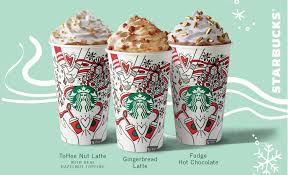
Another news item that has been a hot topic recently is the issue regarding chains such as Starbucks, Pret etc serving special hot drinks ranges (particularly during autumn and the festive season), whereby those drinks contain literally half your allowance of daily calories. Despite saying earlier that the focus shouldn’t necessarily be on calories, when 700 of them are coming from one hot drink choice, you can be sure you’re not getting much nutrition from that.

theburgerguide.com

The same also applies to supersize double and triple stacked burgers, or even those burgers replacing buns with entire doughnuts (anyone else remember seeing those?).

These things are delicious. They are indulgent. And they’re fun. But they’re becoming commonplace and that’s something that I find difficult to stomach (pardon the pun).

The drinks thing is currently more relevant though so we’ll stick with delving a bit deeper into that. This uncovering came from Action on Sugar’s latest report, and examples currently on sale include Starbucks’ Gingerbread Latte, which when made with oat milk contains 523 calories, and the most shocking menu item – their Signature Hot Chocolate with Whipped Cream (again, with oat milk), containing a quite frankly disgraceful 758 calories, and 23 teaspoons of sugar.

I’m not really a coffee drinker, but love a good hot chocolate, and it genuinely terrifies me that I could easily have ordered that, thinking that I was having an innocent little drink. 758 calories. And it’s just liquid.

This is completely and utterly irresponsible from the biggest player in the hot drinks chain game.

When I go out for dinner, I don’t want to be worrying about calories and holding back. And so I won’t. But I also don’t want to be fearful that I might order what I think is an innocent drink, but that actually contains over 1/3 of my daily recommended calories. IN ONE DRINK. To me that’s a madness, and everyday coffee shops like Starbucks and Pret need to start acting more responsibly when it comes to their menus – either being more transparent about how calorific they really are, or making a conscious effort to reduce the amount of dangerously-disguised items on their menu.

So do I have a solution? Is there one??

Obviously I don’t because I’m just little old me – opinions without solutions, however, compromise is going to play a huge part. More nutritional education would be a solid place to start, but a kind of education devoid of fear-mongering, tying together body positivity and healthy mindsets with the science behind our choices. And this really should start in schools.

Having said that, the biggest step towards a solution would need to come from the food industry itself and that’s not going to happen easily. They have their priorities. Capitalism is the only thing to say. Ultimately the consumer’s best interests are not at heart. So it’s on us to make those choices. It’s about finding the balance between avoiding calorie counting whilst also being sensible enough to make choices that aren’t going to lead to significant health problems at some point in life.

I don’t want to stress anyone out. I don’t want to stress myself out. It shouldn’t be a battle, but I know for myself, at least, often it is.

The more we talk about different relationships with food, the more we can understand the way our brains and our stomachs relate to each other, and perhaps in time, this kind of open dialogue will help us to come up with the compromise required to make progress.

Be wise to what you eat. But remember that we need food to survive. Food is essential. Look for choices that make you happy and respect your body.  It’s all about balance, not avoidance.

I’m still working on it. If I find any more answers, I’ll let you know.

¡Comemos!

xo

Food Waste is for Losers

Second year of uni. Food plan for the weeks ahead sorted. £80 Morrison’s shop delivered.

(Yes £80 – this is what happens when you don’t drink that much)

This was the way things went every month. Stock up and then by the end of the month my food supply would be depleted ready to start again.

Or at least that’s how I expected it to work. But my food plans would change constantly and after weeks had gone by I would find heaps of gone off food in the back of the fridge, all of it ending up in the bin.

And I didn’t really think much of it.

Fast forward a few years however, and lots has changed. Now, to me, food waste is criminal. It’s very rare that I end up throwing stuff away, and that’s how it should be.

This is a sort of guide with a number of suggestions and recommendations on ways that you can make the most of what’s in your cupboards, but also help to reduce commercial food waste.

On a personal level, Nadiya’s Time to Eat was what started my full on appreciation for my freezer. So many of the foods I’ve thrown away over the years would’ve been perfectly edible had I frozen them. Your freezer is your friend and the sooner you realise that, the less waste you’ll end up with.

The current contents of my freezer are as follows:

Cardamom Ice Cream

Gingerbread Fondant Cups x3

Vegan Sausages x4

Chips

Edamame Beans

Peas

Shortcrust Pastry

English Muffins x2

Bacon x3

Squid

Smoked Salmon

Broad Beans

Focaccia x1

Croquettes x1

Vegan Fries

Bagels

Shellfish Stock

Some of the things on this list are obvious – where else would you keep ice cream? But others have meant I’ve preserved food that otherwise wouldn’t have made it.

Take the Gingerbread Fondant Cups for example. I made dessert for two people. When it comes to buying ingredients, just making two little fondant cups isn’t really worth it, so I ended up with about nine. There was never any chance of me eating 9 in one sitting, so they’ve now been resting in the freezer for a few months, ready for me to dish up as dessert if I ever have guests over, or for my flatmates.

Making sure you freeze in practical portion sizes is essential. If you tend to just be cooking for one, don’t freeze 3 chicken breasts together – you’ll come to regret it when you only want to defrost one.

My freezer is also a saviour for bready carby products – bagels, muffins, and all sorts of actual bread. Okay, so it’s never quite the same after being defrosted, never as soft and fluffy, but it’s edible, and when you slather it with fillings, the bread really isn’t the star of the show anyway. The focaccia I made the other day is waiting patiently until I delve back into my Max’s Sandwich Shop book in a month or so’s time – and because that’s already sorted, the sandwich recipes I want to try will take me ¼ of the amount of time what with not having to make the actual bread again.

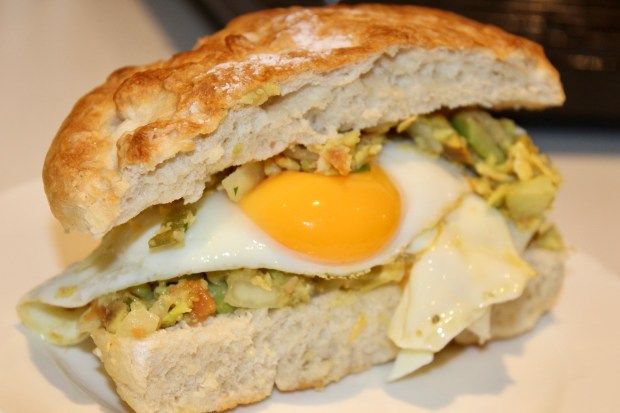
This is one of the sandwiches I made for lunch this weekend with a portion of the focaccia I’d frozen weeks ago. All that remained was to whip up some guacamole and fry an egg!

You can also make the most of slightly stale bread by blending it to breadcrumbs or toasting cubes of it for croutons. This is a much better option than buying packets of these straight from the supermarket.

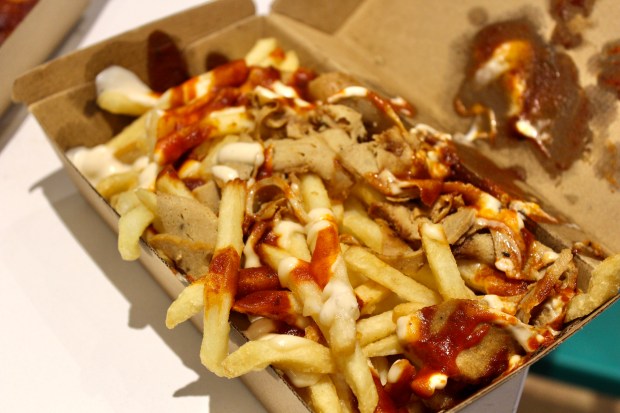
Another thing that I’m not afraid to do is freeze leftover food that I’ve bought from stalls and restaurants. I currently have my loaded fries from Temple of Seitan sitting in there after I couldn’t manage to eat them the other week as I’d already had 4 wings, a burger and Mac n Cheese lool. I’ve done this before with fries from Truffle, which tasted just as good heated up weeks later. The alternative is wasting perfectly good food and in my mind that’s just not a option. There should be no shame in taking home leftovers when you’ve been out to eat – this is much more responsible than overordering and then allowing it all to be thrown away. It also means you’ve got food ready to be reheated for an evening or lunchtime when you’re in a rush and don’t have time to cook something from scratch.

Saving them for a rainy day.

And the final point to add on the topic of freezing things is that many unappealing-looking scraps can be turned into something useful before or after being frozen.

Example number 1: Shellfish stock

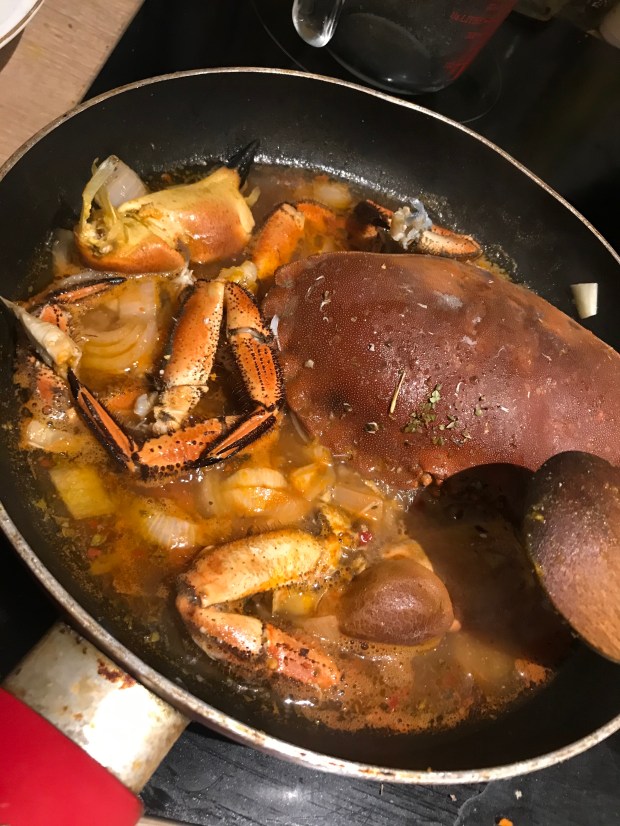
I recently made a crab curry and found myself left with all shell and claws. Instead of binning them straight away, I boiled them into stock with a few other added ingredients, and have now frozen that stock ready for when I make a squid stew later this week.

In the process…
The finished product

Example number 2: Vegetable soup

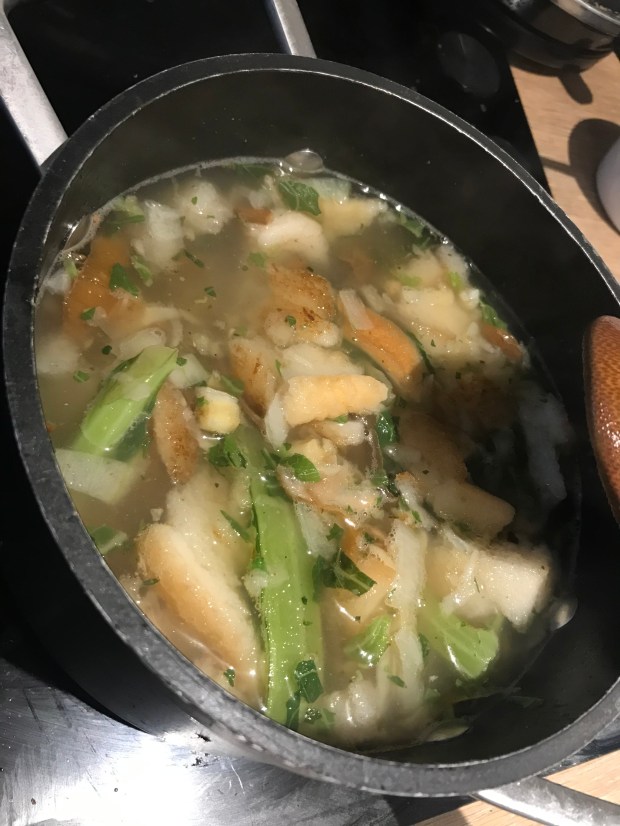
This one might not sound that appealing but it was so satisfying to make. I froze a load of veg scraps – parsnip peel and cauliflower stalks etc and once I had built up enough, I boiled them, eventually blending the scraps into a smooth soup. You could just make stock, but why make stock and end up throwing the scraps away again when you could actually just blend them and use them as the substance for an entire meal. The idea of eating vegetable peel and stalks doesn’t sound massively appetising but it made for a really satisfying meal.

Before the blending

Example number 3: Aquafaba mayo

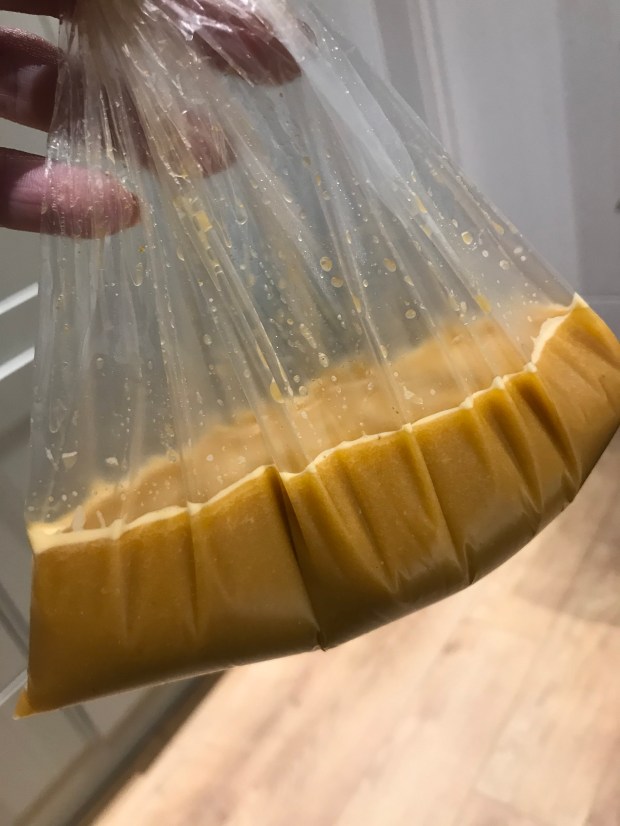
I was surprised to learn during my vegan week (from Rachel Ama) that vegan mayo can be made using aquafaba, or the liquid that comes from tinned chickpeas. Instead of draining the liquid when making a chickpea curry, I kept the liquid in a sealed bag and froze in, later using it to make the mayo.

The point is, if you do your research, there are plenty of ways to think outside the box when it comes to using your freezer to its full potential to limit the amount of food waste you’re producing.

And it’s not only vegetable waste that we can avoid. Fruit that is past its best can also be utilised to make tasty snacks. One of the most obvious examples is with bananas. Overripe bananas that are too mushy to eat are perfect to bake with – whether its cupcakes, muffins, or of course, banana bread. Other fruit works in a similar way – it might not taste great eating it on its own, but you don’t need or even want the freshest fruit when it comes to cooking it down for a compote, or baking it into cakes etc.

If you don’t fancy all that added sugar from baking, try making smoothies or shakes instead. Blend the fruit alone, or add milk or crushed ice (or even ice cream if you want to indulge) for the perfect pick me up in the morning. Once again, the fruit does not need to be on top form for this, as it’s going to be blended to a pulpy mush anyway.

Although most often I cook just for myself, that doesn’t stop me from wanting to try cooking bigger joints of meat, so I often find myself with lots of meaty leftovers. I tend to freeze the meat in smaller portions but there are so many things you can do with leftovers like this, whether it’s chicken, beef, lamb, pork or something more exotic. Using a food processor, you can blend smaller chunks of meat into mince. Obviously the texture ends up being quite different to shop-bought mince but it works in exactly the same way, and often has more flavour.

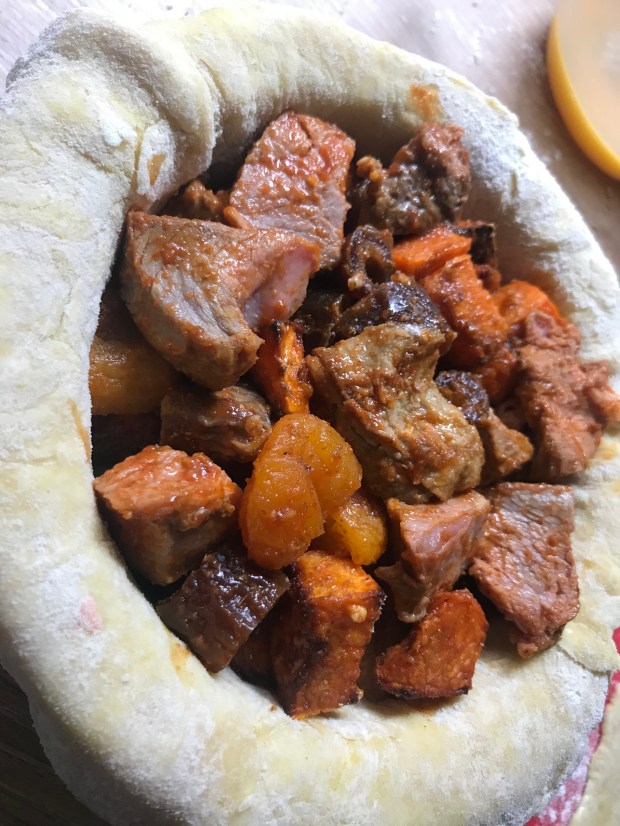
One of my favourite things to do is use leftover meat in a pie. I made a lamb roast dinner a few months ago, and with the leftover meat, I made a harissa lamb pie filling which was delicious.

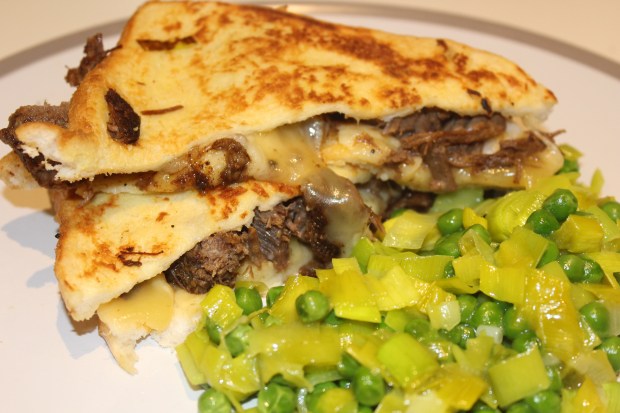
After the pie there were still leftovers, so wanting to use up the lamb in as many diverse ways as possible, I added it to a greek lamb orzo dish. Another time I used some leftover brisket as the filling to some deliciously cheesy eggy bread. Adding your leftover meat to stews and curries is another perfect, and very easy option, and the possibilities really are endless.

As well as the things you can do in your own kitchen, there are now a number of really useful apps you can use on your phones and tablets to help reduce waste in your local community. Here are 3 of my favourites:

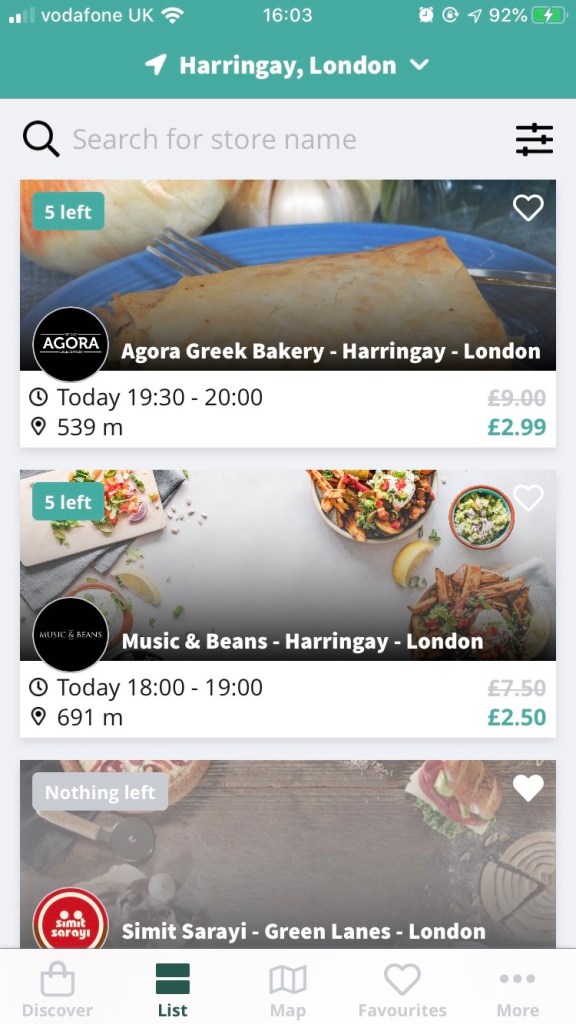
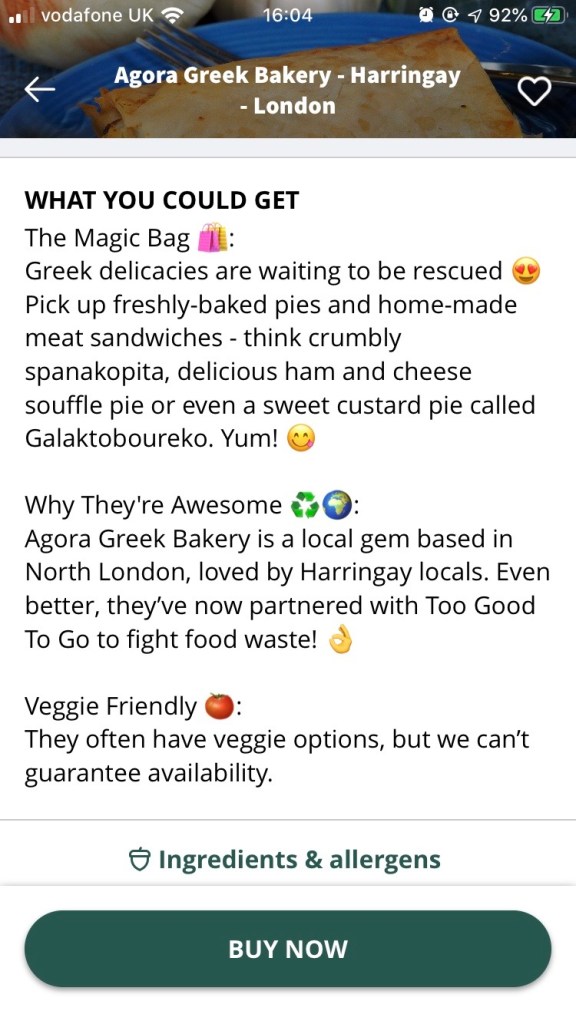
Too Good To Go

A large number of cafés, restaurants and even supermarkets are now using Too Good To Go to reduce their end of day waste. You can browse the app to see which locations will have waste at the end of the day, and how much it will cost (significantly reduced prices of course). You never actually know what specific items you will receive in your mystery bag, as because it’s a sort of pre-order system, the businesses cannot predict what they will have leftover, but they generally tend to give you an idea of the things you can expect to receive. Collection only.

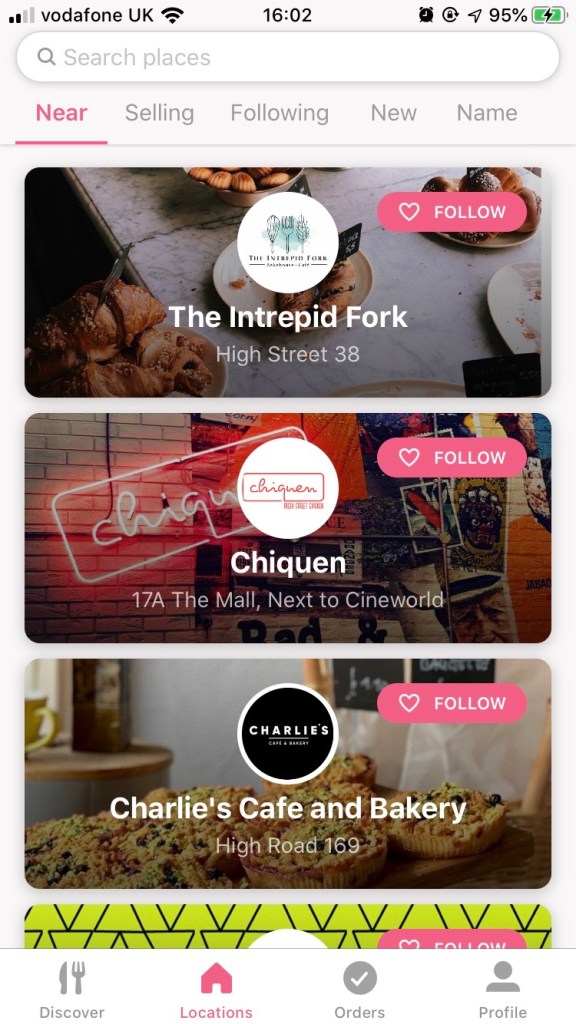
Karma

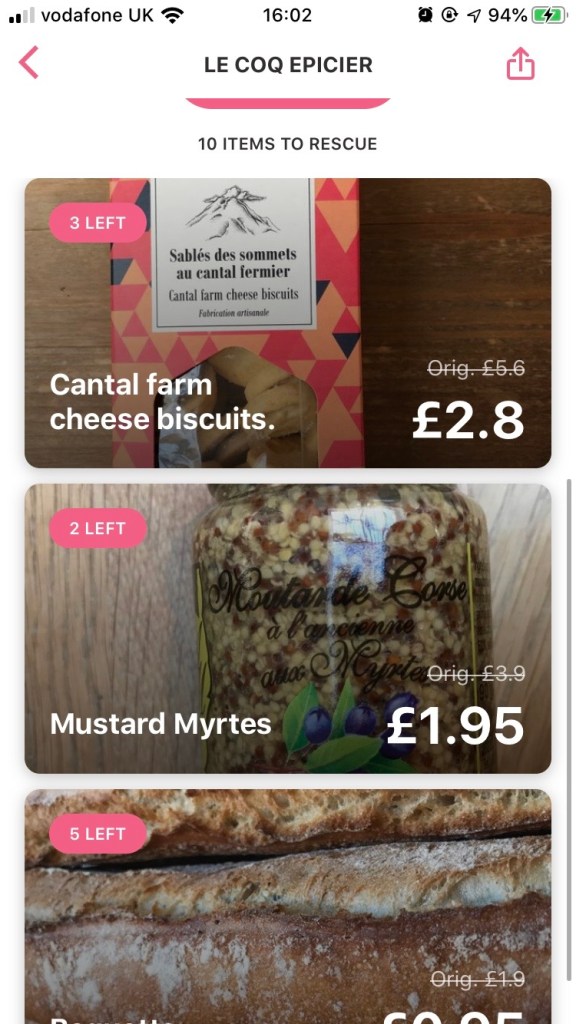
Karma works in a similar way to Too Good To Go, except businesses upload individual waste items live as they have them, and so you will find food ‘to rescue’ even first thing in the morning. Also, rather than committing to buying a surprise goody bag like in the previous app, with Karma you can choose to buy specific dishes. You’ll even find street food style businesses on this app. Again, it’s collection only but each establishment will let you know when you need to collect the food by. More often than not, the food items are half price.

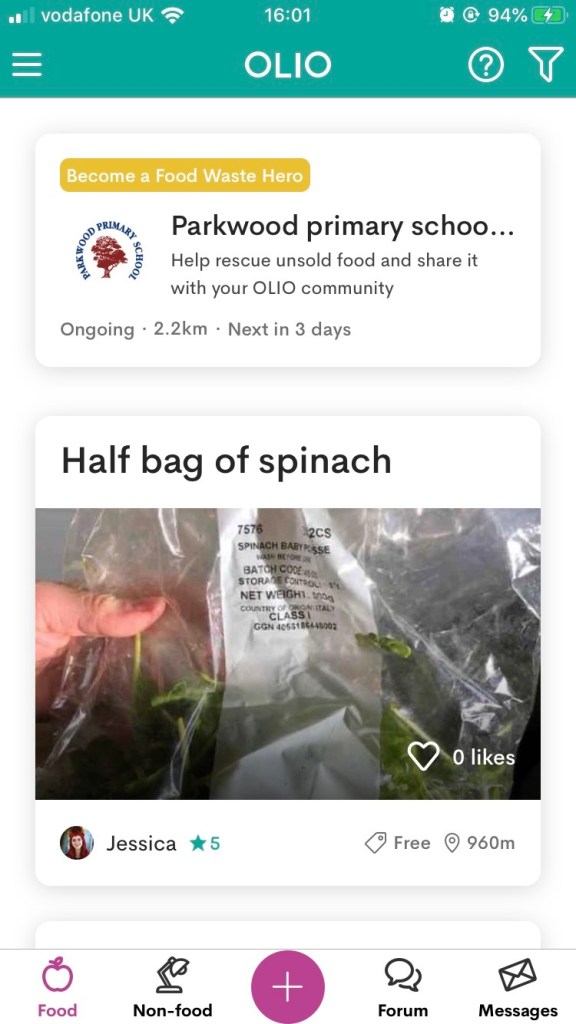
Olio

Saved my favourite until last! Olio does work alongside businesses but it’s designed more so for normal people like us who have food in our homes that is perfectly good to eat but that we’re not going to use. Instead of wasting it, you put up a post on the app, showing what food you are trying to get rid of with a short description, and when it will be available to collect from yours. People can then contact you if they are interested in collecting the item and you can arrange the pick up. A lot of the time people will leave the item securely wrapped outside the property so that you can collect it even if they’re not home, and I’ve done this at mine so I don’t have to worry about whether I’m going to be in or not. The food items can be brand new and unopened or even half used. This might sound odd, but why let half of a loaf of bread go to waste, or even half a bottle of ketchup if it’s perfectly good to use and it saves you from buying a whole new one! I really recommend using this app, and certainly not turning your nose up at it, as I reckon if we all properly thought about how much food we throw away on a yearly basis, it would be shocking. I’m still delighted about the fact that it saved me a few pounds the other month when I needed some strong bread flour and a lady living about 10 minutes from me had a whole unopened packet going for free. Result.

Most of my suggestions above are probably pretty obvious. Use your freezer. Sounds silly, but every time you’re about to throw something away, just think, is there another way I could use this? Might I want this for a dinner or packed lunch next month? Do I know someone who might want this? Of course there’s no point in filling your freezer with a load of things you are never ever going to go back to, but if that’s the case, you need to question what you’re buying, and how much of it you actually need in the first place.

Bottom line is we’re throwing far too much away. There are constant talks of shortages of this and shortages of that, but how can we be suffering shortages at the same time as wasting so much??

The moral of the story is think very carefully about what you’re buying and what you actually need, and do challenge yourself to try one of the apps or recommendations above this month, and see if you can reduce your waste.

As I often like to reiterate – food waste is for losers.

¡Comemos!

xo