Around the world in 80 plates: Man’ousheh

It’s been a while since our last virtual food adventure, but I’m back at it, and this time we’re heading to Lebanon, for a baked breakfast treat that’ll make you question why eating flatbreads for breakfast isn’t the norm here…

I have tried desperately hard throughout this piece to use the singular form of today’s featured dish as the plural version completely changes the word and I can’t bear to incompetently destroy the language… so without further ado, welcome the Man’ousheh.

Origins…

Similar to what we learnt from the Hungarian Lángos, the Man’ousheh (there are also spelling variations) traditionally came from the haul of bread that women would bake in the mornings to feed their families. Smaller portions of dough would go towards making the Man’ousheh for breakfast.

Bread historically has played such a huge part in many cuisines across the globe, being a staple way to feed a family, and one that has unique features in various countries. Compare the fried or baked Lángos commonly topped with sour cream and cheese with the thinner Man’ousheh, heavily spiced with za’atar, sesame seeds and minced lamb to name a few common toppings. You could go from a Turkish stuffed gozlëme flatbread to Spanish pan con tomate, but regardless of where you are, variations of bread-based dishes have been feeding us for centuries.

Terminology…

As I begin to think more deeply about cultural appropriation and the exoticisation of food, I’d like to add a disclaimer here about the use of the word ‘flatbread’. There’s sometimes debate when it comes to equating one country’s produce to that of another nation, for example, lots of articles talk of the Man’ousheh as the Lebanese ‘pizza’. A man’ousheh really isn’t a non-Italian pizza, and actually, only an Italian pizza is an Italian pizza… Therefore trying to equate the two risks ignorance. I’ve also seen some posts questioning the depiction of the Man’ousheh as a flatbread. At the end of the day, a Man’ousheh is simply a Man’ousheh, however, when language and cultural barriers prevent us from understanding what that actually consists of, it can be useful to make comparisons.

The difference between referring to it as a flatbread and as a pizza, is that flatbread is a much more generic term that doesn’t refer to one specific dish from a specific culture, and instead types of flatbread can be found globally. On the other hand, the term ‘pizza’ has more limitations, and almost suggests the idea that the Man’ousheh is trying to live up to a European classic, but hasn’t quite hit the mark.

It’s these kinds of connotations that we should be aware of when comparing food from different backgrounds – let’s eliminate the unquestioned assumption that everything we’re not familiar with is a variation of something we already know. Instead, we should appreciate that there’s a wealth of food out there that goes beyond our personal experience.

With our less-than-inspiring culinary reputation here in the UK, we, more than anyone, should be aware that actually there’s very little we did invent on the food front, and so much that we’ve adopted here stems from the influence of other cultures. The terminology we use should respect and appreciate the food we’re discussing, only using generic comparisons when essential for explanatory purposes.

From Lebanon to London

Lengthy disclaimer aside, nowadays the Man’ousheh can be found in bakeries across the Levant, and has even branched out further afield, gaining attention in the US and here in London. The Lebanese Bakery is one of the best places in the city to try a Man’ousheh, and it actually has stores in Beirut too, which should tell you exactly how legit it is. Their menu’s full of Middle Eastern flavours and toppings, including halloumi, pine nuts, pomegranate molasses and various yoghurts. They even do sweet versions topped with Nutella, tahini and honey.
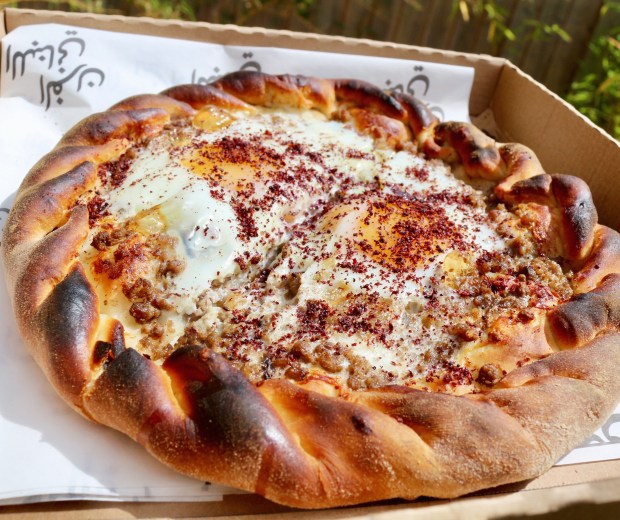
As well as a basic flatbread with hummus, I ordered their all-day breakfast Man’ousheh with baked eggs and awarma (lamb confit). It looked beautiful, with its plaited crust and dazzling egg yolks, and for £6.95, they’re very reasonably priced.

Home cooking

Moving from the experts to my home kitchen, things aren’t as pretty. I love my Lonely Planet Street Food cookbook for its array of recipes for much-loved snacks and on-the-go dishes across the world, so I thought I’d give baking a Man’ousheh a go myself.
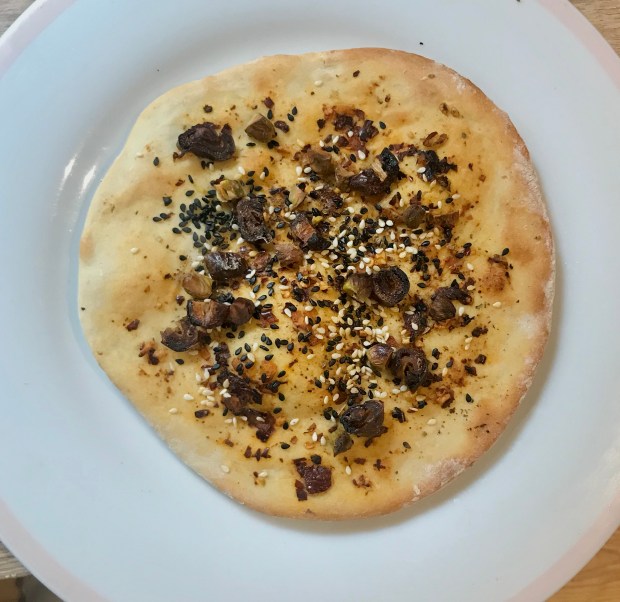
As you can see, definitely not as attractive as those made by the professionals, which is to be expected, but it was ok. The dough definitely wasn’t as light and fluffy, and instead was much thinner with more of a crunch to it, however, it was edible, and sometimes that’s all I’m asking for. I avoided the temptation to shovel as much meat and cheese on top as I could manage, and instead opted for a lighter za’atar, sesame seed and date topping.

If you’re inspired to have a go at home, although the Lonely Planet recipe worked, I’m 100% sure there are much better recipes out there, so it’s really not tricky at all, but just give it a Google and take your pick.

Failing that, trying a Man’ousheh at The Lebanese Bakery is highly recommended for a substantial shared snack or a solid lunch (or very solid breakfast…).

I have no idea where I’m going next time so off I go to get planning for the next edition of Around the World in 80 Plates!

¡Comemos!

xo

Around the World in 80 Plates: Lángos

Deep fried dough. No one can explain why something that sounds so basic and actually quite gross is in reality so delicious. It still baffles me that there are so many different ways of making deep fried dough into snacks and meals, each one of them bringing something completely different to the table, literally.

My travels are this week taking us to the home of the Lángos – a deep fried dough featuring as many customisable toppings as you’d like. And where does this delicacy hail from?

Hungary.

If you’ve read my post on my trip to Budapest last November, you may already have known that.

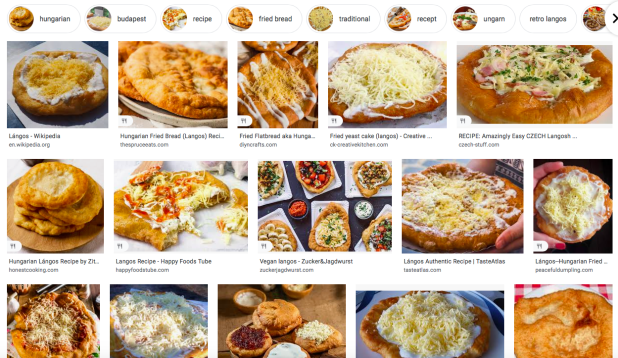
Don’t be too tempted to jump on the idea that this is like a Hungarian pizza. There are many differences. Obviously here the dough is fried, and that’s key, but sometimes mashed potato is added for a fluffy, slightly creamy texture. Secondly, the main topping tends to be sour cream – not a tomato sauce in sight. And last to mention, is unfortunately, the (optional) cheese topping on a Lángos doesn’t tend to be melted, but don’t let that put you off, this actually allows you to get a lot more flavour from the cheese, even if the texture isn’t quite as mouth-wateringly gooey.

Despite not being as large as a typical medium-sized pizza, as it’s deep-fried, it can be pretty heavy, so don’t underestimate just how filling they are, even if the toppings are minimal.

The Lángos is often described as a street food – in fact, once again, it was in my Lonely Planet Street Food guide that I first came across it. Having said that, one of the main qualities of street food tends to be that it’s super easy to eat on the go. As a pretty stodgy flatbread, the Lángos doesn’t really fulfil this brief, and so whilst it’s cheap and easy to quickly whip up outside the confines of a restaurant, you’re probably going to want to take a seat to eat it.

Back when bread was regularly baked in every household, the Lángos dough would be excess leftover from bread-making, and would be baked in the same way, however seeing as such daily home baking is no longer practised, the dough now ends up being deep-fried instead. Back when it was baked in the bread oven, it was placed right at the front, close to the flame, which is where the delicacy gets its name, with láng being the Hungarian word for flame.

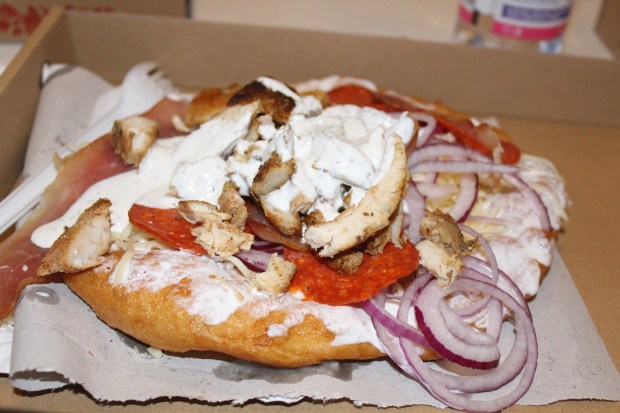
Moving on to my own experiences of the dish. I first tried it at the Central Market in Budapest last year. The upstairs section of the huge market hall has an area dedicated to food, which is comparatively small in size, meaning that queues of people are packed in to one small space, all eagerly awaiting their delicious lunch meal. Whilst my friends opted for slightly more nutritious salad and veg-topped versions, I of course went for the meatiest feast I could find. Sour cream, grated cheese, onion, chicken, pepperoni and ham struggled to contain themselves on top of the dough base as we hunted for somewhere to perch. This is by no means a light snack; be prepared to feel a little heavy afterwards, but it’s worth it. To be honest, Lángos aren’t the most flavoursome meals – other than the flavour from the toppings, there’s little seasoning or added ingredients, other than perhaps a garlicky rub on the base, but the appeal here is definitely more due to tradition and doughy, fried indulgence.

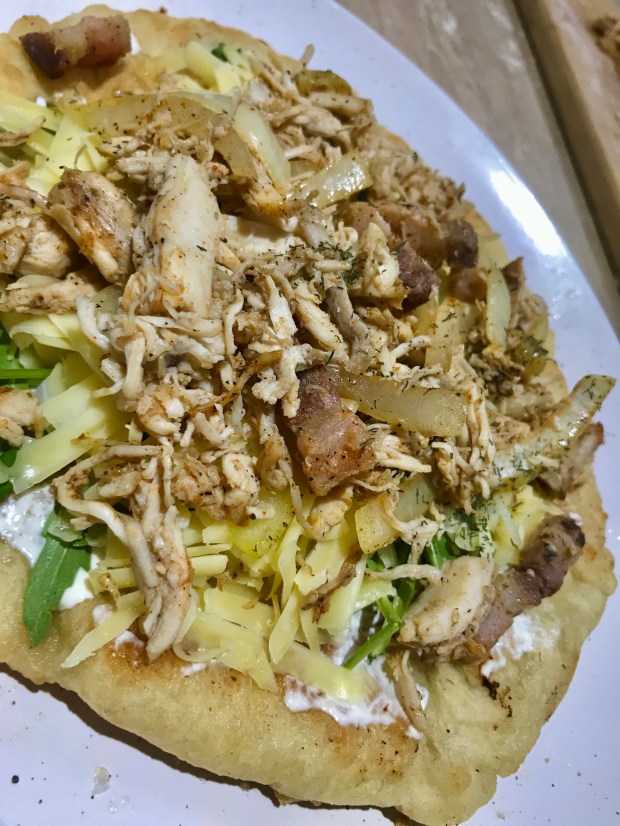
Having said that, when I attempted my own version at home, I have to admit that it was even better than the one I tried in Budapest. After frying, along with the standard sour cream and cheese base, I topped the dough with shredded chicken, pancetta, rocket and onion. Whilst the onion on my Lángos in Budapest was raw, I decided to cook it this time, just to avoid the pungency that raw onion can have. The seasoned toppings were really tasty, and the addition of mashed potato to the dough made it super soft, whilst still maintaining the slightly crispy exterior.

I would definitely make Lángos again at home. They’re really simple, although I would fry the dough for slightly longer next time, just for extra crispiness, as my fear of overcooking it this time made it a little too squidgy in the centre.

And that’s dish number 2 in the series complete. We’ve gone from a healthy, plant-based tomatoey pasta lentil dish last time round, to a deep fried fully- loaded doughy delight, so you can be sure that there are no rules when it comes to deciding which dishes to showcase next.

There are loads of recipes for Lángos online, so with so much time at home at the minute, why not try your own hand at one of Hungary’s signature dishes for an indulgent weekend treat.

¡Comemos!

xo

Around the World in 80 Plates: Koshari

The first in a new series, here I’ll be taking a look at key dishes from countries around the globe, how they compare in London, and how you can attempt to whip them up in your kitchen at home.

Before I get stuck in, I’d like to point out that I began writing this before things really spiralled with regards to the Coronavirus. I talk later on about my love for London’s street food pop ups, and urge you to visit your local, independent restaurants, however, as things stand at the minute, obviously that isn’t necessarily possible. So many places I love have closed down, some not knowing if they will ever be able to reopen. It’s a massively tough time for so many people, so I just hope that when all of this subsides, as many of these places as possible can get back on their feet. So, continuing with my original request, please consider investing your time and money (and stomach space) in these amazing small businesses when it’s safe to do so again – they will really appreciate your support, and it’ll be exciting to try something new.

But getting stuck back in, my first stop is Egypt, an underrepresented cuisine here in the UK, with my Egyptian dish of choice being Koshari (also written as ‘Kushari’).

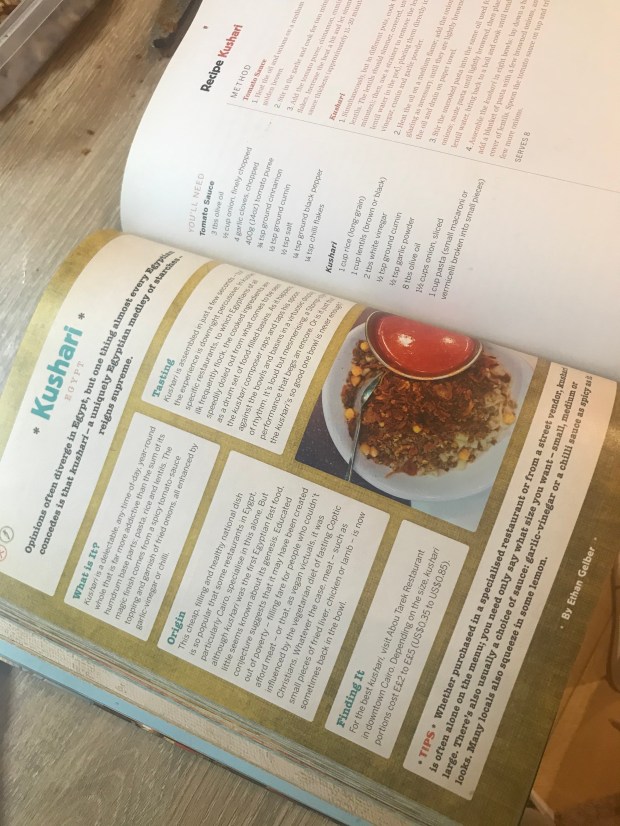
I first came across Koshari in the Lonely Planet Street Food guide, which highlights some of the world’s best street food, offering readers simplified home recipe versions.

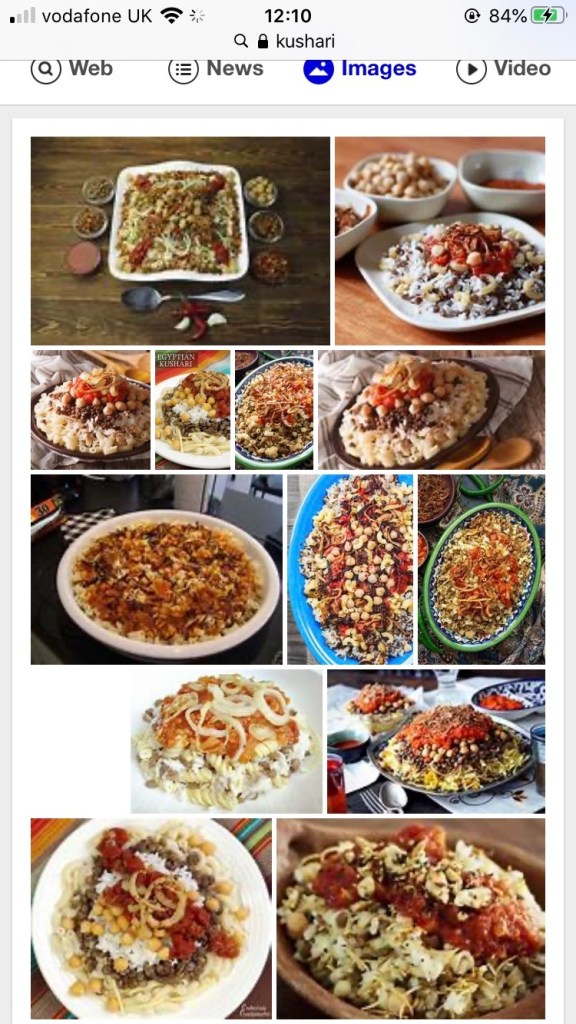
But what is it? As the national dish of Egypt, Koshari consists of brown rice and lentils mixed with chickpeas and macaroni, and topped with a tomato sauce and crispy fried onions. All the elements within the dish are super basic, but combined, create a fibre-filled snack, which is full of flavour. Traditionally, koshari doesn’t use any animal products and so is suitable for vegan diets, although nowadays, some places mix up their menus to include meat versions. Koshari initially came about as a street food dish, being sold on carts throughout Egyptian towns and cities; however, it can now also be found on more formal restaurant menus.

One of the most wonderful things about living in London is the diversity of its food scene. The concept of ‘street food’ in the UK has come under scrutiny recently due to the rapid increase in super popular, commercialised food halls offering ‘street food’. Authenticity and motivations have been questioned, and one of the key issues has been the idea that this kind of food, which initially existed across the world to be sold to labourers as a quick and cheap lunch option, has been ‘gentrified’ in a sense. For ‘street food’ in London, you could find yourself paying over £10 for one dish to enjoy as part of a social outing. Despite this, I strongly believe that our street food scene shouldn’t be given a bad name. I love the fact that many of my favourite food stalls and pop ups are run by people who are so passionate about their food products that they want to channel that into preparing traditional dishes here in London. There may be wider issues, but not to the extent that we should feel guilty for enjoying incredible international food created by experts.

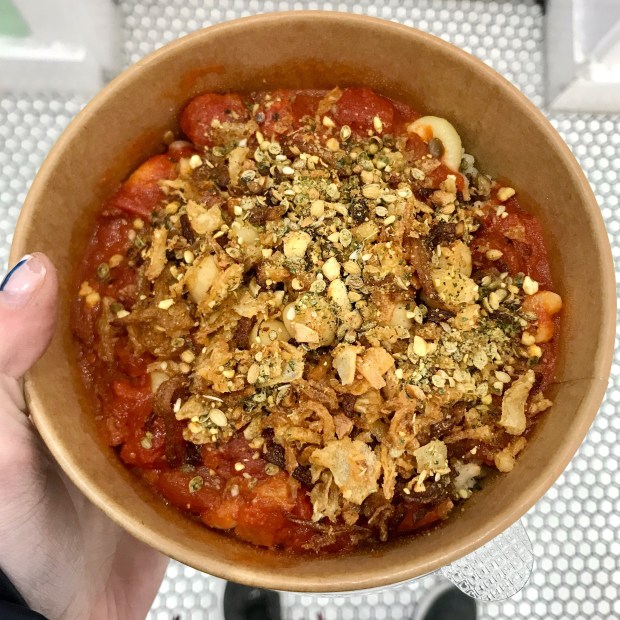
No matter how obscure you think a dish may seem, there’s a 99.9% chance that you’ll still find it in London, and Koshari is one of those. Koshari Street is a small business with a little store on St Martin’s Lane, Covent Garden, which serves the classic dish alongside meat and chicken options, protein bowls, and build your own bowls. The store is a really relaxing space with a small number of tables, and all the ingredients for the dish lain out in front of you behind the counter.

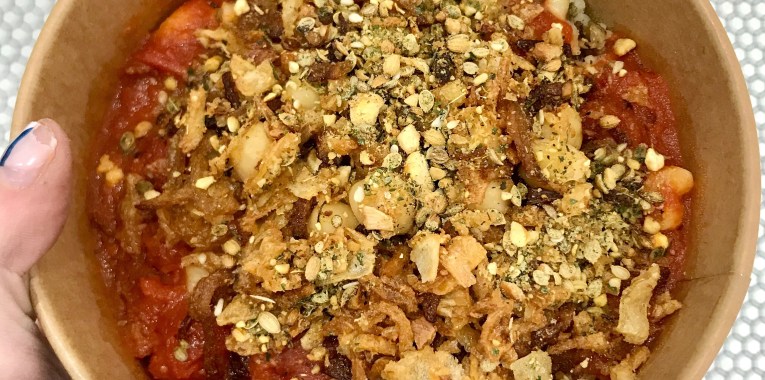
So many of the bowls looked great, but for ‘research purposes’ I wanted to try the classic. With bowls coming in regular and large, I can confirm that the regular portion is a really good size. The base, as is customary, is made up of lentils, macaroni and small noodle pieces and is topped with the classic zingy tomato sauce, chickpeas and a deliciously spiced nut mix, which also adds a lovely crunchy texture to the dish. Koshari bowls are super healthy, but really filling, and I’m really happy to see Egyptian food on the mainstream here in London.

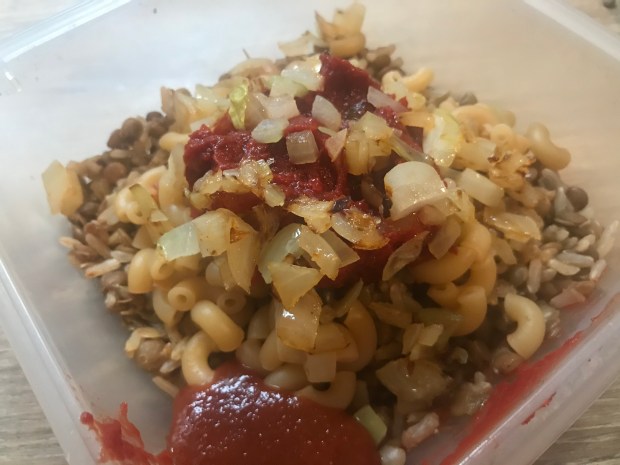
But then it was over to me. To be honest, the task of recreating this at home probably wasn’t as daunting as some of the other dishes I will be attempting, after all, it only really consists of boiling your rice, lentils and pasta and mixing up your tomato sauce before piling everything together. Even so, I was pretty happy with how it turned out…

As a lunchbox meal to eat at work or on the go, this kind of dish is perfect, and is also the kind of thing you can batch cook. I added lots of diced onion to the top of mine for added flavour, but really the classic is so satisfying that you really don’t need to mess with the traditional ingredients. The tomato sauce is actually just a tomato puree mixed with garlic, onion, cinnamon, cumin, salt, pepper and chilli flakes. Because the carb/protein base of this dish is so simple, the beauty of it comes from the spices so the cumin and cinnamon really do bring the whole thing together.

This post has been short and sweet, but hopefully you’ve learnt something. I’d love for this series to encourage you to try something new; to venture out and indulge in a kind of cuisine you’d never really considered before, and maybe even try tackling an unusual dish in your own kitchen. We’ve probably all tried French, Spanish, Mexican, Indian etc., but there is so much more out there that’s hidden from our mainstream dining options. Don’t get me wrong, some of the dishes in this series will be pretty well known, but others I hadn’t even heard of before researching potential material.

Most towns and certainly all cities will have at least a handful of independently run restaurants or cafes dishing up amazing food from lesser-publicised corners of the world, so for your next date, family celebration or friendly catch-up, why not try something new and support those who are kind enough to share their national cuisine with us?

¡Comemos!

xo