The Clock

Having grown up in a small village with no shops and next to no public transport links, getting to any decent restaurant or café was a bit of a commitment. Driving and parking would have to be considered, and so the concept of a regular, local, neighbourhood spot just didn’t really exist. 

Fast forward to now, and living in North London, I’ve begun to discover the wonders of having fantastic restaurants more or less on my doorstep. 

Although I don’t live in Crouch End, it’s fast becoming one of my favourite parts of London – a lovely, little residential bubble, walking distance from my flat. And it’s in Crouch End that I’ve had some fantastic brunches and dinners in the past 12 months.

It was a evening browse on Deliveroo that led me to The Clock, whose menu looked far too good to be available for takeaway on a delivery app. 

On a warm summer’s Saturday night (this is not a novel…), you could be mistaken for thinking we were abroad, on holiday – something which we could only dream of in the months following Lockdown phase one. It certainly didn’t feel as if we were in London. 
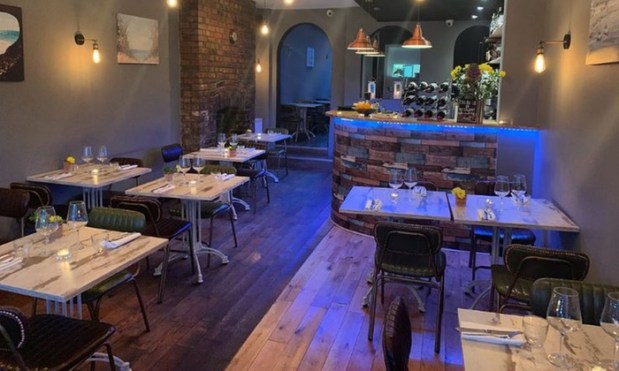
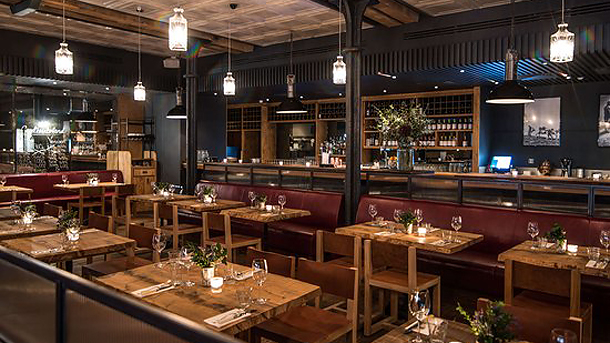
The Clock has the appeal of being a small, intimate venue, with an understated shopfront (that to be honest, you could easily miss), and a comforting, homely vibe inside. Staff are friendly, but not overbearing, and the menu makes it delightfully difficult to choose from.

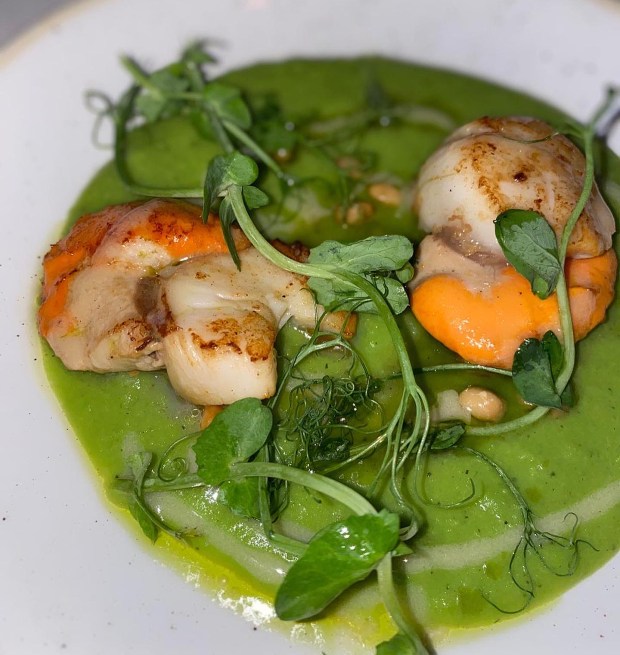
I’m actually going to reference two visits here, as I returned within a couple of weeks, having loved it so much. On the first visit, we shared Seared Scallops with Fresh Pea Purée and Hazelnuts. Not only was this beautiful to look at, but the scallops were cooked perfectly, and the pea purée was light, and well-seasoned.
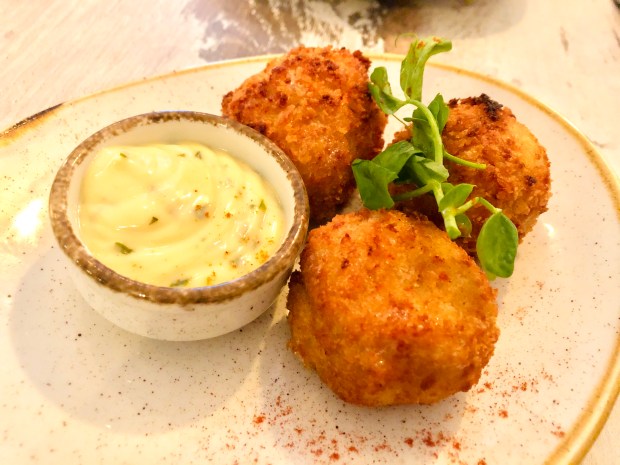
On my second visit, I was particularly impressed by the Sweetcorn and Chorizo Croquettes, where the filling had been blitzed to a smooth puree-type paste. Despite the potential for this to sound slightly like mush, it was incredibly flavoursome and with the crunchy croquette exterior, the consistency of the filling worked really well.

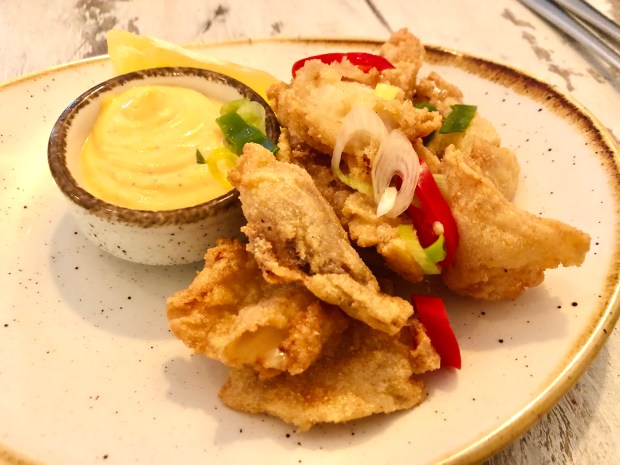
The Salt & Pepper Squid was decent, but not wowing, so for a little salty, snack-style starter, this is a great option.
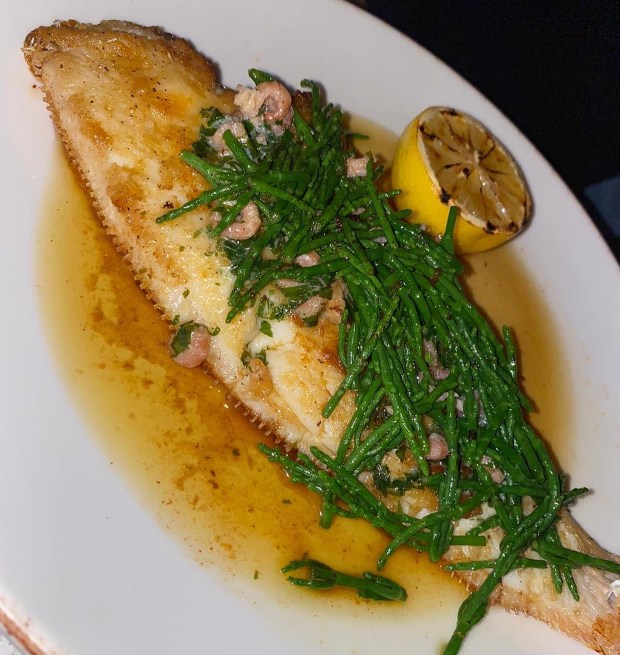
On to the mains and as much as I should probably save the best until last, I have to go straight in with the Lemon Sole with Samphire. I love those magical moments where you genuinely know you’re eating one of the best things you’ve ever tried. This certainly was my ultimate fish dish. You have to persevere to deal with the bones and forget trying to look elegant when you’re picking them from your teeth but ignore that, because the flavour… Slightly citrussy with a light, flaky texture, this fish is buttery and delicious. The samphire adds a lovely burst of colour, with brown shrimp dotted throughout. A side of equally as buttery green beans with hazelnuts was a nice addition – I should add that the piece of fish is huge, and so you probably won’t want a heavy side.
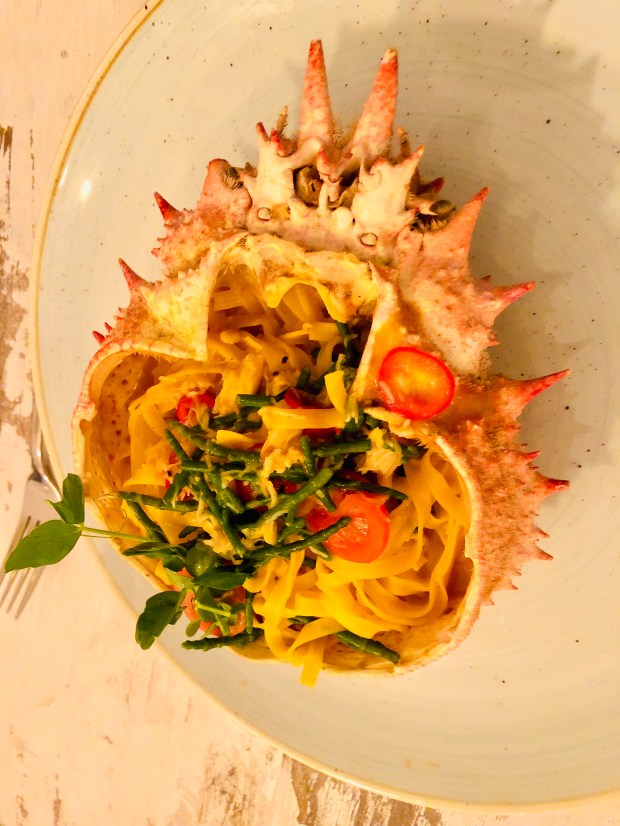
One of their most featured dishes on social media, and for good reason, is the Cornish Crab Linguine. Served in the Spider Crab’s hollowed out shell, the linguine is freshly-made, with a light olive oil sauce coating with roasted tomatoes. The shell serving dish is a bit of a novelty, but one that I absolutely bought into.

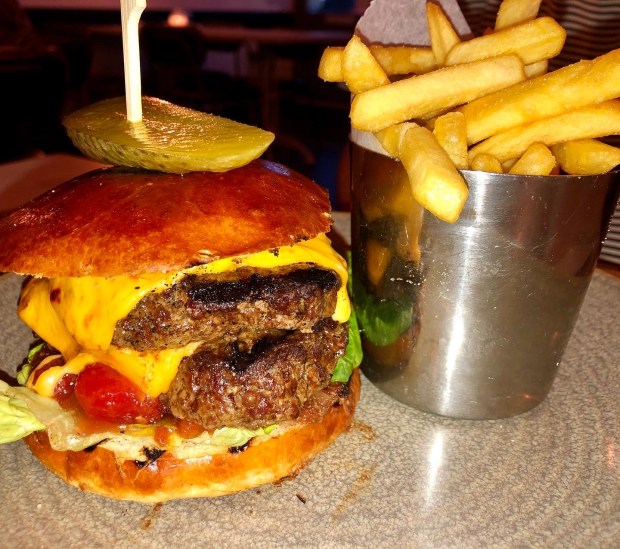
For hungrier bellies to fill, the Double Cheeseburger with thick, juicy patties, cheese and cornichons is a solid option. A mountain of a burger, you certainly won’t be left wonting for more, and the well-seasoned chips carefully straddle the line between fries and chunky chips (something which I’m definitely here for…).
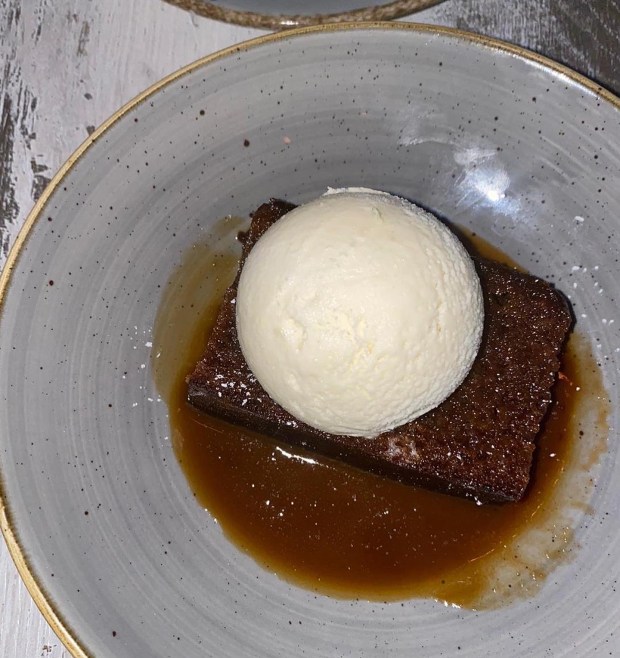
I couldn’t complete my review without mentioning the desserts, despite the fact that I certainly didn’t need one either time. Their Sticky Toffee Pudding is indulgent, with a moist, treacly sponge and a generous helping of vanilla ice cream plonked on top, and you’ll find it paddling in an oozy pool of toffee sauce. 
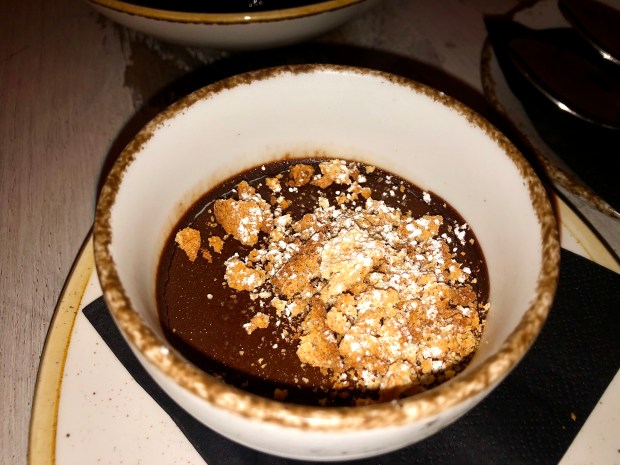
For those who love a boozy pudding with an added caffeine-kick, the Bailey’s Espresso Chocolate Pot is a great shout. It’s super rich and creamy, and the crumbly biscuit topping adds variation to the texture.
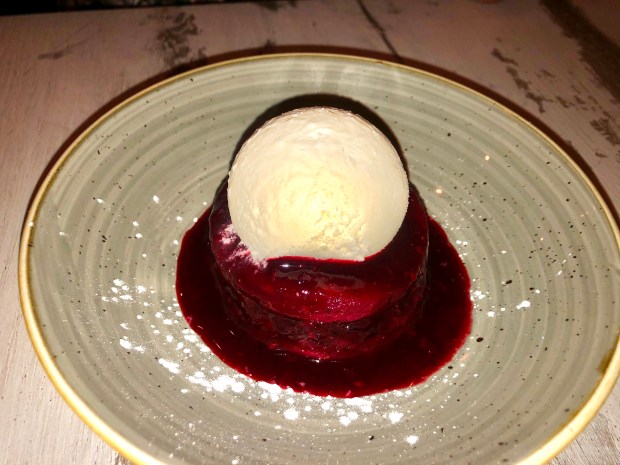
This time though, I really have saved my favourite until last, and to top things off, it was so unexpected. The Summer Berry Pudding didn’t necessarily stand out to me on the menu, as I tend to steer towards chocolate or caramelly style desserts rather than fruit-based, but this was the highlight of the meal. It’s a beautifully striking deep red colour, with the sponge completely saturated with the rich berry sauce. A big dollop of clotted cream on top finishes it off perfectly, and helps to balance out the sharp, punchiness of the tart berry flavours.
It’s important to point out that The Clock has since brought in its new Autumn Menu which looks absolutely fantastic, however not all of the dishes mentioned above are still available, so please see below for their current availability:

  • Scallops with Pea Puree and Hazlenuts – no longer available having been replaced by an alternative scallop starter
  • Chorizo and sweetcorn croquettes – still available (listed under the ‘bites’ section of the `a la carte menu)
  • Salt and Pepper Squid – available on the fixed price menu
  • Roast Lemon Sole – a slightly different variation is available with sea asparagus and herb butter emulsion
  • Spider Crab Linguine – still available
  • Double Cheese Burger – available on the prix fixe menu
  • Sticky Toffee Pudding – still available
  • Baily’s Espresso Chocolate Pot – no longer available
  • Summer Berry Pudding – no longer available

I can’t wait to next head to The Clock for another fantastic meal, and to try out their new menu. It has the loveliest atmosphere inside and is perfect for a date night. 

With current Covid restrictions, we know that the hospitality industry is really being tested, and so please do head to independent restaurants like this one with your household – not only will you be eating really well, but we’re also helping these businesses to stay afloat. Places like Crouch End are as lovely as they are because of local businesses like The Clock so check out the menu, book your table, and lend your support.*

*households only!

¡Comemos!

xo
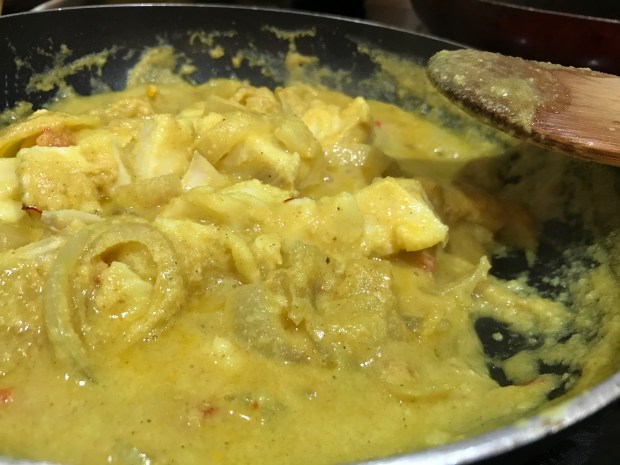
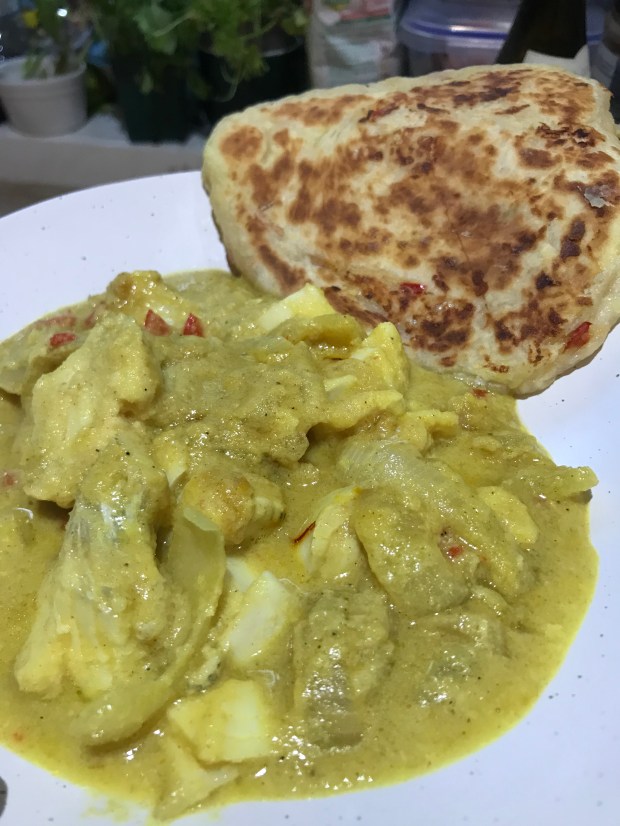
Coconutty Fish Curry

This recipe wasn’t planned. It was a ‘what have I got in the fridge that needs using up?’ kind of meal, which then ended up being utterly delicious. It turned out that it was fresh fish stock and coconut cream that were in my fridge, crying out to be saved, avoiding getting lost behind mountains of double cream, yoghurt and pancetta, or indeed, just ending up in the bin.

I can’t say it’s the most photogenic dish, but we’ve got way too caught up in a world where a dish’s appearance is more influential than its flavour, so excuse the imperfect imagery, and simply try it for yourself – this definitely bears more resemblance to curries in India than restaurant or takeaway curries!

The idea of making a curry without using a ready-made sauce or paste can often seem like a lot of effort, but experimenting with different spices and flavourings is what makes it exciting. I can assure you that this curry recipe is very straightforward and doesn’t require a food processor or hand blender for the base paste.

You can adjust the spice levels to your taste – this wasn’t fiery, but I do like a fair bit of chilli in mine.

Serves 2

1 large onion

Thumb of ginger

1 whole chilli

1 ½ tsp turmeric

1tsp chilli powder

40g coconut cream (I used the kind that comes in a solid block)

250ml fish stock (fresh if you can find or make it)

2 white fish fillets

A pinch of saffron

Sprinkling of desiccated coconut

Rice or flatbread to serve

  1. Slice the onions and cook for at least 20 mins in oil on a low heat until they are beginning to caramelise.
  2. Add the diced chilli and grated ginger along with all the spices except the saffron. Cook for a few more minutes until fragrant.
  3. Add the coconut cream and fish stock, turning up the heat slightly and cooking until reduced by1/3. 
  4. Add saffron and chunks of fish (or you can keep the fillets whole) and cook until fish is done.
  5. Serve with rice and a sprinkling of desiccated coconut. 

As you can see, there are so few steps to this recipe, and once the onions are done, it’s a pretty quick-to-cook meal. It’s sometimes difficult to leave the onions alone for so long, as the temptation is just to get on with things, but allowing them to properly caramelise really does add to the flavour so try to resist the urge to move on too early – I promise it’ll be worth it.

¡Comemos!

xo

Around the World in 80 Plates: Bao

In recent years, the light and fluffy Chinese delicacy that is the baozi, or bao, has found its way into restaurants and kitchens across the globe. Their being steamed, combined with the yeast within the dough, makes for a soft and delicately spongey texture, quite unlike any other kind of baked bread or steamed dumpling.

Our lexical disclaimer for today is here to inform you that ‘bao’ in itself translates as ‘bun’ in Mandarin, and so the commonly-used Western phrase ‘bao bun’ is grammatically redundant, literally meaning ‘bun bun’, in the same way that in Hindi, ‘Chai tea’, actually means ‘tea tea’.

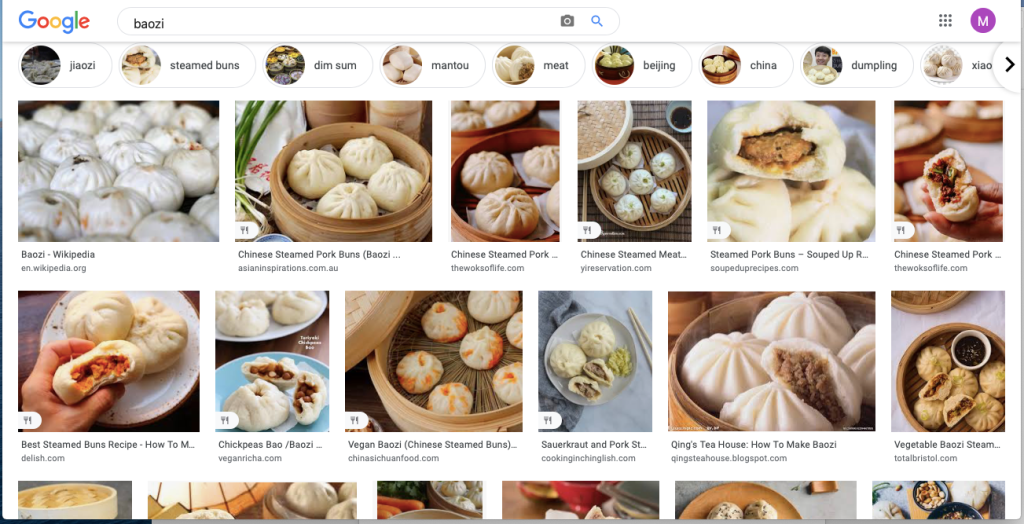
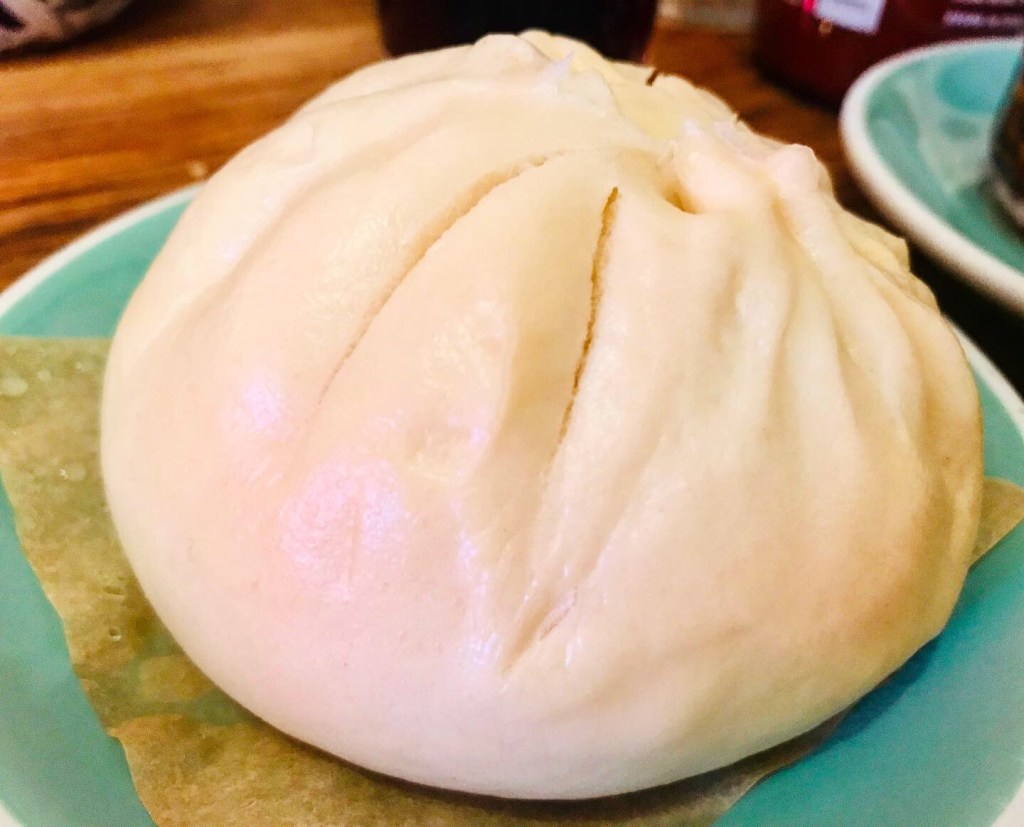
Baozi

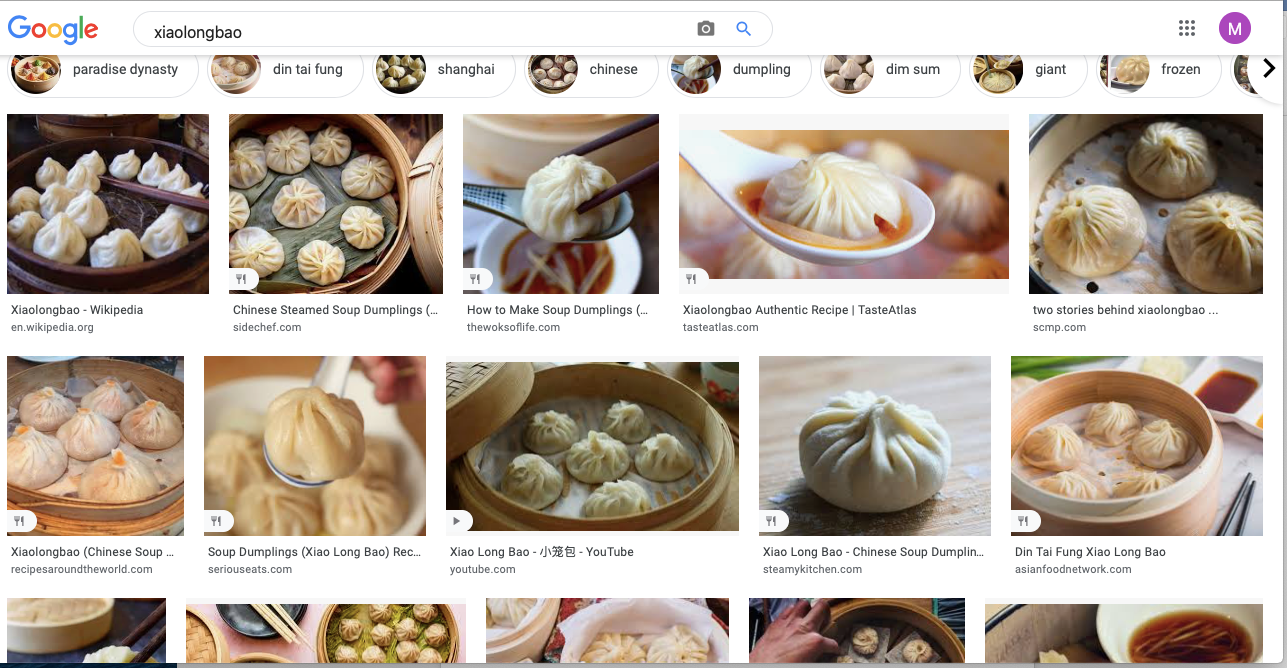
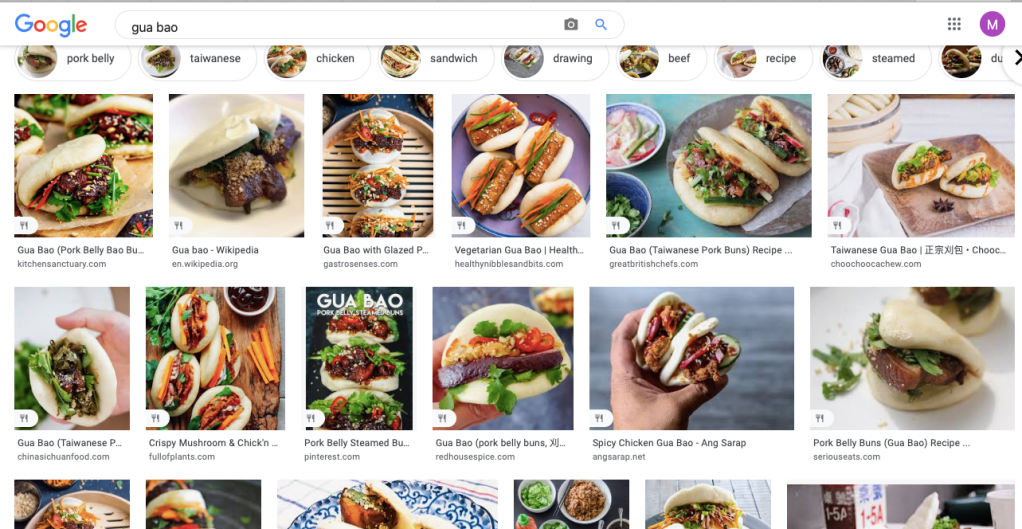
Generally baozi are a filled ‘bun’, with the dough gathered together on top, sometimes leaving a small hole for steam to escape, and complete with either a meat or vegetable filling. One of the most popular is the Char Siu Bao, filled with sticky barbecued pork. Other variants include the xiaolongbao, with xiaolong referring to the bamboo steaming basket in which they are cooked and served., This bao is filled with a hot soup, and is sometimes referred to as a dumpling. The final type of bao that I’ll touch on is the gua bao, which comprises of a flat, open steamed lotus-leaf bun, with a meat (often pork belly) filling.

Xiaolongbao

As ever with Chinese food, it’s very difficult to generalise, as regional cuisines across what is such a huge country vary so significantly. Whether we’re talking baozi, xiaolongbao or gua bao, these may be more prevalent in certain provinces, or be made differently in others, and so defining such a specific part of incredibly complex and diverse cuisine is pretty tricky to do in a few hundred words!

gua bao

…….

Career changes, and COVID combined meant that my dreams of heading to China this year were scuppered, and so I’ve never tried these dreamy little buns in their homeland. Living in London does mean however, that there are a million one street food stalls, Chinatown restaurants, and chains that serve up these little beauties, although of course I’m unable to comment on their authenticity. 

Interestingly, many of the places in which I tried bao/baozi weren’t actually Chinese-influenced, and include Malay, Vietnamese and Japanese-inspired food businesses to name a few. The very first time I tried baozi was years ago at a little independent restaurant back in Nottingham, called Yumacha, which describes itself as serving up ‘an eclectic mix of the Far East’s favourite dishes’. These kind of ‘Asian fusion’ restaurants seem to be on the rise, combining Chinese, Japanese, Thai and Indonesian cuisine plus a whole lot more. I had no idea what I was eating at the time, with the concept of a steamed bun seeming completely alien to me – I have to say this was many years before my foodie instinct really kicked in, and my knowledge of the food I was eating was minimal. Despite this, I loved the unfamiliar, cloud-like texture of the buns, along with their punchy flavoured meat fillings.

Keu Deli

Fast-forward a good 5+ years, and I’ve tried a fair few variations. Popular Vietnamese Keu Deli in London serves up a giant baozi, which definitely wins points for the lightest, most satisfying bao texture. BaoziInn in Chinatown is a solid bet for quality baozi, which were slightly flatter in my experience, and fillings include the pork-patty-like stuffing that I tried.

Admittedly, I’ve yet to try xiaolongbao, possibly because I’ve distanced them from the baozi that I love, as they do tend to resemble dumplings, and the hot broth filling has never appealed to me as much as a juicy meaty filling. 

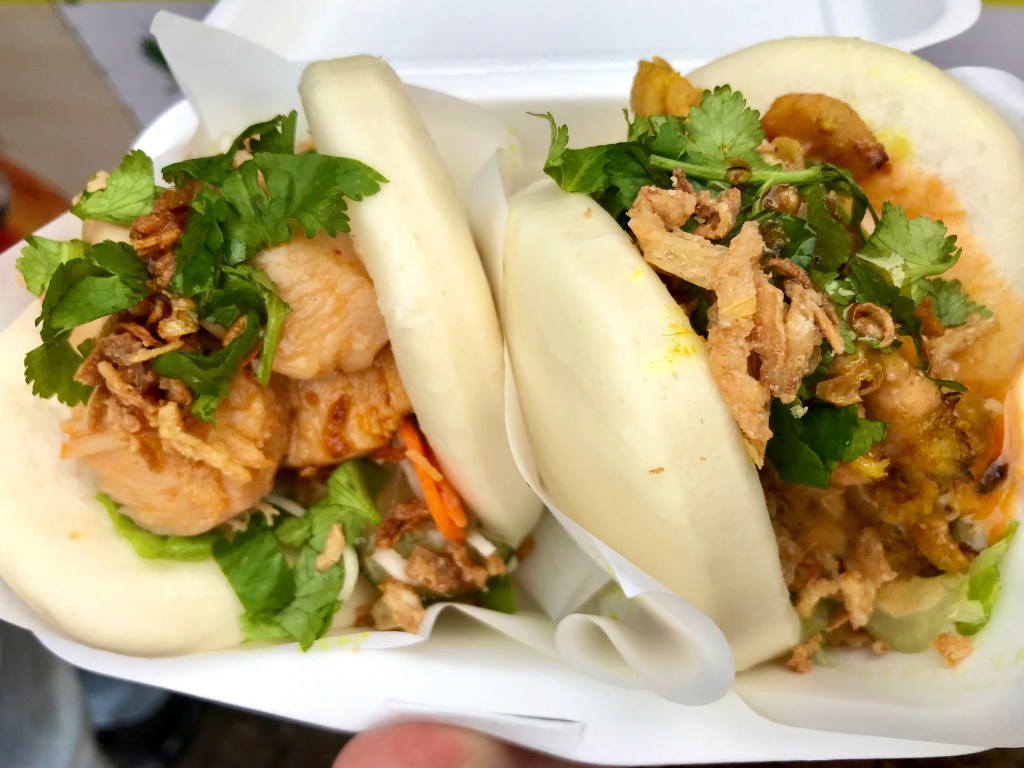
Gua bao , however, might be my favourite, based on those that I’ve tried. They have the most wonderfully smooth texture, and oddly, more filling seems to be packed into these open bao than stuffed within the closed, larger baozi.

My favourites so far were from Thai-Malaysian street food stall Satay Street ,where I was lucky enough to win a competition for two free portions. I tried a curried chicken bao and a satay chicken bao, both of which were great, with the satay flavour being particularly delicious.

Satay Street

I have to admit that the first gua bao I ever tried was actually from Wagamama – I think they’d just added it to the menu, as they were giving away samples outside with a pulled beef style filling, and it was pretty good. There’s only been one occasion where I’ve not been able to finish a gua bao, and I won’t name the business, but it was the filling rather than the bun that I couldn’t stomach – I can only hope you never stumble across it yourselves!

DIY BAO

Oh dear…

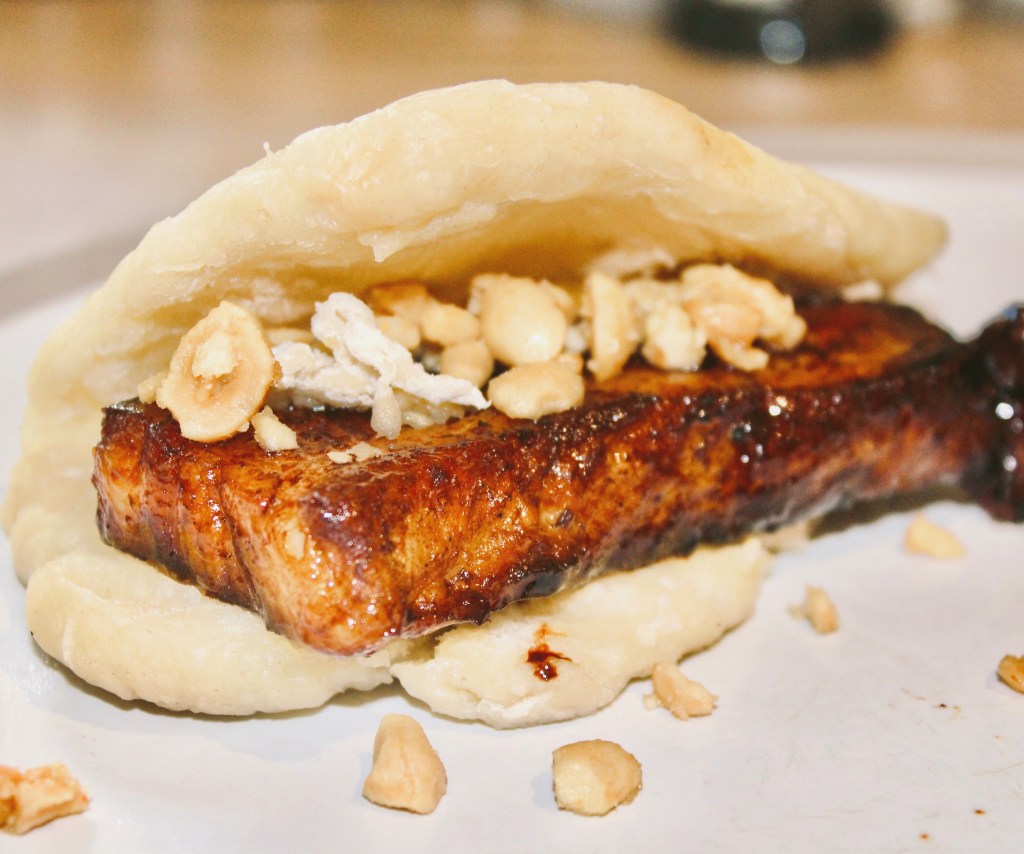
Baking your own bao at home seems like such a daunting exercise, and I have had varying degrees of success. The first time I tried it was a BBC GoodFood recipe, with a pork belly filling, and whilst the filling with sticky and sweet, as you can see, my buns failed entirely, ending up flat as pancake, stodgy and generally quite grim. Whether this was the recipe, my techniques, or dodgy ingredients I couldn’t tell you, but it didn’t bode well for future attempts.

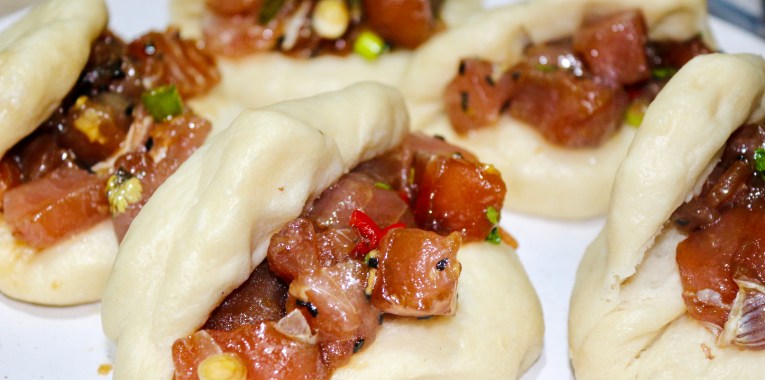
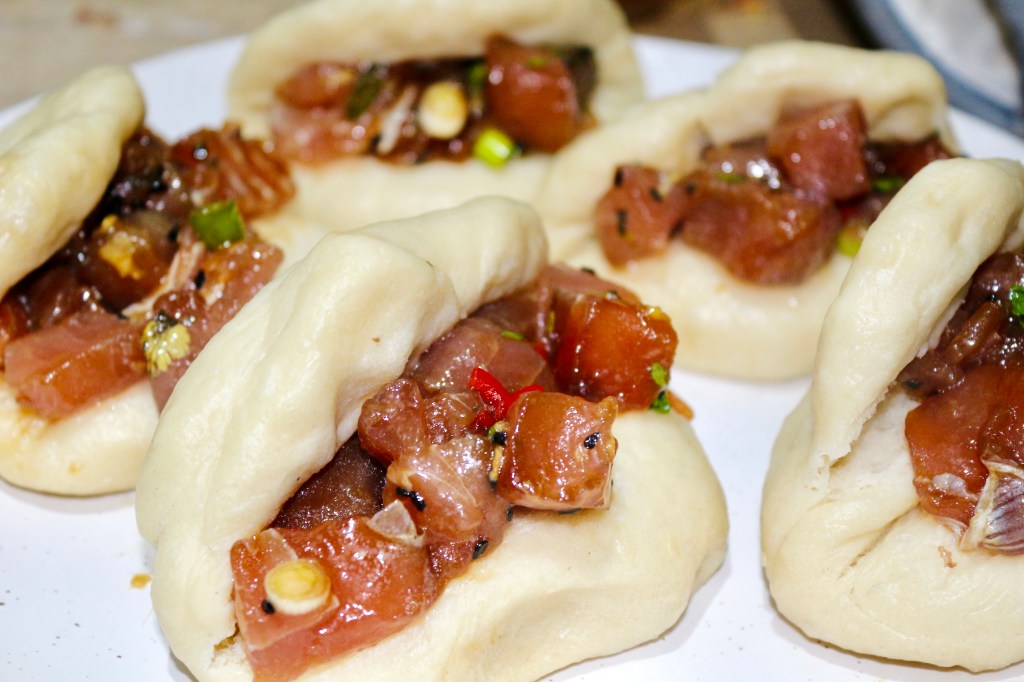
That’s why I was so surprised when I tried Queen Nadiya’s recipe for spicy tuna bao, and they turned out excellently. From her ‘Time to Eat’ cookbook, this is a recipe I would 100% recommend – there’s definitely a little effort required, but with such impressive results, it’s worth it. The buns are super filling but the tuna itself is light, fresh-tasting, and umami, and when a recipe like this goes to plan, there’s a real sense of achievement waiting for you on the other side.

I’m sure there are a huge number of people who still have never tried any form of bao, and if you’re one of them I really urge you to do so. I can’t think of a single other food that compares in texture to these perfect little buns, and with fillings being so varied, there’s bound to be something to suit all tastes. 

¡Comemos!

xo

Ham and Mushroom Arancini with a Roasted Red Pepper Dip

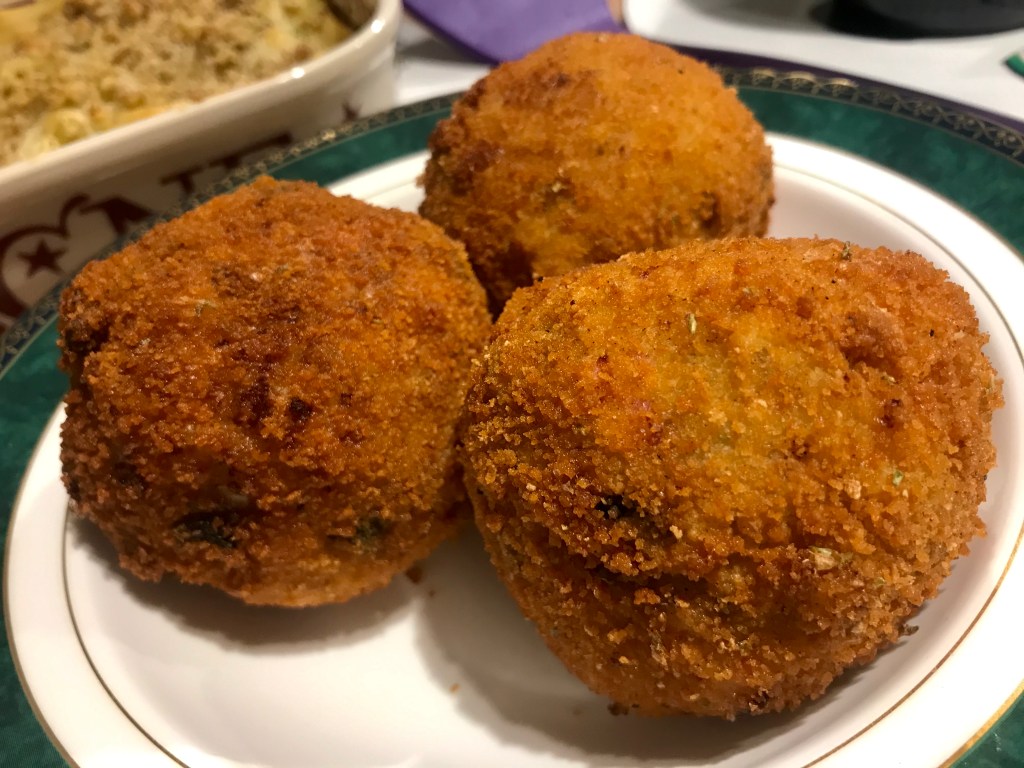
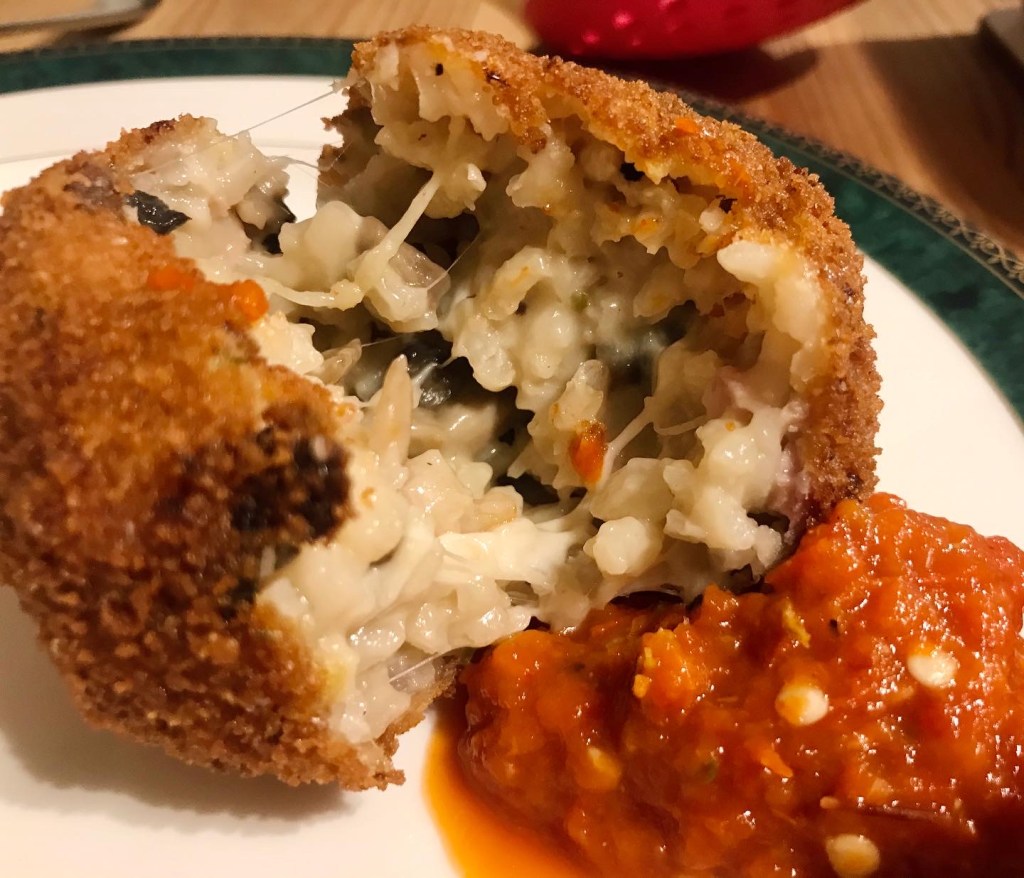
Arancini are one of Italy’s most delicious deep-fried snacks. Varying in size, they’re basically deep fried risotto, often with a particularly cheesy centre, which can ooze apart as you break into them. They’re the perfect starter, or an indulgent on-the-go snack, whether cheese-, meat- or tomato-based.

Having tried them both in the UK and Italy, I thought I’d attempt my own at home, bearing in mind I’d never made them before. A few months ago I made some prawn croquettes following a Rick Stein recipe, and this gave me a decent understanding of how a deep-fried treat with a creamy centre should be made.

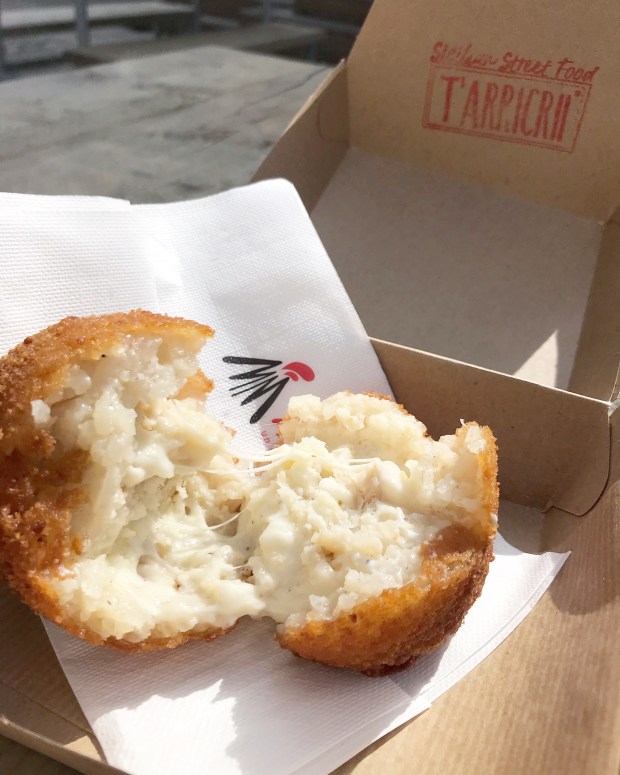
My favourite arancino (singular), I actually had in Manchester of all places, at a street food pop-up called Tarricrii. The arancini were huuuuge, and it was the melted cheesiness that had me sold. 

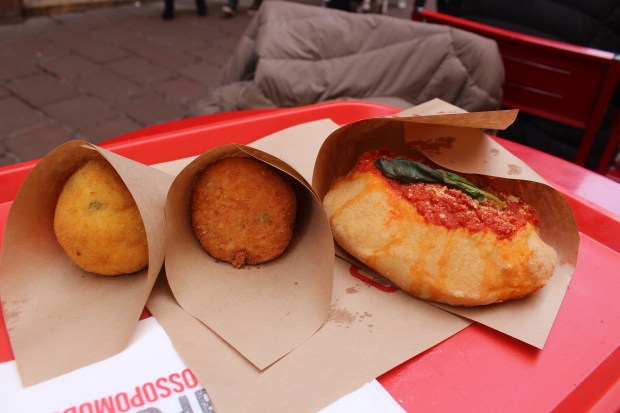
The two that I had in Bologna, Italy, were from an indoor market type place, and although I don’t remember the exact flavours, I know that at least one was tomato-based, there was beef mince involved, and peas featured somewhere. These ones highlight how arancini certainly don’t have to be cheese-filled, and this may be a bastardisation, but to be honest, given the choice, who wouldn’t want a sinking washing line of mozzarella to emerge as you break it apart?

The recipe below is for a ham and mushroom filling, however, it’s incredibly easy to customise the risotto filling, creating a vegetarian version for example, or even adding pesto, tomato sauce, or other meats.

Makes 9

For the Arancini

arborio rice (so sorry I can’t remember the quantity lol – enough risotto rice for 4 people would be a decent bet)

3 slices of thick ham (torn into small chunks)

8 chestnut mushrooms (sliced)

1 large onion

600ml chicken stock

Salt/pepper

Parmesan

1 ball of mozzarella

4tbsp cornflour

1 egg (beaten)

Fresh oregano (or dried if fresh not available)

1 cup breadcrumbs (sorry for the inconsistency of measurements!)

Splash of marsala

  1. Slice the onions and cook for at least 20 mins until caramelised.
  2. Add mushrooms and cook for a further 5 mins
  3. Add the arborio rice and coat with onion mix.
  4. Begin to add the stock and marsala little by little, gradually allowing it to reduce each time over a medium-high heat.
  5. Season, and add the ham, torn mozzarella, parmesan and oregano.
  6. When the risotto is complete, spread out flat on a tray with sides and chill in the fridge for at least 4 hours.
  7. When ready, remove from the fridge and form into large balls (or smaller depending on how you want to serve them).
  8. Roll the arancini first in a bowl of cornflour to coat, then the beaten egg mix, and then finally the breadcrumbs until fully coated.
  9. Heat your chosen oil in a saucepan and deep fry 2-3 at a time until they’re crisp and golden.

For the Roasted Red Pepper Sauce:

1 red pepper

½ onion

1 clove garlic

Salt/pepper

Cayenne pepper

Oregano

Tomato puree

Paprika

  1. Roast the pepper with a little bit of oil for 40 ish mins at 160 until it is bursting from its skin.
  2. Add to a food processor with the garlic and roughly chopped onion.
  3. Blend to a thick-ish paste/sauce and then stir through the remaining ingredients.

I was apprehensive about how these would turn out, but it’s ended up being one of my favourite recipes. They are best eaten fresh, and don’t freeze that well, so make only as many as you can eat!

They’re creamy, gooey, and dipping them into the red pepper sauce gives the perfect sharp kick to it. They are impossible not to like, and I think I’m going to have to try a gorgonzola version next…

I served these as a starter to my Chicken Pesto Lasagne which you can also find the recipe for here on my blog, so enjoy!

¡Comemos!

xo
Mac and Wild

Hard to believe it’s been around four months since my last dining out experience. Never could we have conceived of a global crisis in which every restaurant, bar, pub and café in the country would be closed, what that would mean for our social connections, and more significantly, what that would mean for the thousands of businesses out there, thrown into such an uncertain scenario.

I’d avoided venturing out for the first couple of weeks following the easing of lockdown rules – in my head, I pictured rowdy raucousness throbbing through the streets, and despite a little of that going down in places, it didn’t seem as intense as I’d expected. So when I did finally decide to book that much-anticipated first restaurant visit, it had to be somewhere special.

Scottish restaurant Mac and Wild was that place, having sat firmly atop my restaurant bucket list for two years, ever since drooling over a photo of their ice cream-topped sticky toffee pudding on Instagram.

Ironically, I didn’t end up trying that very sticky toffee pudding (which probably means I’ll have to make a return visit one day), but here’s how the rest of it went…

With Fitzrovia all booked up, we arrived at their Devonshire Square branch, having booked one of the lovely-looking socially-distanced huts, complete with a seating for up to 4, and your very own self-serve drinks cabinet. In my head, I’d pictured these being outside, but their three, I have to say it as it is, sheds, were opposite the bar inside. Nonetheless, they still created a sense of privacy and intimacy, shielded from other diners. Had I booked one of these huts outdoors in winter, complete with blankets, and heating, I think it would’ve been beautiful – both atmospheric and cosy, but as it were, dining in one of those indoors in 27 degree heat, it was a little on the sweaty side.

Being a Scottish restaurant, there are a number of haggis-inspired dishes on the menu, including their Haggis Pops, which we ordered to start. I should also mention at this point that their menu was limited, compared to what their Devonshire Square-specific online menu stated they had. I had been so desperate to try their Venison Scotch Egg, but it was nowhere to be found, so settled for the Haggis Pops.

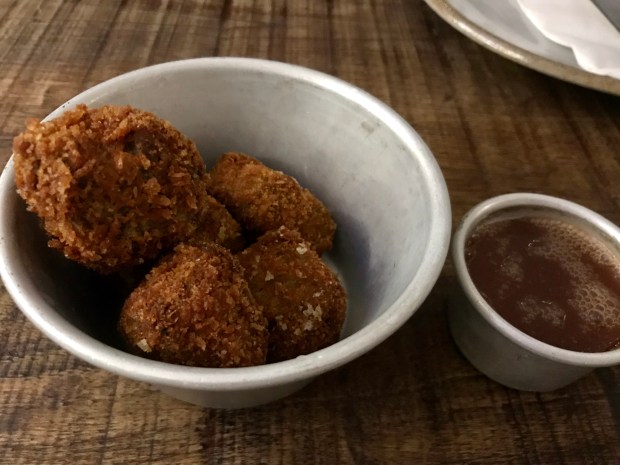
Never (ashamedly) having tried haggis before, it’s difficult for me to judge, as I’m not familiar with the standard flavours and textures, however, the pops came as little fried bites, the meaty haggis filling encased in a crunchy shell. Whilst I enjoyed the outer crunch and the flavours, the texture wasn’t necessarily to my liking – oddly, despite being meaty, it had the texture of a potato croquette filling, and I’ve expressed my views on potatoes here before… To accompany the pops there’s a cranberry-mustard, or ‘Red Jon’ sauce. We spent a good few minutes trying to pinpoint what exactly the sauce was comprised of, intrigued by the sharp and sweet notes, before reluctantly giving in when ‘mustard’ was all we could come up with, and resorting to consulting the ingredients list.

Once again, when it came to ordering mains, I was disappointed to see that amongst the side dishes, the Haggis Mac and Cheese I’d set my heart on didn’t feature. Luckily, they were still offering their Truffle Mushroom Mac and Cheese, which I chose to accompany their signature ‘Venimoo’ Burger. The Venimoo features beef and venison patties, with Béarnaise sauce, cheese, pickles and caramelised onions. The burger was very good. Juicy patties, full of flavour, with a sharp, tanginess from the pickles and the warming, creaminess of the Béarnaise sauce and melting cheese. I can’t say it was mind-blowing (I’ve unintentionally ended up with pretty sky high standards), but the quality and flavours certainly made it worth ordering.

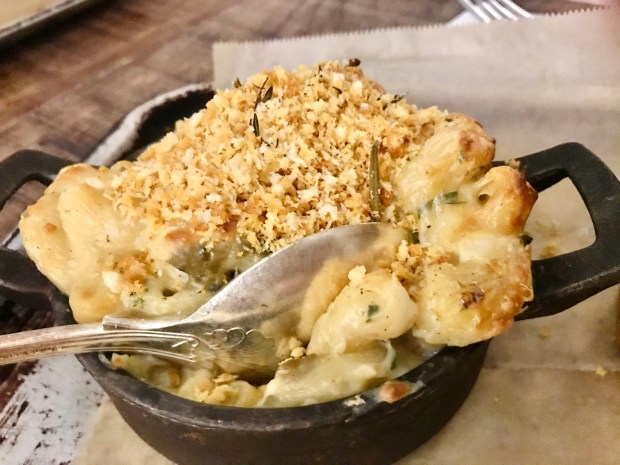
Interestingly my highlight was the Truffle Mushroom Mac and Cheese. Despite not being a speciality dish of theirs, I loved the consistency – a super creamy cheese sauce, without the overwhelming sickliness that truffle can sometimes bring. The mushrooms were cut into large cubed pieces, which I surprisingly enjoyed, cementing its place amongst the best mac and cheeses I’ve tried in London.

As previously mentioned, I didn’t get round to trying the Sticky Toffee Pudding in the end, which only calls for a return visit, however, I’ll be sticking to the soft drinks next time, as the cheapest bottle of white wine came in at £36, despite the drinks menu on their website listing white wine prices as ranging between £20 and £74. For me, this was the most significant issue; service had been good, the food was good to excellent, but for those of us not rolling in money who fancy a drink, £36, when you know full well the bottle isn’t worth that, hurts. It feels almost wrong to say anything negative about businesses that are fighting to survive right now, but having been furloughed myself, and seeing a drop in income, I can’t ignore such limited options when it comes to drinks pricing, particularly as the food prices are very reasonable, which just makes the wine list prices seem even more out of place.

Having said that, I’m so glad to be back eating out, and sharing my thoughts, having enjoyed months of home cooking and takeaways. There’s just something that can’t be beaten about the whole restaurant experience, from the social aspect, to holding a physical menu in front of you and spending an unnecessarily long time indecisively asking the waiters for another 5 minutes to decide.

Restaurants need our support now more than ever, so if you’re craving a high quality burger and wonderful Mac and Cheese, Mac and Wild is a solid choice.

¡Comemos!

xo
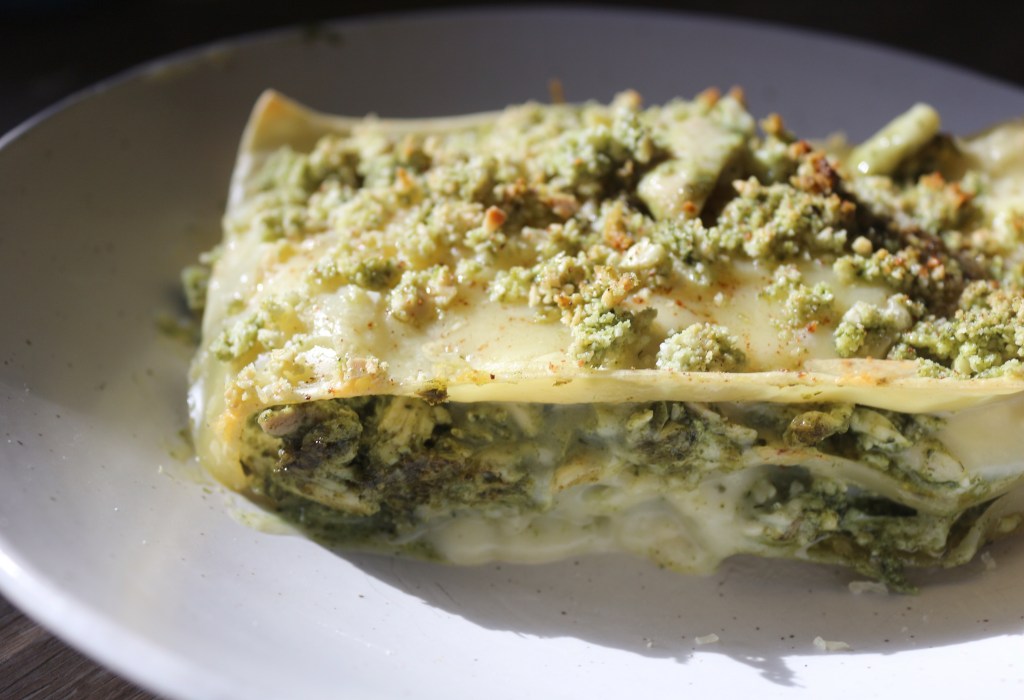
Pesto chicken lasagne

Who doesn’t love pesto? It’s basically a rite of passage to live off of a pre-made pesto pasta for at least half of your time at university nowadays, but it’s actually very simple to make yourself.

This recipe takes the greatest of the pasta sauces – both pesto and béchamel and combines them in a super creamy chicken lasagne dish, where you won’t need to spend ages simmering a ragù sauce and ensuring the meat is cooked adequately, as leftover chicken works a trick here.

With the crunch of almonds on top, combined with oozy melted cheddar, this is a super comforting dish that looks even more impressive than a standard lasagne.

Serves 2

Ingredients:

For the pesto

30g basil

30g pine nuts

2tbsp olive oil

1 clove garlic

1tbsp grated parmesan

For the lasagne

125g shredded cooked chicken

50g cheddar

4 lasagne sheets

2tbsp butter

1 clove garlic

3tbsp flour

milk

nutmeg

handful of almonds

  1. Preheat the oven to 180 degrees (depending on your oven – use your own judgement).
  2. Put all the pesto ingredients into a food processor and blend to a paste.
  3. Boil some salted water and part-cook the lasagne sheets until very al dente.
  4. To make the white sauce, melt the butter in a saucepan, add the diced garlic and flour and mix well.
  5. Add milk bit by bit, continuing to stir on a low-med heat until you have a thickened sauce.
  6. Grate in the nutmeg and remove from the heat.
  7. Mix the chicken and pesto in a bowl.
  8. In a food processor, blitz the almonds into coarse crumbs. For extra flavour, don’t wash out the processor after making the pesto, as then your almond crumbs will suck up all the excess pesto left in there.
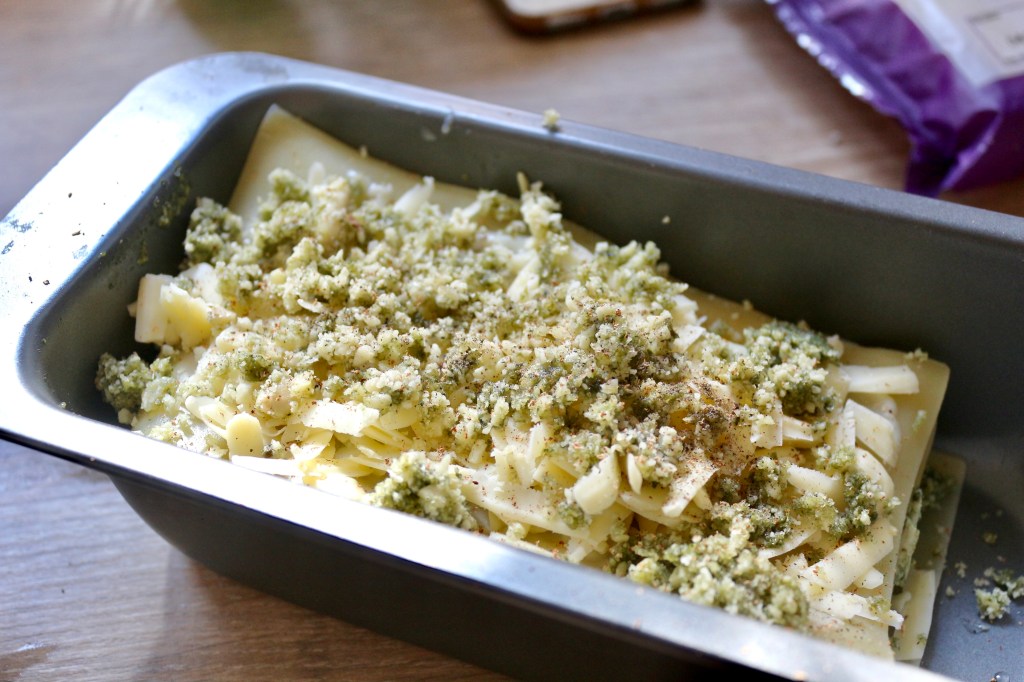
  9. In a loaf tin, layer a lasagna sheet, then chicken and white sauce, then repeat twice more.
  10. Top with the final sheet and sprinkle with grated cheese and the almond crumb.
  11. Bake for 15 minutes until the cheese on top is golden.

¡Comemos!

xo
Around the World in 80 Plates: Lángos

Deep fried dough. No one can explain why something that sounds so basic and actually quite gross is in reality so delicious. It still baffles me that there are so many different ways of making deep fried dough into snacks and meals, each one of them bringing something completely different to the table, literally.

My travels are this week taking us to the home of the Lángos – a deep fried dough featuring as many customisable toppings as you’d like. And where does this delicacy hail from?

Hungary.

If you’ve read my post on my trip to Budapest last November, you may already have known that.

Don’t be too tempted to jump on the idea that this is like a Hungarian pizza. There are many differences. Obviously here the dough is fried, and that’s key, but sometimes mashed potato is added for a fluffy, slightly creamy texture. Secondly, the main topping tends to be sour cream – not a tomato sauce in sight. And last to mention, is unfortunately, the (optional) cheese topping on a Lángos doesn’t tend to be melted, but don’t let that put you off, this actually allows you to get a lot more flavour from the cheese, even if the texture isn’t quite as mouth-wateringly gooey.

Despite not being as large as a typical medium-sized pizza, as it’s deep-fried, it can be pretty heavy, so don’t underestimate just how filling they are, even if the toppings are minimal.

The Lángos is often described as a street food – in fact, once again, it was in my Lonely Planet Street Food guide that I first came across it. Having said that, one of the main qualities of street food tends to be that it’s super easy to eat on the go. As a pretty stodgy flatbread, the Lángos doesn’t really fulfil this brief, and so whilst it’s cheap and easy to quickly whip up outside the confines of a restaurant, you’re probably going to want to take a seat to eat it.

Back when bread was regularly baked in every household, the Lángos dough would be excess leftover from bread-making, and would be baked in the same way, however seeing as such daily home baking is no longer practised, the dough now ends up being deep-fried instead. Back when it was baked in the bread oven, it was placed right at the front, close to the flame, which is where the delicacy gets its name, with láng being the Hungarian word for flame.

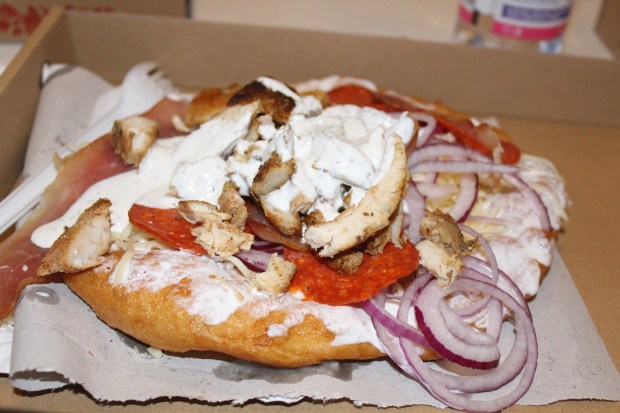
Moving on to my own experiences of the dish. I first tried it at the Central Market in Budapest last year. The upstairs section of the huge market hall has an area dedicated to food, which is comparatively small in size, meaning that queues of people are packed in to one small space, all eagerly awaiting their delicious lunch meal. Whilst my friends opted for slightly more nutritious salad and veg-topped versions, I of course went for the meatiest feast I could find. Sour cream, grated cheese, onion, chicken, pepperoni and ham struggled to contain themselves on top of the dough base as we hunted for somewhere to perch. This is by no means a light snack; be prepared to feel a little heavy afterwards, but it’s worth it. To be honest, Lángos aren’t the most flavoursome meals – other than the flavour from the toppings, there’s little seasoning or added ingredients, other than perhaps a garlicky rub on the base, but the appeal here is definitely more due to tradition and doughy, fried indulgence.

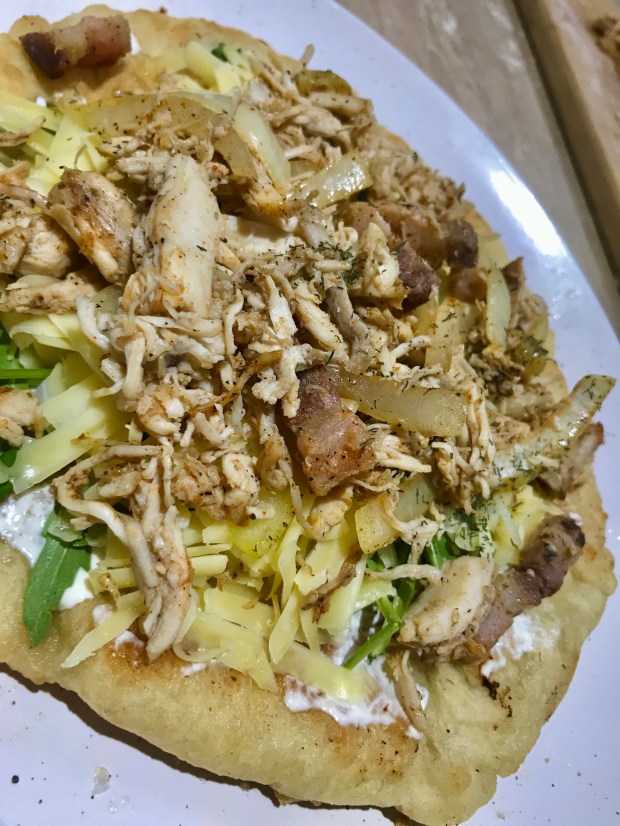
Having said that, when I attempted my own version at home, I have to admit that it was even better than the one I tried in Budapest. After frying, along with the standard sour cream and cheese base, I topped the dough with shredded chicken, pancetta, rocket and onion. Whilst the onion on my Lángos in Budapest was raw, I decided to cook it this time, just to avoid the pungency that raw onion can have. The seasoned toppings were really tasty, and the addition of mashed potato to the dough made it super soft, whilst still maintaining the slightly crispy exterior.

I would definitely make Lángos again at home. They’re really simple, although I would fry the dough for slightly longer next time, just for extra crispiness, as my fear of overcooking it this time made it a little too squidgy in the centre.

And that’s dish number 2 in the series complete. We’ve gone from a healthy, plant-based tomatoey pasta lentil dish last time round, to a deep fried fully- loaded doughy delight, so you can be sure that there are no rules when it comes to deciding which dishes to showcase next.

There are loads of recipes for Lángos online, so with so much time at home at the minute, why not try your own hand at one of Hungary’s signature dishes for an indulgent weekend treat.

¡Comemos!

xo
Meat Me Halfway: Final Week

Just to be clear, my plant-based journey has not come to an end, in fact I’ll hopefully keep it up forever, but it is time to end this series, and I’ll be honest, I’m not ending it on the best note.

Forgive my lack of commitment this time round, but what with everything going on right now, lockdown, money concerns etc., ensuring that every single one of my meals was 100% vegan hasn’t been a priority.

Having said that, I did still make and order some fab food, which I’ll detail below before ending with some highlights and top tips that you can carry forward into your own journey to realising the potential of plant-based food.

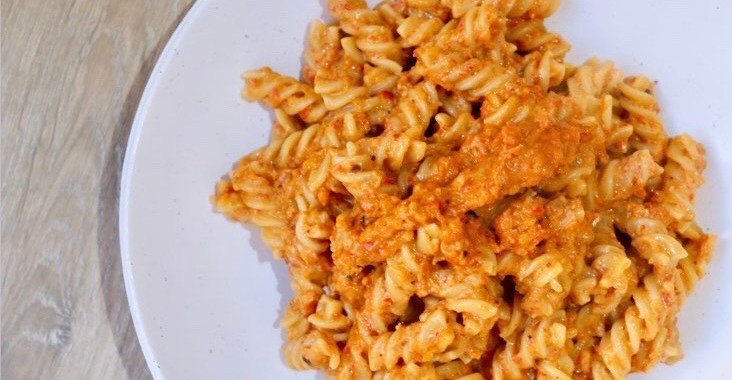
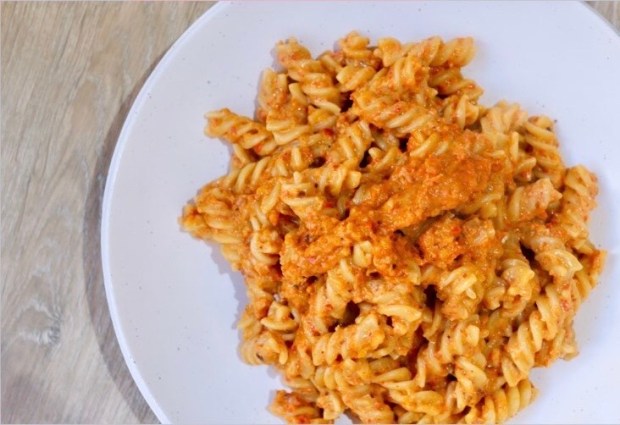
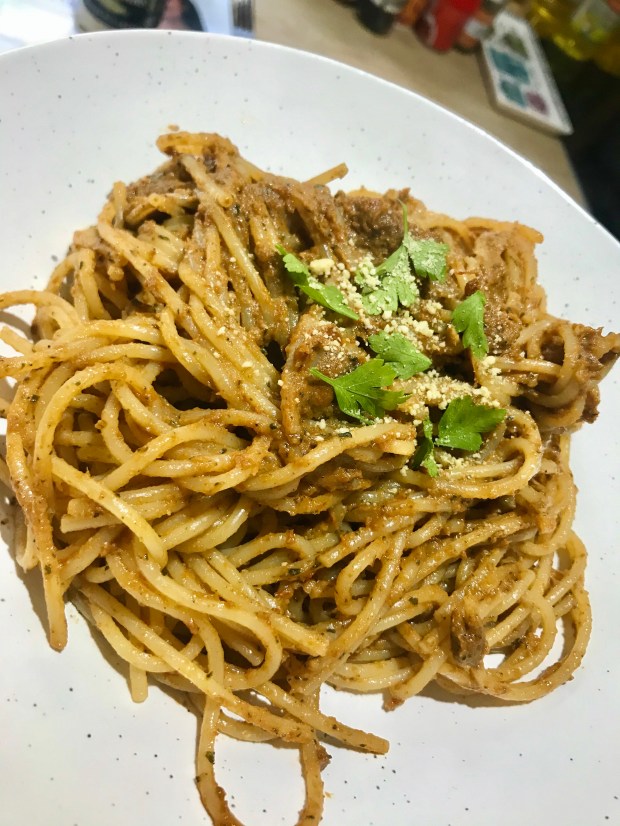
I’ll start with two amazing pasta dishes, the first being @elavegan’s red pepper pasta, with a cashew based sauce, and Rachel Ama’s sun dried tomato pesto pasta. Both of these were super easy to make, although a food processor or some kind of blender type thing is required. If you’re going plant-based or trying to eat more of it, I would definitely recommend getting one anyway as you’ll get so much use out of it.

The red pepper pasta was incredibly creamy, with quite a thick sauce, the red pepper giving it a lovely, soft, sweetness.

The flavour of the sun dried tomato pesto was much stronger – fresh basil, balsamic vinegar and sun dried tomatoes end up being quite a pungent combination, but a delicious one nonetheless.

A couple of soups were also on the cards as per. Sometimes I find soups incredibly satisfying, warm and hearty, and others just miss the mark. The first – Nadiya’s lentil and orange soup fell under the latter category. Obviously I love her recipes, but I struggle with orange-based savoury recipes, particularly in something liquidy like a soup.

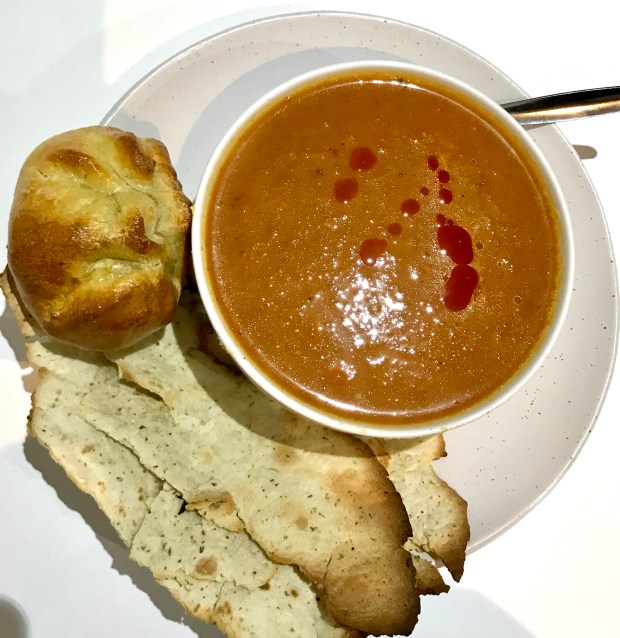
The second soup was my own recipe – harissa and carrot. Whilst it tasted decent with a strong kick of heat, I’m not sure I loved it enough to make again, although undoubtedly if I’d added a load of cream I’m sure it would’ve ticked more boxes…

Drinks now! BBCgoodfood have a pretty good recipe for a chai latte, although plant-based milk is one of the things I’m finding it more difficult to get hold of at this time. Normally soy milk is my go-to but I’ve had to switch to almond milk as that’s all that’s been available. Even so, this frothy, warmly-spiced latte was a perfect morning pick-me-up when breakfast isn’t really my thing.

Dreamy indulgence from Doughnut Time is next on the list. They genuinely do the best vegan doughnuts, which are no different in taste to their normal range. I’d frozen their Vegan Fox doughnut last month as it was part of their Valentine’s range but I’d eaten so much I couldn’t justify trying this one too, so rather than miss it, I shoved it in the freezer ready for a rainy day. Cue lockdown and I’d never been so grateful for this level of resourcefulness. It’s not recommended that you freeze these doughnuts but that won’t stop me. After defrosting and 20 seconds or so in the microwave, I had the most delicious, soft-doughed, melty-buttercreamed chocolate doughnut. The fudge buttercream is incredible and I really hope they give a vegan chocolate doughnut like this one a permanent spot on their menu. Failing that, the David Hasselbiscoff is one of the best doughnuts of all time.

Trust me to be taking complete advantage of the fact that many small food businesses have upped their delivery range due to the current situation, meaning that I’ve been able to get my hands on both Picky Wops’ vegan pizzas and indulgent subs from Jake’s Vegan Steaks.

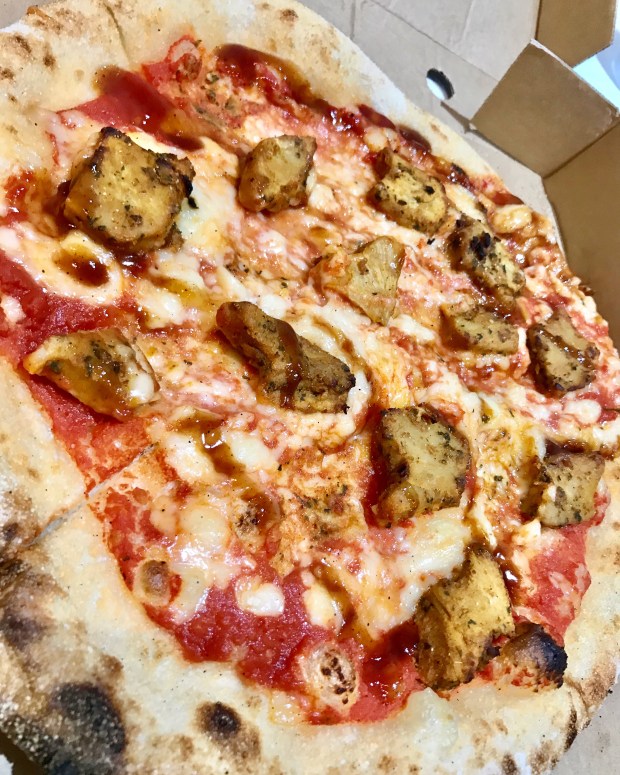
After a few teething issues on the delivery front, I received my bbq chick’n pizza and a cashew-based tiramisu. The pizza was really tasty – the chick’n pieces had a nice texture, the dough was light and fluffy and the ratio of toppings to dough was spot on. It wasn’t the best vegan cheese I’ve had – was more like a thick Béchamel style sauce, but not unpleasant. Admittedly I wasn’t a fan of the tiramisu. The cashew-based mousse/sauce/cream/whatever you want to call it didn’t have much flavour, and I got one hint of coffee from my second to last bite. That’s it. But would defo order pizza from them again in the future.

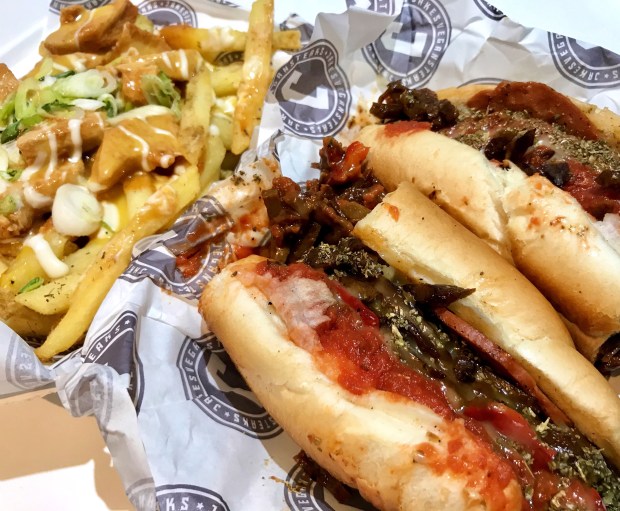
Jake’s Vegan Steaks was my other treat, after I fell in love with their subs at Vegan Nights event last year. Although I’d become obsessed with the super spicy version of their Philly Cheezesteak, I wanted to try something new so ordered the Pepperoni Pizza Steak, along with bbq chick’n fries. The pepperoni sub was decent, although they’d been pretty heavy handed with the oregano. Ultimately, I wouldn’t order it again over the Philly Cheezesteak. The fries were great; really well seasoned with tasty cheesy bbq sauce and chick’n pieces.

And that’s pretty much all I have to share this time round – as it’s supposed to be a week’s worth of meals that’ll give you an idea of how many times I cheated, but like I said, we are in exceptional circumstances.

Before signing off on this series, I wanted to finish with some highlights, mostly in London, from some fantastic businesses that deserve your support.

  1. Redemption, Covent Garden

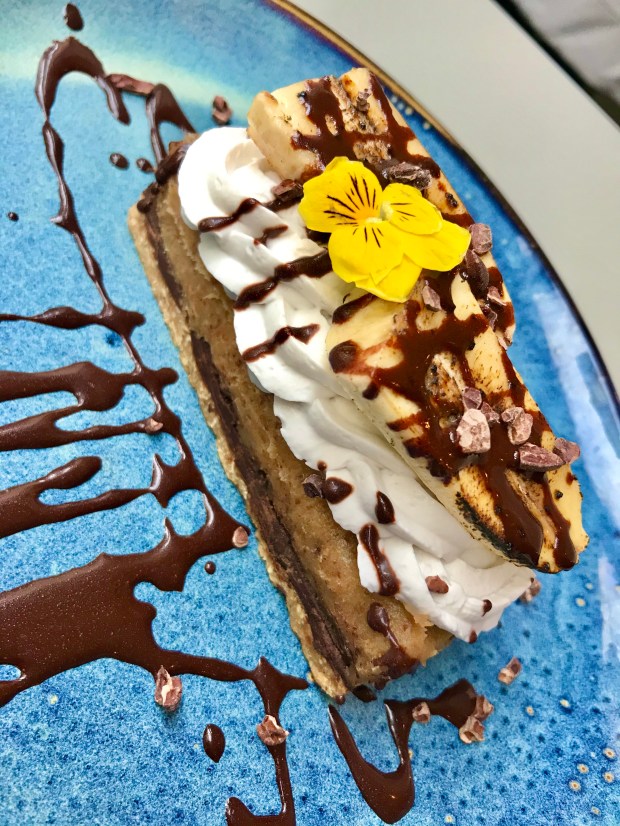
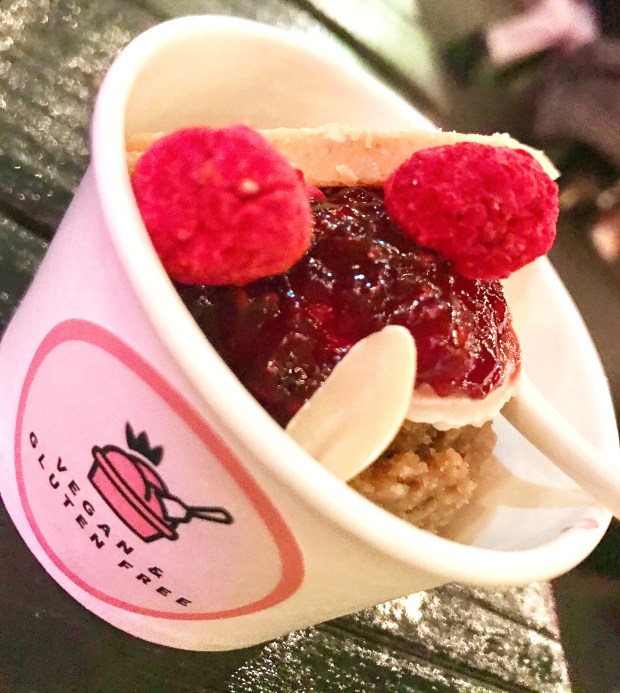
A lovely little restaurant/café with takeaway treats and drinks, Redemption backs on to Neal’s Yard with indoor and outdoor seating. It’s beautiful inside and the food is just as attractive. My top recommendation is the raw Banoffee Pie, pictured below.

  1. Itsu, Everywhere

Less luxurious, Itsu is perfect for healthy veggie lunches. Sushi doesn’t have to be raw fish, and their veggie gyozas and maki rolls are some of the best.

  1. Club Mexicana, KERB Seven Dials

Club Mexicana served up one of the best burritos I’ve had. The cheezeburger burrito genuinely tastes like a cheeseburger – god knows how, but it’s filling, cheesy and uses a great beef mince substitute.

  1. Temple of Seitan, Camden and Hackney

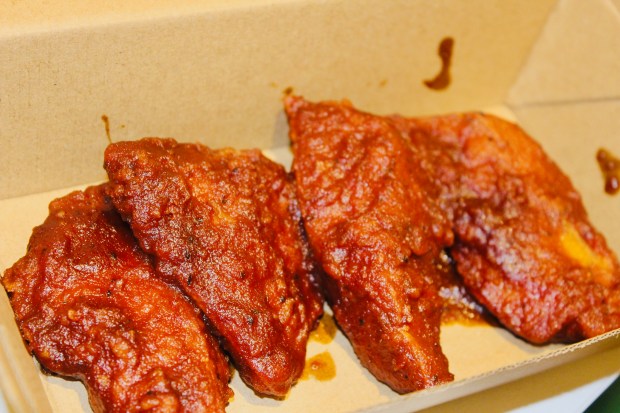
Who ever thought that vegan wings would be a thing. Temple of Seitan, as the name suggests, serves up a load of fast food using the chicken substitute Seitan, and these wings had the most convincing texture. With a delicious bbq glaze, these are high on my list of recommendations.

  1. Humble Dough, Boxpark Shoreditch

One of my favourite sweet treats now, Humble Dough serve up little pots of vegan cookie dough with various toppings. I tried the peanut butter and jam pot, which was delicious, and despite looking like a tiny portion, was the perfect amount for not becoming sickly.

And last but not least – what have I learnt during the last 7 months or so of on-off plant-based eating? It’s been a really interesting little experiment – one that is no longer an experiment and is now just a routinely part of my diet, but here are some things I want you to know…

  1. Don’t listen to how you should feel

I still get frustrated with vegan propaganda telling you that on a plant-based diet, you’ll feel so much lighter and will have way more energy. That’s great if that happens to you, but I have experienced no such thing, and some weeks I’ve even felt awful – heavy and bloated from excess veg, beans and pulses. That’s not to put you off. I just want people to be aware that even if you don’t see the benefits that other people are claiming, this doesn’t mean that it’s not worth the changes. Don’t expect to feel a certain way, and don’t worry if you don’t. Everyone’s body reacts differently to what they put into it, and you won’t necessarily feel like a goddess overnight…

  1. Learn to love key ingredients

There are some amazing ingredients that you should really get to grips with if you want to reduce your meat/dairy intake. If you love cooking then cashews are a really big one, as most creamy plant-based sauces use softened cashews. Beans and pulses are another saviour – chickpeas in particular can become super versatile, not only eating them as they are in curries and stews, but also turning them into a spicy scrambled egg substitute or forming them into falafel or burger-like patties. Aubergine and cauliflower should be your veggie best friends – there are an abundance of vegan recipes using these two ingredients in so many ways online, and finally… tofu. It’s a controversial one, but I honestly believe anyone can enjoy it if it’s cooked to their taste. The main danger is with it being bland, so for a genius solution, follow Rachel Ama’s recipe for chive tofu spread, which is amazing on toast.

  1. Get to know easy replacement hacks

Plant-based milk is obviously a major one – try a few different brands and ingredients and work out which is the one for you – almond, soy, coconut? Pancakes and waffles can easily be made without eggs, just stick to flour, sugar, milk, baking powder and flavouring, and egg replacements in baking can be produced from flax seeds and even aquafaba (liquid in chickpea cans).

  1. Don’t be too strict on yourself

If you’re not cutting out meat and dairy for ethical reasons, I don’t see the need to be super strict on yourself. Just reducing your intake is a great thing to do, so if you’re craving a Dominos pizza or a family-sized bar of Cadbury’s Dairy Milk, there’s no shame in that. You don’t have to change your diet to prove anything to anyone and so there’s no harm in just going entirely plant-based part-time – even if that’s verrry part-time, as in a few days a month.

  1. Look to the experts for inspiration

There are so many vegan blogs, youtube channels and Instagram accounts out there now, not to mention a growing range of excellent cookbooks. Explore, and get to know your favourites, as each of these cooks and bloggers comes with their own style. My favourites include Rachel Ama for vegan meals that think outside the box, Mrs Hollingsworth for amazing baking, snacks and desserts and elavegan for simple recipes using readily available ingredients. Avant Garde Vegan and Fearne Cotton are also worth looking to for ideas.

And that’s it for the time being. I’ll still be sharing my vegan week successes on my Instagram account every month (@foodtravelsldn), but this is the end of the series.

Of course there’ll be new series’ on the way, including my Around the World in 80 Plates, part 2 of which will be coming next week.

But can you guess where I’ll be heading, and what I’ll be making….?

¡Comemos!

xo