
What’s that all about then?
Really?
One (in my opinion, not particularly heavy) fast-food meal = calories equivalent to two hours of cardio?
Did I want to know that?
Probably not.
Should I be aware of that?
Possibly.
So today’s piece is more topical. I don’t tend to address news stories here, but what with this one being strongly-connected to a lot of the things I do like to talk about, things that are constantly on my mind, this one seemed sensible to address.
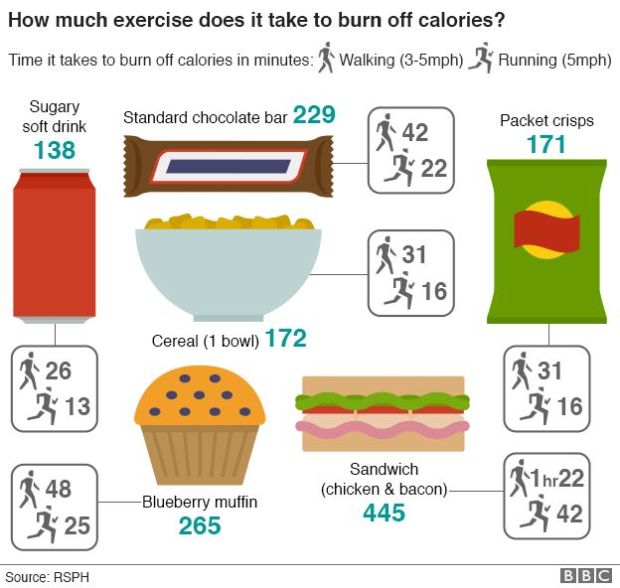
You’ve probably already heard, but in a nutshell, news emerged last week that The Royal Society for Public Health has suggested that food products should be labelled, not only with the number of calories within that item, but also the amount of exercise it would take to burn off those calories.
They believe that people don’t really understand the reality behind the number of calories we’re consuming, and what that actually means for our bodies.
Research from Loughborough Uni has now backed this up, following trials in which people eating food with ‘Pace Labelling’, as it’s called, ended up consuming around 200 calories less daily.
All this stems from the fact that around 13 million adults in the UK are considered ‘obese’ (Diabetes UK study) and that not enough is being done to combat this.
So that’s the idea.
But that’s only the half of it.
Of course, drastic measures like that are going to go hand in hand with a backlash of opinions, generating a huge amount of controversy, and it’s tricky to know where to stand on the matter.
Trying to avoid waffling like my A-Level French style compulsory discursive essays (intro-points for-points against-conclusion-DONE), I’m going to dare to address both sides and see where my thoughts lie, but apologies for said waffle in advance…
I’ve basically already summarised the benefits, explaining the gist of the news story above, but just to reiterate, intention of Pace Labelling = a reduction in the number of calories consumed, through educating people about what those calories actually mean for their bodies. Equating calories to exercise highlights just how “overindulgent” some foods can be (although that word in itself is pretty problematic but more on that later…) and therefore helps us to make healthier choices for ourselves.
It’s designed to be about awareness. Obesity is real, and that’s undeniable. How to combat it is obviously a very tricky topic, as it can be caused by so many different issues, from mental health, to lack of nutritional education, to other health issues, and even genetics.
For me, the intentions are wholly positive. This is coming from a place of genuine concern – however…
Over to the other side…
The news was immediately met by outrage and even more grave concern by a number of bodies and individuals.
Renee Cherry’s reaction to this for Shape magazine makes the very important point that calories aren’t necessarily what matter. What’s more important are the nutrients that you’re getting from those calories, and so it could be more beneficial to your body to eat a product with a higher calorific value, because it contains more ‘goodness’ or essential energy within.
On a similar nutrition-related level, no two people’s bodies are the same when it comes to energy consumption and usage. We know that generally speaking men need more calories than women, and that children need fewer than adults, but that doesn’t take into account the fact that each of our bodies reacts differently to different foods, diets and exercise routines, and so one set of dietary choices that works for person A could mean malnourishment or excess weight for person B.
These arguments against the new recommendation are relevant, but even louder to voice their opinions are those speaking out against the danger they pose to mental health and the risk of eating disorders.
The idea that food = guilt is a damaging one. This is often a key factor in disordered eating, along with the idea that we must immediately compensate for whatever we’ve consumed. There will absolutely be people who see a food label, link X amount of calories to X amount of exercise and either exercise literally to within an inch of their lives, or just avoid food altogether in case they don’t burn it all off.
‘Calorie’ has become a bit of a dirty word. We don’t want calories. We don’t like them. But we NEED them!
This whole idea, despite being well-intentioned, risks demonising the very basic, essential-to-life concept of eating.
Whilst I am completely against the idea, I really do think the reasons behind it are so important to consider, and if this is such a terrible idea (which it kind of is) we need to think about kinder, less damaging ways to educate ourselves and avoid potentially life-threatening food choices. It sounds dramatic, and slightly hypocritical, but we know that consistent poor dietary choices on a daily, monthly, yearly basis can be that dangerous, in the same way that under-eating also can be.
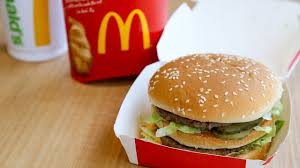
It’s a difficult one. And I’ve voiced this before on a more personal level. The vast majority of us will have at some point associated guilt with food. The idea that food = guilt can be dangerous, but I can’t help but think that if I personally didn’t feel any guilt ever, that would be pretty dangerous in itself, and I certainly wouldn’t be in the shape I’m in now. Being aware of the fact that there are negative consequences of eating Big Macs every day forever is kind of important really, isn’t it?
Food addictions and unhealthy food-related relationships are in some ways, slightly more difficult to address than addictions like alcohol, smoking and drugs, because we absolutely need food. Not eating would be even more dangerous than overeating and so abstinence is impossible. And therefore for many people, the fact that their one vice is something that is essential fuel to staying alive is incredibly complex. You cannot just give up eating because your choices are causing your body to suffer. It requires the most difficult form of self-control.
So I’m very torn.
Food doesn’t always have to be that deep, but we can’t avoid the fact that relationships with food are becoming more and more complex, and so much of that can be put down to irresponsible chains and franchises, with money symbols floating around in their eyeballs.
Another news item that has been a hot topic recently is the issue regarding chains such as Starbucks, Pret etc serving special hot drinks ranges (particularly during autumn and the festive season), whereby those drinks contain literally half your allowance of daily calories. Despite saying earlier that the focus shouldn’t necessarily be on calories, when 700 of them are coming from one hot drink choice, you can be sure you’re not getting much nutrition from that.

The same also applies to supersize double and triple stacked burgers, or even those burgers replacing buns with entire doughnuts (anyone else remember seeing those?).
These things are delicious. They are indulgent. And they’re fun. But they’re becoming commonplace and that’s something that I find difficult to stomach (pardon the pun).
The drinks thing is currently more relevant though so we’ll stick with delving a bit deeper into that. This uncovering came from Action on Sugar’s latest report, and examples currently on sale include Starbucks’ Gingerbread Latte, which when made with oat milk contains 523 calories, and the most shocking menu item – their Signature Hot Chocolate with Whipped Cream (again, with oat milk), containing a quite frankly disgraceful 758 calories, and 23 teaspoons of sugar.
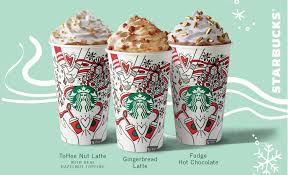
I’m not really a coffee drinker, but love a good hot chocolate, and it genuinely terrifies me that I could easily have ordered that, thinking that I was having an innocent little drink. 758 calories. And it’s just liquid.
This is completely and utterly irresponsible from the biggest player in the hot drinks chain game.
When I go out for dinner, I don’t want to be worrying about calories and holding back. And so I won’t. But I also don’t want to be fearful that I might order what I think is an innocent drink, but that actually contains over 1/3 of my daily recommended calories. IN ONE DRINK. To me that’s a madness, and everyday coffee shops like Starbucks and Pret need to start acting more responsibly when it comes to their menus – either being more transparent about how calorific they really are, or making a conscious effort to reduce the amount of dangerously-disguised items on their menu.
So do I have a solution? Is there one??
Obviously I don’t because I’m just little old me – opinions without solutions, however, compromise is going to play a huge part. More nutritional education would be a solid place to start, but a kind of education devoid of fear-mongering, tying together body positivity and healthy mindsets with the science behind our choices. And this really should start in schools.
Having said that, the biggest step towards a solution would need to come from the food industry itself and that’s not going to happen easily. They have their priorities. Capitalism is the only thing to say. Ultimately the consumer’s best interests are not at heart. So it’s on us to make those choices. It’s about finding the balance between avoiding calorie counting whilst also being sensible enough to make choices that aren’t going to lead to significant health problems at some point in life.
I don’t want to stress anyone out. I don’t want to stress myself out. It shouldn’t be a battle, but I know for myself, at least, often it is.
The more we talk about different relationships with food, the more we can understand the way our brains and our stomachs relate to each other, and perhaps in time, this kind of open dialogue will help us to come up with the compromise required to make progress.
Be wise to what you eat. But remember that we need food to survive. Food is essential. Look for choices that make you happy and respect your body. It’s all about balance, not avoidance.
I’m still working on it. If I find any more answers, I’ll let you know.
¡Comemos!
xo









 ¡Comemos!