Ham and Mushroom Arancini with a Roasted Red Pepper Dip

Arancini are one of Italy’s most delicious deep-fried snacks. Varying in size, they’re basically deep fried risotto, often with a particularly cheesy centre, which can ooze apart as you break into them. They’re the perfect starter, or an indulgent on-the-go snack, whether cheese-, meat- or tomato-based.
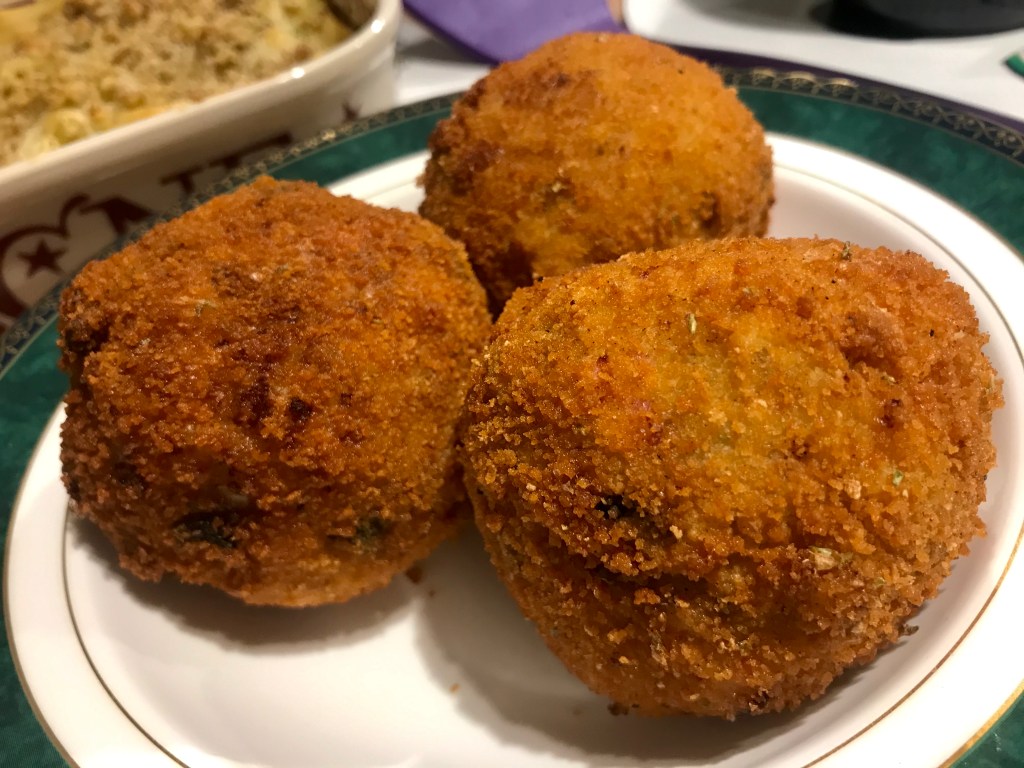
Having tried them both in the UK and Italy, I thought I’d attempt my own at home, bearing in mind I’d never made them before. A few months ago I made some prawn croquettes following a Rick Stein recipe, and this gave me a decent understanding of how a deep-fried treat with a creamy centre should be made.

My favourite arancino (singular), I actually had in Manchester of all places, at a street food pop-up called Tarricrii. The arancini were huuuuge, and it was the melted cheesiness that had me sold. 
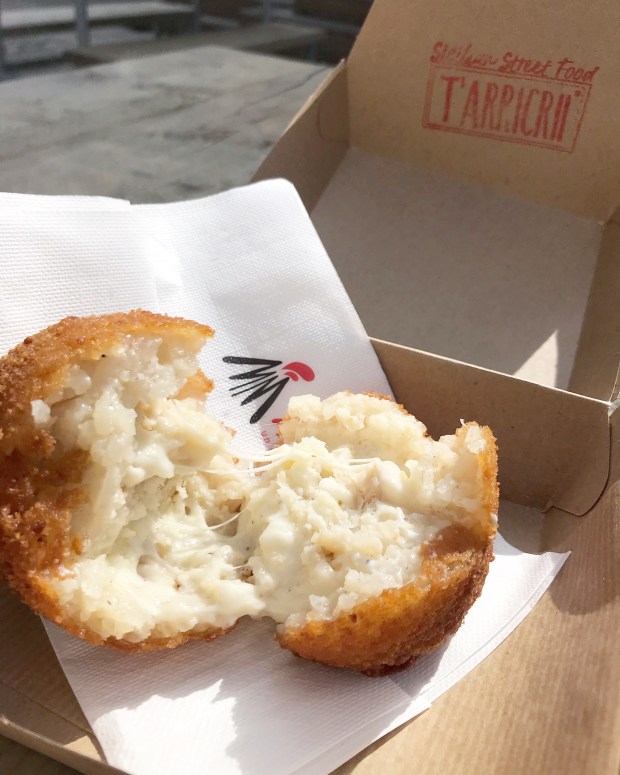
The two that I had in Bologna, Italy, were from an indoor market type place, and although I don’t remember the exact flavours, I know that at least one was tomato-based, there was beef mince involved, and peas featured somewhere. These ones highlight how arancini certainly don’t have to be cheese-filled, and this may be a bastardisation, but to be honest, given the choice, who wouldn’t want a sinking washing line of mozzarella to emerge as you break it apart?

The recipe below is for a ham and mushroom filling, however, it’s incredibly easy to customise the risotto filling, creating a vegetarian version for example, or even adding pesto, tomato sauce, or other meats.

Makes 9

For the Arancini

arborio rice (so sorry I can’t remember the quantity lol – enough risotto rice for 4 people would be a decent bet)

3 slices of thick ham (torn into small chunks)

8 chestnut mushrooms (sliced)

1 large onion

600ml chicken stock

Salt/pepper

Parmesan

1 ball of mozzarella

4tbsp cornflour

1 egg (beaten)

Fresh oregano (or dried if fresh not available)

1 cup breadcrumbs (sorry for the inconsistency of measurements!)

Splash of marsala

  1. Slice the onions and cook for at least 20 mins until caramelised.
  2. Add mushrooms and cook for a further 5 mins
  3. Add the arborio rice and coat with onion mix.
  4. Begin to add the stock and marsala little by little, gradually allowing it to reduce each time over a medium-high heat.
  5. Season, and add the ham, torn mozzarella, parmesan and oregano.
  6. When the risotto is complete, spread out flat on a tray with sides and chill in the fridge for at least 4 hours.
  7. When ready, remove from the fridge and form into large balls (or smaller depending on how you want to serve them).
  8. Roll the arancini first in a bowl of cornflour to coat, then the beaten egg mix, and then finally the breadcrumbs until fully coated.
  9. Heat your chosen oil in a saucepan and deep fry 2-3 at a time until they’re crisp and golden.

For the Roasted Red Pepper Sauce:

1 red pepper

½ onion

1 clove garlic

Salt/pepper

Cayenne pepper

Oregano

Tomato puree

Paprika

  1. Roast the pepper with a little bit of oil for 40 ish mins at 160 until it is bursting from its skin.
  2. Add to a food processor with the garlic and roughly chopped onion.
  3. Blend to a thick-ish paste/sauce and then stir through the remaining ingredients.

I was apprehensive about how these would turn out, but it’s ended up being one of my favourite recipes. They are best eaten fresh, and don’t freeze that well, so make only as many as you can eat!

They’re creamy, gooey, and dipping them into the red pepper sauce gives the perfect sharp kick to it. They are impossible not to like, and I think I’m going to have to try a gorgonzola version next…

I served these as a starter to my Chicken Pesto Lasagne which you can also find the recipe for here on my blog, so enjoy!

¡Comemos!

xo
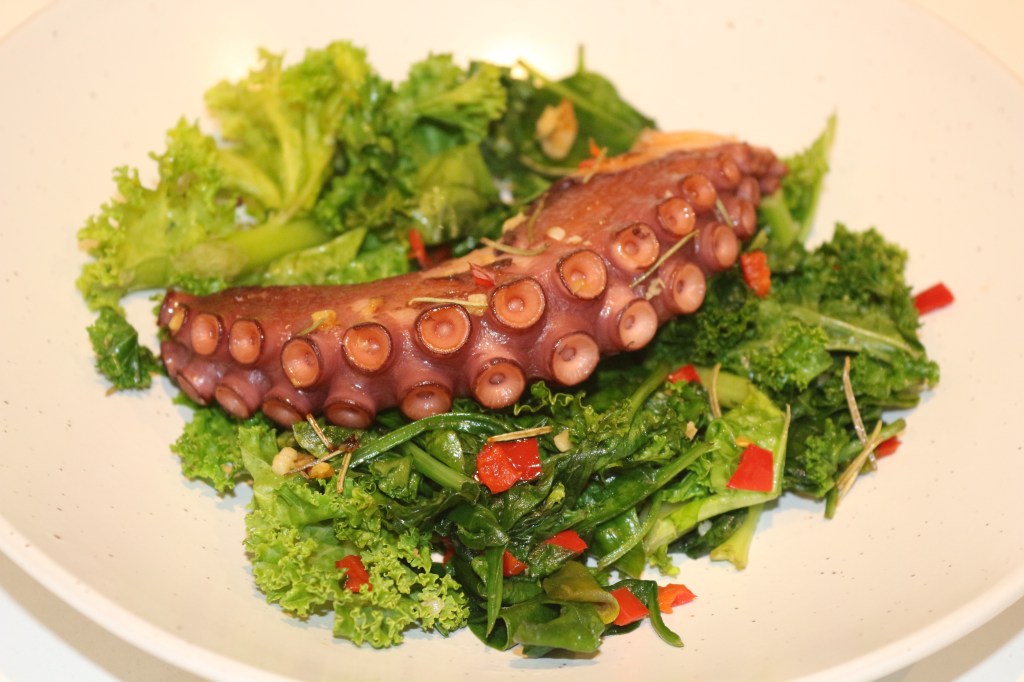
Octopus on a bed of chilli garlic greens

The amazing thing about cooking fish and seafood at home is, providing everything goes to plan, you end up with some serious restaurant-standard food. After a number of cheesy, creamy delights, I wanted to cook up something a bit lighter, knowing that what I was putting into my body was doing it some good, so that’s where this octopus recipe came into it.

There’s definitely a risk of over- or undercooking with octopus, both sins leaving you with a chunk of chewy, unpleasant meat, and so the key with a thick tentacle like the one I used is to cook it low and slow – a ‘bring to the boil then turn down to simmer for 45 minutes’ kind of cooking. This also allows you to get on with other things whilst cooking, and so your active time in the kitchen is minimal.

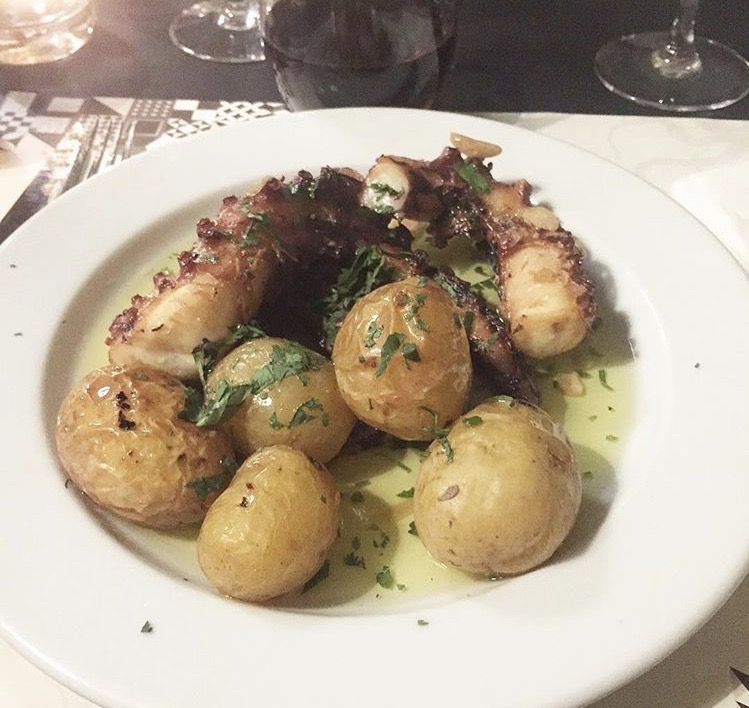
The nicest octopus I’ve ever had was at a restaurant in Lisbon. It was the first time I’d realised that octopus could be that tender, and cooked so simply. Served with some basic potatoes in a garlicky, buttery sauce (more like a light drizzle), it was pretty mind-blowing. Or at least I thought at that time that this was a revolutionary meal – changing the way I viewed octopus. Now, having cooked octopus myself that turned out equally as tender and delicious, I’m no longer under the same pretence that it’s incredibly difficult to achieve this beautiful tenderness. So simplicity here is everything. The kale with garlic and chilli will add all the flavour you need, whilst getting in some greens for a satisfying side dish.

Serves 2

Ingredients:

2 large tentacles

2 cloves garlic (crushed)

butter

splash of white wine

1 red chilli

salt/pepper

100g kale

100g spinach

  1. Put octopus in saucepan, cover with water, bring to the boil then reduce to simmer for 50 minutes until the meat is super tender.
  2. When done, heat butter in a frying pan and add 1 clove of crushed garlic.
  3. When fragrant, add the octopus, white wine and seasoning and cook on  medium heat until liquid has reduced and alcohol evaporated.
  4. Put the octopus to one side, keeping it warm all the while, and add more butter to the pan, adding the sliced chilli and other clove of crushed garlic when melted.
  5. After a few minutes, add the kale, cook for a further 3 minutes, then add the spinach and allow to wilt slightly.
  6. Serve the octopus on top of the bed of kale and spinach

The hardest part of this recipe to be honest is getting hold of the octopus tentacles. Once you’ve managed that, you’re pretty good to go. I got mine frozen from Bradley’s online, which I’ve mentioned before in various scallop and clam recipes. They have an amazing range of frozen fish, all of which has tasted delicious when I’ve cooked with it.

This dish looks beautiful and is super healthy, so don’t let your fear of cooking with seafood put you off trying it. You’ll be surprised by how little effort is involved!

¡Comemos!

xo

Butternut Squash Soup

If you told me a couple of years ago that I’d regularly be eating soup for lunch and dinner I would’ve scoffed. Soup is a liquid meal – how can that possibly satisfy you and fill you up? Well, somehow it does, and I’ve now tried so many delicious soup recipes (Ainlsey Harriott’s in his Caribbean Kitchen cook book are fab), that I thought it was about time I came up with some of my own.

Butternut squash soups have always been some of my favourite, and a lot of that is down to the fact that they are never watery. I love a creamy soup, and with squash, you can get that lovely consistency without even having to add cream, and so it can still be a super healthy meal.

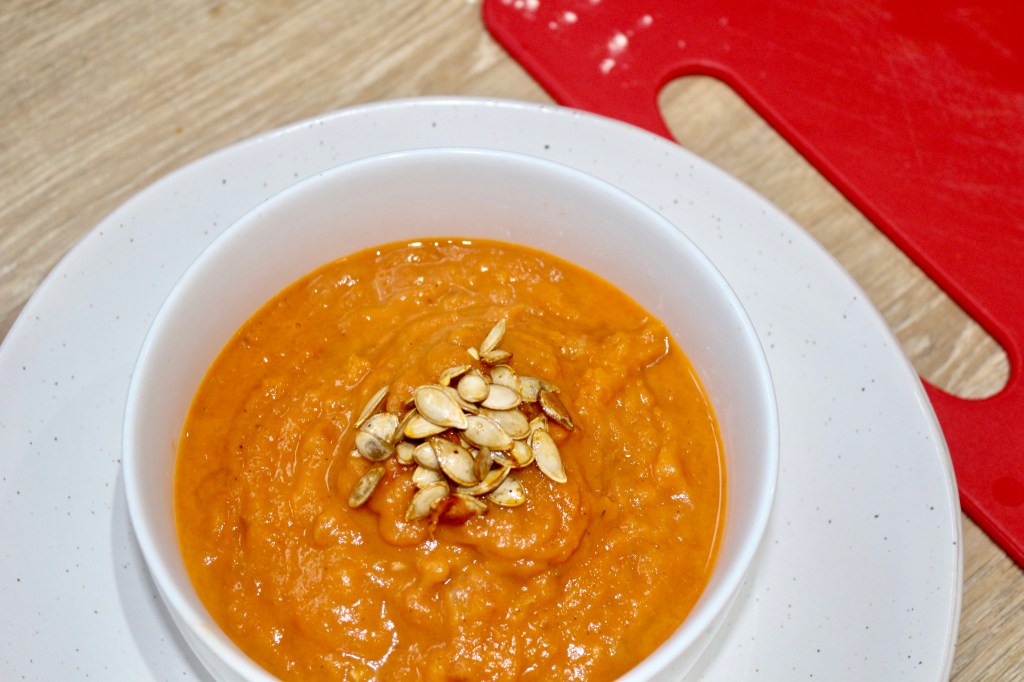
My soup recipe below is not only healthy, but also entirely plant-based (pretty easy to achieve with soups), and I’ve kept a pretty thick consistency. If you wanted a smoother, runnier soup, all you’d have to do is add a little more water, and blend more thoroughly.

And as anti-food waste as I am, there’s no need at all to throw away the seeds. They’re delicious roasted, and add a lovely crunchy to finish off the soup.

Serves 2

Ingredients:

½ squash (plus seeds)

1 carrot

2 ½ tbsp honey

1tsp paprika

salt/pepper

olive oil

1 onion

½ chilli

1 clove garlic

1 stick celery

50ml coconut cream

1 tin chopped tomatoes

100ml water

1tsp nutmeg

1tsp cayenne pepper

1tbsp nutritional yeast

  1. Roast the squash and carrot (both diced) with 1tbsp honey, paprika, olive oil and seasoning until soft and caramelised.
  2. Roast seeds in separate tray with the same honey coating (use ½ tbsp) until golden. These won’t take as long as the veg, so keep an eye on them.
  3. Sweat the onion in a saucepan or deep casserole dish (anything that the soup can happily sit in without overflowing!), then add the garlic and chilli.
  4. Add the chopped celery and seasoning.
  5. When the veg has finished roasting, add to the pot along with the coconut cream, tomatoes and water.
  6. Add the remaining spices, honey and nutritional yeast, and after stirring, bring to the boil then reduce to simmer for 20 mins.
  7. Remove from heat and blend with a stick blender and add a splash of water if the soup is too thick.
  8. Return to simmer for 5 mins then serve topped with the seeds.

This soup is full of flavour, with a little spicy kick to it, and there’s no way you won’t be satisfied after finishing a bowl. You could serve with crusty bread, but as this soup is on the thicker side, I find that I don’t necessarily want any heavy carbs to dip in (with a thinner soup it’s a different story…).

As is the case with most of my recipes, they’re really easy to adapt if you don’t have all the ingredients. Nutritional yeast isn’t essential, it just adds an extra, subtle umami flavour, and I prefer using a small amount of these flakes to a load of vegetable stock. Sweet potatoes would also work really well for the base of the soup, roasted cherry tomatoes instead of tinned tomatoes, and the coconut cream could be replaced by any other cream or coconut milk, or even just left out entirely for more of a light veggie, tomato flavour.

I really do love this recipe, more so than any of the other squash soup recipes I’ve tried elsewhere, so do give it a try.

¡Comemos!

xo

Spicy Seafood Noodle Broth

Many moons ago, after making my delicious paella, I used the mussel and prawn shells to make a shellfish stock which had been sitting in my freezer for a while waiting to be used. I didn’t want to use it for another rice dish, so came up with an alternative using noodles, which I very rarely cook with.

This broth is super light, but it certainly isn’t watery; I also refuse to call it a soup, as there’s so much more going on. It’s a bit of a spicy one, but of course you can play around with the ingredients to make it milder if you prefer; I however, love the kick.

I topped my noodle broth with some dumplings that I can’t claim as my own – I actually followed a recipe from Rick Stein’s Road to Mexico, but I definitely recommend seafoody-style dumplings as an ideal topping, as they add different textures to the dish, along with even more flavour. If you don’t want to go to the effort of making dumplings, other seafood such as prawns would also work really well, and as for the veg, you can mix and match as you like. I love steamed pak choi, but if I’d had some bean sprouts I definitely would’ve added those to.

This is a pretty straightforward recipe, but in order for it to really work, a stick blender is highly recommended, as otherwise you end up with little chunks of onion and chilli floating around, and although that doesn’t affect the flavour, you don’t get a lovely smooth texture. Stick blenders are so worth buying though, especially if you’re a fan of making soups and broths at home.

Serves 2

Ingredients:

1 onion

2 cloves of garlic

chunk of ginger

1 red chilli

small handful of cherry tomatoes

2tsp fish sauce

1tbsp rice wine vinegar

shellfish stock (or fish stock if you don’t have shellfish)

1 400ml tin coconut milk

2tsp sweet paprika

2tbsp sriracha

2tsp miso paste (dark)

bunch of coriander

2 nests of noodles (I used wholewheat)

1 spring onion

paprika flakes

chilli oil

optional toppings, i.e. dumplings, pak choi, bean sprouts, prawns, baby corn

  1. Heat the onion to sweat, and then add the garlic.
  2. Add the chopped or grated ginger, chilli and tomatoes and cook for 5 mins on a medium heat, stirring occasionally (turn down heat if they start to burn or catch on the bottom).
  3. Add the fish sauce and rice wine vinegar and cook for a further 5 mins.
  4. Pour in the shellfish stock, coconut milk, sriracha, miso paste and paprika, sprinkle in some chopped coriander and leave on a low-medium heat for 15-20 mins for all the flavours to soak each other up.
  5. Meanwhile cook your noodles and any toppings, i.e. steam the pak choi. NB. You could cook the noodles in the broth later on after it’s been blended if you prefer.
  6. Use a stick blender to blend the broth to a smooth, slightly creamy consistency.
  7. Add the noodles and top with whichever seafood or vegetables you’ve chosen
  8. Finish with a sprinkling of paprika flakes and spring onions, and a drizzle of chilli oil.

I love the colours in the finished dish – the bright, glossy orange, with the deep red paprika flakes and the contrasting fresh green from the veg. Although not based on any specific dish, this recipe is strongly Asian-influenced – I realise what a broad, sweeping statement that is – but I love how broth-style meals are such a staple in places like Vietnam (Pho), Malaysia (Laksa) and Japan (Ramen). They’re all so different both in terms of flavour and consistency, but what they have in common is the ability to demonstrate just how punchy, comforting and delicious, all at the same time, soup-like meals can be.

¡Comemos!

xo

Butternut Squash, Blue Cheese and Pear Puff Pastry Tart

I love puff pastry. The pre-prepared kind, that is. I’ve never attempted to make it myself, and maybe one day I’ll give it a go, but for now, ready-rolled is an absolute lifesaver.

I love the crunch as you bite into it, with little flakes floating down everywhere. It has a lightness that shortcrust lacks, and a delicious butteriness that you don’t get from filo.

Because you don’t need to make the pastry, this tart is so simple to make, and can be served as one large tart, or smaller, individual versions, using exactly the same measurements.

I used the amazing Beauvale blue cheese from Cropwell Bishop Creamery, which is local to me, as it’s incredibly creamy which is ideal for creating the dreamy melted blue cheese topping, rather than an equally as delicious, but not so practical crumbly Stilton.

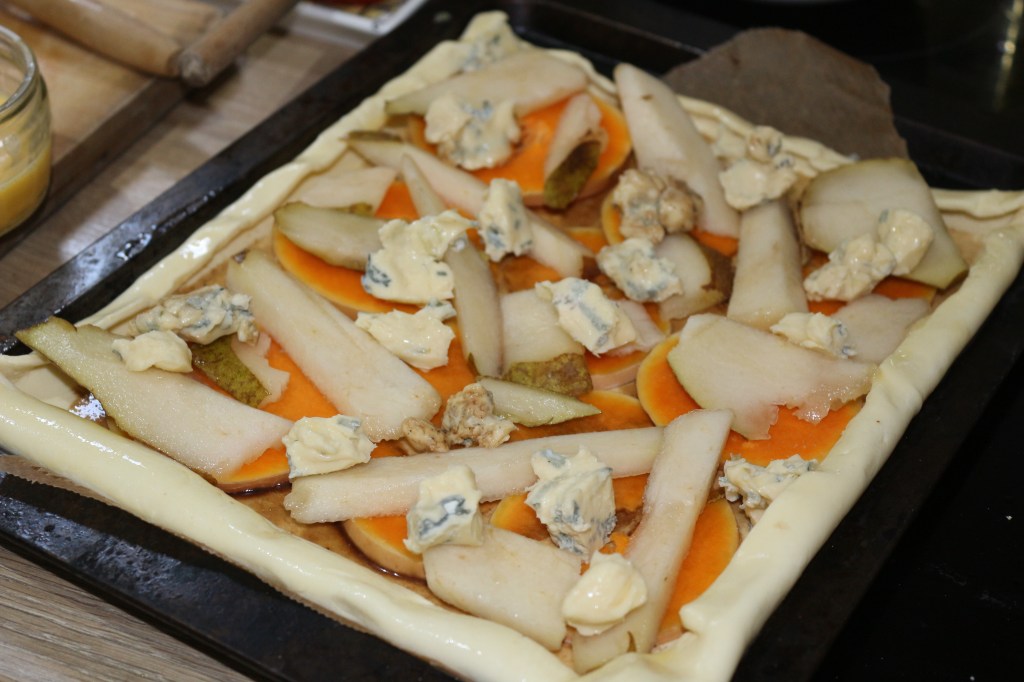
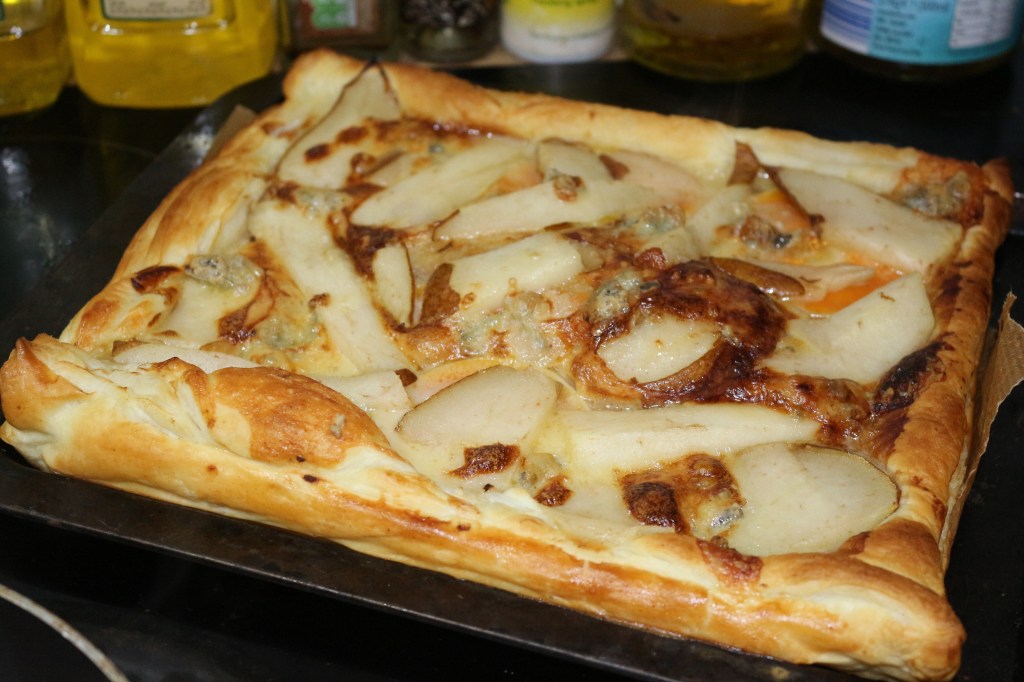
From the photos, you’ll notice that there are two versions of this tart that I made. The first used all the ingredients, but I wasn’t happy with the base, so decided to remake it, and the second version was spot on. Having said that, I didn’t have enough puff pastry or any pears the second time, hence the smaller tarts and fewer toppings.

You can absolutely get the tart to cook through completely without the bottom being soggy, but don’t be afraid to let the outside edges brown a little more to do so. Baking the pastry blind beforehand will also help to ensure it’s completely cooked through.

I won’t even lie, the first time I made this, I ate the entire tart in one go. I just kept going back for more it was so good, so now, over to you…

Makes 1 large rectangular tart and 4 individual tarts

Ingredients:

½ packet of ready rolled puff pastry

½ butternut squash

salt/pepper

rosemary

1tbsp cornflour

1btsp honey + 1btsp balsamic vinegar (combined)

1 pear

75-100g blue cheese (the creamier the better)

1 egg, beaten

chopped walnuts (optional)

  1. Preheat oven to 180.
  2. Cut squash into thin discs and add to a baking tray with olive oil, salt, pepper and rosemary, and roast until soft. This shouldn’t take long – around 10 mins, depending on your oven.
  3. Unroll the pastry and fold over the edges to create a crust. Bake the puff pastry until puffed up and starting to brown slightly (5-8 mins).
  4. Remove pastry from the oven and flatten out the puffed up centre.
  5. Sprinkle the cornflour over the pastry base so that any excess moisture from the filling will be soaked up.
  6. Layer over the squash, pear and chunks of blue cheese, then brush the edges with egg wash before placing back in the oven to bake until golden and cooked throughout. You will need to monitor the base as this will cook slower than the edges which will brown quickly, so turn the heat down if need be.
  7. After removing from the oven, ensure base is not soggy, top with the chopped walnuts and drizzle with the honey/balsamic vinegar dressing.

I topped the finished tart with my favourite spice mix, which is a Spanish brand, including garlic, onion, thyme, chilli flakes and some other spices in there, but you can top with whatever you enjoy – whether that’s a sprinkle of chilli flakes, a few sprigs of rosemary, a dusting of pepper, or just leave it as is!

Once you’ve baked your first tart, you’ll realise how easy it is to customise and make it your own. There are so many different toppings you could experiment with, from Italian caprese, to goat’s cheese and honey, or a classic cranberry and Brie. So get experimenting, and…

¡Comemos!

xo

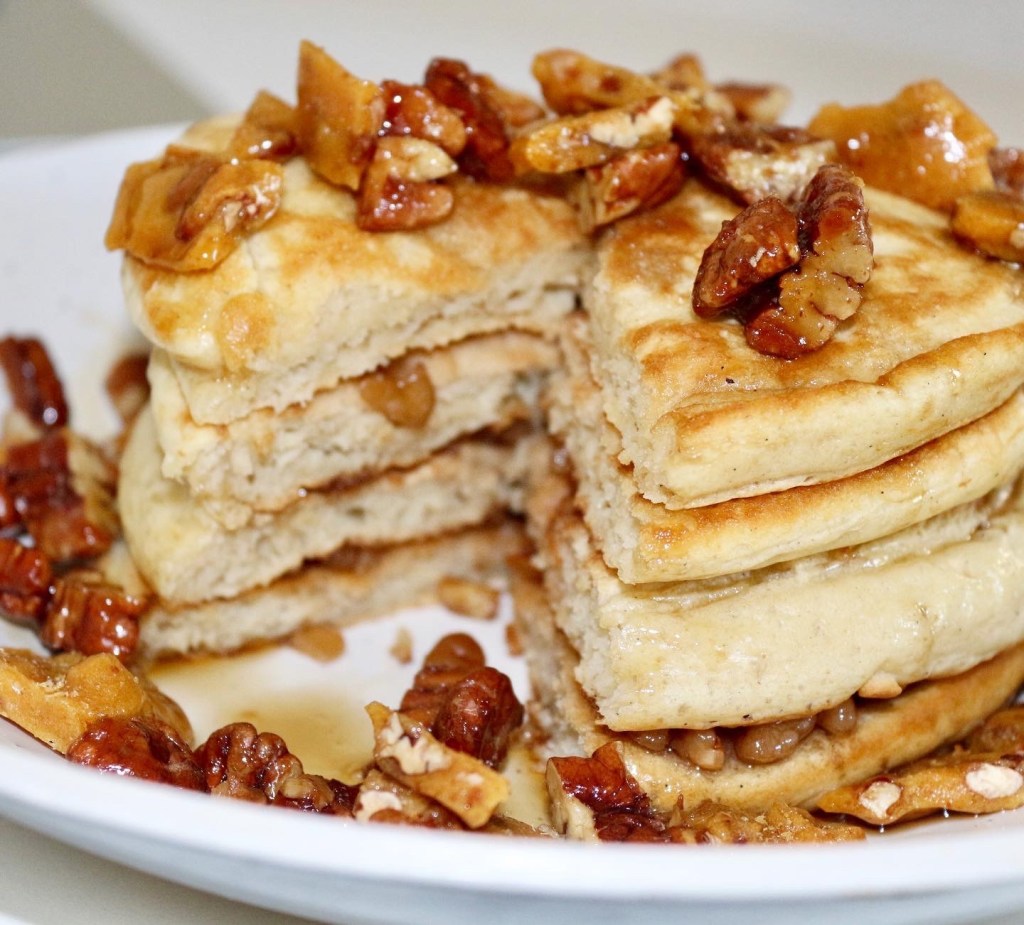
Bourbon Pecan Pancakes

So the other day I posted a photo of my Bourbon Pecan Pancakes on Instagram and got a pretty good reaction. People seemed to be loving the flavour combination and so I decided that I had to put the recipe up.

Interestingly as I was making them I sort of lost any hope of success, as the outside of the pancakes just didn’t look right. It was only when I actually tried them that I realised just how light, fluffy and tasty they actually were and so I decided to ignore my previous judgements, ignore the dodgy aesthetics, and learn to appreciate the great flavour and texture.

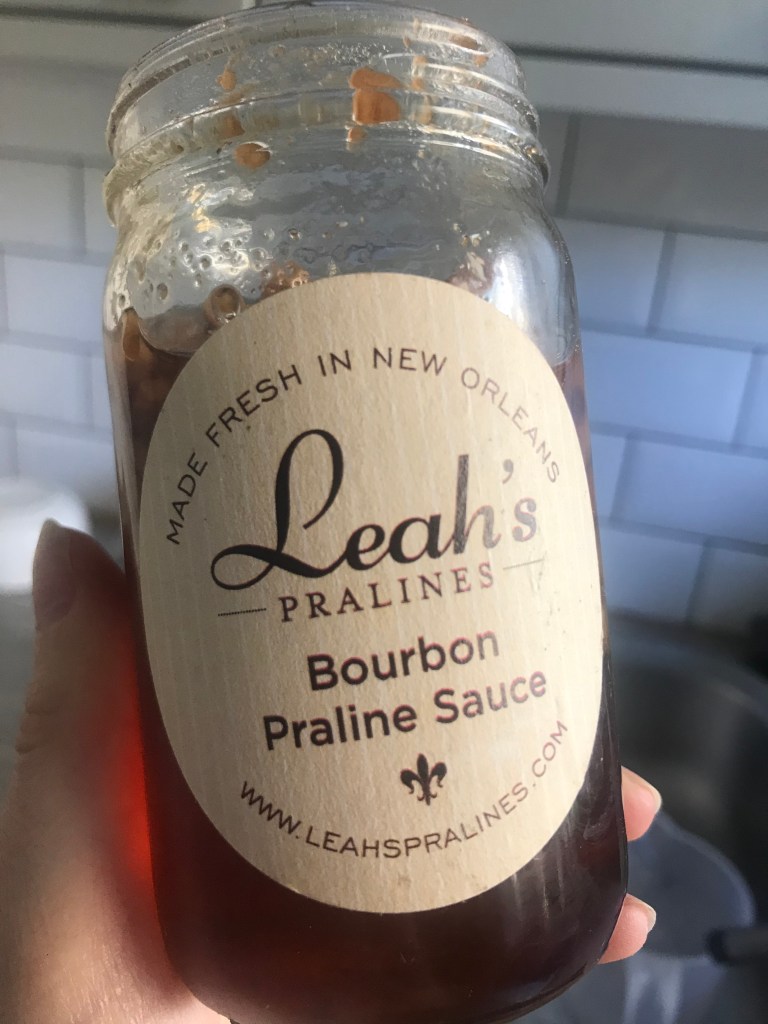
The recipe had been long overdue to be honest, ever since I came back from New Orleans (luckily, just before the Coronavirus travel restrictions), with a suitcase full of southern Louisianan goodies. Typical flavourings and ingredients including Bananas Foster, Pecan Pie and Pralines all influenced these pancakes, but don’t worry that you don’t have the specific foodie souvenirs that I brought back – there’ll be plenty of alternatives that you can use, which I’ll list at the end of the recipe.

These pancakes are sweet and sticky, with a satisfying crunch, and I would say they’ll leave you wanting more, but to be honest, you’ll probably be so stuffed full of deliciousness that you won’t want to think about pancakes for a while…

Makes a stack of 4 pancakes

Ingredients:

Butter

120g flour

120ml milk

1 egg

1tbsp brown sugar

Splash of Bourbon

½ tsp baking powder

1sp vanilla extract

Pinch of salt

Toppings

Handful of pecans  

Bourbon maple syrup*

Bourbon praline sauce*

Bacon brittle*

  1. Combine the dry ingredients then mix in the wet, making sure not to overwhisk – some lumps are ok.
  2. Chop the pecans and put them in a saucepan on a low heat with the syrup, stirring occasionally.
  3. Heat a knob of butter in a non-stick pan on a low-med heat (I use a mini frying pan which is the perfect size for American pancakes so the batter doesn’t have room to spread out too thinly).
  4. Add 2-2 ½ tbsp batter at a time and flip the pancake when bubbles start to form in the centre of the pancake (Not brave enough to risk flipping it properly, I raise the frying pan and tilt on an angle so that the pancake starts to slide out, then I can use a spatula to turn it on its back).
  5. When golden brown, remove from the heat, keep warm and repeat for the other pancakes.
  6. Stack the pancakes with a layer of the praline sauce between each one and top with the syrupy pecans (the syrup should’ve reduced to a thick sticky coating) and cover with crushed brittle. Finish with one final drizzle of the Bourbon syrup then get stuck in!

*Replace Bourbon Maple Syrup with normal syrup heating up with a splash of Bourbon. I used the online store ‘Just Miniatures’ to get a tiny ‘fun-sized’ bottle of Bourbon as I didn’t want to spend lots of money on a big bottle that there was no chance I’d ever drink!

*There are lots of recipes online to make your own Bourbon praline sauce, although they look to be much thinner in consistency that the jar that I bought in NOLA. If you don’t want to go to that kind of effort, adding more syrup between each pancake would be a simpler alternative.

*Again, there are recipes online for Bacon Pecan Brittle, or for those in the US, Leah’s Pralines (where I bought mine) sell packets in their online store. A really delicious alternative would just be to use actual bacon, and you could always glaze it in syrup for added sweetness.

Hopefully now you’ll be on your way to creating your own New Orleans-inspired pancake stack whether you stick religiously to the recipe above, or customise it in your own way. Whatever your toppings, as long as your pancakes feature pecans, Bourbon and maple syrup, you’ll definitely taste those sweet Southern-inspired flavours!

¡Comemos!

xo

Around the World in 80 Plates: Koshari

The first in a new series, here I’ll be taking a look at key dishes from countries around the globe, how they compare in London, and how you can attempt to whip them up in your kitchen at home.

Before I get stuck in, I’d like to point out that I began writing this before things really spiralled with regards to the Coronavirus. I talk later on about my love for London’s street food pop ups, and urge you to visit your local, independent restaurants, however, as things stand at the minute, obviously that isn’t necessarily possible. So many places I love have closed down, some not knowing if they will ever be able to reopen. It’s a massively tough time for so many people, so I just hope that when all of this subsides, as many of these places as possible can get back on their feet. So, continuing with my original request, please consider investing your time and money (and stomach space) in these amazing small businesses when it’s safe to do so again – they will really appreciate your support, and it’ll be exciting to try something new.

But getting stuck back in, my first stop is Egypt, an underrepresented cuisine here in the UK, with my Egyptian dish of choice being Koshari (also written as ‘Kushari’).

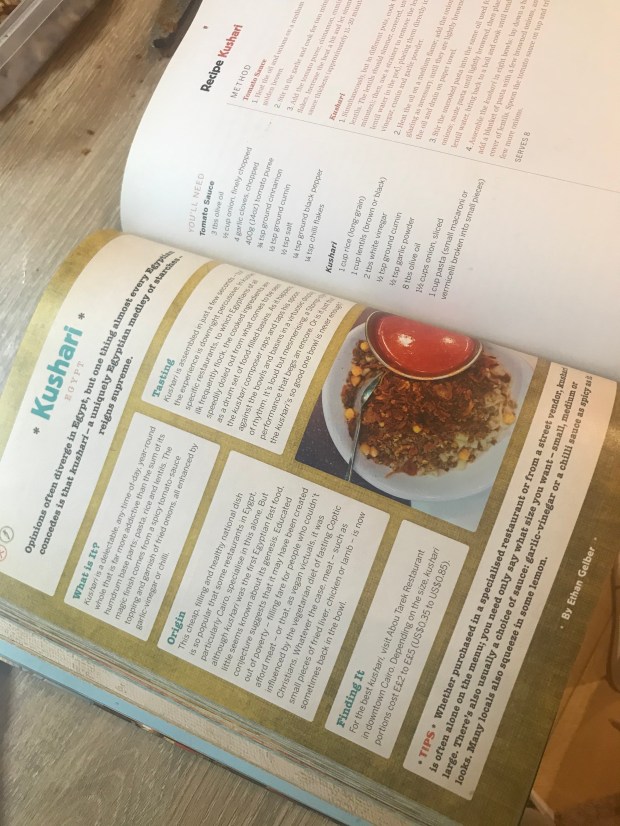
I first came across Koshari in the Lonely Planet Street Food guide, which highlights some of the world’s best street food, offering readers simplified home recipe versions.

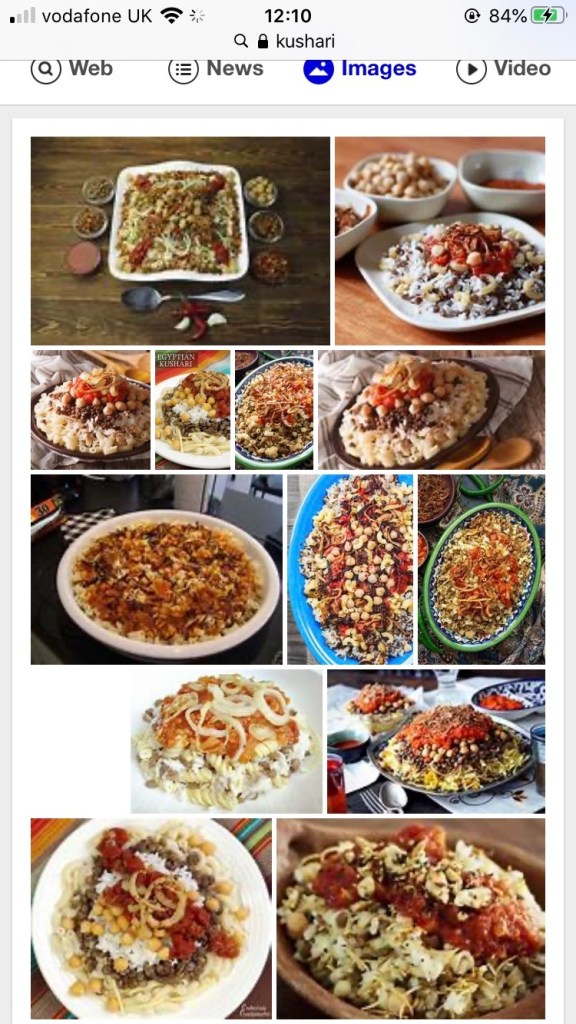
But what is it? As the national dish of Egypt, Koshari consists of brown rice and lentils mixed with chickpeas and macaroni, and topped with a tomato sauce and crispy fried onions. All the elements within the dish are super basic, but combined, create a fibre-filled snack, which is full of flavour. Traditionally, koshari doesn’t use any animal products and so is suitable for vegan diets, although nowadays, some places mix up their menus to include meat versions. Koshari initially came about as a street food dish, being sold on carts throughout Egyptian towns and cities; however, it can now also be found on more formal restaurant menus.

One of the most wonderful things about living in London is the diversity of its food scene. The concept of ‘street food’ in the UK has come under scrutiny recently due to the rapid increase in super popular, commercialised food halls offering ‘street food’. Authenticity and motivations have been questioned, and one of the key issues has been the idea that this kind of food, which initially existed across the world to be sold to labourers as a quick and cheap lunch option, has been ‘gentrified’ in a sense. For ‘street food’ in London, you could find yourself paying over £10 for one dish to enjoy as part of a social outing. Despite this, I strongly believe that our street food scene shouldn’t be given a bad name. I love the fact that many of my favourite food stalls and pop ups are run by people who are so passionate about their food products that they want to channel that into preparing traditional dishes here in London. There may be wider issues, but not to the extent that we should feel guilty for enjoying incredible international food created by experts.

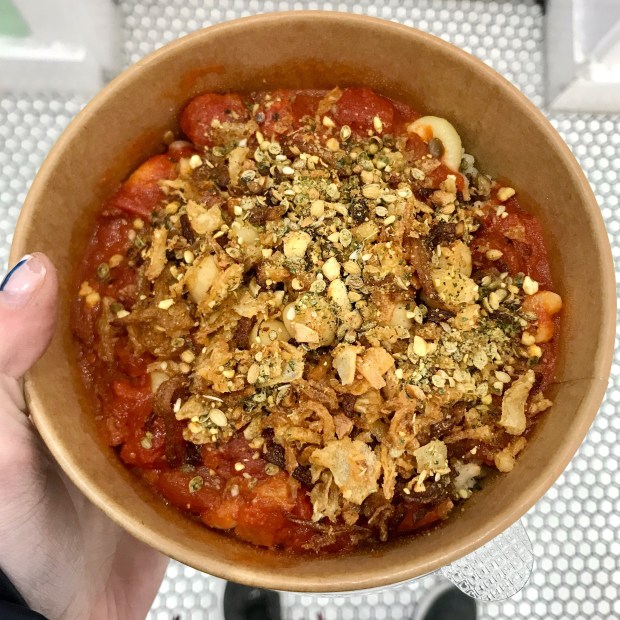
No matter how obscure you think a dish may seem, there’s a 99.9% chance that you’ll still find it in London, and Koshari is one of those. Koshari Street is a small business with a little store on St Martin’s Lane, Covent Garden, which serves the classic dish alongside meat and chicken options, protein bowls, and build your own bowls. The store is a really relaxing space with a small number of tables, and all the ingredients for the dish lain out in front of you behind the counter.

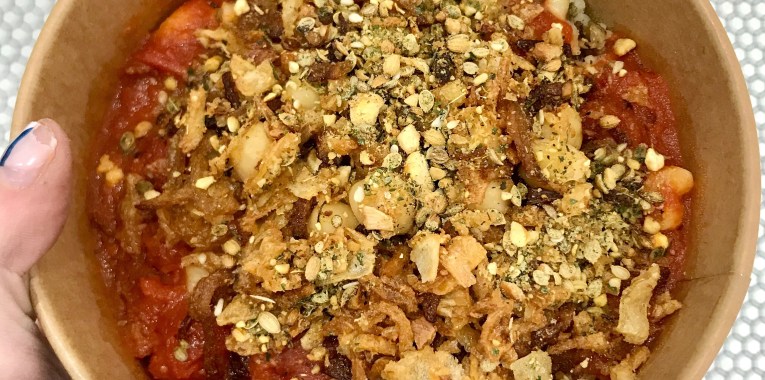
So many of the bowls looked great, but for ‘research purposes’ I wanted to try the classic. With bowls coming in regular and large, I can confirm that the regular portion is a really good size. The base, as is customary, is made up of lentils, macaroni and small noodle pieces and is topped with the classic zingy tomato sauce, chickpeas and a deliciously spiced nut mix, which also adds a lovely crunchy texture to the dish. Koshari bowls are super healthy, but really filling, and I’m really happy to see Egyptian food on the mainstream here in London.

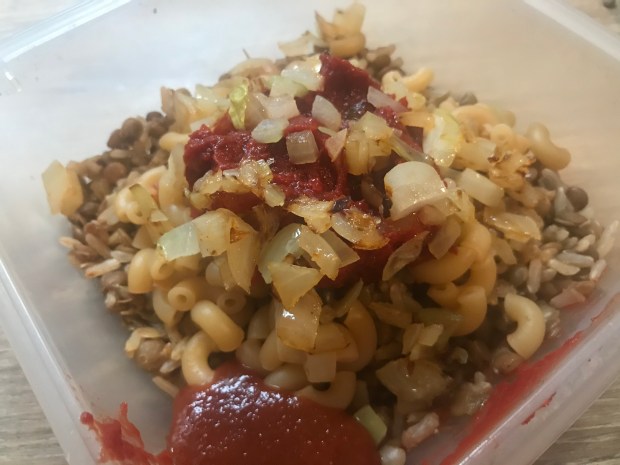
But then it was over to me. To be honest, the task of recreating this at home probably wasn’t as daunting as some of the other dishes I will be attempting, after all, it only really consists of boiling your rice, lentils and pasta and mixing up your tomato sauce before piling everything together. Even so, I was pretty happy with how it turned out…

As a lunchbox meal to eat at work or on the go, this kind of dish is perfect, and is also the kind of thing you can batch cook. I added lots of diced onion to the top of mine for added flavour, but really the classic is so satisfying that you really don’t need to mess with the traditional ingredients. The tomato sauce is actually just a tomato puree mixed with garlic, onion, cinnamon, cumin, salt, pepper and chilli flakes. Because the carb/protein base of this dish is so simple, the beauty of it comes from the spices so the cumin and cinnamon really do bring the whole thing together.

This post has been short and sweet, but hopefully you’ve learnt something. I’d love for this series to encourage you to try something new; to venture out and indulge in a kind of cuisine you’d never really considered before, and maybe even try tackling an unusual dish in your own kitchen. We’ve probably all tried French, Spanish, Mexican, Indian etc., but there is so much more out there that’s hidden from our mainstream dining options. Don’t get me wrong, some of the dishes in this series will be pretty well known, but others I hadn’t even heard of before researching potential material.

Most towns and certainly all cities will have at least a handful of independently run restaurants or cafes dishing up amazing food from lesser-publicised corners of the world, so for your next date, family celebration or friendly catch-up, why not try something new and support those who are kind enough to share their national cuisine with us?

¡Comemos!

xo

Spicy smoked cheese omelette

What is that?? I hear you ask. The deadest, most unphotogenic breakfast of all time?

Well, when it comes to unphotogenic, maybe, but I was so surprised how delicious this spicy cheesy omelette turned out that I just had to do this spontaneously basic post. I debated not including a photo because it looked so shit, but ultimately I felt like a recipe with no photo was a bit of a cop out, and I may as well open with something that looks a bit grim to grab your attention. Despite the world of instagrammable symmetrical plate aesthetics that we live in, let’s not forget that if you genuinely care about food, it’s all about the enjoyment of eating it rather than what it looks like, although a pretty plate is a pleasant bonus.

I used to find eggs so incredibly boring to eat and dull in flavour, which is a madness considering how versatile they actually are.

So now I’ve gone the other way; jumped on the ‘add a fried egg to everything’ bandwagon – burgers, toast, rice, you name it, there are very few dishes that can’t be enhanced by the addition of a fried egg.

But anyway, today isn’t about fried eggs, at least not in that sense. My breakfasts (when I actually have them) typically consist of something that I don’t deem to be time-consuming – granola, porridge or some kind of frozen leftover treat that I just need to reheat. This morning, however, I decided to push the boat out before work and cook an entire omelette!!

Obviously this whole notion of it being more effort is flawed anyway as stovetop cooked porridge probably takes longer and requires more patience and standing around, but still, I felt that this morning was going to be a major commitment.

Granted, only an idiot wouldn’t know how to whip up a standard omelette (if that’s you, yes, you are an idiot), but this one turned out to be so delicious that I had to share my satisfaction. With the kick of chilli and creaminess of the melting cheese, this breakfast was an absolute winner.

Makes 1 omelette

Ingredients:

2 eggs

Splash of milk

1/2 chilli (I used scotch bonnets but they don’t have to be this fiery)

Oregano

20g ish of smoked cheese

Mixed spices

Butter

1. Beat the eggs and add the milk, oregano, crumbled up cheese and chopped chilli then swirl to combine.

2. Heat a knob of butter in a non-stick pan over a medium heat.

3. Pour in the mixture and leave to cook and set.

4. When starting to set on top, use a spatula to examine the underneath to check when it’s golden with some darker brown patches. If you’re satisfied with the colour, instead of flipping the whole thing, just fold one half over the other.

5. Flip the folded omelette and leave for 30-60 seconds longer.

6. Serve up with your choice of seasoning. I used a mixed Spanish spice from the brand Toque which I think you can get online.

This is such a simple recipe but the flavour and the textures still wowed me. Feel free to alter the amount of chilli to your taste. You could also serve with a salad or even chips for a main meal. A drizzle of pesto would also be delicious on top.

This will make getting up for work in the morning so much easier, I promise.

¡Comemos!

xo