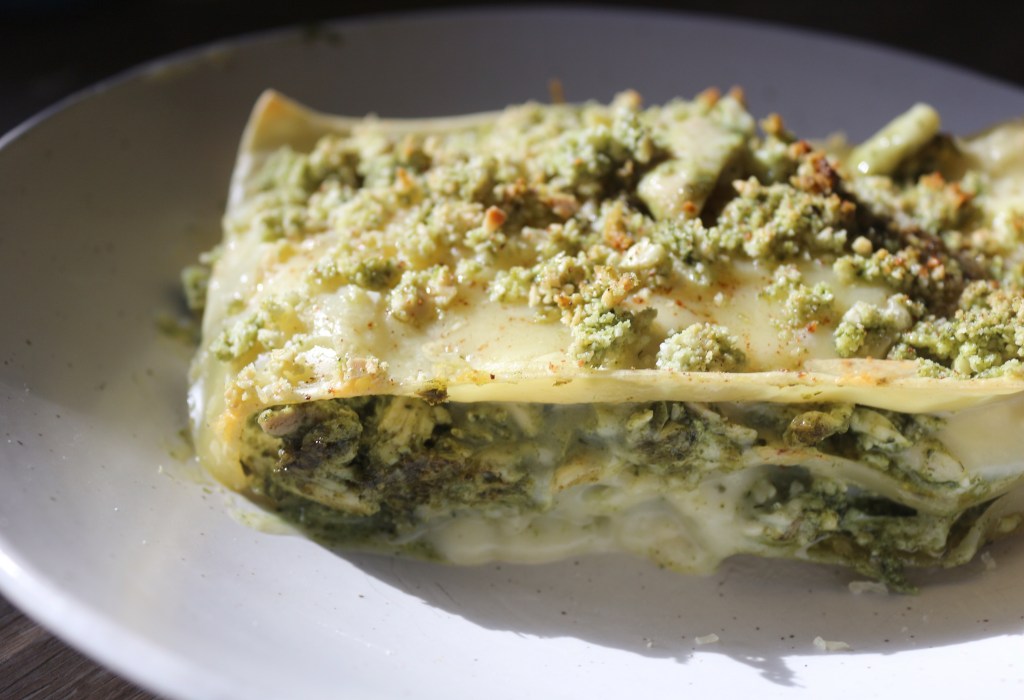
Pesto chicken lasagne

Who doesn’t love pesto? It’s basically a rite of passage to live off of a pre-made pesto pasta for at least half of your time at university nowadays, but it’s actually very simple to make yourself.

This recipe takes the greatest of the pasta sauces – both pesto and béchamel and combines them in a super creamy chicken lasagne dish, where you won’t need to spend ages simmering a ragù sauce and ensuring the meat is cooked adequately, as leftover chicken works a trick here.

With the crunch of almonds on top, combined with oozy melted cheddar, this is a super comforting dish that looks even more impressive than a standard lasagne.
Serves 2

Ingredients:

For the pesto

30g basil

30g pine nuts

2tbsp olive oil

1 clove garlic

1tbsp grated parmesan

For the lasagne

125g shredded cooked chicken

50g cheddar

4 lasagne sheets

2tbsp butter

1 clove garlic

3tbsp flour

milk

nutmeg

handful of almonds

  1. Preheat the oven to 180 degrees (depending on your oven – use your own judgement).
  2. Put all the pesto ingredients into a food processor and blend to a paste.
  3. Boil some salted water and part-cook the lasagne sheets until very al dente.
  4. To make the white sauce, melt the butter in a saucepan, add the diced garlic and flour and mix well.
  5. Add milk bit by bit, continuing to stir on a low-med heat until you have a thickened sauce.
  6. Grate in the nutmeg and remove from the heat.
  7. Mix the chicken and pesto in a bowl.
  8. In a food processor, blitz the almonds into coarse crumbs. For extra flavour, don’t wash out the processor after making the pesto, as then your almond crumbs will suck up all the excess pesto left in there.
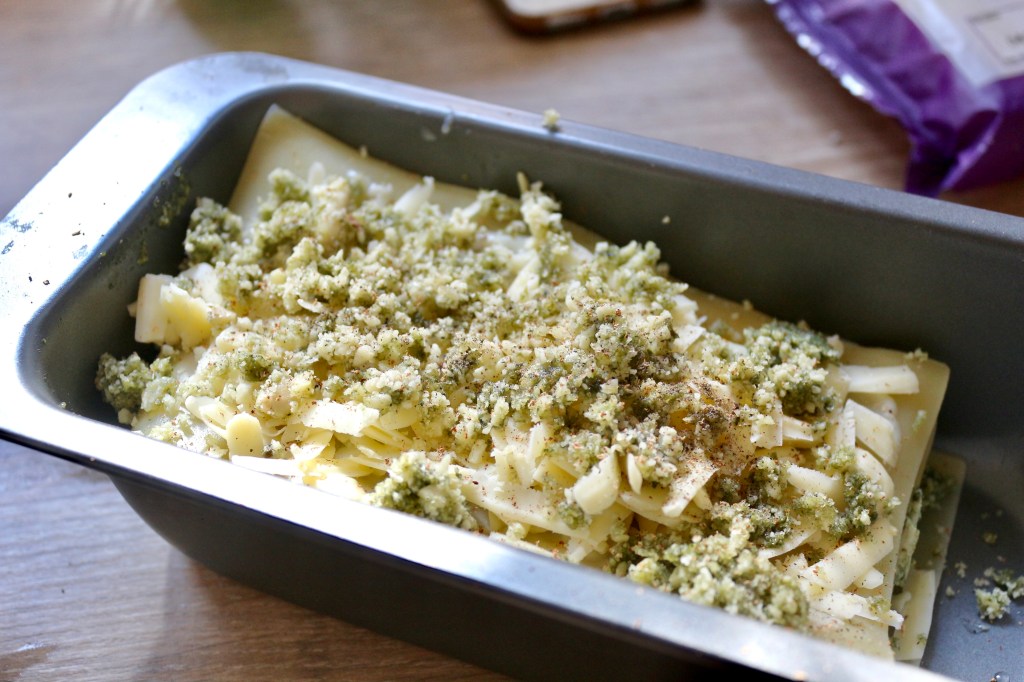
  9. In a loaf tin, layer a lasagna sheet, then chicken and white sauce, then repeat twice more.
  10. Top with the final sheet and sprinkle with grated cheese and the almond crumb.
  11. Bake for 15 minutes until the cheese on top is golden.
¡Comemos!

xo
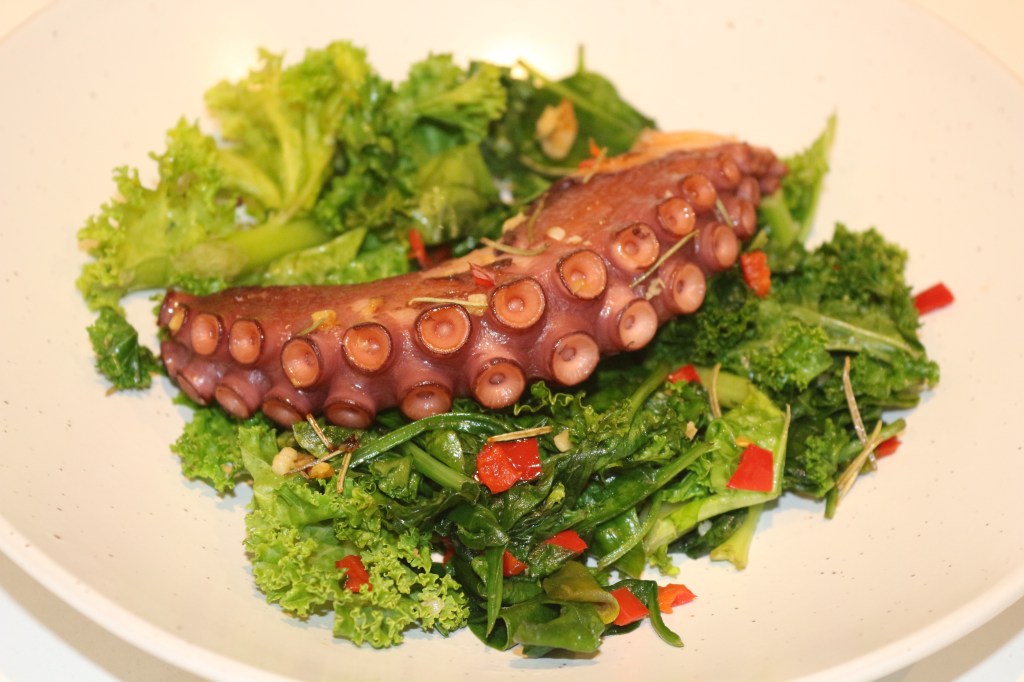
Octopus on a bed of chilli garlic greens

The amazing thing about cooking fish and seafood at home is, providing everything goes to plan, you end up with some serious restaurant-standard food. After a number of cheesy, creamy delights, I wanted to cook up something a bit lighter, knowing that what I was putting into my body was doing it some good, so that’s where this octopus recipe came into it.

There’s definitely a risk of over- or undercooking with octopus, both sins leaving you with a chunk of chewy, unpleasant meat, and so the key with a thick tentacle like the one I used is to cook it low and slow – a ‘bring to the boil then turn down to simmer for 45 minutes’ kind of cooking. This also allows you to get on with other things whilst cooking, and so your active time in the kitchen is minimal.

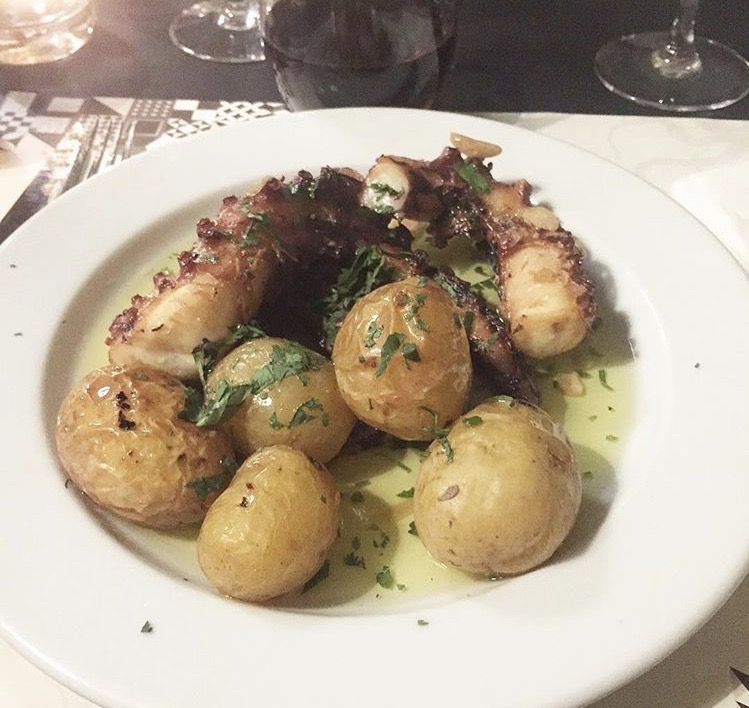
The nicest octopus I’ve ever had was at a restaurant in Lisbon. It was the first time I’d realised that octopus could be that tender, and cooked so simply. Served with some basic potatoes in a garlicky, buttery sauce (more like a light drizzle), it was pretty mind-blowing. Or at least I thought at that time that this was a revolutionary meal – changing the way I viewed octopus. Now, having cooked octopus myself that turned out equally as tender and delicious, I’m no longer under the same pretence that it’s incredibly difficult to achieve this beautiful tenderness. So simplicity here is everything. The kale with garlic and chilli will add all the flavour you need, whilst getting in some greens for a satisfying side dish.

Serves 2

Ingredients:

2 large tentacles

2 cloves garlic (crushed)

butter

splash of white wine

1 red chilli

salt/pepper

100g kale

100g spinach

  1. Put octopus in saucepan, cover with water, bring to the boil then reduce to simmer for 50 minutes until the meat is super tender.
  2. When done, heat butter in a frying pan and add 1 clove of crushed garlic.
  3. When fragrant, add the octopus, white wine and seasoning and cook on  medium heat until liquid has reduced and alcohol evaporated.
  4. Put the octopus to one side, keeping it warm all the while, and add more butter to the pan, adding the sliced chilli and other clove of crushed garlic when melted.
  5. After a few minutes, add the kale, cook for a further 3 minutes, then add the spinach and allow to wilt slightly.
  6. Serve the octopus on top of the bed of kale and spinach

The hardest part of this recipe to be honest is getting hold of the octopus tentacles. Once you’ve managed that, you’re pretty good to go. I got mine frozen from Bradley’s online, which I’ve mentioned before in various scallop and clam recipes. They have an amazing range of frozen fish, all of which has tasted delicious when I’ve cooked with it.

This dish looks beautiful and is super healthy, so don’t let your fear of cooking with seafood put you off trying it. You’ll be surprised by how little effort is involved!

¡Comemos!

xo

Creamy Scallop Pasta with Cheesy Chorizo Crumb

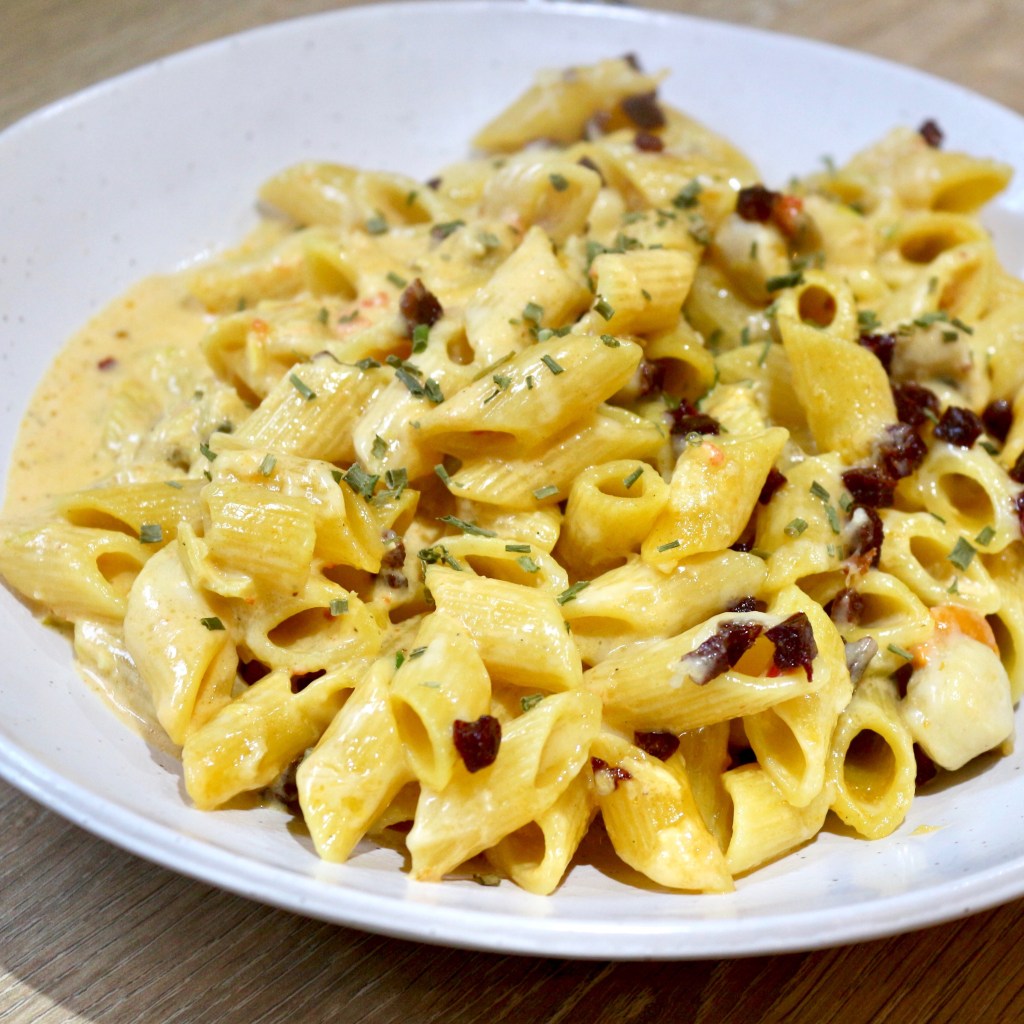
This pasta recipe combines the fanciness of scallops, with the flavour of chorizo and the comfort of gooey melted cheese. Basically, it’s the best of all worlds.

Recently I did a big order of frozen fish and seafood from Bradley’s, a family-run business based in West London. They only sell frozen fish, with the concept behind that being that often, lots of the ‘fresh’ fish we eat isn’t actually fresh at all, and has spent a fair while being transported around before it ends up on our plates. Their fish however, is frozen within 3 hours of being caught, therefore ensuring that both the flavour and the nutrients are bound within the products from the outset, so they taste just as good whenever you choose to eat them later down the line.

Part of my order included the queen scallops featured in this recipe. The kilo bag has provided me with many meals so far, with plenty more to come, and texturally and flavour-wise these small scallops are pretty good quality.

Serves 2

Ingredients:

200g penne pasta

30g chorizo

½ leek

1 red chilli

2 cloves of garlic

150ml double cream

150ml fish stock

2 tsp sun dried tomato paste

small pinch saffron

1tsp chilli flakes

salt/pepper

200g scallops

chives

parlsey

50g cheddar (grated)

  1. Chop the chorizo into tiny crumb/cube pieces then fry until beginning to crisp and set to one side.
  2. Fry the chopped leeks with the chilli and garlic on a low-medium heat until soft and fragrant.
  3. Cook the pasta according to packet instructions.
  4. Add the cream, fish, sun dried tomato paste, saffron, chilli flakes, salt and pepper to the leek mix and continue to cook on medium heat for 15 mins until reduced slightly.
  5. For a super smooth pasta sauce you can blend the creamy leek/stock mix at this point using a hand blender, although it isn’t essential.
  6. Add the scallops, chives and parsley to the pan with the sauce then mix in the pasta.
  7. Place in an ovenproof dish, and top with grated cheddar and the chorizo crumb. Put the dish under the grill until the cheese is golden and melted.
  8. Sprinkle with more chives to serve.

I always like to include alternative adaptations of my recipes, and this one is no different. If you can’t get hold of, or don’t want to use scallops, other seafood would also work. Admittedly, if you’re desperate to showcase amazing scallops, you probably won’t be serving them in a pasta dish, so for me, the scallops aren’t actually the most important part here. Pasta + salty chorizo + cream/cheese + seafood is always going to be a success, whatever ocean-dwelling treat you choose to include!

¡Comemos!

xo

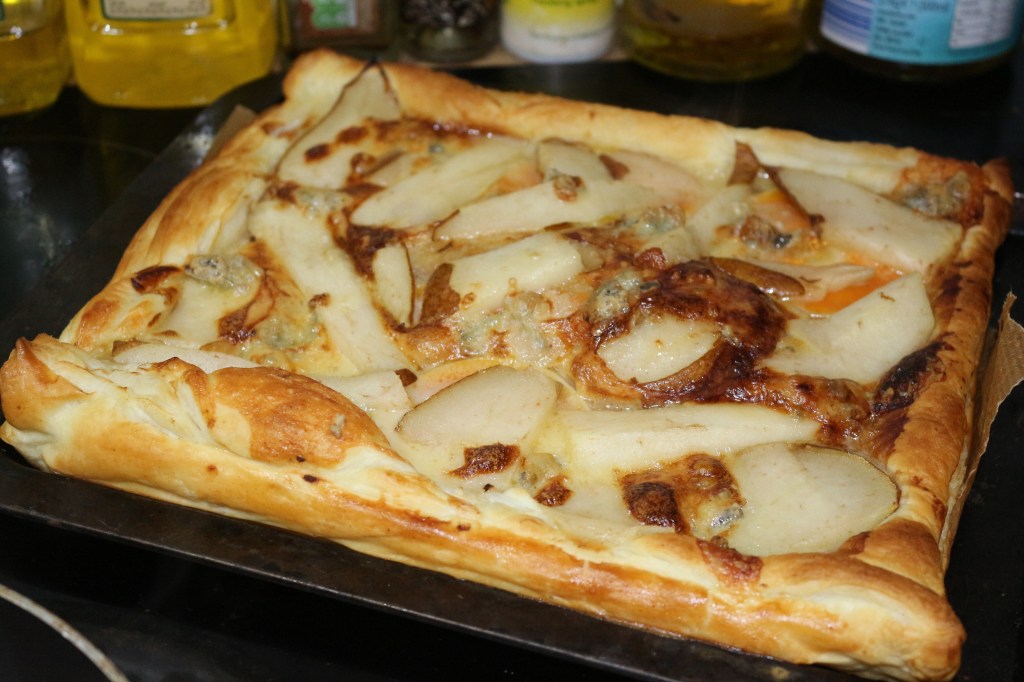
Butternut Squash, Blue Cheese and Pear Puff Pastry Tart

I love puff pastry. The pre-prepared kind, that is. I’ve never attempted to make it myself, and maybe one day I’ll give it a go, but for now, ready-rolled is an absolute lifesaver.

I love the crunch as you bite into it, with little flakes floating down everywhere. It has a lightness that shortcrust lacks, and a delicious butteriness that you don’t get from filo.

Because you don’t need to make the pastry, this tart is so simple to make, and can be served as one large tart, or smaller, individual versions, using exactly the same measurements.

I used the amazing Beauvale blue cheese from Cropwell Bishop Creamery, which is local to me, as it’s incredibly creamy which is ideal for creating the dreamy melted blue cheese topping, rather than an equally as delicious, but not so practical crumbly Stilton.

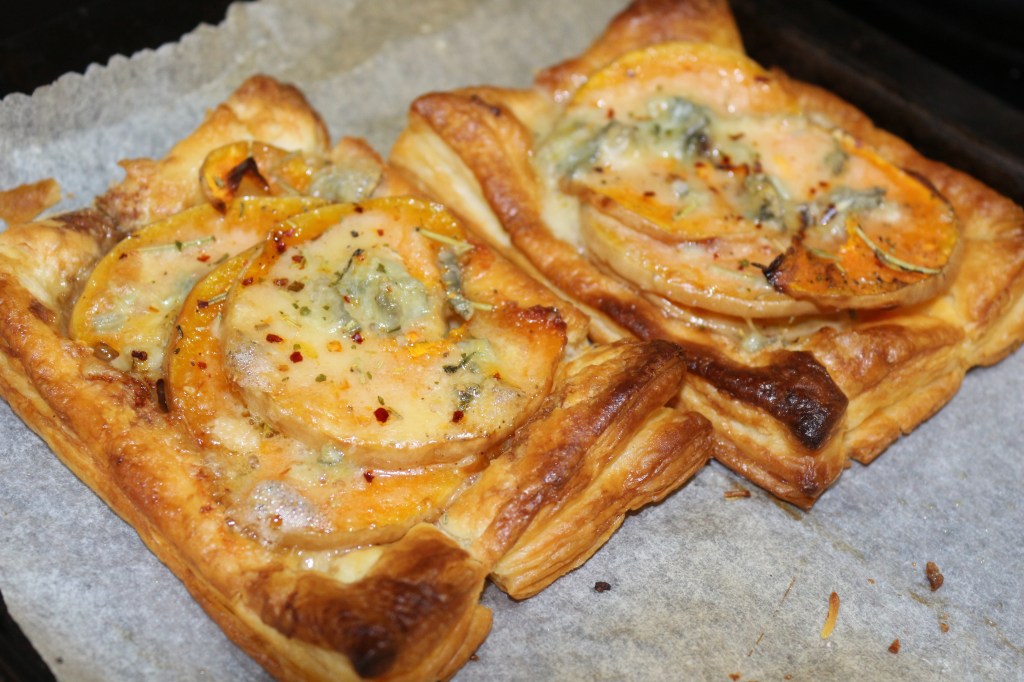
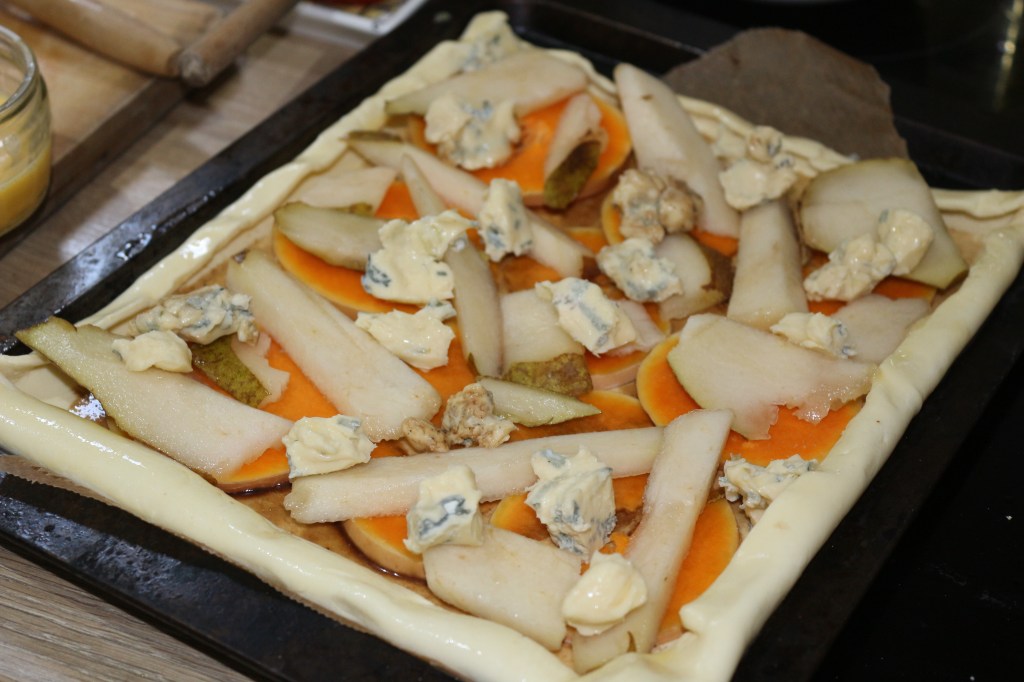
From the photos, you’ll notice that there are two versions of this tart that I made. The first used all the ingredients, but I wasn’t happy with the base, so decided to remake it, and the second version was spot on. Having said that, I didn’t have enough puff pastry or any pears the second time, hence the smaller tarts and fewer toppings.

You can absolutely get the tart to cook through completely without the bottom being soggy, but don’t be afraid to let the outside edges brown a little more to do so. Baking the pastry blind beforehand will also help to ensure it’s completely cooked through.

I won’t even lie, the first time I made this, I ate the entire tart in one go. I just kept going back for more it was so good, so now, over to you…

Makes 1 large rectangular tart and 4 individual tarts

Ingredients:

½ packet of ready rolled puff pastry

½ butternut squash

salt/pepper

rosemary

1tbsp cornflour

1btsp honey + 1btsp balsamic vinegar (combined)

1 pear

75-100g blue cheese (the creamier the better)

1 egg, beaten

chopped walnuts (optional)

  1. Preheat oven to 180.
  2. Cut squash into thin discs and add to a baking tray with olive oil, salt, pepper and rosemary, and roast until soft. This shouldn’t take long – around 10 mins, depending on your oven.
  3. Unroll the pastry and fold over the edges to create a crust. Bake the puff pastry until puffed up and starting to brown slightly (5-8 mins).
  4. Remove pastry from the oven and flatten out the puffed up centre.
  5. Sprinkle the cornflour over the pastry base so that any excess moisture from the filling will be soaked up.
  6. Layer over the squash, pear and chunks of blue cheese, then brush the edges with egg wash before placing back in the oven to bake until golden and cooked throughout. You will need to monitor the base as this will cook slower than the edges which will brown quickly, so turn the heat down if need be.
  7. After removing from the oven, ensure base is not soggy, top with the chopped walnuts and drizzle with the honey/balsamic vinegar dressing.

I topped the finished tart with my favourite spice mix, which is a Spanish brand, including garlic, onion, thyme, chilli flakes and some other spices in there, but you can top with whatever you enjoy – whether that’s a sprinkle of chilli flakes, a few sprigs of rosemary, a dusting of pepper, or just leave it as is!

Once you’ve baked your first tart, you’ll realise how easy it is to customise and make it your own. There are so many different toppings you could experiment with, from Italian caprese, to goat’s cheese and honey, or a classic cranberry and Brie. So get experimenting, and…

¡Comemos!

xo